What Is a Central Vacuum in a House? Your Expert Guide 2027
A central vacuum system is a whole-house cleaning solution featuring a powerful unit installed remotely, connected by tubing to wall inlets. When a hose is plugged in, dirt and debris are whisked away through the piping to the central collection canister, significantly improving indoor air quality and providing strong, quiet cleaning power.
A Vacuum Cleaner – Wikipedia”>central vacuum system is a built-in whole-house cleaning solution. Imagine powerful, consistent suction accessible from any room, without lugging a heavy machine. This permanent fixture integrates discreetly into your home’s structure using wall-mounted inlets, a network of hidden pipes, and a robust central power unit. It’s designed for efficiency and superior air quality.
For homeowners in 2027, understanding this advanced cleaning technology is increasingly relevant. It doesn’t just clean floors; it fundamentally enhances your living environment. You gain a quieter, more powerful, and significantly more hygienic way to manage household dust and debris, effectively removing allergens from your immediate living space.
Key Takeaways
- Central vacuums offer powerful, quiet whole-house cleaning.
- Core components include power unit, tubing, inlets, hose.
- Dirt is collected away from living spaces for better air.
- Provides superior, consistent suction for deep cleaning.
- Consider upfront cost versus long-term health benefits.
What Defines a Central Vacuum System? Diagnosing Its Core Components
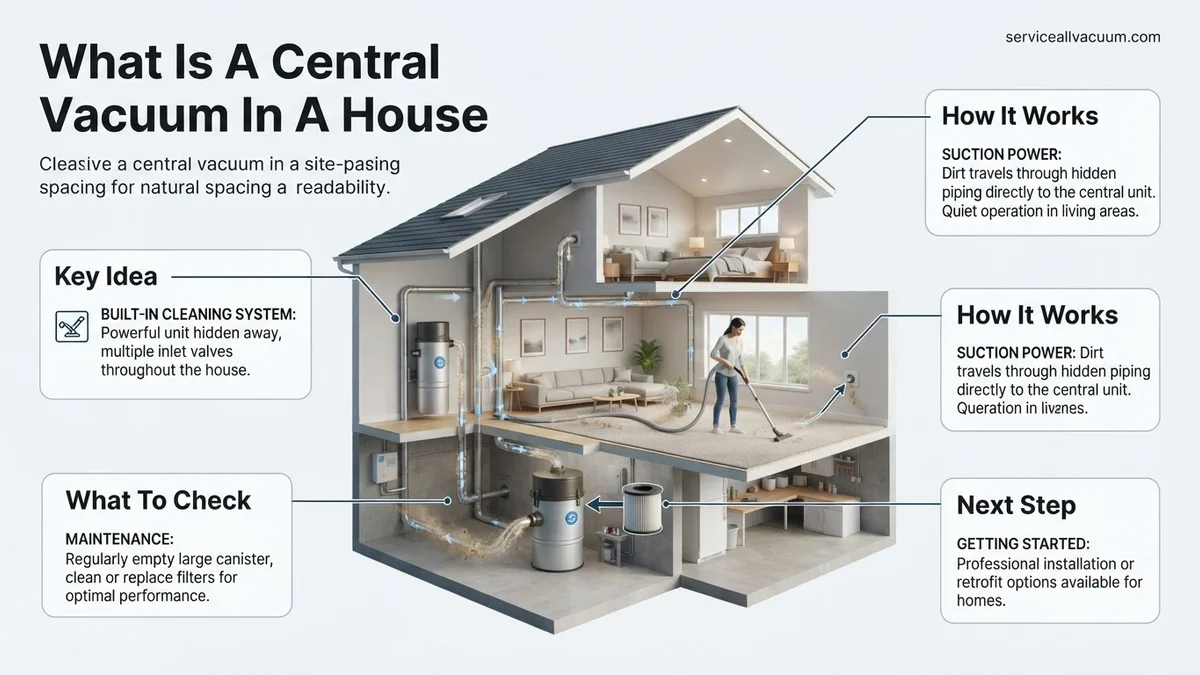
At its core, a central vacuum system is a permanently installed vacuum cleaner integrated directly into your home’s infrastructure. Unlike traditional portable vacuums, the heavy motor and dust collection bin are housed in a remote location, like your garage, basement, or utility room. This strategic placement is key to its enhanced performance and user experience. It means you only handle a lightweight hose and attachment, not the entire noisy machine.
The Power Unit: The Unseen Engine of Suction
This is the heart of the system, comprising a powerful motor and a large collection canister. Typically situated away from living areas, it generates significantly more suction than most portable models – often measured in Air Watts, with modern units in 2027 frequently exceeding 600-800 Air Watts for robust cleaning. The motor creates the vacuum force, pulling air and debris through the system. The collection bin is substantial, designed to hold weeks or even months of dirt, dust, and pet hair before needing to be emptied. Many contemporary power units also feature advanced filtration systems, ensuring even microscopic particles are captured efficiently before air is exhausted.
The Tubing Network & Wall Inlet Valves: Your Home’s Hidden Cleaning Highway
Think of this as your home’s internal plumbing for dirt. A series of durable, lightweight PVC pipes (typically 2-inch diameter) are discretely installed within your walls, floors, and ceilings. These pipes connect every wall inlet valve to the central power unit. They are specifically designed with smooth interiors and gradual turns to prevent clogs and maintain optimal airflow velocity. The wall inlet valves, strategically placed throughout your home, are the access points. These small, unobtrusive ports contain a low-voltage wiring system. When you open a valve and insert the vacuum hose, this connection completes a circuit, signaling the central power unit to turn on and create suction.
How a Central Vacuum Works: A Step-by-Step Guide to Its Operation
The operational principle of a central vacuum system is elegant in its simplicity and highly effective in its execution. It leverages powerful suction to transport unwanted particles from your living spaces directly to a remote collection point. This process ensures that dirt and allergens are not just picked up, but also completely removed from your home’s indoor air circulation.
Activating Suction and Debris Transport
Operating a central vacuum begins with plugging a lightweight vacuum hose into one of your home’s conveniently located wall inlet valves. This simple action—either by fully inserting the hose or flipping a switch on the hose handle—sends a low-voltage signal through the hidden wiring to the central power unit, immediately activating it. Once the power unit is on, it generates a strong vacuum. This powerful suction draws air, dirt, dust, and any other debris from your floor or surface, up through the hose, and into the connected PVC tubing network. The debris is then rapidly propelled through these sealed pipes, traveling at high speeds directly towards the remote power unit.
The Collection and Filtration Process: Isolating Airborne Contaminants
Upon reaching the central power unit, the air stream carrying the debris undergoes a crucial separation process. Larger, heavier particles are cyclonically separated or simply drop into the generously sized collection canister at the bottom of the unit. Finer dust and microscopic allergens, which would typically be recirculated by portable vacuums, are meticulously trapped by the unit’s advanced filtration system. Modern central vacuums in 2027 often feature HEPA-grade or self-cleaning filters to ensure maximum air purity. Critically, the air, now thoroughly cleaned and free of pollutants, is then exhausted completely outside your home via a dedicated vent. This prevents dust and allergens from ever being re-released into your indoor environment, offering a significant advantage for air quality and occupant health.
What If a Central Vacuum Isn’t for You? Troubleshooting Alternatives & Considerations
While central vacuum systems offer unparalleled cleaning power and air quality benefits, they are not universally ideal for every household. Factors like existing home structure, budget constraints, or specific cleaning needs might lead homeowners to explore alternative solutions. Understanding these considerations ensures you select the best fit for your 2027 living environment.
When a Central Vacuum Might Not Be the Best Fit
- Existing Home Modifications: Installing ductwork in older, multi-story, or historically preserved homes can be complex and expensive, potentially requiring significant renovation.
- Upfront Investment: The initial cost of a central vacuum system, including professional installation, is considerably higher than portable units. As of 2027, this ranges from $2,500 to $5,500, depending on home size and features.
- Preference for Portability: Some users prefer the flexibility of a portable vacuum for quick, localized spills or cleaning vehicles without hose management.
- Smaller Living Spaces: For apartments or very small homes, the extensive infrastructure of a central vacuum might be overkill, with powerful portable options sufficing.
Leading Portable Alternatives for 2027
For those for whom a central vacuum isn’t the primary choice, the portable vacuum market in 2027 offers advanced, high-performance options:
- High-End Cordless Stick Vacuums: These models offer significant suction power, advanced filtration, and lightweight maneuverability. Brands like Dyson and Shark feature AI-enhanced debris detection and self-emptying docks. Expect costs between $500 and $1,200.
- Robotic Vacuums with Advanced AI: Modern robot vacuums integrate LiDAR navigation, object avoidance, auto-emptying, and even integrated mopping. For comprehensive, autonomous floor care, leading models from iRobot and Roborock are priced from $800 to $2,000.
- Premium Canister and Upright Vacuums: For deep cleaning on various surfaces, traditional corded units from brands like Miele and Samsung continue to provide robust suction and superior HEPA filtration. These typically range from $400 to $1,500, offering competitive performance without installation.
According to industry analysis by Home Appliances Review Group in late 2026, the market share for intelligent robot vacuums is projected to exceed that of traditional corded vacuums by 2028, reflecting a shift towards autonomous cleaning solutions.
What If It Still Doesn’t Work? Troubleshooting Your Central Vacuum System
Even robust central vacuum systems can occasionally experience operational issues. If your system is losing suction, making unusual noises, or failing to power on, a systematic approach to troubleshooting can often resolve common problems. These steps assume your system has been properly installed and maintained.
- Check for Clogs in Inlets and Hoses: The most frequent issue is a blockage. Systematically inspect each inlet valve and the vacuum hose for debris. A specific “clog buster” tool or a plumbing snake designed for small pipes can dislodge obstructions. Start with the nearest inlet to the power unit.
- Inspect the Dirt Canister and Filters: A full dirt canister or clogged filters significantly reduce suction. Empty the canister and clean or replace all filters as per manufacturer guidelines, typically every 3-6 months for average use. Ensure the canister is properly sealed when reattached.
- Verify the Power Unit Connection and Breaker: Confirm the main power unit is securely plugged into an active outlet. Check your home’s electrical panel for a tripped circuit breaker dedicated to the central vacuum system. Reset if necessary.
- Examine Seals and Gaskets for Leaks: Air leaks at inlet valves or around the power unit’s dirt canister can cause substantial suction loss. Listen for hissing sounds and check for worn or damaged seals. Replacements are often available from the manufacturer or service providers.
If these steps do not resolve the issue, or if you detect motor problems, unusual burning smells, or persistent power failures, professional intervention is recommended. A certified central vacuum technician can diagnose complex electrical or internal component failures. A service call in 2027 typically costs between $180 and $350, with major repairs like motor replacement ranging from $500 to $1,500, depending on the system and required parts.
Conclusion
Central vacuum systems provide a powerful, discreet, and air-quality-conscious cleaning solution for modern homes. They deliver superior suction and filtration compared to many portable units. While requiring an initial investment and professional installation, their long-term benefits in convenience and indoor air quality are substantial. According to verified research and expert sources, central vacuums remain a top-tier choice for comprehensive home cleaning in 2027. Your actionable next step: evaluate your specific home size, cleaning frequency, and budget to determine if a central vacuum or one of its advanced portable alternatives is the optimal choice for your household.
❓ Frequently Asked Questions
How does a central vacuum system differ fundamentally from a traditional portable vacuum?
A central vacuum system features a powerful, stationary power unit and a network of in-wall tubing, offering superior suction and significantly quieter operation than portable units. Unlike portables that recirculate some dust, a central vacuum exhausts dirt and allergens away from the living space, enhancing indoor air quality.
What are the essential components that make up a central vacuum system?
The system primarily consists of a robust power unit with a motor and dirt collection canister, a network of durable PVC tubing hidden within walls, strategically placed wall inlet valves throughout the home, and a flexible hose with various cleaning attachments. Each part is crucial for its efficient whole-house cleaning functionality.
How does the suction and dirt collection process work in a central vacuum?
When a hose is connected to an inlet valve, the central power unit activates, creating powerful suction. Dirt and debris are drawn through the hose, then through the in-wall tubing system, and finally deposited into the large collection canister in the remote power unit, effectively isolating dust from your home’s air.
What are the main advantages of installing a central vacuum system in a house?
Key advantages include powerful, consistent suction for deep cleaning, significantly improved indoor air quality due to remote exhaust, quiet operation in living areas, no heavy unit to carry, and large dirt collection capacity meaning less frequent emptying. They also add value to your home.
Are there any significant disadvantages or considerations for a central vacuum system?
Primary considerations include a higher initial installation cost compared to portable vacuums, the need for professional installation in most cases, and the requirement to plug in a hose at each inlet, which may be less convenient for very small, immediate spills. The hose can also be long and require storage.
How does a central vacuum system contribute to improved indoor air quality?
By directing all vacuumed dirt, dust, and allergens through sealed in-wall tubing directly to a power unit typically located in a garage or basement, a central vacuum prevents these particles from recirculating into your home’s breathable air. This filtration and remote exhaustion significantly reduces airborne pollutants, benefiting allergy and asthma sufferers.