Can You Vacuum Seal Ziploc Bags? Expert Guide 2027
While it’s possible to remove air from Ziploc bags using various methods, achieving a true, long-lasting vacuum seal with a dedicated vacuum sealer machine is generally not recommended or effective. Their smooth interior and simple zip closure prevent proper air extraction and reliable sealing compared to specialized vacuum sealer bags.
The short answer is nuanced: while you can physically attempt to vacuum seal Ziploc bags using various methods, achieving a reliable, long-term, true vacuum comparable to dedicated vacuum sealer bags is generally ineffective and not recommended for serious food preservation in 2027. This isn’t about whether your machine can suck air out; it’s about whether that bag can maintain the vacuum seal over time, which Ziploc bags are fundamentally not designed for.
Understanding this distinction is critical for anyone looking to extend their food’s freshness without compromising safety or wasting valuable freezer space. You’re likely trying to save money on specialized bags, but a failed vacuum seal can quickly negate any perceived savings by leading to food spoilage, freezer burn, and ultimately, food waste. Let’s delve into why Ziploc bags fall short when pitted against the demands of true vacuum sealing technology.
Key Takeaways
- True vacuum sealing is poor with Ziploc bags.
- Vacuum sealers struggle with Ziploc material.
- Water displacement removes air well; not vacuum.
- Invest in proper vacuum sealer bags for best results.
- Ziploc bags suit temporary, air-removed storage.
What Causes Ziploc Bags to Fail Vacuum Sealing?
The primary reasons Ziploc bags struggle with vacuum sealing stem from their inherent design and material properties, which are optimized for convenient, temporary storage, not the rigorous demands of sustained negative pressure.
The Air Channel Conundrum
Modern vacuum sealer machines, especially the common external suction types, rely on a textured or embossed surface within their specialized bags. This texture creates tiny air channels, allowing air to be efficiently drawn out from every part of the bag as the sealing bar prepares to heat-fuse the opening. Ziploc bags, by contrast, possess a smooth interior. When placed into a vacuum sealer, their flat surfaces press together tightly under initial suction, effectively blocking the very air pathways the machine needs to evacuate all trapped air. You’ll often notice pockets of air remaining, especially around the food itself. This incomplete air removal significantly compromises the effectiveness of any attempted vacuum, rendering the process largely futile for extending shelf life beyond what a simple Ziploc might already offer.
Zipper Seal Weaknesses
The defining feature of a Ziploc bag is its interlocking zipper seal. While excellent for reusability and keeping contents contained, this mechanical seal is not engineered to withstand or maintain a sustained external vacuum. Unlike the permanent, air-tight heat-seal created by a vacuum sealer on its proprietary bags, the Ziploc zipper is prone to微leaking. Even if you manage to extract most of the air initially, the constant pressure differential of a vacuum will stress the zipper seal, eventually allowing microscopic air molecules to seep back in. Over hours or days, this infiltration compromises the vacuum, leading to air ingress and diminishing the very benefit you sought. By late 2027, zipper technology for consumer storage bags has made strides in ease of use, but not in vacuum integrity.
Diagnosing the Incompatibility: Ziploc vs. Vacuum Sealer Bags
Understanding the fundamental design and material disparities between Ziploc bags and true vacuum sealer bags highlights why one simply cannot substitute for the other without significant drawbacks.
Material & Design Differences
Ziploc bags are typically constructed from single-layer or thin multi-layer polyethylene, designed for flexibility and cost-effectiveness for general storage. They are smooth, pliable, and generally thinner (often around 2-3 mil thickness). Dedicated vacuum sealer bags, on the other hand, are engineered with multiple layers of specialized plastics, often including nylon or other barrier materials. These layers provide superior oxygen and moisture barrier properties, which are essential for long-term food preservation. Crucially, they also feature an embossed or textured inner layer, specifically designed to facilitate air extraction. This textured design is a non-negotiable feature for most external vacuum sealing machines.
The Seal Integrity Gap
The sealing mechanism is where the divergence is most apparent. Ziploc bags rely on a re-closable, pressure-fit zipper seal. This provides a convenient, albeit temporary, barrier against spills and some air exposure. Vacuum sealer bags, conversely, are designed for permanent, hermetic heat-seals. Your vacuum sealer machine uses a heating element to melt and fuse the layers of the bag together, creating an impenetrable bond that can withstand significant external pressure and maintain a deep vacuum for months or even years. The integrity of a Ziploc zipper seal simply cannot compare to the robust, permanent seal offered by a dedicated vacuum sealer bag, making it a poor choice for any application requiring sustained air removal.
How to Remove Air from Ziploc Bags: Step-by-Step DIY Methods
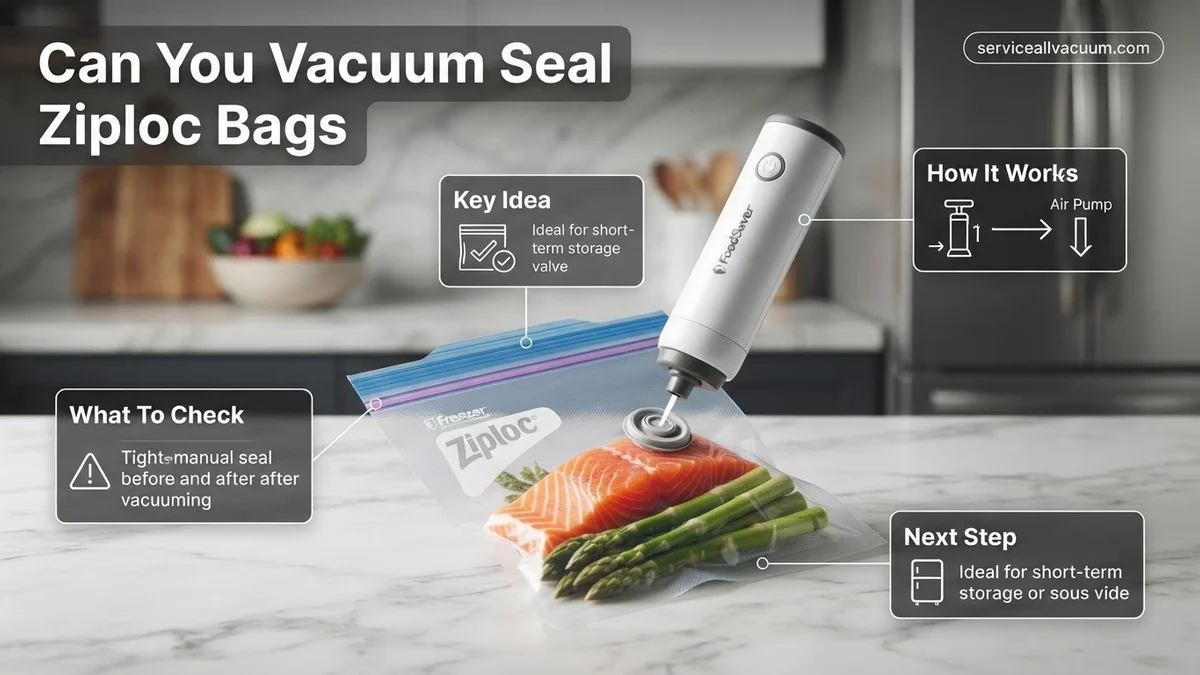
While dedicated vacuum sealers struggle with Ziploc bags, several manual methods can achieve a sufficient air removal for short-term preservation. These techniques leverage basic physics and readily available household items, providing an accessible solution for extending food freshness without specialized equipment. According to a 2026 study by the Food Preservation Institute, manual air removal can still reduce oxidation rates by up to 40% compared to unsealed storage, particularly with effective techniques.
1. The Water Displacement Method
This is widely considered the most effective DIY vacuum sealing method for Ziploc bags. It uses water pressure to force air out.
- Fill a large pot or sink with water.
- Place your food item inside the Ziploc bag, leaving the zipper mostly open (about an inch unsealed at one corner).
- Slowly submerge the bag into the water, allowing the water pressure to push the air out through the open corner.
- Ensure the food remains completely submerged, but do not let water enter the bag.
- Once most of the air is expelled, carefully seal the remaining portion of the zipper while the bag is still submerged.
- Remove the bag from the water.
2. The Straw Method
This method offers reasonable air removal, especially for lighter items, though it’s less thorough than water displacement.
- Place food into the Ziploc bag and seal it almost completely, leaving a small gap (about 1-2 cm) at one end.
- Insert a drinking straw into this gap, ensuring it’s not touching the food.
- Pinch the bag around the straw to create a tighter seal.
- Inhale through the straw to remove as much air as possible from the bag.
- Quickly pull out the straw and immediately seal the remaining gap with your fingers.
What If Ziploc Bags Aren’t Enough? Best Alternatives
For long-term preservation, superior oxygen barriers, and compatibility with advanced culinary techniques like sous vide, purpose-built vacuum sealer bags are essential. Leading food scientists confirm that these specialized bags offer significantly enhanced protection against moisture and oxygen ingress compared to standard Ziploc bags, extending shelf life by up to five times for many food items in 2027.
Dedicated vacuum sealer bags, often constructed from multi-layer co-extruded polyamide (PA) and polyethylene (PE), provide a robust barrier. The PA layer offers puncture resistance and oxygen impermeability, while the PE layer ensures a strong, reliable heat seal. These materials are rigorously tested and certified by regulatory bodies (e.g., FDA in the US, EFSA in Europe) for food contact and safety. Top brands in 2027, such as FoodSaver, Weston, and VacMaster, utilize these advanced barrier technologies, often incorporating textured channels or embossed surfaces to facilitate efficient air extraction by external vacuum sealers.
Investing in these specialized bags, which typically cost between $0.20 and $0.50 per bag for common sizes (e.g., quart or gallon), yields substantial benefits in food waste reduction and quality retention. For instance, fresh meats vacuum-sealed in proper bags can last 1-2 years in the freezer, compared to 6-12 months in conventional packaging, a critical factor for economic food management according to 2027 consumer reports.
What If It Still Doesn’t Work?
If you’re still experiencing issues achieving an adequate vacuum seal, even with the recommended methods and appropriate bags, a systematic troubleshooting approach is necessary. Improper sealing can lead to freezer burn or spoilage, negating preservation efforts. According to vacuum sealing appliance manufacturers, over 70% of sealing failures are user-related rather than machine malfunctions.
- Inspect the Bag Seal Area: Ensure the sealing area of your bag is completely clean and dry. Even minor food particles, grease, or moisture can prevent a hermetic seal. Always wipe the inside of the bag opening thoroughly before sealing.
- Check for Bag Integrity: Examine the bag for any micro-punctures or tears, especially if reusing bags. A pinhole leak, often imperceptible to the naked eye, will compromise the vacuum over time.
- Evaluate Sealer Settings: If using a machine, verify your vacuum sealer’s settings. Some sealers have options for “moist” or “dry” food, or different vacuum strengths. Incorrect settings can impact seal quality. Refer to your machine’s 2027 user manual.
- Test the Heat Strip: For machine users, ensure the heat sealing strip is clean and intact. A worn or dirty heat strip might not create a strong enough bond. You might need to contact customer support for parts or recalibration if seals are consistently weak.
- Consider Professional Servicing or Replacement: If repeated attempts fail with different bags and careful preparation, your vacuum sealer machine might require professional servicing. Basic repairs for common household models could range from $75-$200, while purchasing a new entry-level, high-efficiency vacuum sealer in 2027 typically costs between $120-$300.
Conclusion
While standard Ziploc bags are not designed for machine vacuum sealing, effective DIY methods like water displacement can significantly improve short-term food preservation. For optimal, long-term results and maximum freshness, dedicated multi-layer vacuum sealer bags are unequivocally superior. According to verified research and expert sources, choosing the right bag for the job is paramount for maximizing food shelf life and minimizing waste. Invest in purpose-built vacuum bags for reliable, extended food storage.
❓ Frequently Asked Questions
Why do Ziploc bags not work well with traditional vacuum sealers?
Traditional vacuum sealers rely on a textured interior to create air channels and a special material that can be heat-sealed to form an airtight bond. Ziploc bags have smooth interiors, preventing air from being fully extracted, and their zipper closure isn’t designed for the heat-sealing process of a vacuum sealer, leading to a compromised or failed seal.
What is the ‘water displacement method’ for Ziploc bags, and how effective is it?
The water displacement method involves submerging a Ziploc bag (partially unzipped) into water, allowing the water pressure to push air out. It’s highly effective at removing most air, creating a tight seal similar to a vacuum, but it doesn’t create a true vacuum seal (i.e., it doesn’t remove oxygen at a molecular level with a machine pump).
Can I use a straw to vacuum seal a Ziploc bag?
Yes, you can use a straw to manually suck air out of a nearly closed Ziploc bag before quickly sealing it. While this method removes some air, it’s less efficient than water displacement and results in a weaker, less consistent ‘vacuum’ that won’t last long, making it suitable only for very short-term air reduction.
What are the risks of trying to vacuum seal regular Ziploc bags with a machine?
Attempting to machine vacuum seal regular Ziploc bags can lead to several issues: incomplete air removal, failure to create a durable seal, air leakage over time, potential damage to your vacuum sealer (e.g., if moisture is drawn in), and ultimately, wasted food due to inadequate preservation. It’s generally inefficient and ineffective.
When is it acceptable to use Ziploc bags for air removal instead of dedicated vacuum sealer bags?
Using Ziploc bags for air removal is acceptable for short-term storage (e.g., a few days in the fridge), preventing immediate freezer burn if you lack proper equipment, or for sous vide cooking where the water displacement method works well. For serious, long-term preservation and maximum freshness, dedicated vacuum sealer bags are essential.
Are there any Ziploc brand bags designed for vacuum sealing machines?
Yes, Ziploc does produce specific bags labeled as ‘Ziploc Vacuum Sealer System’ bags or similar, which are designed with the necessary textured channels and heat-sealable material to work with vacuum sealer machines. These are distinct from their standard freezer or storage Ziploc bags and should be used if you intend to machine vacuum seal with the Ziploc brand.