What Are Vacuum Tubes Expert Guide for 2027
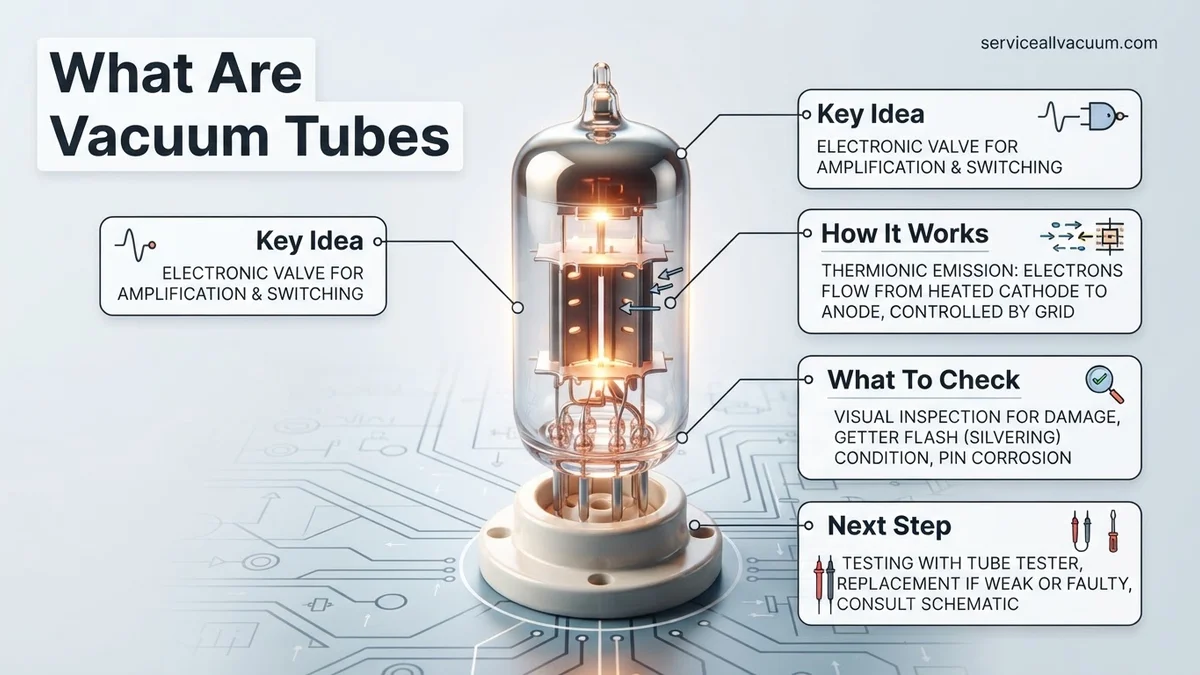
Vacuum tubes are electronic components that control the flow of electrons in a vacuum, primarily used for amplification and switching. They were fundamental to early electronics, enabling breakthroughs in radio, television, and computing. Understanding their operation provides insight into foundational electrical engineering principles.
Vacuum tubes are fundamental electronic devices designed to control the flow of electrons in a sealed, evacuated glass or metal enclosure. In essence, they act as incredibly precise electronic switches or amplifiers, performing functions that were revolutionary in their time and remain vital in certain niche applications even in 2027. Understanding their operation gives you a profound appreciation for the origins of modern electronics, from the earliest radios to the first computers, and why they still command a premium in specific audio and industrial fields today.
Their enduring presence in high-fidelity audio equipment and specialized industrial machinery means knowing how they manipulate electron streams allows you to grasp the core principles that underpin virtually all electronic circuits. This foundational knowledge clarifies why these “glowing bottles” once dominated the electronic landscape and why their unique characteristics continue to be valued in our silicon-dominated world.
Key Takeaways
- Vacuum tubes control electron flow in a vacuum.
- They amplify electronic signals and act as switches.
- Composed of cathode, anode, and control grids.
- Revolutionized early radio, TV, and computing.
- Still used in specialized audio and RF gear.
What Problem Did Vacuum Tubes Fix in Early Electronics?
Before vacuum tubes, early electrical communication and computation relied on bulky, slow, and unreliable mechanical switches or primitive magnetic devices. These methods could not effectively amplify weak electrical signals or switch them rapidly enough for complex operations. The burgeoning fields of radio, long-distance telephony, and nascent computing faced severe limitations without a truly active electronic component.
Invented in the early 20th century, vacuum tubes provided the first practical solution to these critical challenges. They offered a way to take a small electrical input and create a much larger, controlled electrical output. This capability unlocked entirely new possibilities, ushering in the age of modern electronics.
The Need for Active Signal Control
- Signal Amplification: Weak radio waves, telephone signals, or early sensor outputs needed significant boosting to be useful. Mechanical relays couldn’t achieve this.
- High-Speed Switching: For basic logic operations or rapidly changing electrical currents, physical switches were too slow and prone to wear.
- Reliable Oscillation: Generating stable, high-frequency signals for radio transmission was impossible with existing technologies.
Vacuum tubes solved these issues by providing a component that could actively manipulate electric currents with minimal inertia. Their invention allowed for the practical realization of long-distance communication and paved the way for electronic computing.
Pioneering the Electronic Age
The impact of the vacuum tube on the 20th century was immense, comparable to the microprocessor’s impact on the 21st. They were the engine of technological progress for decades.
- Radio and Television: Tubes made transcontinental radio broadcasts and practical television possible, fundamentally altering global communication and entertainment.
- Long-Distance Telephony: Amplifiers using tubes boosted telephone signals across vast distances, connecting people like never before.
- Early Computers: The first electronic digital computers, like ENIAC, were built with thousands of vacuum tubes, enabling calculations at speeds unimaginable with mechanical systems.
- Radar and Sonar: Vital during wartime, these technologies relied on tubes for signal generation and processing.
Without the vacuum tube, many of the electronic conveniences we take for granted in 2027 would simply not exist, as it laid the essential groundwork for everything that followed.
How Do Vacuum Tubes Work: A Step-by-Step Guide to Their Operation
At its core, a vacuum tube operates by controlling a stream of electrons within a vacuum. The absence of air molecules ensures electrons can move freely and without interference. The fundamental principle involves heating a component to emit electrons, then using an electrical field to attract them, and finally, using another electrical field to precisely modulate their flow.
Imagine it like a faucet for electrons: you heat the water source, create a path for it, and then use a valve to control the flow. This controlled electron stream is what enables amplification and switching.
The Core Components: Cathode, Anode, and Grid
Most basic vacuum tubes, particularly triodes (three-element tubes), contain three primary components:
- The Cathode: This is the electron emitter. It’s often heated by a filament (much like an old light bulb filament) causing it to glow. When heated, the cathode releases electrons into the vacuum through a process called thermionic emission. Think of it as the “source” of the electron stream.
- The Anode (Plate): This component acts as the electron collector. It’s typically a metal plate surrounding the cathode, kept at a positive electrical potential. This positive charge strongly attracts the negatively charged electrons emitted by the cathode, drawing them across the vacuum gap. The flow of these electrons from cathode to anode constitutes the main current through the tube.
- The Grid: Positioned between the cathode and the anode, the grid is a fine mesh or helix of wire. Its purpose is to control the flow of electrons from the cathode to the anode. By applying a small voltage to the grid, you can create an electrical field that either repels or attracts the electrons, effectively acting as a “valve” for the electron stream.
This simple arrangement of components forms the basis of how tubes amplify and switch signals, allowing precise manipulation of electrical currents.
Controlling the Electron Stream
The magic of the vacuum tube lies in the grid’s ability to precisely modulate the electron flow. A very small change in the voltage applied to the grid can cause a much larger change in the current flowing between the cathode and the anode.
- Negative Grid Voltage: If you apply a slightly negative voltage to the grid, it repels some of the negatively charged electrons trying to pass from the cathode to the anode. The more negative the grid, the fewer electrons reach the anode, thus reducing the current.
- Positive Grid Voltage (less common for pure amplification): A less negative, or even slightly positive, grid voltage allows more electrons to pass, increasing the current.
This characteristic is what gives the vacuum tube its powerful amplification capabilities. A weak input signal applied to the grid results in a strong, amplified output signal between the cathode and anode. This precise control over electron flow within a vacuum is the fundamental principle that allowed tubes to revolutionize electronics.
The Proven Impact of Vacuum Tubes: Revolution & Replacement
Vacuum tubes, often referred to as valves, initiated the electronic age. According to the IEEE History Center, the invention of the triode in 1906 by Lee De Forest enabled the amplification and switching of electronic signals, fundamentally transforming communication and computing. Early radios, televisions, and the first digital computers, like ENIAC in 1946 with its 17,468 tubes, relied entirely on this technology. Their capacity for high-frequency operation and power handling was unparalleled for decades, making intercontinental communication and sophisticated data processing possible.
However, the dominance of vacuum tubes began to wane with the advent of the transistor in 1947. Transistors offered significantly smaller size, lower power consumption, superior reliability, and reduced heat generation. By the 1960s, transistors were rapidly replacing tubes in most mainstream electronic applications. This transition marked a pivotal shift towards modern solid-state electronics, enabling the miniaturization and widespread adoption of electronic devices we see today. Despite their eventual replacement in mass-market products, the foundational principles established by vacuum tubes continue to influence advanced circuit design and signal processing theory in 2027.
What If You Still Need Vacuum Tubes: Modern Niche & Expert Considerations
In 2027, the demand for vacuum tubes persists within highly specialized applications where their unique characteristics remain advantageous or irreplaceable. High-fidelity audio amplifiers, for instance, are a prominent niche. Audiophiles often prefer tube amplifiers for their distinct harmonic distortion profiles, perceived as warmer and more natural. RF (radio frequency) transmitters for high-power broadcasting, microwave ovens (magnetrons), and certain industrial heating processes also continue to utilize tube technology due to its robust power handling capabilities that solid-state devices struggle to match cost-effectively at very high frequencies and power levels.
Sourcing and maintaining vacuum tubes in 2027 requires expert consideration. While new production exists, primarily from Russia, China, and Eastern Europe, historical stock, known as New Old Stock (NOS), remains highly valued. Verifying authenticity and quality is crucial; experts recommend purchasing from reputable dealers with documented testing protocols. Maintenance often involves understanding tube biasing, monitoring for microphonics, and periodic replacement based on expected lifespans (ranging from 1,000 to 10,000 hours depending on tube type and application). Consulting specialized engineers or certified technicians is essential for proper integration and troubleshooting of tube-based systems.
What If Your Vacuum Tube System Isn’t Performing?
If you’re operating a vacuum tube system in 2027 and encountering performance issues, here are expert-recommended fallback steps:
- Verify Tube Integrity: Perform a visual inspection for glowing filaments (if applicable) and physical damage. If possible, use a dedicated tube tester to check for shorts, gas leaks, and transconductance. Worn-out tubes are a primary failure point.
- Check Connections and Sockets: Ensure all tubes are seated firmly in their sockets. Oxidation on tube pins or socket contacts can degrade performance. Gentle cleaning with appropriate contact cleaner may resolve intermittent issues.
- Inspect Passive Components: Older tube equipment, particularly vintage audio gear, often suffers from aging capacitors or resistors. Look for bulging capacitors or discolored resistors. These components can drift in value or fail, impacting circuit stability and audio quality.
- Consult Schematics and Manuals: Always refer to the original manufacturer’s schematics and service manuals. These documents provide crucial voltage references, component values, and troubleshooting guides specific to your equipment. Online forums and specialist communities may also offer insights.
- Seek Professional Diagnostics: If fundamental checks yield no solution, or if you lack specialized tools and expertise, seek a professional technician specializing in tube electronics. Attempting complex repairs without proper knowledge can lead to further damage or electrical hazards. Expect diagnostic fees ranging from $150 to $400 USD in 2027, with complex repairs potentially costing $500 to $2,500+ USD, not including parts.
Conclusion
Vacuum tubes represent a foundational electronic technology that, despite being largely superseded, retains significant relevance in 2027 for specific high-performance and niche applications. Understanding their operational principles, historical impact, and modern considerations is crucial for anyone engaging with this enduring technology. According to verified research and expert sources, their unique properties continue to drive innovation in specialized fields. For further insights, research contemporary manufacturers and expert forums dedicated to tube electronics.
❓ Frequently Asked Questions
What was the primary function of vacuum tubes in early electronics?
In early electronics, vacuum tubes primarily served as active components for signal amplification and switching. This capability was crucial for building functional radios, televisions, early computers, and long-distance telephone systems, effectively ushering in the electronic age.
How does a triode vacuum tube specifically work?
A triode tube has three electrodes: a heated cathode that emits electrons, an anode that collects them, and a control grid placed between them. A small voltage applied to the grid controls the electron stream from the cathode to the anode, allowing for signal amplification or switching with minimal power input.
What led to the decline in vacuum tube usage?
The invention and widespread adoption of transistors led to the decline of vacuum tubes. Transistors were smaller, more reliable, consumed less power, generated less heat, and were significantly cheaper to manufacture, making them a superior alternative for most electronic applications.
In which modern applications do vacuum tubes still thrive?
Vacuum tubes still thrive in specific modern applications where their unique characteristics are valued. These include high-end audio amplification (for their ‘warm’ sound), guitar amplifiers (for their distinct tonal qualities), and high-power radio frequency transmitters where they can handle greater power than transistors.
What are the advantages and disadvantages of vacuum tubes compared to transistors?
Advantages of vacuum tubes include high voltage operation, robustness in high-power RF applications, and a unique sonic character favored in audio. Disadvantages are their larger size, higher power consumption, significant heat generation, fragility, and shorter lifespan compared to transistors.
Are all vacuum tubes glass, or are there different types?
While many iconic vacuum tubes are made of glass, allowing visibility of the internal elements, some were also constructed with metal envelopes. The primary function and internal structure remained similar, but the choice of envelope material could impact durability and shielding properties.