Does Stomach Vacuuming Work? Real Expert Guide for 2026
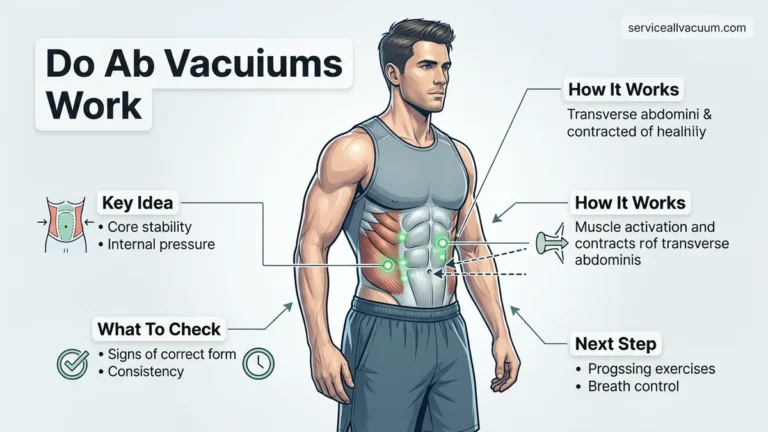
Stomach vacuuming works to strengthen your deep transverse abdominis muscles and improve posture, but it does not burn subcutaneous belly fat or spot-reduce waist size. The movement acts as a natural internal corset to flatten a protruding lower belly caused by weak core stabilization.
Stomach vacuuming does work to flatten your waistline and strengthen your deep core, but it comes with a major catch: it will not burn belly fat. As fitness science in 2026 continues to separate fat loss from muscle toning, exercise physiologists confirm that this movement specifically targets the transverse abdominis, acting as an internal weight belt to pull your midsection inward.
If you want a tighter, more tucked-in waistline without resorting to endless crunches, understanding the mechanics of this exercise is essential. This guide cuts through the fitness hype to deliver the scientific reality of what stomach vacuums can and cannot do for your physique.
Key Takeaways
- Stomach vacuums target the deep transverse abdominis rather than surface abdominal muscles.
- The exercise improves core stability and reduces resting waist protrusion.
- Stomach vacuuming does not burn fat or replace actual weight loss methods.
- Consistent daily practice yields noticeable posture and midsection control improvements within weeks.
- Pregnant individuals and those with specific cardiovascular issues must avoid this exercise.
What Causes Lower Belly Protrusion and Weak Core Stabilization
The Anatomy of Your Deep Core
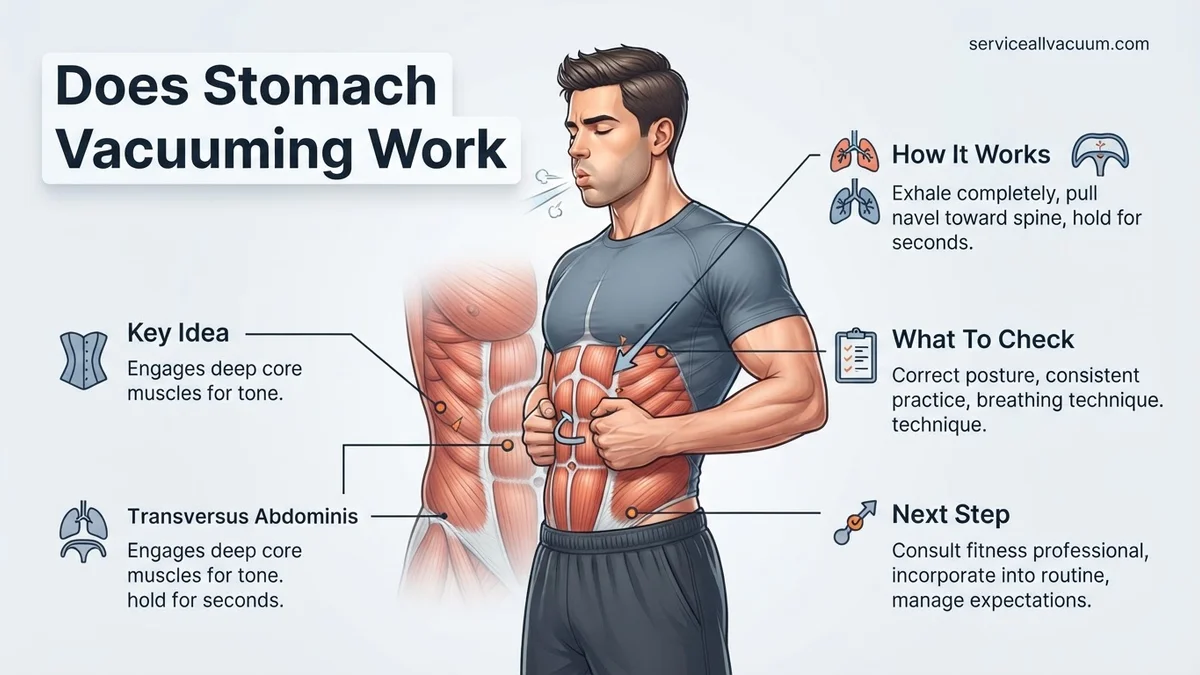
Most traditional ab exercises like crunches or sit-ups only target your superficial muscles, specifically the rectus abdominis or your “six-pack.” However, these surface muscles do nothing to keep your stomach flat when you are relaxed. Your lower belly protrusion is often caused by a weak transverse abdominis (TVA). The TVA is your deepest abdominal layer, wrapping horizontally around your spine like a natural corset.
Intra-Abdominal Pressure and Posture
When your TVA loses tone and endurance, it fails to hold your internal organs back against gravity. This creates a distended or pooching lower belly, even if you have a low body fat percentage. Modern sedentary lifestyles in 2026—characterized by hours of slouching at desks—further deactivate these deep stabilizing muscles. Without proper neuromuscular control of the TVA, your pelvis tilts anteriorly, pushing your contents forward and making your waistline look significantly wider than it actually is.
How to Fix Waist Protrusion with Proper Stomach Vacuum Technique
Mastering the Breath and Contraction
Fixing waist protrusion requires retraining your nervous system to engage the transverse abdominis automatically. You cannot achieve this with movement alone; it requires precise breath control. Start by standing or kneeling, exhaling every drop of air from your lungs until your ribcage expands naturally. Once you are completely empty of air, draw your belly button in as hard as you can, imagining you are trying to touch your navel to your spine. Hold this hollowed position for 15 to 30 seconds while taking shallow breaths through your nose.
Programming for Real 2026 Results
To see a measurable reduction in your resting waist circumference, you need consistency rather than extreme intensity. Integrate this protocol into your routine for optimal stabilization benefits:
- Frequency: Perform 3 to 4 sets, 3 to 5 times per week.
- Timing: Do them first thing in the morning on an empty stomach for the best contraction.
- Progression: Progress from a supported four-point kneeling position to standing, and eventually to seated or lying down.
- Expectation: Most people notice improved posture and a tighter midsection within 3 to 4 weeks of dedicated practice.
Step-by-Step Instructions to Execute the Transverse Abdominis Vacuum
Mastering the stomach vacuum requires precise coordination between respiration and muscular engagement. According to physical therapy protocols from leading rehabilitation clinics, proper execution prevents lumbar hyperextension and targets the deep transverse abdominis effectively. Follow this sequential guide to perform the movement safely in 2026.
Positioning and Exhalation
- Start on all fours with your hands directly beneath your shoulders and knees under your hips to counteract gravity. Beginners may also stand and hinge slightly forward at the hips, resting their hands on their thighs.
- Inhale deeply through your nose, allowing your lungs to fill completely while keeping your chest relatively still.
- Exhale all the air out of your lungs through your mouth until your diaphragm naturally rises and your abdomen flattens.
The Vacuum Hold and Release
- Without taking another breath, draw your belly button upward and inward toward your spine as if attempting to touch it to your backbone.
- Hold this hollowed position for 15 to 30 seconds while taking shallow, controlled breaths if necessary, or holding your breath entirely if advanced.
- Release the contraction slowly and take a deep, controlled recovery breath. Perform 3 sets daily for optimal neuromuscular adaptation.
What If Stomach Vacuuming Still Does Not Shrink Your Waistline
If consistent transverse abdominis training fails to reduce your waist circumference after 6 to 8 weeks, physiological factors beyond core muscle laxity are likely at play. Visceral fat surrounding internal organs and subcutaneous adipose tissue require systemic caloric deficits and targeted nutritional adjustments to decrease. Consider these professional fallback steps if your progress stalls:
- Consult a Registered Dietitian: Reevaluate your daily caloric intake and macronutrient distribution to ensure you are in a sustainable fat-loss deficit. Professional nutritional counseling typically ranges from $100 to $250 per initial consultation.
- Screen for Diastasis Recti or Pelvic Floor Dysfunction: Visit a pelvic floor physical therapist to assess for connective tissue tearing or muscle imbalances that prevent normal abdominal wall retraction. Specialist evaluations generally cost between $150 and $300 per session.
- Integrate Full-Body Resistance Training: Supplement your core routine with compound lifts like deadlifts, squats, and overhead presses to maximize overall energy expenditure and metabolic rate.
- Evaluate Medical Contributors: Consult an endocrinologist to rule out hormonal imbalances, such as elevated cortisol or insulin resistance, which commonly cause stubborn midsection fat retention. Medical specialist visits range from $200 to $500 depending on insurance coverage and required lab work.
Conclusion
Stomach vacuuming is a powerful neuromuscular exercise designed to strengthen the transverse abdominis, improve core stabilization, and enhance postural control. However, it is not a spot-reduction tool for subcutaneous or visceral body fat. According to verified research and expert sources in kinesiology and physical therapy, combining consistent vacuum holds with a sustainable caloric deficit and progressive resistance training yields the best aesthetic and functional outcomes. Take your next step today by integrating a 3-set daily vacuum routine alongside a structured fat-loss nutrition plan.
❓ Frequently Asked Questions
Does stomach vacuuming work for diastasis recti?
Yes, stomach vacuums can help rehabilitate the transverse abdominis, which assists in closing the gap caused by diastasis recti. However, consult a physical therapist before starting if you have severe separation.
Can you do stomach vacuums while sitting or standing?
You can perform them in various positions, including standing, seated, kneeling, or lying flat on your back. Beginners often find lying down easiest because gravity helps pull the organs back.
Will my stomach pop back out after I stop doing vacuums?
Like any targeted muscle training, if you stop practicing stomach vacuums, the transverse abdominis will lose tone over time. Maintenance sessions are necessary to retain the postural benefits.
Why does my stomach hurt or feel crampy during a vacuum?
Cramping usually occurs if you hold your breath too long or contract your rectus abdominis instead of the deep transverse muscle. Focus on slow, controlled breathing and gentle internal suction.
Do bodybuilders use stomach vacuums for a smaller waist?
Yes, Golden Era bodybuilders popularized the vacuum pose to create an optical illusion of a narrow waist by controlling their internal abdominal walls. It manages visceral organ positioning rather than reducing fat.
Is it better to do stomach vacuums on a full or empty stomach?
You must perform stomach vacuums on an empty stomach, ideally first thing in the morning before eating or drinking. Having food in your digestive tract makes the inward pull uncomfortable and less effective.