Does Stomach Vacuum Work? Real Results and 2026
Yes, stomach vacuums work by strengthening the deep transverse abdominis muscle to improve core control and posture, but they do not burn belly fat or alter your underlying anatomy. Real waist-cinching results come from combining this internal pressure training with proper execution and patience.
The short answer is yes, stomach vacuums do work, but not by burning belly fat. If you want a tighter waistline and better internal core control in 2026, this isometric breathing exercise targets the exact muscle responsible for pulling your stomach inward like a natural corset.
Many people expect miracles from fitness trends, but understanding the biomechanics reveals why this technique shrinks waist measurements without dropping pounds on the scale.
Key Takeaways
- Stomach vacuums target the transverse abdominis, your body’s natural internal weight belt.
- The exercise improves core stability, posture, and distension control.
- Stomach vacuums do not cause spot fat reduction or burn subcutaneous belly fat.
- Consistent daily or weekly practice yields visible improvements in waist tautness.
- Proper breathing mechanics and empty-stomach execution are vital for safe results.
What Causes Lower Belly Protrusion and Weak Transverse Abdominis Control
The Anatomical Culprit Behind the Pooched Stomach
You might wonder why your lower belly pushes outward even when your body fat percentage is relatively low. The issue rarely stems from subcutaneous fat. Instead, it usually points to a weak transverse abdominis, the deepest layer of your core muscles that wraps horizontally around your torso.
When this internal muscle lacks tone, it fails to hold your internal organs back against gravity. Your organs push forward, creating a protruding lower belly and a wider waist appearance. Traditional crunches and sit-ups completely miss this muscle group because they only target your outer superficial layers.
Intra-Abdominal Pressure and Postural Collapse
Modern sedentary lifestyles in 2026 often cause people to sit slouched for hours, turning off deep core engagement completely. This postural collapse weakens the neurological connection between your brain and your transverse abdominis.
- Weakened internal pressure regulation lets your stomach contents spill forward.
- Chronic slouching lengthens and deconditions the deep core stabilizers.
- Superficial ab training overdevelops the outer walls while leaving the internal girdle weak.
How to Fix Waist Protrusion with the Proper Stomach Vacuum Technique
Mastering the Mechanics of the Vacuum Hold
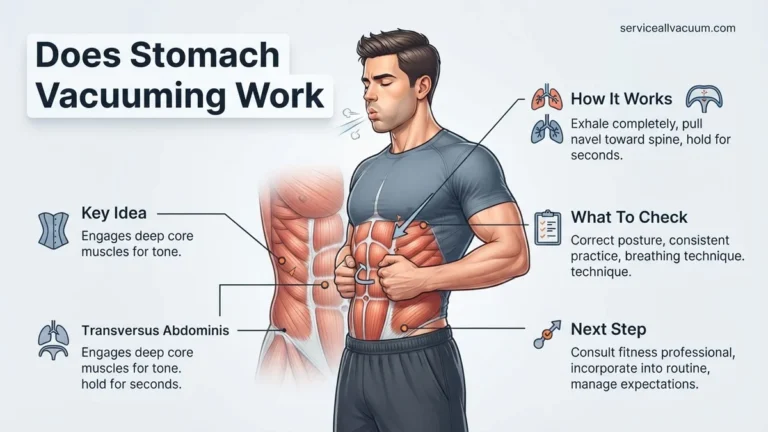
Fixing waist protrusion requires retraining your nervous system to contract the transverse abdominis automatically. The stomach vacuum accomplishes this through maximal exhalation and forced internal suction. As you expel every drop of air from your lungs, you draw your navel inward toward your spine and upward beneath your ribcage.
This movement is entirely different from sucking in your stomach breathlessly while standing. It is a precise isometric contraction that forces deep muscle fiber recruitment.
Step-by-Step Execution for Measurable Results
To get real waist-cinching results, you must perform the technique with proper form and progressive tension:
- Start on your hands and knees to let gravity assist your internal organs.
- Take a deep breath in through your nose, expanding your ribcage rather than your belly.
- Exhale completely through your mouth until your lungs feel entirely empty.
- Pull your belly button up and in as hard as possible, holding the vacuum for 15 to 30 seconds while taking shallow breaths.
- Release slowly and repeat for 3 to 5 sets daily.
Step-by-Step Instructions to Master the Standing Stomach Vacuum
Mastering the vacuum exercise requires precise coordination between respiration and core engagement. Practicing consistently in 2026 relies on proven physical therapy protocols designed to activate the deepest layer of abdominal muscle safely.
Phase 1: Setup and Positioning
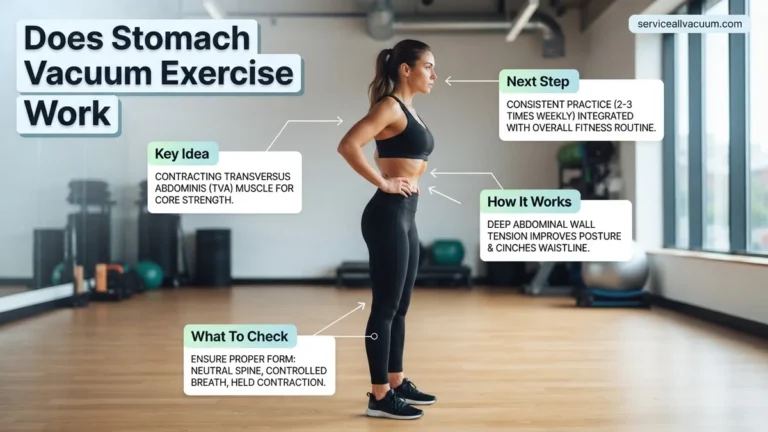
Begin by adopting the correct posture to isolate the transverse abdominis effectively. Stand tall and place your hands firmly on your hips or lean slightly forward onto a table for upper body support. Exhale all the air completely from your lungs until your diaphragm relaxes fully.
- Stand with your feet shoulder-width apart to ensure a stable, grounded base.
- Bend your knees slightly and hinge forward at the hips, placing your hands just above your knees.
- Inhale deeply through your nose, expanding your chest without letting your abdomen push outward.
- Exhale every last drop of air forcefully through your mouth, drawing your ribcage upward.
Phase 2: The Vacuum Hold
Once your lungs are completely empty, execute the core suction maneuver. Imagine trying to pull your belly button up and underneath your ribcage toward your spine. Hold this hollowed position without breathing for 10 to 20 seconds, depending on your current fitness level. Release slowly, take shallow breaths, and repeat for 3 to 5 total sets.
What If Stomach Vacuums Still Do Not Flatten Your Waistline
If consistent daily practice fails to yield visible reductions in waist circumference, underlying biomechanical or physiological factors may be at play. Fitness professionals and physical therapists note that surface results require addressing the whole body.
- Assess Visceral Fat Levels: Deep abdominal fat surrounding internal organs prevents a flat stomach regardless of muscle tone. Incorporate a caloric deficit and cardiovascular training to lower overall body fat percentages.
- Evaluate Pelvic Alignment: Anterior pelvic tilt pushes the belly forward artificially. Consult a physical therapist to correct postural imbalances through targeted glute and hamstring strengthening.
- Consult a Gastroenterologist: Chronic bloating, food sensitivities, or gastrointestinal distress can mimic a protruding lower stomach. Medical evaluation and dietary adjustments typically cost between $150 and $500 depending on diagnostic testing.
- Work with a Corrective Exercise Specialist: If neuromuscular control remains elusive, hire a certified personal trainer or kinesiologist. Professional coaching sessions generally range from $70 to $150 per hour to retrain proper activation pathways.
Conclusion
Stomach vacuums successfully strengthen the transverse abdominis, improve core stabilization, and reduce functional waist measurements when paired with proper nutrition. According to verified research and expert kinesiology sources, consistency is the ultimate variable for long-term postural success. Your next step is to integrate three sets of 15-second holds into your daily morning routine. Commit to this progressive routine today for a stronger, deeply supported midsection through 2026 and beyond.
❓ Frequently Asked Questions
Does the stomach vacuum exercise permanently shrink your waist?
It provides a temporary and semi-permanent waist-cinching effect by keeping your deep core muscles engaged and preventing internal organs from pushing forward. However, it does not permanently alter your skeletal structure or remove fat tissue.
Why does my stomach push outward even when I am lean?
A weak transverse abdominis acts like a loose corset, allowing your internal organs to spill forward. Strengthening this deep muscle pulls everything inward, restoring flat abdominal profile control.
Can I do stomach vacuums every day?
Yes, because the transverse abdominis is a postural stabilization muscle made of slow-twitch fibers, daily practice is generally safe and effective. Listen to your body and avoid overexertion if you feel dizzy.
Should I hold my breath during a stomach vacuum?
Yes, you must exhale all the air from your lungs completely before drawing your stomach in and holding the breath. Trying to breathe normally while executing a maximum vacuum is nearly impossible and defeats the purpose.
Is the stomach vacuum better than traditional crunches?
They serve entirely different purposes; crunches target the superficial rectus abdominis ‘six-pack’ muscles, while vacuums target the deep transverse abdominis that acts as an internal girdle.
What is the best time of day to perform stomach vacuums?
First thing in the morning on an empty stomach before eating or drinking is ideal. Food and water in your stomach will push outward and prevent you from achieving a maximum contraction.