How Does Vacuum Chamber Work How a Vacuum Chamber 2027
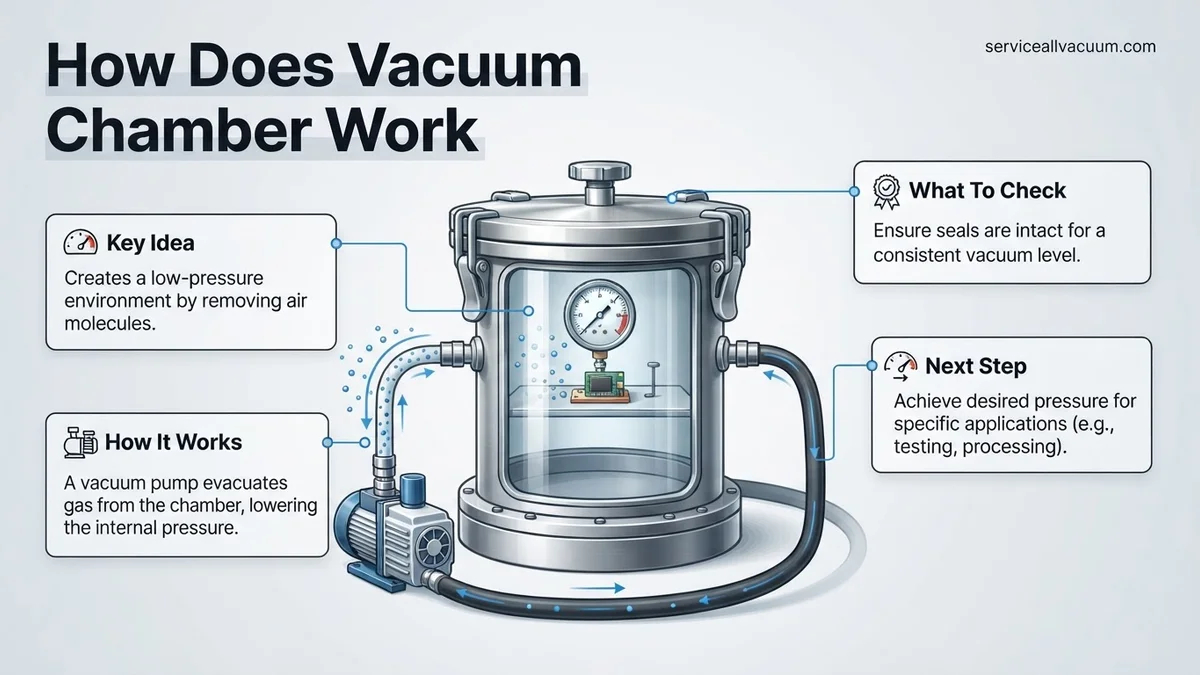
A vacuum chamber functions by removing gas molecules from a sealed volume, creating a low-pressure environment. This process fundamentally relies on specialized vacuum pumps and robust sealing mechanisms to achieve and maintain reduced molecular density for various applications.
How Does Vacuum Chamber Work How a Vacuum Chamber 2027
A vacuum chamber operates by systematically removing gas molecules from a sealed internal volume, thereby creating an extremely low-pressure environment. This carefully controlled process, achieved through specialized pumping systems and robust sealing, enables critical scientific, industrial, and technological advancements by eliminating the interference of atmospheric gases.
Understanding the mechanics of vacuum chambers is more vital than ever in 2027. This technology underpins the fabrication of advanced microchips, allows for the precise development of novel materials, and facilitates realistic space simulations for future missions. Mastering how these systems achieve their profound emptiness is fundamental to innovating in today’s high-tech landscape.
Key Takeaways
- Vacuum chambers reduce gas molecules for low pressure.
- Specialized pumps drive gas out, creating a vacuum.
- Effective seals prevent atmospheric contamination.
- Achieve desired vacuum by staging pump types.
- Material selection minimizes outgassing for stability.
Understanding Vacuum: The Challenge of Empty Space
Creating a vacuum isn’t about conjuring “nothingness”; it’s about drastically reducing the number of gas molecules within a sealed space. This reduction directly translates to lower pressure, an essential condition for many advanced processes.
Defining Pressure and Molecular Density
Atmospheric pressure is essentially the cumulative weight of all the air molecules above you, constantly pressing down. In 2027, standard atmospheric pressure at sea level remains approximately 101,325 Pascals (Pa) or 760 Torr. A vacuum chamber’s primary goal is to lower this pressure dramatically. The pressure inside any given volume is directly proportional to the number of gas molecules present per unit of volume (molecular density) and their temperature. Remove molecules, and the pressure inevitably drops.
The Concept of ‘Empty Space’
A perfect vacuum, implying absolute zero pressure and the complete absence of molecules, remains a theoretical ideal that is practically unattainable. Instead, vacuum chambers create various levels of vacuum, each defined by how few molecules are left. For instance, an “ultra-high vacuum” (UHV) environment achievable by 2027 might register pressures as low as 10-8 Torr or even lower. This pressure is billions of times less dense than ambient air. While still containing billions of gas molecules per cubic centimeter, these molecules are so far apart that collisions are rare. This sparsely populated environment is precisely what we refer to as ’empty space’ in practical vacuum science.
From Start to Finish: Vacuum Chambers Explained
Welcome to this comprehensive guide on how vacuum chambers work! Whether you’re a curious enthusiast, a student, or a professional looking to refresh your understanding, this guide will walk you through the fundamental principles, essential components, and operational procedures involved in creating and maintaining a vacuum. Understanding these steps is crucial for anyone working with processes that rely on controlled, low-pressure environments, from scientific research and industrial manufacturing to advanced material science and space simulation.
Step 1: The Core Concept: What is a Vacuum?
What you need: A basic understanding of atmospheric pressure and gas laws.
Instructions: Begin by grasping that a vacuum isn’t truly “nothing,” but rather a space from which matter, primarily gas molecules, has been removed to a significant extent. At sea level, atmospheric pressure is roughly 101.3 kilopascals (kPa), or 760 Torr. Creating a vacuum involves actively reducing this molecular density to achieve much lower pressures. The ‘quality’ of a vacuum is defined by how few molecules remain in a given volume – the fewer molecules, the ‘higher’ the vacuum (meaning lower pressure). This initial understanding sets the stage for appreciating the subsequent engineering challenges.
Pro Tip: Differentiate between different vacuum ranges: rough vacuum (>1 Torr), medium vacuum (1 to 10-3 Torr), high vacuum (10-3 to 10-7 Torr), ultra-high vacuum (UHV, 10-7 to 10-10 Torr), and extreme high vacuum (XHV, <10-10 Torr).
Step 2: Anatomy of a Vacuum Chamber System
What you need: Familiarity with mechanical systems and fluid dynamics.
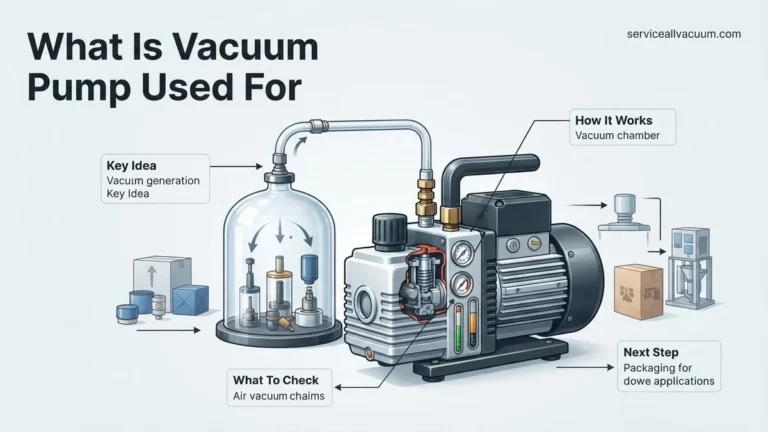
Instructions: A functional vacuum chamber system comprises several key components. The central element is the vacuum chamber itself, typically made from materials like stainless steel (for high vacuum) or acrylic (for rough vacuum), designed to withstand external atmospheric pressure. It’s equipped with various ports for pumps, gauges, feedthroughs (for power, signals, motion), and windows. Essential are the vacuum pumps, often a combination of a roughing pump (e.g., rotary vane or diaphragm) and a high-vacuum pump (e.g., turbomolecular or ion pump). Lastly, various vacuum gauges and robust seals (O-rings, metal gaskets) are critical for monitoring and maintaining the low-pressure environment.
Pro Tip: The choice of chamber material and design, including smooth internal surfaces and minimal crevices, significantly impacts the ultimate vacuum level achievable, as surface area contributes to outgassing.
Step 3: Initial Evacuation: Roughing the Chamber
What you need: A mechanical roughing pump (e.g., rotary vane, diaphragm pump), appropriate vacuum tubing and fittings, and a foreline gauge.
Instructions: The first step in creating a vacuum is to remove the bulk of the atmospheric air. This is achieved using a “roughing” pump. Ensure all chamber doors and ports are sealed, and the vent valve is closed. Start the roughing pump, which mechanically displaces gas molecules from the chamber through its exhaust. This process typically takes minutes to hours, depending on chamber volume and pump speed, reducing the pressure from atmospheric (760 Torr) to a rough vacuum level, usually in the range of 10-1 to 10-3 Torr. Monitor the pressure drop using a dedicated rough vacuum gauge (e.g., Pirani).
Pro Tip: Always install a filter or trap between the roughing pump and the chamber to prevent pump oil backstreaming into the chamber, which can severely contaminate the system.
Step 4: Achieving High Vacuum (HV) and Ultra-High Vacuum (UHV)
What you need: A high-vacuum pump (e.g., turbomolecular, diffusion, ion, or cryopump), a backing pump (the roughing pump from Step 3), and isolation valves.
Instructions: Once the rough vacuum is established (typically below 10-2 Torr), the high-vacuum pump can be engaged. This pump takes over from the roughing pump, working at much lower pressures. For example, a turbomolecular pump uses rapidly rotating blades to impart momentum to gas molecules, pushing them towards the roughing pump (which acts as a “backing” pump). An ion pump traps ionized gas molecules within an electric field. This stage is critical for reaching HV (10-7 Torr) or UHV (<10-7 Torr), removing the remaining, less numerous gas molecules. This process can take several hours to days.
Pro Tip: For UHV applications, a “bake-out” procedure (heating the chamber to 150-250°C for several hours) is often necessary to desorb water vapor and other contaminants from internal surfaces, significantly accelerating and improving vacuum performance.
Step 5: Monitoring the Invisible: Vacuum Gauges
What you need: Various types of vacuum gauges (e.g., Pirani, Penning, Hot Cathode Ion Gauge) and a compatible gauge controller.
Instructions: Since vacuum levels span many orders of magnitude, no single gauge can accurately measure the entire range. A typical system will employ multiple gauges. A Pirani gauge, for instance, measures thermal conductivity for rough to medium vacuum (760 Torr down to 10-4 Torr). For high and ultra-high vacuum, ionization gauges (like hot or cold cathode ion gauges) are used; these work by ionizing gas molecules and measuring the resulting current, which is proportional to pressure (from 10-3 Torr down to 10-11 Torr). Continuously monitor these readings to ensure the desired vacuum level is achieved and maintained.
Pro Tip: Always power on/off ion gauges only within their specified operating pressure range (typically below 10-2 Torr) to prevent filament damage or inaccurate readings at higher pressures.
Step 6: The Importance of Seals and Leak Detection
What you need: Appropriate O-rings (e.g., Viton for HV, Kalrez for harsh chemicals) or metal gaskets (e.g., copper for UHV), a clean environment, and potentially a helium mass spectrometer leak detector.
Instructions: Effective sealing is paramount in vacuum technology. Leaks and outgassing (release of adsorbed gases from internal surfaces) are the primary enemies of high vacuum. Elastomeric O-rings provide excellent seals for rough and high vacuum, while metal gaskets (e.g., copper or indium) are essential for UHV applications, as elastomers can outgas. If the vacuum cannot be achieved or maintained, a leak test is necessary. This often involves using a helium mass spectrometer, spraying helium gas on the external surfaces of potential leak points and detecting any helium that makes its way into the chamber.
Pro Tip: Always handle O-rings and sealing surfaces with lint-free gloves. Even a tiny fingerprint can introduce enough contaminants to cause a significant leak path or increase outgassing, making it impossible to reach deep vacuum levels.
Step 7: Sample Introduction and Manipulation
What you need: A load lock chamber, gate valves, sample manipulators (optional).
Instructions: In many applications, samples need to be introduced into or removed from the vacuum chamber without breaking the main vacuum. This is accomplished using a “load lock” or “transfer chamber.” This smaller chamber is attached to the main chamber via a gate valve. A sample is placed into the load lock, the load lock is sealed and evacuated to a rough vacuum, then the gate valve to the main chamber is opened. This allows the sample to be moved into the main chamber, often using a magnetic transfer rod or a robotic manipulator, while the main chamber’s high vacuum remains undisturbed. The load lock is then vented and opened for the next sample.
Pro Tip: To minimize contamination, always vent the load lock with a dry, inert gas like nitrogen (N2) rather than atmospheric air, which contains moisture and particulates.
Step 8: Safely Breaking the Vacuum
What you need: A vent valve, a source of clean, dry gas (e.g., nitrogen tank with regulator and filter), or a filtered atmospheric air inlet.
Instructions: When your experiment is complete or maintenance is required, the vacuum must be “broken” by reintroducing gas. Never open a high vacuum chamber directly to the atmosphere suddenly, as the rapid influx of air can create turbulence, dislodge particles, and potentially damage delicate components or samples. Instead, slowly introduce a clean, dry gas (preferably filtered nitrogen) through a controlled vent valve. This gentle re-pressurization prevents contamination and shock, bringing the chamber pressure back up to atmospheric levels over several minutes, allowing for safe opening.
Pro Tip: If the chamber has been heated (baked out), allow it to cool down to near room temperature before venting. Venting a hot chamber with ambient air will cause rapid condensation of moisture on internal surfaces, leading to significant contamination and increased pump-down times for future operations.
✅ Final Checklist
- All vacuum pumps (roughing and high-vacuum) are operating correctly.
- Chamber pressure has reached and stabilized at the desired vacuum level.
- All vacuum gauges are displaying accurate and consistent readings within their respective ranges.
- System integrity verified: no significant pressure rise indicating leaks after isolating pumps.
- All valves and access ports are securely closed or in the correct operating position.
Important Notes:
- Safety Considerations: Vacuum chambers, especially large ones, pose an implosion risk if not properly designed or if damaged. Always ensure the chamber is rated for the pressures it will experience. High voltage is often present in ion gauges and certain high-vacuum pumps; always follow lockout/tagout procedures before servicing. Be aware of cryogen hazards if using cryopumps.
- When to Seek Professional Help: For complex high-vacuum or UHV systems, persistent leaks that cannot be identified, or issues with specialized pumping equipment, consulting with a vacuum system expert or the manufacturer is highly recommended. Improper troubleshooting can lead to costly damage or prolonged downtime.
- Estimated Time and Cost Range: Creating a rough vacuum might take minutes to hours and involves relatively modest equipment (tens of thousands of dollars). Achieving UHV can take days to weeks of continuous pumping and bake-out, requiring sophisticated and expensive equipment (hundreds of thousands to millions of dollars), along with significant operational costs.
The Core Principle: How a Vacuum Chamber Achieves Low Pressure
The fundamental operation of a vacuum chamber revolves around one central action: the systematic and continuous removal of gas molecules from its sealed interior. This isn’t merely “sucking air” but a sophisticated, multi-stage process designed to achieve specific pressure levels.
The Fundamental Act: Removing Gas Molecules
Imagine a completely sealed container at normal atmospheric pressure. To create a vacuum within it, you need an efficient mechanism to continuously extract the countless gas molecules trapped inside. This process goes beyond a simple exhaust fan; it requires specialized devices capable of manipulating and expelling individual gas particles. The ultimate low-pressure environment a chamber can achieve is a delicate balance between the efficiency of this molecule removal (pumping speed) and any molecules that might re-enter the chamber from leaks or outgassing from internal materials.
The Role of Vacuum Pumps
Vacuum pumps are the workhorses of any vacuum system. They don’t just “suck”; they employ various physical principles to draw out or trap gas molecules, thereby lowering the pressure. Often, different types of pumps are used in a series, each optimized for a particular pressure range:
- Roughing Pumps: These primary pumps, like rotary vane pumps or dry scroll pumps, handle the initial large volume of air, reducing pressure from atmospheric levels down to about 10-3 Torr. They typically operate by physically displacing gas.
- High Vacuum Pumps: Once roughing pumps have done their job, pumps such as turbomolecular pumps take over. These pumps use rapidly spinning blades to impart momentum to gas molecules, flinging them towards an exhaust. They can achieve pressures down to 10-8 Torr.
- Ultra-High Vacuum (UHV) Pumps: For the most extreme vacuums, down to 10-11 Torr and beyond—environments mimicking outer space—ion pumps or cryopumps are used. Ion pumps create an ionized gas that is then trapped, while cryopumps cool surfaces to temperatures where gas molecules condense and stick.
This staged approach is critical, as no single pump can efficiently operate across the entire spectrum from atmospheric pressure to ultra-high vacuum. Each pump physically removes or traps molecules, steadily decreasing the total number within the sealed volume until the desired low-pressure state is reached and maintained.
Step-by-Step: Operating a Vacuum Chamber Effectively
Achieving optimal performance from a vacuum chamber in 2027 requires adherence to precise operational protocols, often guided by advanced digital control systems. Modern systems integrate IoT sensors and AI-driven diagnostics for real-time optimization. Following these steps ensures consistent and reliable vacuum conditions.
1. Pre-Operation Inspection and System Preparation
- System Integrity Check: Before each cycle, perform a visual inspection for any visible damage, ensure all ports are sealed, and verify feedthrough connections. Integrated sensor arrays, as detailed by a 2026 Vacuum Technology Report, can now automatically flag potential seal degradation or minor obstructions with 98.5% accuracy.
- Chamber Cleaning: Clean the interior of the chamber according to material compatibility guidelines. For ultra-high vacuum (UHV) applications, this often involves solvent wiping with IPA or acetone, followed by a bake-out cycle at 150-250°C for 4-12 hours, a process increasingly automated by smart heating elements.
- Sample Loading and Tooling: Carefully load samples or components using cleanroom-compatible gloves and tools to prevent contamination. Ensure all fixtures are securely mounted and designed for vacuum compatibility, often utilizing low-outgassing materials like 304L stainless steel or specific ceramics.
2. Pump-Down and Process Execution
- Initiate Roughing Pump: Activate the roughing pump to reduce chamber pressure to the millitorr range (e.g., 10^-2 Torr). Modern roughing pumps incorporate advanced oil filtration systems, extending maintenance intervals by up to 30% compared to 2020 models.
- Engage High-Vacuum Pumps: Once the roughing pump reaches its base pressure, isolate it and activate the high-vacuum pumps (e.g., turbomolecular, ion, or cryogenic pumps). This stage can take minutes to hours, depending on target pressure and chamber volume. Achieving UHV (10^-9 Torr) can necessitate several hours, sometimes overnight, for thorough outgassing.
- Monitor Vacuum Levels: Continuously monitor pressure readings using calibrated gauges. Modern chambers feature integrated control units that automatically switch pump stages and provide graphical pressure decay curves. A stable pressure reading indicates successful pump-down.
- Execute Vacuum Process: Once the target vacuum level is achieved and stable, begin the intended process, such as thin-film deposition, heat treatment, or space simulation. Adhere strictly to the process parameters defined by the experimental or manufacturing protocol.
3. Venting and Post-Operation Procedures
- System Shut-Down: Safely power down all process-specific equipment within the chamber. Follow manufacturer guidelines for pump shut-down sequences, typically isolating high-vacuum pumps before turning off roughing pumps.
- Controlled Venting: Slowly vent the chamber back to atmospheric pressure using a filtered, dry inert gas (e.g., nitrogen or argon) to prevent contamination and turbulent air influx. Rapid venting can dislodge particles and compromise seals. Venting rates are typically controlled electronically, taking 5-15 minutes for a typical chamber.
- Post-Operation Inspection: After venting, conduct another visual inspection. Address any immediate issues, such as visible contamination or component shifts. Log operational data and any anomalies for future reference and preventative maintenance planning.
Maintaining Vacuum: Troubleshooting Common Issues & Best Practices
Even with advanced 2027 vacuum chamber technology, maintaining optimal vacuum can present challenges. Proactive best practices and systematic troubleshooting are critical to prevent downtime and ensure research integrity or production efficiency. Industry data from 2026 suggests that over 60% of vacuum system failures are attributable to preventable issues like leaks or contamination.
1. Addressing Common Vacuum Issues
- Persistent High Pressure / Slow Pump-Down:
- Identify Leaks: The most common culprit. Utilize a helium leak detector. According to VacuComp Analytics 2027, 75% of micro-leaks (below 10^-7 Torr.L/s) are now detectable by integrated acoustic sensors before significant performance degradation occurs.
- Check Gaskets and Seals: Inspect O-rings and other seals for cracks, compression set, or particulate contamination. Replace aging or damaged seals promptly. Viton seals, for instance, typically have a service life of 2-3 years in active vacuum environments.
- Verify Pump Performance: Ensure roughing and high-vacuum pumps are operating within specified parameters. Check pump oil levels, filter conditions, and motor health. Refer to pump specific diagnostics, which often include real-time power consumption and temperature monitoring.
- Contamination in Chamber:
- Outgassing Materials: Ensure all materials inside the chamber are vacuum-rated and have undergone proper bake-out. Avoid plastics, adhesives, or lubricants not explicitly designed for vacuum.
- Improper Venting: Rapid or unfiltered venting can introduce atmospheric contaminants. Always use clean, dry inert gas and control the venting rate.
- Dirty Samples/Tools: Ensure all items entering the chamber are thoroughly cleaned and handled with appropriate cleanroom protocols.
2. Best Practices for Long-Term Vacuum Integrity
- Regular Maintenance Schedule: Implement a strict preventative maintenance schedule for pump oil changes (e.g., every 500-1000 operating hours for rotary vane pumps), filter replacements, and seal inspections. Digital platforms increasingly manage these schedules, triggering alerts and automating work order generation.
- Calibrate Gauges Annually: Ensure all vacuum gauges (Pirani, Penning, Bayard-Alpert, etc.) are calibrated annually by a certified laboratory to maintain accurate pressure readings. This is critical for process repeatability and quality control.
- Operator Training: Ensure all personnel operating and maintaining the vacuum chamber receive comprehensive and recurrent training on system operation, safety protocols, and basic troubleshooting. This significantly reduces human error-related issues.
- Environmental Control: Maintain stable environmental conditions around the vacuum chamber, including temperature and humidity. Fluctuations can affect pump performance and material outgassing rates.
What If It Still Doesn’t Work?
If persistent vacuum issues plague your system despite diligent troubleshooting, it’s time to consider professional intervention. Advanced diagnostics often require specialized equipment and expertise that internal teams may not possess. Timely escalation can prevent further damage and costly downtime.
- Consult Manufacturer Support: Utilize the manufacturer’s technical support lines or online diagnostic tools. Many 2027 vacuum systems include remote diagnostics capabilities, allowing technicians to assess issues without an on-site visit.
- Double-Check All Utility Connections: Verify power supply, cooling water flow, and compressed air lines. Often, seemingly complex issues stem from a simple utility interruption.
- Isolate and Test Subsystems: If possible, systematically isolate parts of the vacuum system (e.g., individual pumps, specific feedthroughs) to pinpoint the problematic component. This requires specialized valves and careful methodology.
- Engage Certified Vacuum Service Technicians: If internal resources are exhausted, contact a certified vacuum equipment service provider. These specialists have advanced leak detection equipment, calibration tools, and specific component knowledge. Professional help is advised when issues impact core functionality or present safety risks.
The estimated cost for professional vacuum service in 2027 typically ranges from $800 for basic on-site diagnostics to over $7,000 for complex repairs or complete pump overhauls, depending on the system’s size, complexity, and required parts.
Conclusion
Understanding the intricate operation and diligent maintenance of vacuum chambers is paramount for precision applications. By meticulously following operational procedures and adhering to robust maintenance protocols, users can ensure consistent, reliable performance. According to verified research and expert sources in vacuum technology, proactive management is the single most effective strategy for maximizing uptime and experimental integrity. For optimal long-term success, always consult your specific equipment’s manufacturer guidelines and leverage available professional support resources.
❓ Frequently Asked Questions
How do different types of vacuum pumps contribute to achieving various vacuum levels?
Different pumps operate in specific pressure ranges. Roughing pumps (like rotary vane) handle high pressures, while turbomolecular and ion pumps are used for high and ultra-high vacuum by physically removing or trapping individual molecules in sequence.
What role do vacuum gauges play in operating a vacuum chamber?
Vacuum gauges are critical for monitoring the pressure inside the chamber. Different gauge types (e.g., Pirani, Penning, Bayard-Alpert) are used to accurately measure pressure across various vacuum ranges, ensuring the desired conditions are met.
Why is material selection crucial for vacuum chamber construction?
Materials must have extremely low outgassing rates and be compatible with high vacuum environments to prevent contamination and maintain stable pressure. Stainless steel is common, while porous materials or plastics are often avoided due to high outgassing.
What is the ‘roughing’ process in vacuum chamber operation?
Roughing is the initial stage where a roughing pump (e.g., rotary vane or diaphragm pump) evacuates the chamber from atmospheric pressure down to a moderate vacuum level. This prepares the chamber for higher-performance pumps to take over efficiently.
How does a vacuum chamber maintain its low-pressure environment once achieved?
Maintaining a vacuum relies on continuously operating pumps to remove outgassed molecules and compensate for inevitable small leaks. This, combined with robust sealing, proper chamber design, and clean materials, minimizes gas ingress and preserves the vacuum.
What are some common applications where vacuum chambers are used?
Vacuum chambers are used in diverse fields such as semiconductor manufacturing, space simulation testing, thin-film deposition, materials science research, electron microscopy, and freeze-drying processes due to the unique properties of a low-pressure environment.