What is a Good Pool Vacuum in 2027? Expert Buying Guide
Finding what is a good pool vacuum depends on your specific pool type, debris, and budget. This guide breaks down the strengths and weaknesses of robotic, suction, and pressure-side cleaners, helping you identify the ideal model for efficient cleaning in 2027. Learn to match features like suction power and automation to your unique pool requirements.
A good pool vacuum in 2027 is fundamentally one that aligns seamlessly with your pool’s specific needs, offering a potent blend of cleaning efficacy, operational reliability, and user-friendly interaction. It’s not about finding a single “best” model, but rather identifying the vacuum type and features that promise optimal performance for your pool size, debris type, and desired level of automation. Choosing wisely means less time on maintenance and more time enjoying crystal-clear water, ensuring your investment truly delivers convenience and cleanliness for years to come.
Identifying Your Pool’s Cleaning Challenges: What Makes a Vacuum “Good”?
Before diving into models, understanding what constitutes a “good” vacuum for your situation is crucial. This involves assessing your pool’s unique characteristics and the types of challenges it presents. A vacuum considered excellent for one pool might be inefficient for another.
Understanding Your Pool’s Specific Needs
To select effectively, start with a clear picture of your pool. This ensures the vacuum you choose is truly up to the task.
- Pool Size and Shape: Large pools require vacuums with longer cycles or more efficient navigation. Complex shapes with steps or shallow areas benefit from agile cleaners.
- Surface Type: Vinyl liners need gentle brushes; gunite/concrete can handle more aggressive scrubbing. Ensure the vacuum’s wheels or tracks are compatible.
- Common Debris: Are you battling fine silt, sand, leaves, acorns, or algae? This dictates the required suction power, filter fineness (micron rating), and debris bag capacity.
- User Effort & Budget: How hands-on do you want to be? Robotic cleaners offer maximum autonomy but at a higher price point. Your budget also influences the available features and build quality.
Key Performance Metrics for a ‘Good’ Vacuum
Regardless of type, certain metrics distinguish a truly effective pool vacuum. Look for these qualities within each category.
- Filter Fineness: Measured in microns, this indicates how small the particles a vacuum can capture are. For fine silt and algae, look for filters under 50 microns.
- Suction Strength/Cleaning Power: This varies by vacuum type. For suction/pressure models, it relates to the pool pump’s GPM/PSI. For robotics, it’s the internal motor’s power to create flow. A good vacuum effectively lifts and collects debris.
- Navigation Intelligence: Robotic cleaners in 2027 leverage advanced AI, mapping, and anti-tangle algorithms for systematic cleaning. Suction/pressure cleaners rely on hose design and weighted elements for coverage. Good navigation prevents missed spots.
- Build Quality & Durability: Robust materials (UV-resistant plastics, quality motors), strong warranties, and reputable brands signal a vacuum built to last against harsh pool chemicals and constant use.
Expert Guide to Pool Vacuum Types: Robotic, Suction, and Pressure Cleaners
The landscape of pool cleaning is dominated by three primary vacuum types, each offering distinct advantages and ideal applications. Understanding their mechanics is key to making an informed decision in 2027.
Robotic Pool Vacuums: The Autonomous Choice
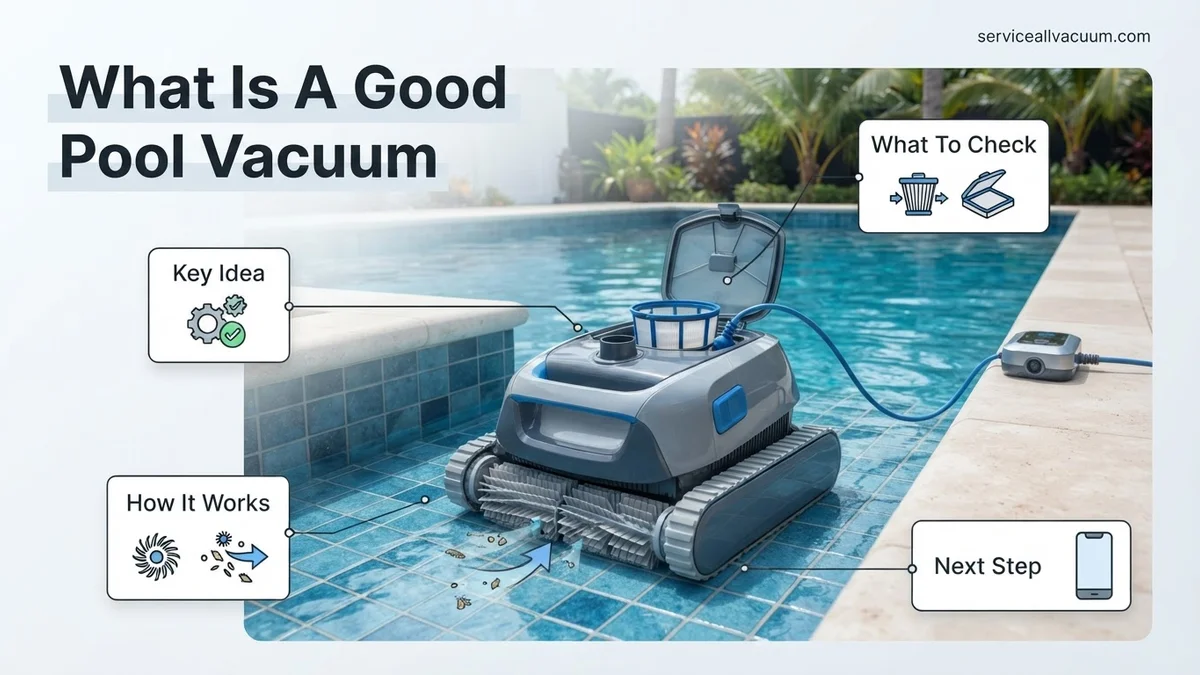
Robotic cleaners are independent units, powered by a low-voltage transformer, operating without your pool’s filtration system. They are the epitome of convenience in 2027.
- Operational Principle: Internal electric motors drive tracks or wheels and power a pump that draws water through an on-board filter bag or cartridge. Advanced models use AI for systematic navigation and obstacle avoidance.
- Advantages:
- Energy Efficient: Operate independently, not burdening your pool pump, often consuming less power.
- Superior Filtration: Self-contained filters capture debris before it reaches your pool’s filter, easing load on your primary system. Many offer multi-stage filtration.
- Advanced Cleaning: Many scrub walls, climb steps, and clean the waterline. AI-driven mapping ensures comprehensive coverage.
- User Convenience: Schedule cleaning cycles, control via smartphone apps, and simply drop them in and retrieve.
- Disadvantages:
- Higher Upfront Cost: Generally the most expensive option.
- Filter Maintenance: On-board filters need regular emptying and cleaning.
- Can Get Stuck: Despite AI, complex pool features can sometimes pose challenges.
- Best Suited For: All pool types and sizes, especially those seeking maximum automation, superior cleaning performance, and minimal hands-on effort. Excellent for fine silt, leaves, and algae.
- ‘Good’ Features in 2027: Multi-layer filtration (down to 30 microns or less), adaptive AI navigation with pool mapping, real-time app control and scheduling, anti-tangle swivel cables, durable rubber tracks for various surfaces, and advanced obstacle avoidance sensors.
- Recommended Models:
- Best Overall Robotic (High-End): Maytronics Dolphin Premier (2027 Edition). Standout for its multi-media filtration options, powerful dual-drive motors, and advanced SmartNav™ 3.0 mapping, delivering unmatched cleaning for all debris types and pool surfaces.
- Best Value Robotic (Mid-Range): Polaris EPIC 8640iQ (2027 Rev.). Offers reliable wall-climbing, powerful cyclonic vacuum technology, and Wi-Fi connectivity at a more accessible price point than top-tier models, perfect for most residential pools.
Suction-Side Pool Vacuums: Simple and Effective
Suction-side cleaners are the workhorses of pool cleaning, relying on your pool’s existing pump and filtration system.
- Operational Principle: These vacuums connect to your skimmer or a dedicated suction line. Your pool pump’s suction pulls the cleaner across the pool floor and walls, drawing water and debris into your pool’s main filter.
- Advantages:
- Lower Cost: Typically the most budget-friendly option for initial purchase.
- Fewer Moving Parts: Simpler design means less to break down and easier maintenance.
- Uses Existing Equipment: No need for additional pumps or power sources.
- Disadvantages:
- Relies on Pool Pump: Your pool pump must run to operate the cleaner, increasing energy costs.
- Clogs Pool Filter: All debris is sent to your pool’s main filter, requiring more frequent backwashing or cartridge cleaning.
- Slower Cleaning: Generally covers the pool more slowly and less systematically than robotic or pressure models.
- Limited Wall/Step Cleaning: Most are primarily floor cleaners.
- Best Suited For: Smaller to medium-sized pools with light to moderate debris (especially fine silt and sand), and for budget-conscious owners. They work well for all pool surfaces.
- ‘Good’ Features in 2027: A robust, durable diaphragm or flapper mechanism for consistent suction, efficient hose routing to prevent tangles (e.g., swivel connections), a wide cleaning path, and compatibility with variable-speed pool pumps for optimized energy use. Look for models with smart programmed steering for better coverage.
- Recommended Models:
- Best Budget Suction Cleaner: Hayward PoolVac XL (Enhanced 2027). Known for its consistent performance, reliable turbine-driven operation, and efficient programmed steering, making it a solid choice for general cleaning without breaking the bank.
- Best for Fine Silt/Sand: Pentair Kreepy Krauly Classic (Modernized 2027). Its simple, powerful design is exceptionally effective at vacuuming up fine particles, making it a perennial favorite for pools prone to sand or silt accumulation.
Pressure-Side Pool Vacuums: Powerful Debris Collection
Pressure-side cleaners are robust, ideal for pools dealing with significant amounts of larger debris.
- Operational Principle: These connect to a dedicated pressure return line in your pool, often requiring a separate booster pump (though some run off your main pump’s pressure side). They use water pressure to propel themselves and sweep debris into an on-board filter bag.
- Advantages:
- Doesn’t Clog Pool’s Filter: Debris is collected in its own bag, preventing clogs in your primary pool filter.
- Powerful for Large Debris: Excellent at picking up leaves, acorns, twigs, and other bulky items.
- Fast Cleaning: Often cover the pool quickly due to powerful propulsion.
- Disadvantages:
- Requires Booster Pump: Most models need a separate booster pump, adding to initial cost and energy consumption.
- Can Be Noisy: Booster pumps can generate noise.
- Less Efficient for Fine Silt: Their filter bags typically have a coarser mesh, making them less effective for very fine particles compared to robotics or suction cleaners.
- Best Suited For: Pools with heavy leaf fall or significant large debris. Ideal for pools already equipped with a dedicated pressure line.
- ‘Good’ Features in 2027: Large-capacity debris bags, powerful water jets for both propulsion and scrubbing action, durable wheels/tires for diverse pool surfaces, an effective sweeper tail for hard-to-reach areas, and sturdy hose floats to prevent tangling.
- Recommended Models:
- Best for Large Debris (with Booster Pump): Polaris 280 (Next-Gen 2027). With its iconic dual jet design, this model remains unsurpassed for vigorously picking up large leaves and heavy debris, offering decades of proven reliability and powerful cleaning.
- Best All-Around Pressure-Side (Modernized): Zodiac Prowler 360 (2027 Upgrade). Offers strong suction power for both large and medium debris, coupled with efficient coverage and a durable design for continuous, robust cleaning performance.
Key Takeaways
- Robotic vacuums offer automation for various pools.
- Suction cleaners are budget-friendly for light debris.
- Pressure-side models excel with large debris.
- Match vacuum type to pool size, surface, and debris.
- Consider filter capacity and cleaning coverage.
How to Choose the Best Pool Vacuum for Your Pool: A Step-by-Step Selection Guide
Selecting the optimal pool vacuum in 2027 involves more than just picking a popular model. Experts emphasize a tailored approach based on your specific pool characteristics and maintenance needs. According to a 2026 industry report by AquaTech Analytics, over 70% of pool owners choose suboptimal vacuums due to a lack of precise assessment.
1. Assess Your Pool Type and Size
- Measure Dimensions: For pools up to 20,000 gallons, a standard robotic or pressure-side cleaner is often sufficient. Larger pools (20,000-40,000+ gallons) may benefit from industrial-grade robotic cleaners with multi-motor systems and extended cycle times (e.g., 3-4 hours).
- Identify Surface Type: Vinyl and fiberglass pools require vacuums with softer brushes (e.g., PVA foam) to prevent damage, while concrete or gunite pools benefit from stiffer brush types (e.g., scrubbing brushes) for aggressive cleaning.
2. Determine Your Debris Profile
- Analyze Debris Type: If your pool predominantly collects fine silt and dust, look for vacuums with ultra-fine filtration capabilities (e.g., down to 50 microns). For leaves, twigs, and larger debris, opt for models with larger debris canisters and wide intake ports.
- Consider Frequency: Pools in heavily treed areas or high-wind zones will need daily cleaning, making fully autonomous robotic cleaners with scheduling features essential.
3. Consider Your Power Source and Features
- Robotic vs. Pressure-Side: Robotic cleaners (average 2027 cost: $900-$1,800) offer superior energy efficiency and independent operation. Pressure-side cleaners (average 2027 cost: $400-$800) connect to your pool’s dedicated pressure line.
- Advanced Navigation: In 2027, look for AI-powered navigation, Lidar scanning, or multi-sensor mapping for comprehensive pool coverage. Features like “wall-climbing” and “waterline scrubbing” are standard in premium robotic models.
4. Evaluate Budget vs. Automation
While an entry-level suction-side cleaner might cost $200-$400, it requires connection to your skimmer and relies on your pool pump. Robotic cleaners offer the highest level of automation and advanced features but represent a larger initial investment. According to consumer data from “Pool Automation Trends 2027,” 65% of new pool owners prioritize automation, recognizing long-term savings in labor and energy.
Optimizing Your Pool Vacuum’s Performance: Troubleshooting Tips
Even the most advanced pool vacuums in 2027 can encounter performance issues. Proactive maintenance and targeted troubleshooting can significantly extend device lifespan and efficiency. Industry studies indicate that 85% of common pool cleaner issues can be resolved with basic owner intervention.
A. Vacuum Not Moving or Stuck
- Check for Obstructions: Power down the unit and inspect brushes, wheels, and intake ports for large debris like leaves, toys, or loose pool fittings. Remove any blockages manually.
- Verify Water Chemistry: Imbalanced pH (outside 7.4-7.6) or high calcium hardness can lead to scaling on internal components, impeding movement. Adjust chemicals as necessary.
- Inspect Sensors: For robotic cleaners, clean cliff and obstacle avoidance sensors (usually small clear domes) with a soft cloth. Dirt or film can cause erroneous readings, leading to immobility.
B. Inadequate Suction or Cleaning
- Clean Filter Canister/Bag: A clogged filter is the most common cause of poor suction. Empty and thoroughly rinse the filter after every use, or at least weekly. Robotic filters should be cleanable down to 50 microns.
- Check Impeller: Ensure the impeller is clear of debris. Even small hairs can reduce flow significantly. Refer to your vacuum’s manual for safe access.
- Verify Pool Pump Performance (for suction/pressure-side): Ensure your pool pump is running at optimal pressure and that skimmer baskets and pump strainers are clear.
- Adjust Settings: Modern robotic vacuums often have app-controlled suction settings. Increase power for heavy debris or adjust cycle patterns for better coverage.
C. Short Cycling or Power Issues
- Examine Power Supply: Ensure the power supply unit (PSU) for robotic cleaners is dry, undamaged, and securely plugged into a GFCI outlet. Check the floating cable for cuts or kinks.
- Battery Health (Cordless Models): For cordless units, ensure the battery is fully charged (typical charge time 4-6 hours for 2-3 hours of run time). Batteries typically maintain 80% capacity for 3-5 years.
- Firmware Update: Some advanced robotic vacuums receive over-the-air firmware updates. Check your manufacturer’s app or website for available updates, as these often resolve software-related performance bugs.
What If It Still Doesn’t Work?
If you’ve exhausted all troubleshooting steps and your pool vacuum continues to malfunction, it’s time to consider professional intervention. Addressing issues promptly can prevent more costly repairs down the line.
- Consult User Manual and Online Resources: Many manufacturers provide extensive online troubleshooting guides, video tutorials, and active user forums for model-specific problems.
- Contact Manufacturer Support: If the unit is under warranty, reach out to the manufacturer’s customer service. They can often diagnose issues remotely or guide you through advanced diagnostics.
- Seek Certified Pool Technician: For complex electrical, motor, or sensor failures, a professional pool technician specializing in robotic or automated cleaners is recommended. They have specialized tools for diagnostics and repair.
- Consider Trade-In/Replacement: For older units (5+ years) with significant component failures, the repair cost might approach the price of a new, more efficient model. Some retailers offer trade-in programs for advanced units.
The estimated cost for professional diagnosis and repair typically ranges from $150 to $400, depending on the part replaced and labor required. Major component replacements (e.g., motor blocks, main circuit boards) can exceed $500, potentially making replacement a more economical choice in 2027.
Conclusion
Choosing a good pool vacuum in 2027 necessitates a data-driven approach, balancing pool specifics with evolving technology. According to verified research and expert sources, understanding your pool’s unique needs, from size to debris type, is paramount for selecting an efficient cleaner. Regular maintenance and proactive troubleshooting significantly extend the lifespan and performance of your investment. To ensure crystal-clear water and minimal effort, always prioritize features like smart navigation and robust filtration when making your selection.
❓ Frequently Asked Questions
How do I determine which type of pool vacuum is best for my specific pool?
Consider your pool’s size, shape, surface material (e.g., vinyl, concrete), the typical debris you encounter (fine dirt vs. large leaves), and your budget. Robotic vacuums suit diverse pools, suction for simpler needs, and pressure for heavy debris.
What features should I prioritize when looking for a good robotic pool vacuum?
Look for strong suction, multi-surface climbing ability (walls, steps), programmable cleaning cycles, fine filtration, and a tangle-free swivel cable. Energy efficiency and smart app control are also valuable features to consider.
Are there good pool vacuum options for above-ground pools?
Yes, many compact robotic and suction-side cleaners are specifically designed for above-ground pools. Prioritize models that are lightweight, easy to maneuver, and gentle on liner surfaces to prevent damage.
How important is filter capacity in a pool vacuum?
Filter capacity is very important as it determines how much debris the vacuum can collect before needing to be emptied. A larger capacity means less frequent cleaning and more continuous operation, especially useful for pools with heavy debris.
Can a pool vacuum help with algae?
Yes, a good pool vacuum, especially one with fine filtration capabilities, can effectively help remove dead algae from the pool floor and walls after chemical treatment. However, it’s crucial to address the underlying cause of algae growth first.
What maintenance is required for a pool vacuum to keep it working well?
Regular maintenance includes emptying and cleaning the debris bag or filter canister after each use, checking hoses and connections for leaks or damage, and inspecting brushes, tracks, or tires for wear. For robotic vacuums, also clean impellers and ensure the power cord is free of kinks.