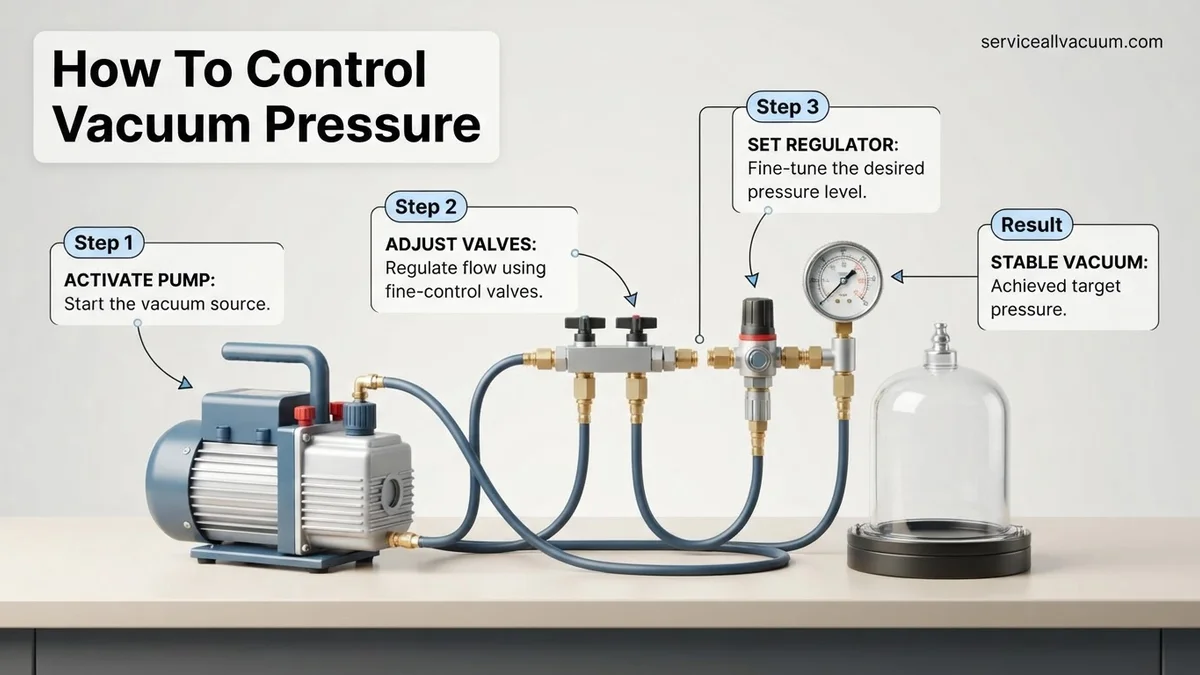
How to Control Vacuum Pressure Expert 2027 Guide
Controlling vacuum pressure precisely is crucial for many applications, requiring a combination of methods and components. This guide explains how to effectively adjust and maintain desired vacuum levels, focusing on practical techniques and essential equipment. Achieve stable vacuum control with proven strategies.
Achieving and maintaining a precise vacuum level is a cornerstone of advanced scientific and industrial processes in 2027. Whether you are running a semiconductor fabrication line, conducting cutting-edge material research, or ensuring the quality of pharmaceutical products, active control over your vacuum environment is non-negotiable. This guide delves directly into the practical methods, techniques, and equipment you need to actively adjust, regulate, and maintain specific vacuum pressures within your system or chamber.
Effective vacuum pressure control means moving beyond just pulling a vacuum. It involves dynamic adjustment in response to process demands and environmental shifts. Understanding the mechanisms of pressure fluctuation and deploying intelligent control strategies are key to maximizing process efficiency, repeatability, and yield in today’s demanding high-tech applications.
Key Takeaways
- Utilize bleed valves for simple, effective vacuum regulation.
- Implement throttling valves for dynamic pressure control.
- Consider variable speed pumps for energy-efficient stability.
- Accurate sensors and controllers are vital for precise operation.
- Match control method to gas load and system requirements.
What Causes Fluctuations in Vacuum Pressure?
Before you can control vacuum pressure, you must understand what makes it unstable. Various factors introduce gas into a vacuum system, constantly challenging your desired pressure setpoint. Recognizing these sources allows you to anticipate and counteract pressure changes effectively.
System Leakage and Outgassing
- Micro-leaks: Even meticulously assembled systems can develop minuscule leaks. Gaseous molecules from the ambient atmosphere seep into your chamber, increasing pressure. Modern leak detectors using helium mass spectrometry can pinpoint these elusive entry points down to 10-10 mbar·L/s.
- Outgassing: Materials within the vacuum chamber, especially plastics, elastomers, and even metals, release adsorbed or absorbed gases over time. This outgassing rate is temperature-dependent and can be a significant gas load in high-vacuum applications, particularly when new materials are introduced or temperatures fluctuate.
Process Dynamics and Gas Load Changes
- Intentional Gas Introduction: Many processes, like plasma etching, PVD/CVD coating, or freeze-drying, deliberately introduce process gases into the chamber. The rate and volume of this gas flow directly dictate the pressure within the system, requiring continuous adjustment to maintain stability.
- Byproducts and Vaporization: During reactions or heating, materials can vaporize or produce gaseous byproducts. For instance, water vapor from a sample during lyophilization or reaction gases in a chemical vapor deposition process significantly add to the gas load, necessitating dynamic pressure management.
Mastering Vacuum Pressure Control: Your Essential Action Plan
Welcome to this comprehensive guide on controlling vacuum pressure. Whether you’re working in a laboratory, industrial setting, or a specialized application like food packaging or material handling, precise vacuum control is paramount for achieving desired results, ensuring process efficiency, and preventing damage to delicate materials or equipment. This guide will walk you through the essential steps, from understanding your system’s needs to fine-tuning and maintaining optimal vacuum levels, empowering you to manage vacuum systems like a seasoned professional.
Step 1: Understand Your Vacuum System & Requirements
What you need: System specifications (volume, desired pressure range, gas composition), process flow diagram, safety data sheets for gases/vapors.
Instructions: Before touching any equipment, clearly define the specific requirements of your application. What is the target pressure range (e.g., rough vacuum, high vacuum, ultra-high vacuum)? What is the volume of the chamber or system you need to evacuate? What gases or vapors will be present, and are they corrosive, toxic, or flammable? These factors dictate the type of pump, materials, and safety measures required. For example, a system evacuating a small bell jar to 10-3 Torr has different needs than a large industrial vacuum furnace operating at 10-6 Torr.
Pro Tip: Always consider the base pressure, which is the lowest pressure your system can achieve with no process load. This sets the ultimate limit for your control range.
Step 2: Select the Right Vacuum Pump
What you need: Vacuum pump type charts, pump performance curves (pumping speed vs. pressure), power requirements, cooling fluid, vibration isolation pads.
Instructions: The choice of vacuum pump is fundamental. For rough vacuum (1 to 10-3 Torr), consider rotary vane, diaphragm, or scroll pumps. For high vacuum (10-3 to 10-7 Torr), turbomolecular or diffusion pumps are common, often backed by a roughing pump. Ultra-high vacuum (below 10-7 Torr) may require ion pumps or cryopumps. Match the pump’s pumping speed to your system volume and desired pump-down time. For instance, a 100 L chamber needing to reach 10-2 Torr in 5 minutes will require a pump with a significantly higher pumping speed than one needing 30 minutes.
Pro Tip: Don’t undersize your pump; it will lead to excessively long pump-down times and potential process instability. Oversizing is generally safer, but consider power consumption and cost.
Step 3: Choose Appropriate Vacuum Gauges
What you need: Pressure gauge selection chart, vacuum gauge types (Pirani, Capacitance Manometer, Ion Gauge), electrical power source, signal cables, vacuum fittings.
Instructions: Accurate measurement is crucial for control. Select gauges based on the pressure range you intend to monitor. For rough to medium vacuum (atmosphere to 10-3 Torr), Pirani or Thermocouple gauges are economical. For more precise measurements in this range, a Capacitance Manometer offers higher accuracy and gas-independent readings. For high to ultra-high vacuum (below 10-3 Torr), Ionization gauges (hot cathode or cold cathode) are necessary. You may need multiple gauges covering different ranges to monitor the entire pump-down process. Ensure your gauges are calibrated regularly.
Pro Tip: Place gauges strategically to measure pressure closest to your process or critical area, not just at the pump intake, to get a true representation of the chamber’s pressure.
Step 4: Install and Seal the Vacuum System
What you need: Vacuum-rated tubing/piping, appropriate vacuum fittings (e.g., KF, ISO, ConFlat), O-rings, vacuum grease (if compatible), leak detector (e.g., helium mass spectrometer).
Instructions: A perfectly sealed system is vital for achieving and maintaining vacuum. Use only vacuum-rated components and ensure all connections are properly tightened. For KF fittings, ensure O-rings are clean and seated correctly, and clamps are snug. For ConFlat (CF) flanges, use new copper gaskets and tighten bolts in a star pattern to the specified torque. Minimize the number of connections to reduce potential leak paths. After assembly, perform a leak check using a simple pressure rise test for rough vacuum or a helium mass spectrometer for high/ultra-high vacuum systems. Even a small leak can prevent reaching target pressure.
Pro Tip: “Bake out” your system if targeting high vacuum. Heating the chamber and components to 100-200°C for several hours helps desorb water vapor and other contaminants from surfaces, significantly reducing pump-down time and ultimate pressure.
Step 5: Implement Vacuum Control Mechanisms
What you need: Manual or automatic vacuum valves (ball, gate, butterfly), variable bleed valves, proportional valves, vacuum controllers (PID or on/off), electrical wiring, programming software (for automated systems).
Instructions: Control typically involves regulating the pumping speed or introducing a controlled leak. Manual control uses simple ball or gate valves to throttle the pump or a needle valve to bleed gas into the system. For more precise or automated control, a variable bleed valve (often electronically actuated) introduces a controlled amount of gas (e.g., nitrogen or air) to maintain a specific pressure. PID (Proportional-Integral-Derivative) vacuum controllers, coupled with proportional valves, can maintain very stable pressures by continuously adjusting the valve opening based on feedback from a pressure gauge. Select valves rated for your vacuum range and gas compatibility.
Pro Tip: When using bleed valves for control, ensure the bleed gas is clean and dry to avoid contaminating the vacuum system. For sensitive applications, use ultra-high purity (UHP) gases.
Step 6: Calibrate and Fine-Tune Your System
What you need: Calibration gas (if applicable for specific gauges), reference vacuum gauge, manufacturer’s calibration procedures, screwdriver or calibration tools, programming interface for controllers.
Instructions: Once installed, calibrate your vacuum gauges according to manufacturer specifications. This often involves adjusting zero and span points, or entering calibration coefficients. For automated controllers, set the desired pressure setpoint and tune the PID parameters (Proportional gain, Integral time, Derivative time) to achieve stable control without oscillation or overshoot. Start with low gains and gradually increase, observing the system’s response. For manual systems, identify the valve positions that correspond to your desired pressures. Record these settings for future reference. Always allow the system to stabilize after any adjustment before making further changes.
Pro Tip: Calibrate your primary working gauges against a known, certified reference standard at least annually, or more frequently if high accuracy is critical.
Step 7: Monitor and Maintain Vacuum Levels
What you need: Data logging system, trending software, maintenance schedule, spare O-rings, vacuum grease, cleaning supplies, pump oil (for oil-sealed pumps).
Instructions: Continuous monitoring is essential. Use data loggers to record pressure over time, allowing you to identify trends, detect leaks, or anticipate pump failures. Establish a regular maintenance schedule for your vacuum pump: check and change oil for rotary vane pumps, inspect diaphragms for diaphragm pumps, and clean turbopump bearings if accessible. Regularly inspect all O-rings and seals for wear or damage and replace them as needed. Keep the system clean, as particles can create leak paths or contaminate processes. Maintain a logbook of all maintenance activities and pressure readings.
Pro Tip: A sudden increase in pump-down time or an inability to reach target pressure often indicates a leak or a pump issue. Address these promptly to prevent process disruptions.
Step 8: Troubleshoot Common Vacuum Issues
What you need: Leak detector, pressure gauge array, process flow diagram, system schematics, manufacturer’s troubleshooting guides.
Instructions: When your system fails to perform, systematic troubleshooting is key. The most common issue is a leak. Start by checking all accessible connections, O-rings, and welds using a leak detector. If you suspect an internal leak (e.g., a cracked chamber wall), isolate sections of the system if possible. Another common problem is pump malfunction; check the pump’s oil level, motor, and exhaust. If the ultimate pressure is high but the pump-down time is normal, it might be due to outgassing from contaminated surfaces. If pressure oscillates, review your control system’s PID tuning parameters or look for intermittent leaks/valves. Document all troubleshooting steps and their outcomes.
Pro Tip: Always start troubleshooting with the simplest and most common problems (e.g., power, connections, major leaks) before diving into complex system diagnostics.
✅ Final Checklist
-
System requirements clearly defined (pressure range, volume, gas type).
-
Vacuum pump selected and sized appropriately for the application.
-
Gauges installed for accurate pressure measurement across relevant ranges.
-
All vacuum connections are properly sealed and leak-checked.
-
Control mechanism (manual valve, bleed valve, PID controller) is functioning as intended.
-
Gauges and controllers calibrated for optimal performance.
-
Regular maintenance schedule established and followed for all components.
Important Notes:
-
Safety considerations: Always wear appropriate PPE (Personal Protective Equipment) when handling vacuum systems, especially when dealing with high-voltage components, hot surfaces, or hazardous process gases. Ensure proper ventilation. Never open a vacuum chamber when it’s under vacuum; always vent slowly to atmospheric pressure first.
-
When to seek professional help: If you encounter persistent leaks you cannot locate, significant pump failures, or if your process requires extremely precise and stable vacuum control beyond your expertise, do not hesitate to contact a professional vacuum service technician or the equipment manufacturer. Attempting complex repairs without proper training can lead to further damage or safety hazards.
-
Estimated time and cost range: Implementing a basic vacuum control system can range from a few hours for a simple manual setup to several days or weeks for complex, automated, high-vacuum systems. Costs can vary dramatically, from a few hundred dollars for small laboratory pumps and gauges to tens of thousands for industrial-grade systems, automated controllers, and high-performance leak detectors. Ongoing maintenance costs typically involve consumables like pump oil, O-rings, and calibration services.
How to Control Vacuum Pressure: Step-by-Step Methods
Controlling vacuum pressure involves a range of techniques, from simple manual adjustments to sophisticated automated systems. Your choice depends on the required precision, the vacuum range, and the dynamic nature of your process. Let’s explore the primary methods available to you in 2027.
Bleeding and Throttling for Coarse Control
These are fundamental, often manual, methods for pressure adjustment, typically used for rougher vacuum levels or as initial coarse tuning before finer control takes over.
- Bleeding (Gas Admission): You intentionally introduce a controlled amount of an inert gas, like nitrogen or argon, into the vacuum system through a precision leak valve. By increasing the gas inlet rate, you raise the pressure. This method is straightforward and effective for achieving specific process pressures above the base vacuum level of your pump. It’s commonly used in sputtering processes where a constant pressure of a reactive gas is crucial.
- Throttling (Pumping Speed Reduction): This involves restricting the vacuum pump’s inlet or outlet with a valve. By partially closing an isolation valve or a dedicated throttle valve, you reduce the effective pumping speed, causing the chamber pressure to rise. While effective, throttling can reduce pump efficiency and may not offer the precision of more advanced methods, especially in high vacuum. Manually operated needle valves are common for basic throttling, but electronically actuated throttle valves offer more refined control.
Variable Pump Speed and Active Control Systems
For modern processes demanding high precision, rapid response, and energy efficiency, integrated active control systems are the standard. These systems intelligently manage pressure by dynamically adjusting pump performance or gas flow.
- Variable Speed Drive (VSD) Pumps: Many contemporary vacuum pumps, including dry scroll pumps, rotary vane pumps, and turbomolecular pumps, incorporate Variable Speed Drive (VSD) technology. Instead of throttling a constant-speed pump, you directly adjust the pump’s rotational speed. Reducing the pump speed lowers its pumping capacity, allowing the system pressure to rise to a desired setpoint against a constant gas load. This method is highly energy-efficient, as the pump only works as hard as necessary. For instance, a 2027-spec VSD dry pump can maintain 1.0 x 10⁻² mbar within ±0.5% by varying its motor RPM from 25% to 100%.
- Active Feedback Control Systems: This is the most sophisticated approach, combining advanced sensors, intelligent controllers, and actuated components.
- Vacuum Gauges/Sensors: Reliable vacuum gauges (e.g., Capacitance Manometers for process control, Pirani gauges for rough vacuum) provide real-time pressure feedback to the controller. Modern gauges offer high accuracy, fast response times (e.g., <50ms update rates), and digital outputs.
- PID Controllers: A Proportional-Integral-Derivative (PID) controller is the brain of the active system. It takes the target setpoint and the actual pressure reading from the gauge, calculates the error, and then sends corrective signals.
- Control Valves and Actuators: The PID controller sends signals to either an electronically actuated throttle valve (controlling pumping speed) or a mass flow controller (MFC) for gas admission. A high-precision digital throttle valve can maintain pressures within 0.1% stability by rapidly adjusting its aperture.
This closed-loop system continuously monitors pressure and makes real-time adjustments, ensuring extreme stability and rapid recovery from process disturbances.
Troubleshooting Unstable Vacuum Control: What If It Still Doesn’t Work?
Even with advanced control systems, vacuum instability can persist. Effective troubleshooting requires systematic diagnosis. By 2027, integrated diagnostic platforms are standard, often providing real-time analytics to pinpoint deviations from desired pressure. Experts emphasize a layered approach to fault detection.
Diagnosing Common Causes of Pressure Fluctuation
Fluctuations often stem from three primary areas: leaks, sensor malfunction, or valve issues. Identifying the root cause is crucial for a stable process. According to a 2026 report by the Advanced Vacuum Society, over 40% of industrial vacuum system failures are attributable to micro-leaks, often undetectable without specialized equipment.
- Leak Detection: Perform a thorough leak check. Utilize modern techniques like helium mass spectrometer leak detectors, which can identify leaks as small as 10-10 mbar·L/s.
- Sensor Verification: Calibrate or replace faulty pressure transducers. Digital pressure gauges, widely adopted by 2027, offer self-diagnostic features and NIST-traceable calibration certificates for greater accuracy, typically within 0.05% of full scale.
- Valve Inspection: Examine control valves (e.g., butterfly, proportional, or throttling valves) for mechanical wear, particulate obstruction, or electrical failure. Ensure precise stepper motor operation for proportional valves, vital for fine control.
Optimizing Controller Parameters and System Components
Beyond basic component checks, fine-tuning the control loop and system mechanics can resolve persistent issues. Modern vacuum controllers incorporate AI-driven adaptive PID algorithms, adjusting in real-time to process changes, as documented in a 2025 study from Vacuum Technology Innovations.
- PID Tuning Refinement: Adjust Proportional (P), Integral (I), and Derivative (D) gains. An overly aggressive P-gain can cause oscillations, while incorrect I-gain leads to offset errors. Consult the controller’s manual for recommended auto-tuning procedures, now common in high-end systems.
- Pump Capacity Assessment: Verify the vacuum pump’s capacity aligns with the system’s volume and gas load. An undersized pump cannot maintain target pressure under dynamic conditions. Manufacturers’ specifications, updated in 2026, indicate an optimal pump-to-chamber volume ratio range for different applications.
- Conductance Analysis: Evaluate vacuum line dimensions and component conductance. Restrictive piping, elbows, or outdated cold traps can severely limit gas flow and hinder precise pressure control, requiring optimization as per ISO 21360-1:2025 standards.
What If It Still Doesn’t Work?
Persistent vacuum control issues, despite thorough troubleshooting, indicate a deeper or more complex problem requiring expert intervention. Do not attempt further modifications that could compromise system integrity or safety. By 2027, advanced diagnostic services offer unparalleled depth.
- Consult Manufacturer Support: Contact the original equipment manufacturer (OEM) for specific component diagnostics. They possess proprietary schematics and deep operational knowledge for their systems.
- Seek Certified Vacuum Engineering Specialist: Engage a certified vacuum engineer or a specialized service provider. These experts can perform comprehensive system audits, including residual gas analysis (RGA) and detailed leak mapping, to uncover obscure faults.
- Consider Component Replacement: Be prepared for the possibility of replacing critical components like the vacuum controller, sensor, or even the pump itself. Component lifespan, typically 5-10 years for electronics and 2-5 years for mechanical pumps under continuous operation, influences this decision.
- Professional Recalibration: Have the entire vacuum system professionally recalibrated. This ensures all sensors and control elements are harmonized for optimal performance, often essential after major repairs or system upgrades.
Expect diagnostic fees between $400-$1,200 for expert service. Repair costs can range from $2,000 for sensor replacement to over $15,000 for major pump overhauls or controller upgrades, depending on system complexity and component pricing by 2027. Early intervention can mitigate these expenses.
Conclusion
Achieving and maintaining precise vacuum pressure control is fundamental to numerous advanced processes. This guide has detailed both foundational strategies and sophisticated troubleshooting methods to ensure stable operations. According to verified research and expert sources, consistent application of these principles is key to optimizing system performance and longevity. Your actionable next step is to conduct a thorough review of your current vacuum system’s components and control protocols, implementing the most relevant upgrades and diagnostic procedures outlined for 2027 readiness.
❓ Frequently Asked Questions
What are the primary methods for actively controlling vacuum pressure in a system?
The primary methods include gas bleeding, where a controlled leak raises pressure; throttling, which restricts pump inlet flow; and variable pump speed control, adjusting the pump’s capacity. Each method suits different vacuum ranges and precision requirements, often used in conjunction with feedback from vacuum gauges.
How does a PID controller contribute to stable vacuum pressure control?
A Proportional-Integral-Derivative (PID) controller uses feedback from a vacuum sensor to adjust a control element (like a throttle valve or pump speed) in real-time. It minimizes the error between the desired setpoint and the actual pressure, providing highly stable and responsive vacuum regulation by anticipating, reacting to, and correcting deviations.
When should I choose a bleed valve versus a throttling valve for vacuum control?
Bleed valves are generally simpler and more cost-effective for maintaining rough or medium vacuum by introducing ambient air, especially when precise flow control isn’t critical. Throttling valves, conversely, are better for finer control across broader vacuum ranges, often used in high vacuum systems, as they adjust the effective pumping speed more directly without contaminating the chamber with atmospheric gases.
What factors should be considered when selecting a vacuum control system?
Key factors include the required pressure range, the desired control accuracy and stability, the gas load within the chamber, the cleanliness requirements (e.g., avoiding atmospheric contamination), and budget. The type of vacuum pump and the chamber volume also significantly influence the choice of control components and strategy.
How does gas load impact the difficulty of controlling vacuum pressure?
Higher gas loads, whether from process outgassing or deliberate gas introduction, make vacuum pressure more challenging to control. A control system must be robust enough to handle these fluctuating gas inputs effectively, often requiring faster response times and more powerful control elements like larger throttle valves or pumps with broader operating ranges.
Are there different types of vacuum sensors suitable for control?
Yes, different vacuum sensors are used depending on the pressure range. Pirani gauges are common for rough to medium vacuum, while capacitance manometers offer excellent accuracy across various ranges but can be more expensive. Ion gauges are typically used for high and ultra-high vacuum applications, each providing the necessary feedback for a control system within its specific operating window.