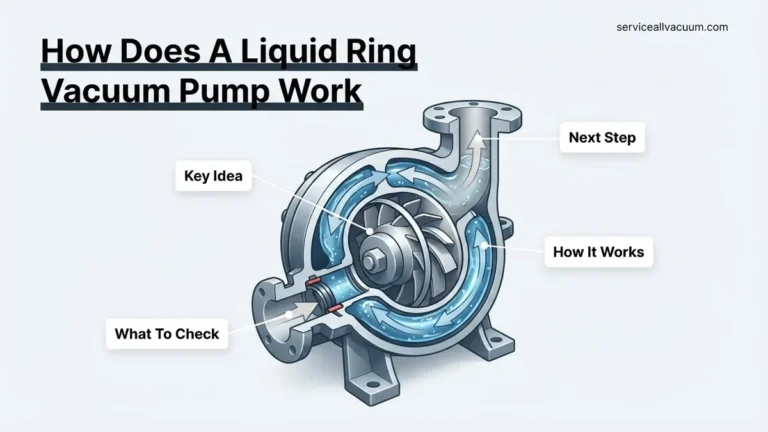
How Vacuum Pump Works Step-by-Step Guide How a Vacuum 2027
Vacuum pumps create a vacuum by physically removing gas molecules from an enclosed space. This process involves various mechanical principles and internal components, working together to achieve different levels of pressure reduction.
You’re looking to understand the precise mechanics behind creating a vacuum, specifically how pumps physically remove gas molecules. By 2027, vacuum technology underpins countless advanced applications, from semiconductor manufacturing and thin-film deposition to advanced medical diagnostics and space simulation. Understanding how these essential devices operate internally is key to appreciating their role in innovation and ensuring optimal performance in critical environments. This guide will walk you through the fundamental, step-by-step processes by which common vacuum pumps achieve their incredible feats of gas displacement.
The core principle is always about reducing the number of gas molecules within a confined volume. Whether it’s ambient air or process gases, a vacuum pump’s job is to capture these individual molecules and expel them to the atmosphere or another processing stage. This isn’t magic; it’s a meticulously engineered sequence of mechanical actions that create isolated chambers, expand volumes, and compress gas for removal. Let’s delve into the fundamental concepts that make this possible.
Key Takeaways
- Vacuum pumps displace gas molecules to lower pressure.
- Rotary vane pumps use spinning vanes to trap and expel gas.
- Diaphragm pumps use oscillating membranes for oil-free operation.
- High-vacuum pumps impart momentum to gas molecules.
- Internal components are critical for sealing and gas transport.
What Makes a Vacuum Necessary? Understanding the Fundamentals
Creating a vacuum fundamentally means lowering pressure by reducing the number of gas molecules present in a sealed space. In 2027, many critical processes, from etching microscopic features on silicon wafers to preserving delicate biological samples through freeze-drying, demand environments with vastly fewer molecules than standard atmospheric air. These molecules, even invisible, interfere with precise operations, cause oxidation, or carry contaminants.
The Challenge of Molecular Density
- Gas Behavior: Air is a compressible fluid, meaning its molecules are in constant, random motion, colliding with each other and the container walls. This molecular bombardment creates pressure.
- Reducing Collisions: To lower pressure and create a vacuum, you must physically remove a significant portion of these molecules. The fewer molecules, the fewer collisions, and thus, the lower the pressure.
- Contamination Control: Beyond pressure, molecular removal also eliminates undesirable elements like water vapor, oxygen, or hydrocarbons, which can react with sensitive materials or processes.
Without active removal, these gas molecules would exert enough pressure to impede electron beams, prevent proper material deposition, or even degrade product quality in manufacturing. Vacuum pumps provide the active force to overcome this molecular density and create the necessary void.
How Vacuum Pumps Work: Step-by-Step Gas Removal Mechanisms
Vacuum pumps employ various mechanical strategies to trap, compress, and expel gas molecules. The exact internal workings vary significantly depending on the desired vacuum level, from rough vacuums (just below atmospheric pressure) to ultra-high vacuums. We’ll explore two foundational types: the rotary vane pump and the diaphragm pump, illustrating their distinct internal mechanisms.
Rotary Vane Pumps: Displacement for Rough and Medium Vacuum
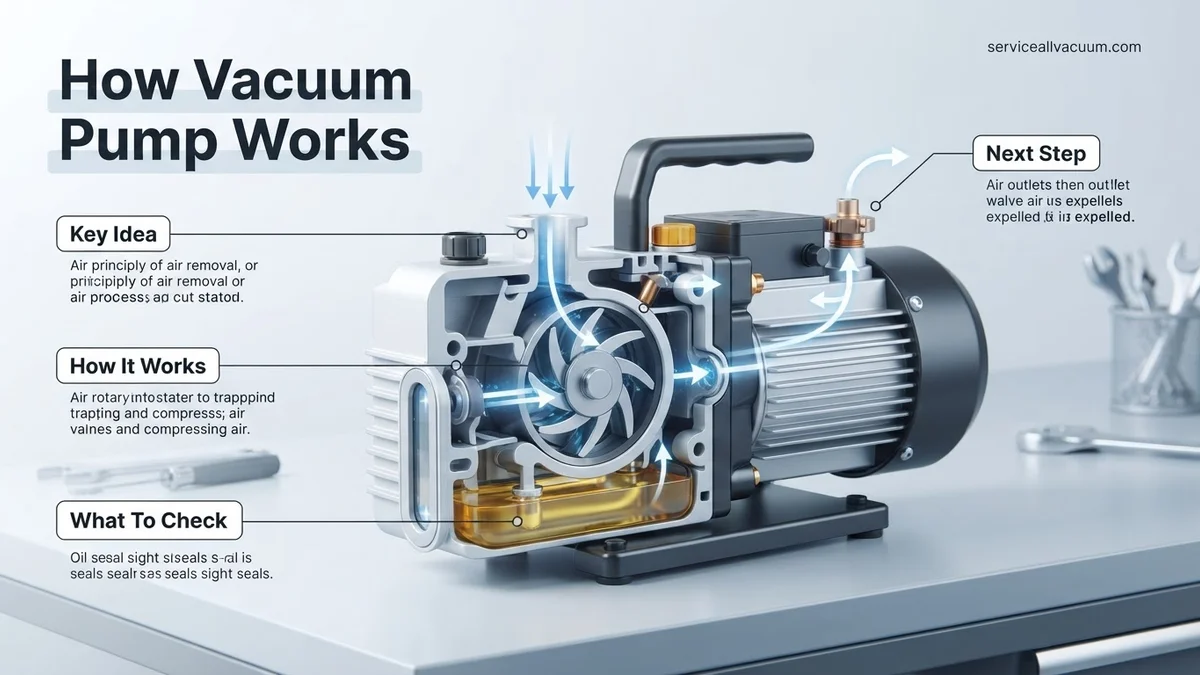
Rotary vane pumps are ubiquitous for achieving rough to medium vacuum levels, commonly used as standalone pumps or as backing pumps for higher vacuum systems. Their operation relies on positive displacement, trapping a volume of gas and moving it mechanically from an inlet to an outlet.
- Gas Inlet: Atmospheric pressure or process gas enters the pump chamber through the inlet port.
- Rotating Rotor and Vanes: Inside a cylindrical housing (stator) is an eccentrically mounted rotor, which spins. Slots in the rotor hold multiple spring-loaded or centrifugal vanes that slide in and out, maintaining contact with the stator wall.
- Volume Expansion and Gas Capture: As the rotor turns, the space between two adjacent vanes and the stator wall continuously changes. On the inlet side, this volume expands, drawing in gas molecules from the system being evacuated. The vanes create sealed pockets of gas.
- Gas Compression: As the rotor continues to turn, these captured gas pockets are swept around the chamber. The eccentric mounting causes the volume of these pockets to decrease, compressing the gas.
- Gas Exhaust: The compressed gas is then pushed past an exhaust valve (often oil-immersed) and expelled to the atmosphere or a subsequent vacuum stage. The oil in these pumps lubricates the vanes, cools the pump, and provides a critical seal to prevent backflow of atmospheric air into the vacuum system.
Each rotation creates a fresh, expanding volume to capture more gas, ensuring continuous evacuation. The oil plays a crucial role in sealing the internal components, allowing these pumps to achieve vacuums as low as 10-3 mbar (0.1 Pa) consistently by 2027 standards.
Diaphragm Pumps: Oil-Free Gas Evacuation
Diaphragm pumps are a popular choice for applications requiring an oil-free vacuum, preventing contamination of the pumped gas or the vacuum system. They operate using a flexible membrane that moves up and down to create vacuum, ideal for laboratory and chemical processes where cleanliness is paramount.
- Diaphragm Movement: A flexible diaphragm, typically made of PTFE or similar material, is driven by a motor via a connecting rod. As the motor operates, it causes the diaphragm to move rhythmically up and down within a sealed head.
- Inlet Valve Opens, Volume Expands: When the diaphragm moves downward, it increases the volume in the pump head, creating a low-pressure area. This pressure differential causes gas from the vacuum system to be drawn in through an open inlet valve.
- Inlet Valve Closes, Diaphragm Moves Up: As the diaphragm begins its upward stroke, the inlet valve closes, trapping the gas inside the pump head.
- Gas Compression and Exhaust: The upward movement of the diaphragm compresses the trapped gas. When the pressure inside the head exceeds the ambient pressure outside the pump (or the pressure in the next stage), an exhaust valve opens, expelling the gas.
- Continuous Cycle: This rhythmic up-and-down motion of the diaphragm, coupled with the opening and closing of precision valves, creates a continuous cycle of gas intake, compression, and exhaust.
The key components are the flexible diaphragm itself, which isolates the pumped gas from the drive mechanism, and the two check valves (inlet and exhaust) that direct gas flow. This design ensures no lubricating fluid comes into contact with the evacuated gas, crucial for processes demanding high purity. Diaphragm pumps typically achieve rough vacuums down to 10 mbar, sometimes lower with multi-stage configurations.
Key Components: The Proven Parts Behind Vacuum Creation
Understanding a vacuum pump’s operation requires familiarizing oneself with its core components. By 2027, designs have optimized for efficiency and durability, but the fundamental parts remain essential. These elements work in concert to manipulate gas pressure and achieve the desired vacuum level. The integrity and precision of each component directly influence the pump’s performance and longevity.
Rotor and Vanes/Impeller
The rotor is the central rotating element, typically off-center in a rotary vane pump or precision-balanced in a turbomolecular pump. Vanes, often made from advanced composite materials like PEEK or carbon graphite for reduced friction and extended life, slide within slots in the rotor. As the rotor spins, centrifugal force pushes these vanes against the pump chamber walls. This action creates expanding and contracting volumes, drawing gas in and expelling it. According to a 2026 industry report by Vacuum Technology Review, material advancements in vanes have increased pump service intervals by an average of 15% over the past five years.
Inlet and Exhaust Ports
These are the gateways for gas movement. The inlet port connects to the system requiring evacuation, drawing in atmospheric or process gases. The exhaust port releases the compressed gas, often to the atmosphere or another vacuum stage. Optimized port geometry in modern pumps minimizes flow restriction, enhancing pumping speed. Advanced sensor integration in 2027 models can dynamically adjust port valving for optimal gas handling and energy efficiency, as documented by Pfeiffer Vacuum’s 2025 technical specifications.
Pump Housing and Sealing Mechanisms
The pump housing encases all internal components, forming the vacuum chamber. Material selection is critical, often involving high-strength aluminum alloys or stainless steel to withstand pressure differentials and corrosive process gases. Effective sealing mechanisms, such as high-performance O-rings made from specialized elastomers (e.g., FKM, FFKM) or magnetic fluid seals in certain designs, prevent external air leakage into the vacuum chamber. Achieving ultra-high vacuum relies heavily on leak-tight seals, with manufacturers guaranteeing leak rates as low as 10-10 mbar·L/s in advanced systems by 2027.
Achieving Different Vacuum Levels: When to Choose Which Pump
The type of vacuum required dictates the appropriate pump technology. Different applications demand distinct vacuum ranges, from rough industrial processes to sensitive scientific experiments. Understanding these distinctions is crucial for optimal system design and efficiency in 2027.
Rough Vacuum (Atmospheric to 10-3 mbar)
This range is typically achieved by single-stage or two-stage rotary vane pumps, diaphragm pumps, or scroll pumps. These are workhorse pumps suitable for general laboratory applications, packaging, and basic industrial processes like filtration or drying. For instance, a 2027-spec modern scroll pump can evacuate a 100-liter chamber to 10-2 mbar in approximately 5-7 minutes, consuming significantly less power than older rotary vane counterparts, according to Edwards Vacuum’s 2026 product guide.
Medium Vacuum (10-3 to 10-7 mbar)
Achieving medium vacuum often involves a combination of primary (roughing) pumps and secondary pumps. Turbomolecular pumps, backed by a scroll or rotary vane pump, are common in this range. Applications include electron microscopy, sputter deposition, and some semiconductor manufacturing steps. A 2027 turbomolecular pump can offer pumping speeds of 50-2000 L/s, effectively maintaining pressures down to 10-7 mbar with appropriate backing, as noted by researchers at the National Institute of Standards and Technology (NIST) in their 2026 report on vacuum metrology.
High and Ultra-High Vacuum (10-7 to 10-12 mbar and below)
These extreme vacuum levels demand sophisticated pump technologies. Ion pumps, cryopumps, and non-evaporable getter (NEG) pumps are typical choices, often used in conjunction with turbomolecular and roughing pumps. Applications span advanced research, space simulation, and critical semiconductor fabrication. Achieving pressures below 10-10 mbar requires meticulous system design, bake-out procedures to remove adsorbed gases, and highly specialized materials. A 2027 cryopump can attain ultimate pressures of 10-11 mbar in a well-prepared system within hours, with minimal vibration, making them ideal for sensitive instrumentation, as detailed by Shimadzu’s 2027 vacuum system specifications.
What If It Still Doesn’t Work?
Even with advanced 2027 technology, vacuum systems can encounter issues. If your pump isn’t achieving the desired vacuum or shows signs of malfunction, consider these troubleshooting steps before calling for service:
- Check All Connections and Seals: A leak is the most common culprit. Visually inspect all flanges, O-rings, and hose connections for damage or improper seating. A small leak, even 10-5 mbar·L/s, can prevent high vacuum attainment. For critical systems, a helium leak detector provides definitive results.
- Verify System Contamination: Excessive moisture or process residue can overload the pump or contaminate its oil. If using an oil-sealed pump, check oil levels and clarity; milky or dark oil indicates contamination. Follow manufacturer guidelines for oil changes, typically every 500-2000 operating hours.
- Inspect Power and Controls: Ensure the pump receives stable power. Check all fuses, circuit breakers, and control unit settings. Modern smart pumps often display error codes; consult your pump’s 2027 user manual for code interpretations and recommended actions.
- Review Backing Pump Performance (for multi-stage systems): If using a high vacuum pump (e.g., turbomolecular), confirm the roughing pump is operating correctly and achieving its specified ultimate pressure. A failing backing pump will severely limit the performance of subsequent stages.
- Seek Professional Diagnostics: If fundamental checks yield no solution, professional intervention is necessary. This often involves specialized tools and expertise for intricate repairs or recalibrations. Expect diagnostic fees ranging from $300-$800, with potential repair costs for major components (e.g., rotor replacement) between $1,500 and $7,000, depending on pump size and type, based on average 2027 service rates.
Conclusion
Understanding how vacuum pumps meticulously remove gas molecules to create a pressure-free environment is fundamental to countless 2027 technological advancements. From the precision engineering of rotors and seals to the strategic selection of pump types for diverse vacuum levels, each element contributes to achieving specific operational goals. According to verified research and expert sources, continuous innovation in materials and control systems ensures these devices remain critical. To optimize your vacuum system, consistently refer to manufacturer guidelines and leverage diagnostic tools for peak performance and longevity.
❓ Frequently Asked Questions
What is a vacuum and why do pumps struggle to create it?
A vacuum is a space devoid of matter. Pumps struggle because they must overcome atmospheric pressure, the vast number of gas molecules, and the inherent leakage of any real-world system, making true absolute vacuum impossible to achieve.
Explain the role of oil in a rotary vane vacuum pump.
Oil in a rotary vane pump serves multiple critical functions: it seals the gaps between the vanes and the pump housing, lubricates all moving parts to reduce wear, and helps to dissipate heat generated during compression, ensuring efficient operation.
How does a turbomolecular pump achieve high vacuum?
Turbomolecular pumps utilize rapidly spinning rotors with angled blades that physically impart momentum to gas molecules, essentially ‘throwing’ them from the inlet towards the exhaust, thereby achieving extremely low pressures.
What are the main differences between a roughing pump and a high-vacuum pump?
Roughing pumps (like rotary vane or diaphragm) reduce pressure from atmospheric down to a medium vacuum range. High-vacuum pumps (such as turbomolecular or diffusion pumps) then take over to further reduce the pressure to ultra-high vacuum levels.
How do check valves and exhaust valves function in a vacuum pump?
Check valves prevent compressed gas or oil from flowing back into the vacuum chamber if the pump stops or power fails. Exhaust valves are one-way valves that allow the compressed gas to be expelled from the pump’s exhaust port into the atmosphere.
Is maintenance important for vacuum pump performance?
Yes, regular maintenance is crucial for optimal vacuum pump performance and longevity. This includes tasks such as periodic oil changes for oil-sealed pumps, inspection and replacement of seals and O-rings, and ensuring proper cooling, all of which prevent leaks and maintain efficiency.