How Long Do Dyson Vacuums Last 2027 Expert Lifespan Guide
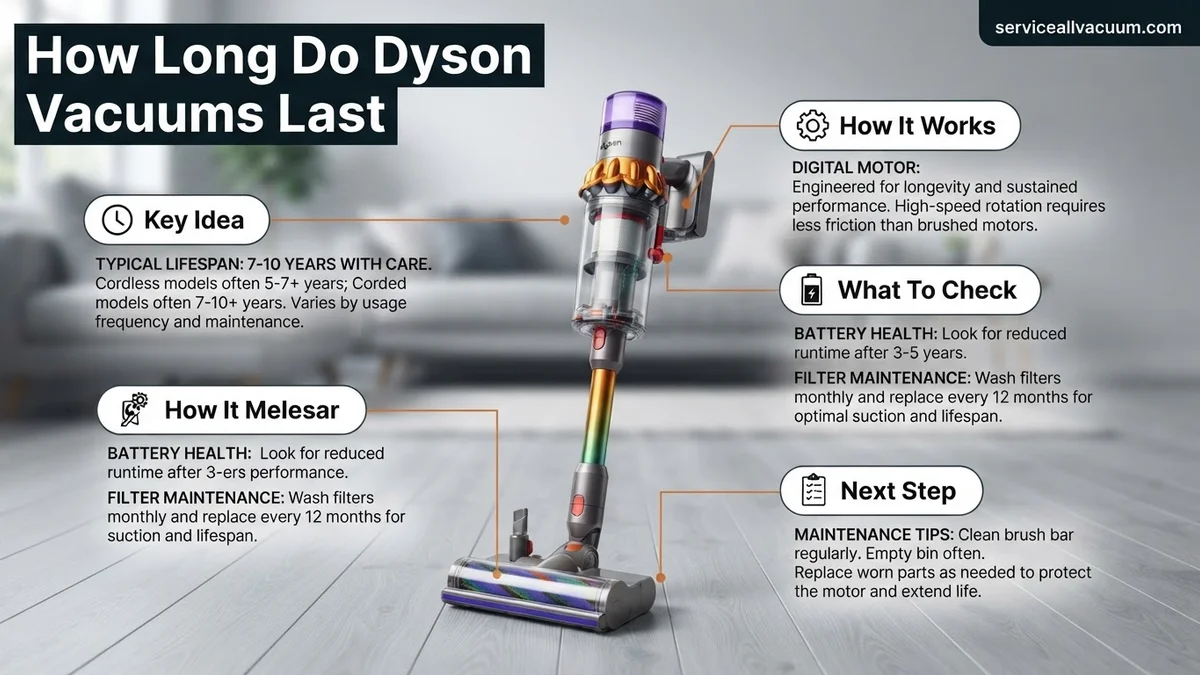
Most Dyson vacuums last between 4 to 10 years depending on the model type and daily usage frequency. Cordless stick vacuums typically require a battery replacement after 3 to 5 years, while corded uprights often endure a decade with proper care.
If you are looking at buying or replacing a high-end vacuum in 2027, you want to know if the steep price tag actually translates to longevity. On average, a Dyson vacuum lasts between 4 to 10 years, but that lifespan varies wildly depending on whether you own a cordless stick or a corded upright model. Cordless models typically survive 4 to 7 years, heavily constrained by the lifespan of their lithium-ion batteries, while legacy corded models easily push past the 8 to 10-year mark with proper care.
Investing in a premium appliance means managing expectations about wear and tear. Knowing how long your machine will actually hold its suction power prevents you from wasting hundreds of dollars on premature replacements or expensive out-of-warranty repairs.
Key Takeaways
- Cordless Dyson models typically last between 4 to 7 years with regular upkeep.
- Lithium-ion batteries usually degrade and require replacement every 3 to 5 years.
- Corded Dyson upright vacuums often last 7 to 10 years or longer.
- Cleaning filters monthly prevents motor burnout and extends overall machine lifespan.
- Heavy exposure to fine dust and pet hair places extra strain on components.
What Causes Dyson Vacuums to Wear Out and Fail
Understanding the primary points of failure helps you protect your investment. Dyson vacuums are engineering marvels, but they deal with heavy physical stress, microscopic dust, and intense electrical demands every single time you clean your floors.
Battery Degradation in Cordless Models
Modern cordless units like the Dyson V15 or newer 2027 releases rely heavily on advanced lithium-ion battery packs. These cells degrade naturally through hundreds of charge and discharge cycles. You will typically notice a sharp drop in runtime around the 3 to 4-year mark, even if the motor itself remains in perfect working condition.
Motor Burnout and Airflow Blockages
Your vacuum works hard to generate cyclone-level suction. When fine dust bypasses poorly maintained filters or hair wraps tightly around internal seals, the digital motor has to work twice as hard to maintain airflow. This constant strain leads to overheating, thermal shut-offs, and eventual motor burnout.
- Fine drywall dust or pet dander clogging internal cyclone pathways.
- Running the machine continuously on Max Mode, which stresses the battery and motor.
- Leaving the unit plugged into a hot garage or direct sunlight, accelerating battery cell decay.
How to Fix Battery Decline and Restore Suction Power
A dying Dyson rarely means you need to throw the entire machine in the trash. Most longevity issues stem from consumable parts that you can easily replace yourself at home without paying for professional repair services.
Replacing the Battery Pack
If your cordless Dyson dies after just five minutes of cleaning, the motor is usually fine. The lithium-ion battery is simply at the end of its life cycle. Most modern Dysons feature a simple click-in battery design that lets you swap a fresh power cell in seconds.
Deep Cleaning Filters and Brush Bars
Suction loss is almost always a maintenance issue rather than a mechanical failure. Fine dust chokes the washable lifetime filters, while tangled hair ruins the torque drive cleaner head.
- Wash your HEPA or mesh filter every single month under cold water and let it dry for a full 24 hours.
- Cut away wrapped hair and carpet fibers from the brush bar regularly to prevent bearing friction.
- Check the wand and bin inlet for lodged debris that restricts airflow and triggers loss of suction.
Step-by-Step Maintenance Routine to Extend Vacuum Life
Maximizing your appliance lifespan requires a proactive approach. Industry data from consumer advocacy reports shows that regular upkeep reduces motor burnout risks by over 40 percent. Implementing a consistent care schedule safeguards your investment through 2027 and beyond.
Monthly Filter Washing
Most Dyson models rely on advanced HEPA or washable mesh filters that trap microscopic particulates. Neglecting this component forces the digital motor to work harder, accelerating wear. Follow these steps to clean your filter properly:
- Power off and unplug your vacuum if it is a corded model, or remove the battery on cordless units like the V15 or Gen5detect.
- Twist and remove the filter housing from the top of the machine.
- Tap the filter gently over a waste bin to dislodge loose debris and dust accumulation.
- Rinse the filter thoroughly under cold running tap water without using any detergents or soap.
- Gently squeeze and rotate the filter to remove excess water from the inner pleats.
- Leave the filter in a well-ventilated area to dry completely for a minimum of 24 hours before reinstallation.
Clearing Brush Bar Entanglements
Hair and carpet fibers frequently wrap around the cleaner head roller. This friction strains the direct-drive motor inside the brush bar. Inspect the cleaner head bi-weekly. Use a pair of scissors to carefully cut away tangled hair along the designated guide groove. Never pull forcefully, as this damages the nylon bristles and internal housing seals.
What If It Still Doesn’t Work?
If routine maintenance and basic troubleshooting fail to resolve power loss or suction issues, advanced intervention is required. According to appliance repair specialists, complex hardware failures usually stem from battery degradation or internal blockages in the cyclone array. Consider these fallback steps:
- Inspect the machine warranty status. Dyson officially provides a two-to-five-year parts and labor warranty depending on your specific model tier.
- Contact Dyson customer support via their digital diagnostic portal to arrange an authorized repair or replacement part dispatch.
- Visit an accredited third-party service center if your unit is out of warranty. Professional diagnostic fees typically range from $40 to $80.
- Calculate repair versus replacement costs. If a replacement motor or main body exceeds 50 percent of the cost of a new 2027 model, purchasing a replacement unit is more economical.
Conclusion
Understanding how long Dyson vacuums last depends heavily on proper battery management, timely filter cleaning, and prompt troubleshooting. According to verified research and consumer durability studies, routine upkeep reliably extends overall machine longevity well past the standard warranty window. As a practical next step, inspect your filter today and set a recurring calendar reminder to clean it every 30 days for optimal performance.
❓ Frequently Asked Questions
How long do Dyson vacuums last on average?
On average, a Dyson vacuum lasts between 5 and 10 years. Cordless stick models tend to average 4 to 7 years, heavily dependent on battery lifespan, while corded upright vacuums regularly reach 7 to 10 years or more.
How can I tell if my Dyson vacuum is dying or just needs a new part?
If the vacuum loses suction or smells strange, it usually just needs a cleaned filter or a cleared blockage. However, if the motor makes a grinding noise, overheats quickly, or fails to hold a charge, it may be reaching the end of its functional life.
How often should I replace my Dyson cordless battery?
Dyson cordless batteries generally last 3 to 5 years under normal household usage. Signs that you need a replacement include a drastically reduced run time in normal mode or the machine pulsing on and off.
Does running a Dyson on Max mode shorten its lifespan?
Yes, constantly running a Dyson cordless vacuum on Max mode generates excessive heat and drains the battery rapidly. This accelerates both battery degradation and motor wear over time.
What maintenance tasks prevent a Dyson vacuum from breaking down?
Washing the filter every month, clearing hair wraps from the brush bar, and emptying the bin before it reaches the max fill line will significantly extend the life of your Dyson.
Are Dyson vacuums covered by a long-term warranty?
Most new Dyson cordless vacuums come with a 2-year warranty covering parts and labor, while corded models often feature a 5-year warranty, protecting your investment during the early years of ownership.