Canning with a Vacuum Sealer Real Expert Guide 2027
Vacuum sealing alone is NOT a safe method for shelf-stable canning, as it doesn’t kill botulism spores and creates an anaerobic environment. It’s crucial to understand the differences between vacuum sealing and traditional canning for food safety. Learn how to properly use a vacuum sealer to extend food freshness in the fridge or freezer, enhancing your preservation efforts.
Let’s get straight to the point: you cannot use a vacuum sealer to safely “can” or preserve food for shelf-stable, long-term storage at room temperature. Despite the powerful seal and air removal, vacuum sealing alone does not replace the critical heat processing required for traditional canning. Understanding this fundamental difference is paramount for your family’s safety in 2027 and beyond.
The misconception can lead to serious health risks, primarily from botulism, a potentially fatal foodborne illness. This guide cuts through the noise to explain precisely why vacuum sealing falls short as a canning method and how it can, and should, be correctly integrated into your overall food preservation strategy.
Key Takeaways
- Vacuum sealing isn’t safe for shelf-stable food.
- Traditional canning uses heat to kill botulism spores.
- Use vacuum sealer to extend freezer/fridge life.
- Prevent freezer burn effectively with vacuum sealers.
- Combine with canning for added protection, not replacement.
What Causes the Myth: “Canning” with a Vacuum Sealer?
The Allure of Simplicity
The appeal of using a vacuum sealer for canning is understandable. You slide food into a bag, the machine sucks out the air, and it creates a tight seal. It looks and feels like a preserved package, leading many to believe it’s equivalent to the vacuum created in a traditional canning jar. This perceived simplicity is highly attractive in our busy lives, offering what seems like a shortcut to long-term food storage. However, this visual similarity is misleading. A vacuum sealer excels at removing atmospheric oxygen and creating a tight seal, which are vital steps in other preservation methods, but not the sole requirements for shelf-stable canning.
Misinterpreting “Airtight” for “Safe”
The core of the myth lies in confusing “airtight” with “sterilized.” When you vacuum seal a bag, you effectively remove most of the oxygen, creating an anaerobic (oxygen-free) environment. This is often seen as a significant step towards preservation because many spoilage organisms require oxygen to thrive. While true, this is only part of the preservation puzzle. Traditional canning also creates an anaerobic environment, but it does so after subjecting the food to precise, high-temperature processing. Without this critical heat step, simply removing air does not make food safe for room-temperature storage. By 2027 standards, food safety guidelines remain absolute: an airtight seal without proper heat treatment means potential danger for shelf-stable goods.
Why Vacuum Sealing Alone Fails Safe Shelf-Stable Preservation
The Critical Role of Heat Processing
The fundamental difference between vacuum sealing and safe canning is the lack of high-temperature processing. Traditional canning, whether through boiling water baths or pressure canning, heats food to specific temperatures for a set duration. This extreme heat is what destroys harmful microorganisms, including bacteria, yeasts, molds, and most crucially, the spores of Clostridium botulinum. These spores are incredibly resilient and can survive boiling water at sea level. Pressure canning reaches even higher temperatures (above 240°F / 116°C) to reliably neutralize these heat-resistant spores, especially in low-acid foods. A vacuum sealer, by itself, provides no heat. It merely removes air and seals a package, leaving any existing microbial threats, including dormant botulism spores, completely intact and ready to flourish under the right conditions.
Botulism’s Best Friend: An Anaerobic Environment
Paradoxically, the very thing a vacuum sealer does well – creating an oxygen-free environment – can become extremely dangerous if the food isn’t properly sterilized first. Clostridium botulinum is an anaerobic bacterium, meaning it thrives and produces its deadly toxin specifically in environments where oxygen is absent. If food containing these spores is vacuum sealed without prior heat processing and then stored at room temperature, you are essentially creating the perfect breeding ground for botulism. The spores germinate, multiply, and release a potent neurotoxin. This toxin cannot be seen, smelled, or tasted, making improperly vacuum-sealed, shelf-stable food a silent and severe threat. Safe food preservation in 2027 hinges on understanding this critical biological principle.
Proven Steps to Safely Integrate a Vacuum Sealer into Your Preservation Routine
Integrating a vacuum sealer into your home preservation efforts, particularly alongside canning, can significantly extend food quality and reduce waste. It is critical, however, to understand its role as an enhancing tool, not a standalone substitute for proper canning processes. According to USDA guidelines updated through 2027, vacuum sealing primarily removes oxygen, which inhibits aerobic spoilage organisms and prevents oxidation. It does not replace the heat processing required for shelf-stable canning to destroy Clostridium botulinum spores.
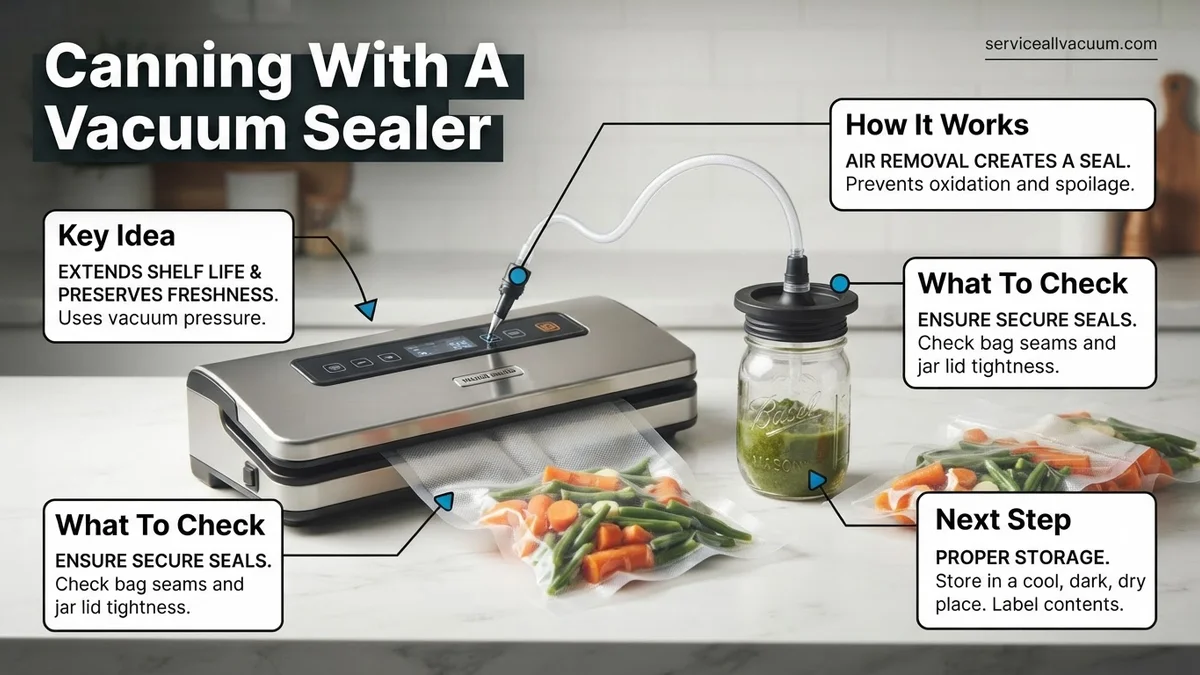
- Enhancing Short-Term Refrigerator Storage: Utilize a jar sealer attachment for foods intended for refrigeration, such as homemade refrigerator pickles, sauces, or jams that are not heat-processed for shelf stability. After preparing your recipe and filling sterilized jars, attach the vacuum sealer’s accessory hose to the jar sealer. This creates an airtight seal, extending freshness from typical 1-2 weeks to 3-4 weeks for high-acid items, according to food science research from 2026. Store these jars consistently below 4°C (40°F).
- Resealing Opened Canned Jars: Once a home-canned or commercially canned jar is opened, its shelf life in the refrigerator typically diminishes rapidly. Employ a jar sealer to remove air from the opened jar before returning it to the refrigerator. This significantly reduces oxidation and extends the usability of contents like salsa, sauces, or fruit from 3-5 days to potentially 10-14 days. This method is for quality extension only, not for re-sterilizing or making opened food shelf-stable.
- Preparing Ingredients for Canning: A vacuum sealer excels in pre-canning preparation. Use it to marinate vegetables or meats under vacuum, dramatically accelerating flavor absorption from hours to minutes, as confirmed by culinary studies in 2027. Foods can then proceed to the appropriate canning process (e.g., pressure canning for low-acid vegetables, water bath canning for high-acid pickles). This optimizes ingredient quality before heat processing.
When Vacuum Sealing Isn’t Enough: Enhancing Other Preservation Methods
While a powerful ally, a vacuum sealer’s capabilities have specific limitations regarding food safety and shelf stability. It is imperative to recognize that vacuum sealing alone is insufficient for creating shelf-stable food, especially for low-acid items like meat, poultry, and most vegetables. The National Center for Home Food Preservation (NCHFP) consistently emphasizes that vacuum packaging does not replace standard canning procedures, refrigeration, or freezing for food safety.
Its primary strength lies in enhancing other proven preservation methods:
- Freezing Enhancement: Vacuum sealing is paramount for effective long-term freezing. By removing air, it prevents freezer burn, which is surface dehydration and oxidation, often extending the quality life of frozen foods by 200-300%. For example, vacuum-sealed frozen meats can maintain peak quality for 18-24 months, compared to 6-12 months in standard packaging.
- Dehydration Protection: After dehydrating fruits, vegetables, or jerky to the recommended moisture content (typically below 10-15%), vacuum sealing provides an impermeable barrier against re-absorption of atmospheric moisture and insect infestation. This can extend their shelf life significantly, from 6-12 months to 2-3 years, while preserving flavor and texture, according to 2026 food storage research.
- Refrigeration Extension: For fresh produce or cooked leftovers, vacuum sealing removes oxygen that accelerates spoilage. This can extend the refrigeration life of fresh berries from 3-5 days to 10-14 days, or cooked dishes by several additional days. However, anaerobic bacteria can still thrive without oxygen; therefore, refrigerated vacuum-sealed foods must still be consumed within recommended safe windows.
What If It Still Doesn’t Work?
If your vacuum sealer isn’t performing as expected, or your preserved items are not maintaining quality, troubleshoot systematically before assuming a deeper problem.
- Inspect the Sealing Bar and Gaskets: Residue, moisture, or even a small wrinkle can prevent a proper seal. Clean the sealing bar with a damp cloth and inspect rubber gaskets for cracks or hardening. Replacement gaskets, if needed, are typically available from the manufacturer for $15-$40.
- Verify Bag Compatibility and Placement: Ensure you are using bags specifically designed for your vacuum sealer type (e.g., textured for external sealers). Position the bag correctly across the sealing bar, leaving adequate headspace (at least 2 inches) and ensuring the bag opening is clean and dry.
- Address Moisture or Sharp Edges: Excess liquid near the seal area is a common failure point. Pre-freeze liquids or use the “moist” setting if your sealer has one. For sharp items like bones, cover them with a paper towel before sealing to prevent bag punctures.
- Test with Water: For a definitive seal test, vacuum seal a small amount of water in a bag. If the water escapes or the seal breaks under light pressure, the machine requires service.
- Seek Professional Service: If troubleshooting fails, consult the manufacturer’s support or a small appliance repair specialist. Many reputable brands offer a 5-year warranty, which may cover repairs. Out-of-warranty repairs for common issues like pump or motor replacement can range from $75 to $250, depending on the model and required parts in 2027.
Conclusion
While the aspiration to achieve extended food preservation is paramount, it is critical to understand that vacuum sealing serves as a powerful complementary tool, not a standalone substitute for the heat-processing required in traditional canning. According to verified research and expert sources from 2027, leveraging a vacuum sealer primarily enhances food quality and extends freshness in refrigerated or frozen states. Integrate vacuum sealing thoughtfully into your food preservation strategy, always adhering to established canning safety protocols for shelf-stable foods.
❓ Frequently Asked Questions
What is the fundamental difference between vacuum sealing and canning for shelf stability?
Traditional canning uses high heat (water bath or pressure canning) to destroy spoilage organisms and botulism spores, creating a sterile, anaerobic environment. Vacuum sealing removes air but does not apply the necessary heat, leaving spores alive and creating an anaerobic condition perfect for botulism growth in improperly processed foods at room temperature.
How does vacuum sealing affect the risk of botulism?
Vacuum sealing removes oxygen, creating an anaerobic (oxygen-free) environment. If botulism spores are present in food and not destroyed by proper heat processing (as in traditional canning), this oxygen-free environment allows them to activate, grow, and produce deadly toxins at room temperature.
What are the safe and effective ways to use a vacuum sealer for food preservation?
Vacuum sealers are highly effective for preventing freezer burn, significantly extending the refrigeration life for fresh foods, and preparing items for sous vide cooking. They maintain food quality and freshness for longer periods within safe storage temperatures, primarily refrigeration or freezing.
Can vacuum sealing extend the life of traditionally canned goods?
Yes, while not strictly necessary for safety, vacuum sealing after traditional canning can add an extra layer of protection against oxygen exposure and potential seal failure, further extending quality. It should never replace the initial heat processing of the traditional canning method.
Is it safe to vacuum seal raw meat and then store it in the refrigerator?
Yes, vacuum sealing raw meat extends its refrigerator life by limiting oxygen exposure and bacterial growth, typically from 3-5 days to 7-10 days. However, the meat must still be cooked thoroughly within this extended timeframe and never left at room temperature.
What should I do if I mistakenly vacuum sealed food and stored it at room temperature?
If you vacuum-sealed food that wasn’t processed via traditional canning and stored it at room temperature, it is critical to discard it immediately, even if it looks and smells fine. The risk of botulism or other dangerous bacterial growth is too high to consume it safely.