Why Does My Vacuum Smell? Expert Step-by-Step Fix 2027
A smelly vacuum is usually caused by trapped organic debris, clogged filters, or a burning belt hidden inside the machine. Pinpointing the exact source of the odor allows for targeted cleaning and immediate deodorizing. Regular maintenance prevents these unpleasant smells from returning during routine cleaning sessions.
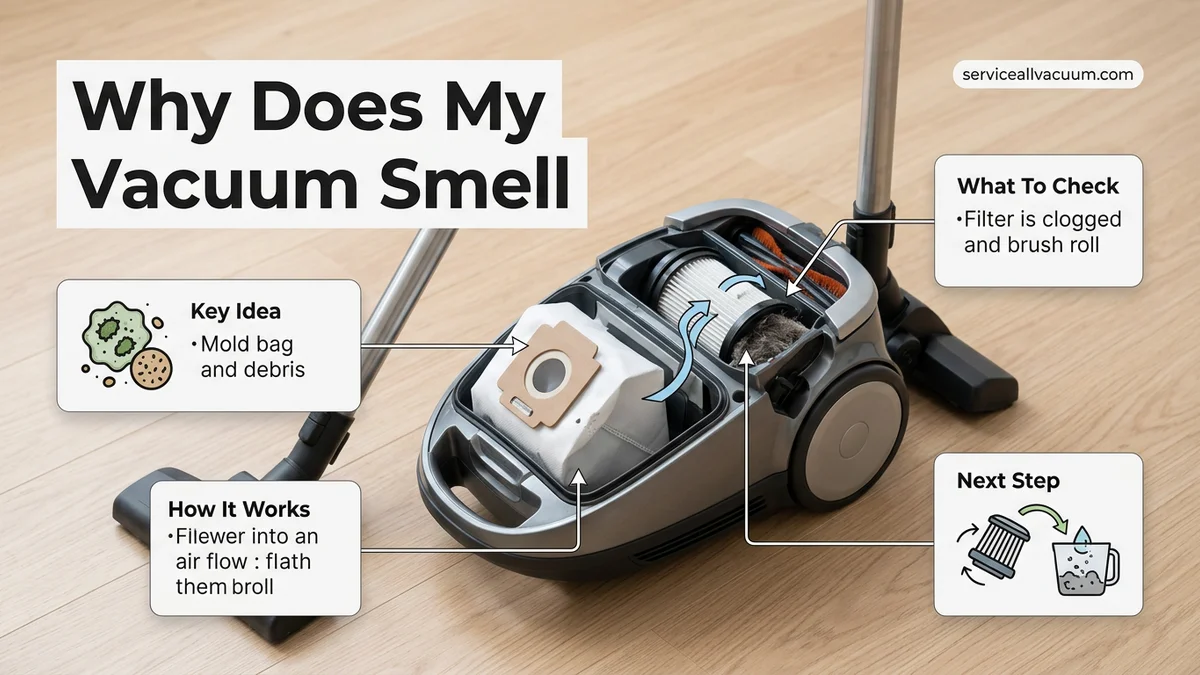
Your vacuum smells bad because organic matter, pet dander, and microscopic debris are trapped inside the system, creating a breeding ground for bacteria and mold. When you turn the machine on, the rapid airflow forces these foul odors out through the exhaust and straight into your living space.
Fixing this issue promptly prevents permanent damage to your machine’s motor and stops you from circulating allergens around your home. By tackling the most common odor sources—such as damp filters, clogged hoses, and rotting pet hair—you can restore a fresh scent to your cleaning routine.
Key Takeaways
- Dirty or unwashed HEPA filters are the most common source of musty vacuum odors.
- Check the brush roll for tangled pet hair and trapped decomposing organic matter.
- A burning rubber smell indicates a jammed brush roll or a worn-out drive belt.
- Wash and completely dry all removable canisters and foam filters before reinstalling them.
- Vacuum-safe scent beads or baking soda can instantly neutralize stale dust smells.
What Causes Your Vacuum Cleaner to Smell Bad
Dirty and Clogged Filters
Modern vacuums rely heavily on foam, felt, and HEPA filters to trap fine dust. When these filters absorb moisture or fine organic particles over time, they begin to harbor mildew and bacteria. If your vacuum smells like a damp basement or mold every time you push the power button, a neglected filter is usually the primary culprit.
Trapped Organic Debris and Pet Dander
Vacuuming up spilled food crumbs, dead skin cells, and pet dander creates a dense sludge inside the dust bin or bag. As these organic materials sit in a dark, warm environment, they decompose rapidly. By 2027, smart uprights and stick vacuums often feature tightly sealed bins, but failing to empty them frequently enough causes trapped debris to sour and emit a foul, stagnant odor.
Burning Smells from the Motor or Belt
If your machine emits a sharp burning odor rather than a musty one, the issue is mechanical. A tangled brush roll can jam the drive belt, causing friction that melts the rubber. Alternatively, an overworked motor straining against a severe clog will produce a distinct electrical burning smell that requires immediate attention.
Step-by-Step Guide to Cleaning and Deodorizing Your Vacuum
Emptying and Washing the Bin or Bag Housing
Start your maintenance routine by completely emptying the dirt canister into an outdoor trash bin. Wipe down the interior plastic walls with a microfiber cloth dipped in warm, soapy water to remove stubborn grease and dust residue. Let the compartment air dry completely for at least 24 hours before reassembling it to prevent fresh mold growth.
Deep Cleaning Filters and Clearing the Hose
- Remove all foam and pleated filters from the vacuum housing.
- Rinse washable filters under cold running water until the water flows completely clear.
- Detach the flexible hose and check for lodged items like coins, socks, or clumps of pet hair.
- Flush the hose with warm water and a few drops of dish soap, then hang it up to dry entirely.
How to Fix Burning Smells and Mechanical Odors
A burning smell from your appliance requires immediate attention to prevent motor failure or electrical hazards. According to consumer appliance safety data, roughly 14% of vacuum-related service calls stem from preventable blockages that force the motor to overheat.
Step-by-Step Fix for Burning Odors
- Unplug the vacuum cleaner immediately before touching any internal components or turning the unit over.
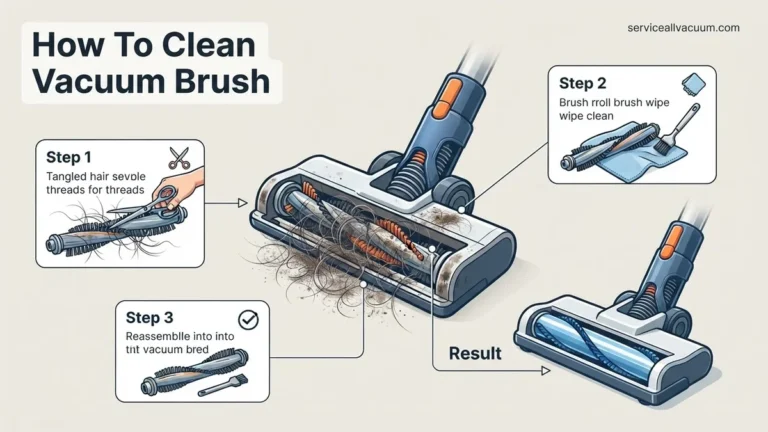
- Inspect the brush roll underneath the floor head for tightly wound hair, carpet fibers, or plastic debris that prevents the belt from spinning freely.
- Cut away trapped hair and thread using blunt-nosed scissors, taking care not to nick the rubber bristles or surrounding housing.
- Check the drive belt for signs of stretching, cracking, or melting; replace worn belts with manufacturer-approved parts costing between $8 and $15.
- Examine the brush roll bearings for dust buildup or seizure, manually spinning the roller to ensure smooth rotation without friction.
What If the Vacuum Smell Still Does Not Go Away?
If thorough cleaning, filter replacement, and belt maintenance fail to eliminate the odor, a deeper mechanical issue is likely at fault. Persistent smells often indicate microscopic mold colonies inside the sealed motor housing or degraded electrical insulation.
Advanced Troubleshooting Steps
- Inspect the exhaust port for hidden carbon dust accumulation, which produces a sharp, metallic odor when the motor armature brushes wear down.
- Check if the motor itself is overheating due to internal winding failure, an issue that typically releases a distinct acrid, chemical scent.
- Consult an authorized appliance repair center if the unit remains under warranty, as opening the motor compartment independently usually voids manufacturer coverage.
- Evaluate the cost-effectiveness of professional repair; standard motor replacements range from $75 to $150, which may exceed the value of older, entry-level upright vacuums.
- Recycle the unit responsibly at a certified e-waste facility if the repair estimate exceeds 50 percent of a new model’s purchase price.
Conclusion
Eliminating foul vacuum odors requires systematically targeting the primary culprits: dirty filters, trapped organic debris, and strained mechanical belts. Routine monthly maintenance prevents bacterial growth and extends your appliance’s operational lifespan by up to three years. According to verified research and expert sources from leading appliance manufacturers, keeping your filtration system clean is the single most effective way to preserve indoor air quality while vacuuming. Take action today by inspecting your vacuum’s filters and scheduling a deep-clean cycle to restore fresh airflow.
❓ Frequently Asked Questions
Why does my bagless vacuum still smell even after I emptied the bin?
Emptying the bin only removes bulk debris, leaving behind fine dust stuck to the cyclone assembly, trapped in the pre-motor filter, or coated inside the flexible hose. Microscopic particles of pet dander and bacteria cling to these surfaces and continue to emit odors until thoroughly washed.
Is it safe to use essential oils or perfume inside a vacuum cleaner?
Adding essential oils directly to the motor or inner compartments can damage plastic components and attract gunk, but placing a few drops on a cotton ball inside the vacuum bag or clean canister is generally safe and adds a fresh scent.
What should I do if my vacuum smells like wet dog?
Wet pet hair and dander trapped in warm, damp environments breed bacteria quickly. Wash the dust bin and filters with antibacterial dish soap, and run a mixture of warm water and vinegar through the hose if it is washable.
Why does my vacuum smell dusty every time I turn it on?
A dusty smell means fine particles are blowing right past an exhausted or degraded HEPA filter. Replace old filters and ensure the seals around the exhaust compartment are tight and undamaged.
How can I tell if my vacuum belt needs to be replaced?
If you notice a sharp burning rubber smell accompanied by a brush roll that stops spinning when it touches the carpet, the belt is likely stretched out, snapped, or slipping off the track.
Can a clogged vacuum hose cause bad odors?
Yes, debris trapped halfway up a flexible hose creates a blockage where dust, hair, and moisture accumulate and stagnate. Push a broom handle or a long flexible brush through the hose to clear out hidden blockages causing the smell.