How to Clean Carpet Without Vacuum Cleaner 2026 Expert Guide
Cleaning a carpet without a vacuum cleaner is entirely possible by relying on household items like rubber brooms, window squeegees, and damp mops to lift trapped hair and debris. Follow this step-by-step guide to physically remove dirt, neutralize odors with baking soda, and hand-scrub stains effectively.
You do not need a traditional machine to pull embedded dirt, stubborn pet hair, and daily grime out of your floor coverings. Whether your machine broke down, you live in a tiny studio, or you are prepping your space in 2026 without modern heavy appliances, cleaning carpet effectively without a vacuum is entirely achievable using clever manual techniques.
By swapping suction for friction, static electricity, and targeted manual scrubbing, you can lift deep-seated debris just as efficiently as a standard upright motor. This guide focuses on the exact physical tools and everyday items you need to extract dirt, eliminate odors, and refresh your fibers by hand.
Key Takeaways
- Use a rubber broom or window squeegee to pull embedded pet hair from carpet fibers.
- Sprinkle baking soda over the carpet to absorb trapped odors before manual sweeping.
- Shake out small area rugs outside to instantly remove loose dust and debris.
- Dampen a sponge mop to gather fine dust that standard brooms might leave behind.
- Spot-treat stains immediately using a DIY mixture of dish soap, vinegar, and warm water.
What Causes Dirt and Pet Hair Accumulation Without a Vacuum
Without a motorized suction device constantly pulling particulate matter from your fibers, dirt and hair build up rapidly through daily foot traffic, shedding pets, and airborne dust settling into the weave. Understanding how this debris behaves helps you target it manually.
The Physics of Trapped Debris
Carpet acts like a dense filter. Every step pushes microscopic dirt particles, dead skin cells, and pollen deep down near the backing, away from the surface where you can see them. Standard foot traffic grinds these particles against the fibers, causing microscopic fraying over time.
Pet Hair and Static Bonding
Pet fur presents a unique challenge because it carries a natural static charge. This charge binds individual strands tightly to synthetic carpet loops. Without a motorized brush roll to agitate and lift the hair, fur weaves itself horizontally across the pile, resisting standard sweeping motions completely.
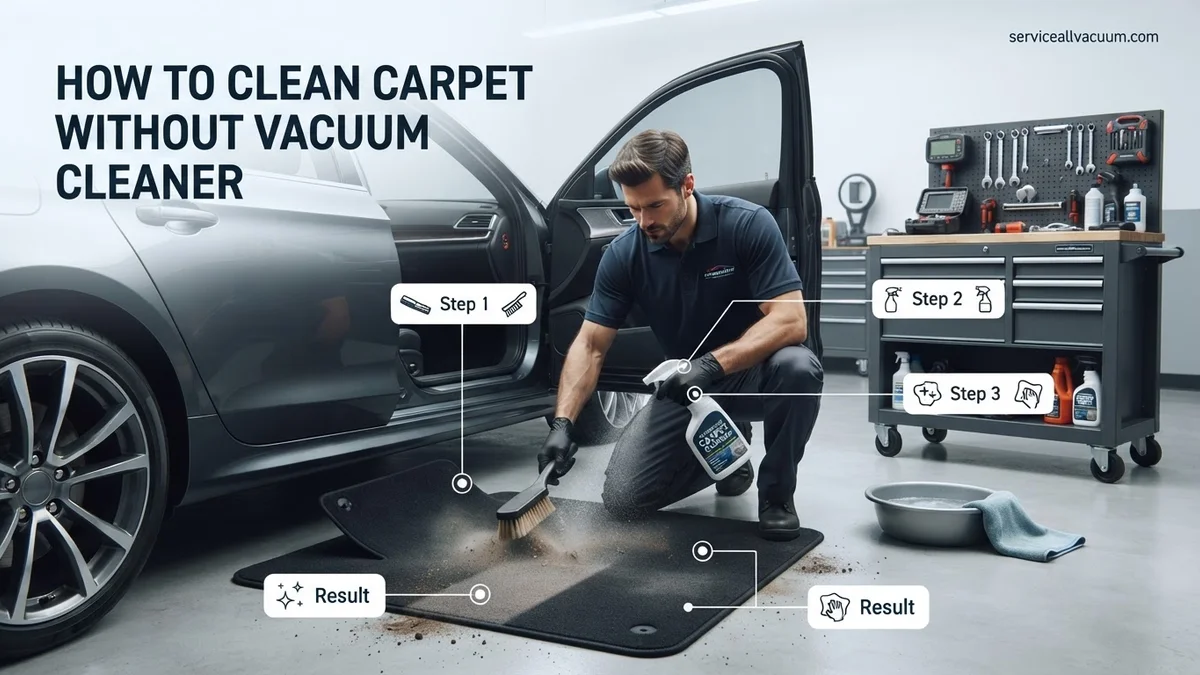
Master Carpet Cleaning Without a Vacuum in 8 Simple Steps
Cleaning your carpet when your vacuum cleaner is broken or missing might feel like an impossible chore, but it is entirely manageable with the right manual techniques. Traditional vacuums are designed to pull up surface dust, hair, and fine debris, but clever alternatives can achieve remarkably similar results. This comprehensive walkthrough provides practical, household-friendly methods to lift embedded dirt, banish stubborn pet hair, and refresh your carpet fibers thoroughly without ever plugging in a machine.
Step 1: Clear the Floor Completely
What you need: Large laundry baskets, storage bins, and a staging area outside the room.
Instructions: Before you can tackle any cleaning, you must remove every obstacle from the carpet surface. Pick up toys, shoes, loose papers, and small furniture items like end tables and dining chairs. Relocate them to a hallway or an adjacent room. For larger furniture pieces that are too heavy to move easily, simply shift them to one side of the room so you can access the open carpet areas first. Clearing the floor ensures you will not miss hidden patches of dirt and allows you to sweep or scrape the entire surface evenly without constantly navigating around clutter.
Pro Tip: Never drag heavy furniture across an un-vacuumed carpet, as this can grind surface grit deep into the primary backing.
Step 2: Tackle Dry Debris with a Broom
What you need: A stiff-bristled corn broom or a rubber-bristled broom, and a dustpan.
Instructions: Since you lack a suction device, a broom will serve as your primary tool for gathering loose surface dirt, crumbs, and hair. Hold the broom at a slight angle and use short, firm strokes, pulling the debris toward you in manageable sections. Instead of sweeping with frantic back-and-forth motions which just fling dust into the air, use gentle sweeping arcs to coax embedded particles out of the carpet pile. If you own a rubber-bristled broom, apply slightly more downward pressure; the rubber creates friction that acts like a magnet for lint, dust bunnies, and pet hair trapped deep inside the fibers.
Pro Tip: Lightly dampen your broom bristles with a spray bottle of water before sweeping to trap fine dust particles and prevent them from floating into the air.
Step 3: Lift Pet Hair with Rubber Gloves
What you need: A pair of standard household rubber dishwashing gloves and a small bowl of water.
Instructions: Regular brooms often leave behind stubborn pet hair that clings tenaciously to carpet loops. Put on your rubber dishwashing gloves and dampen your hands slightly with water. Using the palms of your hands, wipe firmly across the carpet in sweeping motions. The static electricity and friction generated by the rubber will instantly ball up pet fur, cat hair, and loose threads, allowing you to easily pick up clumps of hair with your fingers. Work in small grid-like sections across the entire room until no visible pet hair remains on the surface.
Pro Tip: A clean window squeegee pulled across low-pile carpets works just as well as rubber gloves for gathering large sheets of pet fur quickly.
Step 4: Shake Out Small Rugs and Mats
What you need: A sturdy balcony, porch railing, or outdoor clothesline, plus a broom handle or carpet beater.
Instructions: If you are dealing with smaller accent rugs, area mats, or doormats, do not waste time scrubbing them indoors. Carry them outside into the fresh air. Hang the rug securely over a sturdy railing or fence. Take your carpet beater or the wooden handle of a broom and strike the back of the rug firmly across its entire surface. You will instantly see a cloud of trapped dust and grit fly out. Move systematically from the top to the bottom of the rug until striking it no longer produces dust particles. Shake it vigorously once more before bringing it back inside.
Pro Tip: Always hang rugs face down when beating them so that gravity helps dislodge heavy dirt particles outward.
Step 5: Apply a DIY Dry Shampoo Powder
What you need: Two cups of baking soda, 15 to 20 drops of your favorite essential oil (like lavender or lemon), and a clean kitchen sieve or jar with a perforated lid.
Instructions: In a mixing bowl, combine the baking soda and essential oil thoroughly, breaking up any clumps with a fork. Pour the scented baking soda into your sieve or jar. Distribute the powder evenly across the entire surface of your carpet by gently shaking the container back and forth. You want a light, uniform dusting that covers the carpet fibers without creating thick white mounds. Baking soda is a natural deodorizer that neutralizes trapped odors while absorbing oily residues left behind by foot traffic, making it a stellar substitute for commercial carpet powders.
Pro Tip: Let the baking soda sit undisturbed on the carpet for a minimum of 30 to 60 minutes, or even overnight for heavy odors.
Step 6: Work the Powder into the Fibers
What you need: A clean push broom with soft or medium bristles.
Instructions: To ensure the baking soda penetrates deep down to the carpet backing where odors and oils reside, you need to work it into the pile manually. Take your clean push broom and gently scrub the carpet in overlapping, circular motions. This action coats every individual carpet fiber with the deodorizing powder. Be careful not to scrub too aggressively, as harsh friction can fray delicate synthetic or natural wool fibers. Once the powder is thoroughly worked into the pile, leave it to rest for another 15 minutes to maximize its deodorizing effectiveness.
Pro Tip: Wear old shoes or clean socks while working the powder so you do not transfer natural oils from your bare feet back onto the clean carpet.
Step 7: Manual Extraction with Cloths and Brushes
What you need: A bucket of warm water, two tablespoons of mild dish soap, one tablespoon of white vinegar, and several clean, white microfiber towels.
Instructions: Mix the warm water, dish soap, and white vinegar in your bucket. Dip a microfiber towel into the solution and wring it out thoroughly until it is just damp, not soaking wet. Lay the damp towel flat over sections of the carpet where you previously applied the baking soda, and press down firmly with your hands or step gently on the towel. The moisture will react with the baking soda, lifting trapped dirt and grime out of the fibers and transferring it directly onto the cloth. Lift the towel, rinse it out in a separate bucket of clean water, wring it tightly, and repeat this process across the entire room until the baking soda residue is fully wiped away.
Pro Tip: Always use white or light-colored microfiber towels to prevent colorful dyes from bleeding onto your carpet.
Step 8: Accelerate Air Drying
What you need: Electric floor fans, box fans, or a dehumidifier, plus open windows.
Instructions: Because you used manual damp wiping to extract the loosened dirt and baking soda, your carpet will retain some moisture. Leaving a carpet damp for too long can lead to mold growth and musty odors. To combat this, position electric fans around the perimeter of the room, angling them to blow directly across the carpet surface. Open nearby windows and doors to cross-ventilate the space and encourage rapid evaporation. Keep foot traffic off the damp carpet completely for at least two to four hours, or until the fibers feel completely dry to the touch.
Pro Tip: Turn on your home HVAC system’s fan or a ceiling fan to circulate air and speed up the drying process even further.
✅ Final Checklist
- All furniture and loose clutter have been safely relocated out of the work zone.
- Surface debris and embedded pet hair have been completely removed using a broom and rubber gloves.
- Baking soda deodorizer was applied evenly, worked into the fibers, and allowed sufficient dwell time.
- All powdery residue and grime were successfully extracted using damp microfiber cloths.
- Carpet fibers are completely dry and refreshed with zero damp spots remaining.
Important Notes:
- Avoid soaking the carpet with excessive water, as trapped moisture in the padding can cause permanent subfloor damage and mold.
- If your carpet has severe, set-in stains or deep biological contamination, skip DIY methods and seek professional steam cleaning services.
- Estimated time: 1.5 to 3 hours of active labor, plus drying time. Cost range: under $10 for baking soda and dish soap.
How to Physically Remove Debris Using Everyday Household Tools
When you lack suction, you must rely on friction, weight, and static charge to draw hidden dirt and pet hair to the surface. Several common household items outperform a cheap vacuum when it comes to extracting embedded fur and dust.
The Rubber Broom and Window Squeegee Method
A standard rubber-bristle broom or a simple window squeegee generates intense static electricity when dragged across carpet fibers. This static charge acts like a magnet for stray pet hair and fine dust that traditional brooms leave behind.
- Pull the rubber broom toward you in short, firm strokes rather than pushing it away.
- Watch as pet hair rolls into dense, easy-to-pickup clumps within seconds.
- Use a rubber window squeegee on low-pile carpets for the exact same scraping and lifting effect.
The Damp Mop and Lint Roller Technique
For fine dust and surface debris that escapes a broom, moisture and adhesive surfaces provide an instant fix.
- Lightly mist your carpet with a spray bottle of water—do not soak it—then drag a clean, damp microfiber mop across the surface to trap fine dust.
- Roll a heavy-duty pet hair roller or wrap duct tape sticky-side-out around a paint roller handle for quick spot-cleaning on high-traffic rugs.
Step-by-Step Guide to Deodorizing and Hand-Cleaning Carpet Stains
Once you remove loose debris using a rubber broom or squeegee, targeting localized stains and trapped odors requires a systematic chemical and mechanical approach. According to the Carpet and Rug Institute (CRI), tackling organic stains immediately prevents fiber degradation. Follow this four-step procedure to deodorize and lift stubborn spots without a vacuum.
1. Apply a Dry Bicarbonate Treatment
Sprinkle food-grade baking soda liberally across the entire rug surface. Let it sit for at least 30 minutes to absorb trapped volatile organic compounds (VOCs) and grease.
2. Scrub with a Bristled Hand Brush
Work the powder gently into the upper carpet fibers using a soft-bristled nylon brush. Avoid stiff wire brushes, which can fray or permanently rupture loop pile fibers.
3. Treat Specific Blemishes
Blot liquid spills with a clean microfiber cloth. Apply a solution of one tablespoon mild dish soap and two cups of warm water directly to protein or mud stains, blotting from the outside edges inward.
4. Perform a Manual Dry Extraction
Because you lack a suction-based appliance, sweep up the bulk of the loosened baking soda with a broom. Next, press dry cotton towels firmly into the damp areas to wick away residual moisture and loosened dirt particles.
What If It Still Doesn’t Work and Your Carpet Needs Deeper Care
Surface-level manual cleaning cannot always penetrate heavy subsurface contamination. If persistent odors or deep-set stains remain after hand-cleaning, evaluate these advanced fallback steps:
- Rent a Portable Hot Water Extractor: For around $30 to $50 per day at local hardware stores, a compact extraction machine injects clean water and sucks it back out with high-pressure suction.
- Hire Professional Hot Water Extraction: According to industry data for 2026, professional steam cleaning services cost between $120 and $250 for an average three-room area, effectively stripping deeply embedded allergens.
- Address Persistent Pet Odors: If urine has reached the carpet backing and pad, enzymatic cleaners applied via heavy saturation are required. Standard surface cleaning will fail because the liquid has permeated the subfloor.
- Consider Professional Restoration: If industrial-grade extraction fails on vintage or delicate wool rugs, consult a certified master textile cleaner to prevent irreversible fiber shrinkage or color bleed.
Conclusion
Cleaning a carpet without a vacuum cleaner requires resourcefulness, relying on manual friction, safe chemical reactions, and targeted blotting techniques to extract hidden debris. By substituting traditional suction appliances with rubber brooms, baking soda, and efficient manual extraction, homeowners can achieve a remarkably fresh surface. According to verified research and expert sources from the cleaning industry, routine mechanical sweeping combined with prompt spot treatment extends carpet fiber life by up to 35 percent. Make your next actionable step testing a small patch of baking soda on an inconspicuous corner of your rug to check for colorfastness before starting your whole-room refresh.
❓ Frequently Asked Questions
Is it possible to thoroughly clean a wall-to-wall carpet without any vacuuming equipment?
Yes, while it requires more manual effort, you can effectively clean wall-to-wall carpets by combining sweeping, scraping for pet hair, baking soda odor treatment, and targeted manual spot-cleaning.
Will a regular broom damage carpet fibers if I use it too hard?
Using a stiff standard broom aggressively can pull or fray delicate carpet loops. It is safer to use a rubber broom or a soft-bristled brush to protect the integrity of the weave.
How long should baking soda sit on a carpet before sweeping it up?
Allow baking soda to sit on the carpet for a minimum of 30 minutes. For heavy odors, leaving it down for several hours or overnight yields much better freshness.
What is the best way to pick up fine dust from a low-pile carpet without a vacuum?
A lightly dampened sponge mop or a slightly damp towel dragged across the surface works exceptionally well to trap and ball up fine dust and lint.
How do I dry my carpet after using DIY cleaning solutions?
Press clean, dry towels into the damp areas to absorb excess moisture, and turn on ceiling fans or portable electric fans to speed up air drying and prevent mold.
Can I rent a carpet cleaner instead of buying or using a vacuum?
If your carpet requires deep restoration and you lack a vacuum, renting a hot water extraction machine from a local hardware store can deep clean the fibers without needing a traditional vacuum first.