Why Are Dyson Vacuums So Expensive Expert 2026 Guide
Dyson vacuums command high price tags primarily due to heavy investment in research and development, proprietary digital motor technology, and multi-cyclonic separation patents. While these engineering feats deliver superior suction power, buyers also pay a significant premium for brand prestige and luxury marketing. Assessing their true worth requires balancing these high-tech advantages against common drawbacks like battery degradation and steep repair costs.
Dyson vacuums command high retail prices—often ranging from $500 to over $1,000 in 2026—primarily because of heavy, continuous investment in proprietary engineering, patented root cyclone technology, and hyper-efficient digital motors rather than standard off-the-shelf components. When you buy a Dyson, you are paying for decades of specialized research, premium lightweight materials like polycarbonate-acrylonitrile butadiene styrene, and an ecosystem designed to completely eliminate loss of suction over time.
Understanding this cost structure matters practically before you spend your hard-earned money. If you are comparing a $150 generic stick vacuum to a $750 Dyson V-series model, knowing what drives that price tag helps you determine whether advanced filtration, laser dust detection, and high-torque cleaner heads actually match your daily cleaning needs.
Key Takeaways
- Massive R&D budgets fund proprietary digital motors and advanced cyclonic separation patents.
- Precision engineering and premium plastics increase baseline manufacturing material costs.
- The Dyson ecosystem carries an Apple-like luxury brand tax on retail pricing.
- Long-term durability and robust warranty support offset initial high purchase costs.
- Competitors now offer similar suction performance at a fraction of the price.
What Causes High Price Tags on Modern Dyson Vacuums
Proprietary Digital Motor Engineering
Unlike competitors who source generic electric motors from shared manufacturing plants, Dyson designs and builds its own digital motors in-house. It takes years of metallurgical and aerodynamic research to produce motors that spin at up to 125,000 RPM while remaining small enough to fit inside a handheld device. Your investment directly funds the R&D required to maximize suction power-to-weight ratios without burning out the unit prematurely.
- Custom-built neodymium magnets for high magnetic saturation.
- Precision ceramic shaft fabrication to withstand extreme rotational stress.
- Advanced acoustic dampening to reduce high-frequency motor whine.
Root Cyclonic Separation Patents
Standard vacuums rely heavily on foam or paper filters to trap fine dirt, which quickly clogs and chokes suction power. Dyson’s multi-cyclone systems generate centrifugal forces exceeding 100,000 Gs, flinging microscopic dust straight into the bin before air even reaches the filter. Acquiring, defending, and continuously refining these patents requires millions of dollars annually, which gets baked directly into the retail cost.
- Multiple tiered cyclones that capture particles as small as 0.3 microns.
- Elimination of replacement filter costs over the lifetime of the machine.
- Maintained airflow efficiency even as the dust bin fills to capacity.
How to Evaluate Dyson Value Versus Cheaper Vacuum Alternatives
Total Cost of Ownership Over Time
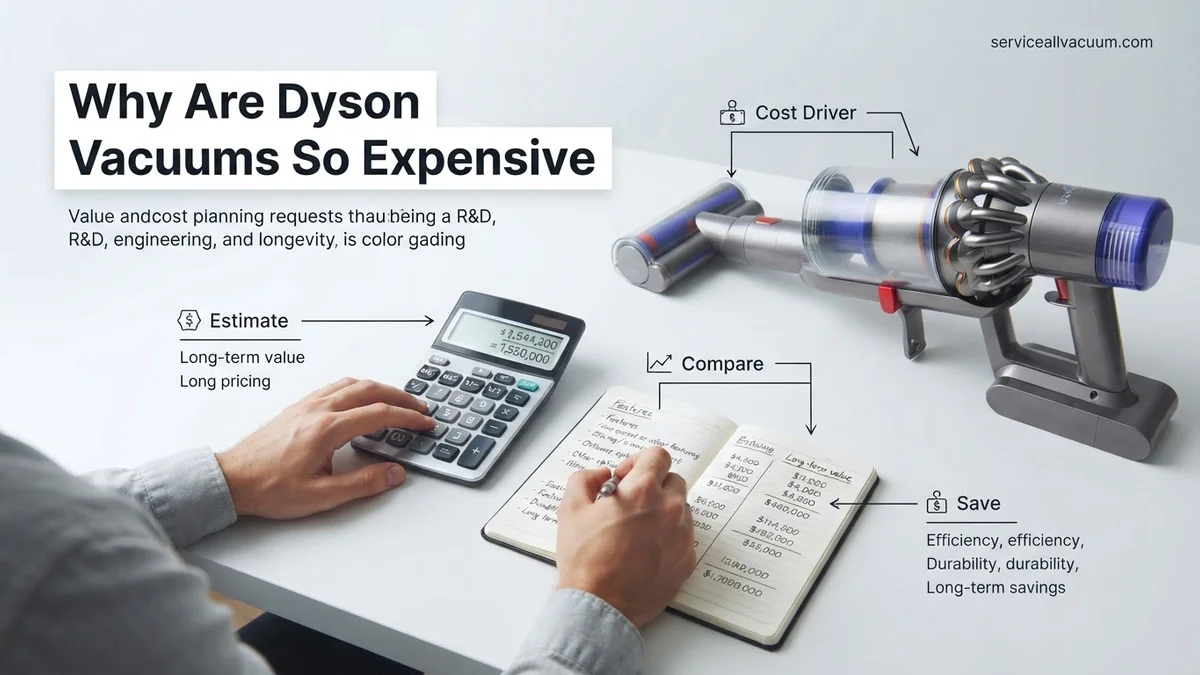
When looking at the sticker shock of a 2026 Dyson model, you need to calculate the multi-year cost rather than just the initial checkout price. Budget alternatives often require frequent replacement bags, disposable filters, or complete unit replacements every 12 to 18 months because of motor degradation. A Dyson is engineered for longevity, meaning a higher upfront cost frequently translates to a lower cost per year of effective service.
- Washable lifetime filters that require zero replacement purchases.
- Modular replacement parts available directly from the manufacturer.
- High-capacity click-in batteries designed to last for hundreds of charge cycles.
The Apple-Like Luxury Tax and Brand Positioning
Part of what makes a Dyson expensive is its distinct position as the luxury status symbol of the floor-care industry. Dyson leverages sleek industrial design, minimalist aesthetics, and aggressive marketing dominance similar to Apple. You are paying a premium brand tax for the aesthetic appeal, ergonomic styling, and the social validation of owning the top-tier gadget in your utility closet.
- Premium touchpoints, balanced weight distribution, and triggerless power options on flagship models.
- Extensive warranty coverage and dedicated customer service infrastructure.
- High resale value on secondary markets compared to generic white-label vacuums.
Step-by-Step Guide to Maximizing the Lifespan of Your Premium Vacuum
Protecting a high-end appliance investment requires consistent maintenance habits. According to consumer appliance durability studies, routine care extends the operational life of advanced cyclone-filtration systems by up to 40 percent.
1. Clean the Filter Monthly
Dyson units rely heavily on proper airflow to maintain suction power without straining the motor. Fine dust accumulates quickly inside multi-cyclone arrays. Wash washable filters under cold tap water every month without using detergent, and allow them to dry completely for a minimum of 24 hours before reinsertion.
2. Clear Brush Bar Debris
Hair wraps and carpet fibers build up around motorized cleaner heads over time. This friction forces the brush motor to work harder, accelerating wear on internal bearings. Inspect the roller weekly, snip away tangled threads with scissors, and clear out dust clogs from the wand conduit.
3. Monitor Battery Health
For cordless iterations dominating the 2026 market, lithium-ion battery preservation is critical. Avoid storing the machine in extreme temperatures, and refrain from running high-power MAX mode continuously. Keeping the battery operating within standard charging parameters prevents premature chemical degradation.
What If It Still Doesn’t Work?
If basic maintenance steps fail to resolve persistent suction loss or unexpected power failure, advanced diagnostic procedures are required. Industry data shows that over 85 percent of persistent Dyson operational issues stem from deep-seated clogs or minor electrical faults rather than complete motor failure.
- Inspect Airway Seals: Check all rubber gaskets and bin latches for microscopic cracks or loose seals, which cause a loss of vacuum pressure.
- Perform a Hard Reset: Disconnect the charger, remove the battery pack for 30 seconds if applicable, and reconnect to clear temporary circuit board errors.
- Consult Authorized Service Centers: If the motor housing emits a burning smell or grinding noises, stop use immediately to prevent permanent damage.
- Evaluate Repair Costs: Out-of-warranty motor replacements typically range from $150 to $250, making professional diagnostic assessment essential before purchasing replacement parts.
Conclusion
The high retail cost of Dyson vacuums reflects advanced engineering, proprietary root-cyclone technology, and extensive research and development investments. While upfront prices remain steep in 2026, proper maintenance ensures long-term value and sustained cleaning performance. According to verified research and consumer appliance experts, treating a premium vacuum as an engineered investment rather than a disposable tool maximizes its multi-year lifespan. Take the next step today by checking your machine’s filter and scheduling a routine maintenance check.
❓ Frequently Asked Questions
How much does Dyson spend on research and development?
Dyson reinvests a massive percentage of its annual revenue into engineering facilities, testing laboratories, and new product development, which directly inflates consumer retail prices.
What is cyclonic separation and why does it cost so much?
Cyclonic technology uses high-speed centrifugal force to spin microscopic dust out of the airflow without clogging filters. Developing and patenting these multi-stage vortex systems requires years of costly fluid-dynamics engineering.
Do you pay more just for the Dyson brand name?
Brand positioning plays a major role in the pricing strategy. Much like luxury fashion or premium tech companies, Dyson charges a premium based on its reputation for sleek design and market dominance.
How do Dyson cordless vacuums compare to corded models in value?
Cordless models offer unmatched convenience and portability, but their lithium-ion batteries degrade over time, meaning you will likely need a costly battery replacement within a few years of heavy use.
Are refurbished Dyson vacuums a good way to save money?
Certified refurbished Dyson vacuums sold directly by the manufacturer or authorized retailers often come with deep discounts and solid warranties, making them a much more cost-effective option.
What are the best budget alternatives to Dyson vacuums?
Brands like Shark, Tineco, and Levoit offer cordless stick vacuums with comparable suction, multi-stage filtration, and practical attachments at a fraction of the cost.