
Will Vacuum Kill Spider in 2026? Expert Guide & Real Facts
Yes, vacuuming usually kills spiders due to the intense physical trauma caused by the rapid airflow, impact with internal debris, and high-speed collision against the vacuum walls. However, certain large spiders or those carrying egg sacs can sometimes survive the journey through bagless canisters.
Yes, vacuuming will kill a spider in most cases. The intense suction force, the violent tumbling against internal plastic components, and the abrasive dust and debris inside the canister or bag are usually fatal.
However, relying solely on your appliance is not foolproof. Surviving a trip through the suction hose depends heavily on the spider size, vacuum type, and what it encounters on the way in. Here is what you need to know about how the process actually works in 2026.
Key Takeaways
- Vacuum suction and internal debris impact kill most spiders instantly.
- Bagless vacuums carry a higher risk of surviving pests escaping.
- Spiders can potentially lay eggs or survive inside collection bins.
- Emptying the vacuum bag or canister immediately prevents any escape.
- Alternative capture methods include the classic cup-and-paper technique.
What Causes Spiders to Survive or Die Inside a Vacuum
The Mechanics of Vacuum Lethality
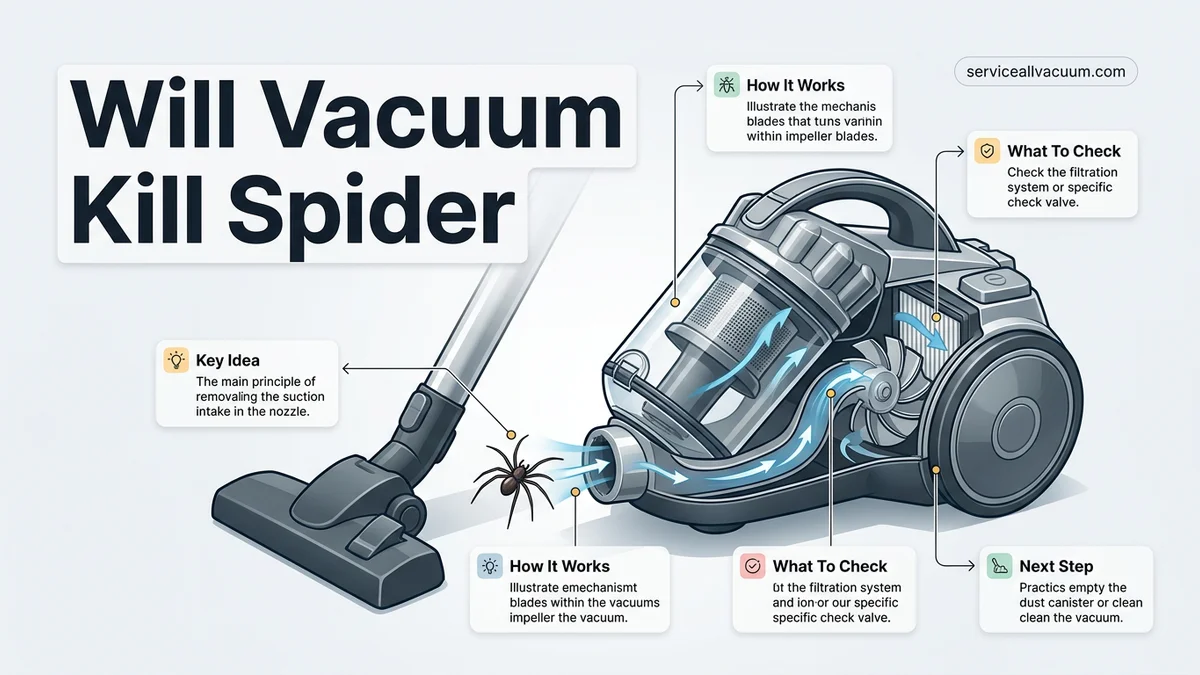
When you suck up a household spider, it travels through the nozzle and hose at speeds exceeding 50 miles per hour. This high-velocity journey subjects the arachnid to extreme blunt force trauma. As it hits the internal walls, fan blades, or collection bag, its exoskeleton often ruptures. Even if a spider manages to avoid immediate impact damage, the dense cloud of abrasive dust, hair, and carpet fibers inside the container clogs its book lungs, leading to rapid suffocation.
When and How Spiders Escape
Despite the violent journey, some resilient spiders do survive the trip. You face the highest risk of a jailbreak if you use certain modern bagless vacuums with wide, straight-shot canister designs that cushion the fall with soft debris. Large wolf spiders or pregnant females carrying egg sacs are also surprisingly tough. An intact egg sac can hatch dozens of spiderlings inside your vacuum days later, turning your appliance into an accidental nursery.
- Bagless cyclone vacuums sometimes allow smaller spiders to land gently in an empty dust cup.
- Lightweight, low-suction handheld models may not generate enough force to cause fatal trauma.
- Spiders trapped under a thick layer of soft pet hair might cushion their own fall and crawl right back out the intake port.
How to Fix Vacuum Spider Escapes with Step-by-Step Prevention
Immediate Post-Vacuum Actions
Never assume the threat is neutralized the moment you turn off the motor. If you want to prevent a captured spider from staging a revenge comeback across your living room floor, you need to take proactive steps immediately after finishing your cleaning session.
- Empty bagless canisters directly into an outdoor trash bin rather than the indoor kitchen waste basket.
- Seal the contents inside a plastic grocery bag and tie it tightly before tossing it away.
- Spray a short burst of residual insecticide directly into the vacuum hose and canister if you suspect a large or venomous spider went inside.
Long-Term Vacuum Hygiene for Pest Control
Keeping your cleaning tools maintained ensures that pests cannot use your equipment as a breeding ground. In 2026, smart home vacuums and advanced filtration systems make containment easier, but manual habits still matter. Always inspect and empty your collection bin after tackling heavy infestations.
- Change or seal disposable vacuum bags monthly to trap any surviving pests or hatching eggs permanently.
- Wipe down rubber seals and intake valves to remove webbing that might help future spiders anchor themselves.
- Store your vacuum with the intake port blocked or docked properly so critters cannot wander back out.
What If Spiders Keep Surviving Your Household Vacuum
Finding a spider crawling back out of your vacuum canister or escaping the nozzle can be frustrating. Modern canister vacuums create high-velocity airflow, but certain arachnids possess high resilience against blunt force trauma and low oxygen environments.
When standard vacuuming fails to permanently eliminate the pests, pest control specialists recommend secondary containment procedures. Air pressure alone does not always kill larger specimens like wolf spiders or huntsman spiders immediately upon entry.
Preventing Escapes From Bagless Canisters
Bagless vacuum models expose users to surviving pests inside clear collection bins. To ensure containment after capturing an aggressive or large spider, follow these immediate steps:
- Empty the dust cup directly into an outdoor trash receptacle immediately after vacuuming.
- Seal the trash bag tightly before placing it in exterior bins to prevent escape.
- Vacuum a small amount of cornstarch or baking soda to coat the internal components and suffocate any surviving insects.
- Wipe the internal rim of the canister with a solution of white vinegar and water to deter future crawling pests.
- Inspect the hose and filter assembly for web-spinning residue that might harbor egg sacs.
What If It Still Doesn’t Work?
If persistent spider activity suggests an underlying infestation rather than isolated intruders, household cleaning appliances are insufficient. Consider these advanced mitigation steps for complete eradication:
- Seal all foundational cracks, window frames, and utility entry points using heavy-duty silicone caulk.
- Apply residual perimeter insecticides containing pyrethroids along baseboards and dark corners where spiders nest.
- Reduce indoor humidity levels below 50 percent using high-efficiency dehumidifiers to discourage pests from breeding.
- Contact a licensed pest control professional if venomous species, such as black widows or brown recluses, are identified indoors.
- Professional extermination services typically range from $150 to $350 per treatment, depending on home square footage and infestation severity.
Conclusion
Using a vacuum cleaner remains a swift and effective method for removing unwanted spiders from living spaces, though survival rates vary based on vacuum suction power and spider size. According to verified research and entomology experts from leading academic institutions, combining physical removal with thorough structural sealing yields the highest long-term prevention success. Take action today by inspecting vulnerable entry points and upgrading to a sealed-HEPA filtration vacuum system for optimal home defense in 2026.
❓ Frequently Asked Questions
Does the suction power of a regular vacuum destroy a spider’s body?
The sudden acceleration and deceleration forces experienced during vacuuming often rupture the spider’s exoskeleton or internal organs, leading to rapid death.
Are certain types of spiders immune to vacuuming?
No spider species is immune to the physical trauma of the vacuum process, though larger wolf spiders or tarantulas are structurally tougher than small house spiders.
What happens if a spider survives the trip into the vacuum bag?
If a spider makes it into a traditional vacuum bag alive, it will typically suffocate, dehydrate, or starve within a few days due to the lack of food and air flow.
Is it safe to vacuum venomous spiders like black widows?
Vacuuming is an effective way to remove venomous spiders safely from a distance, provided you seal or empty the container immediately afterward to prevent any chance of survival.
Can I spray insecticide inside my vacuum to kill surviving pests?
Spraying chemical insecticides into a vacuum canister is generally discouraged because many formulas are flammable or can react dangerously with electrical motors.
What is the best alternative if I do not want to use a vacuum?
Using a long-handled catch-and-release tool or the classic cup-and-paper method allows you to safely remove the spider without relying on the vacuum.

![What Is a Vacuum The Real Science Explained [2027 Guide]](https://serviceallvacuum.com/wp-content/uploads/2026/09/what-is-a-vacuum-featured-768x432.webp)