How to Dispose of Vacuum Cleaner Step-by-Step Guide 2027
Properly disposing of an old vacuum cleaner requires knowing whether it qualifies as e-waste or standard trash. Recycling centers, municipal drop-off sites, and donation centers offer the most eco-friendly alternatives to throwing it in a landfill.
Getting rid of an old vacuum cleaner requires a bit more thought than tossing it into the standard household trash. Because modern vacuums contain electric motors, plastic housings, and sometimes hazardous lithium-ion batteries, municipal waste regulations in 2027 strictly govern how these appliances enter the waste stream. Whether your machine finally burned out after a decade of service or you are upgrading to a newer model, understanding your disposal options ensures you stay compliant with local environmental laws while keeping bulky electronics out of standard landfills.
Proper disposal prevents toxic materials from leaking into soil and groundwater, but it also helps recover valuable metals and plastics for reuse. Choosing the right path depends entirely on whether your vacuum still functions, whether it plugs into a wall or runs on a battery pack, and what your local waste management facility accepts. Let’s look at the environmental reasons for proper disposal and the exact steps you need to take before letting your old machine go.
Key Takeaways
- Empty the dirt bin and remove all attachments before disposal.
- Cordless vacuums require separate lithium-ion battery recycling.
- Working units can be donated to local charities or thrift stores.
- Check local municipal e-waste regulations before scheduling curbside pickup.
- Standard trash disposal should remain your absolute final resort.
Why Proper Vacuum Disposal Matters and Environmental Impact
The Hidden Dangers of E-Waste
Vacuums fall squarely into the category of small electronic waste, often called e-waste. When you throw a vacuum into a standard dumpster, it ends up in a landfill where non-biodegradable plastics take centuries to break down. More concerning are the internal components. Electric motors contain copper windings, steel shafts, and circuit boards that can leach heavy metals like copper and aluminum into local ecosystems as they corrode.
Cordless Vacuum Battery Risks
If you own a cordless stick vacuum, improper disposal creates an immediate safety hazard. These machines run on powerful lithium-ion battery packs. When compacted in a traditional garbage truck, damaged lithium-ion batteries frequently spark and cause dangerous fires in waste processing facilities. By 2027, municipal sanitation departments have ramped up penalties for throwing batteries into household trash, making separate drop-offs legally mandatory in many regions.
2026 Vacuum Cleaner Disposal Expert Practical Guide
Disposing of an old vacuum cleaner might seem as simple as tossing it in the curbside trash, but improper disposal can harm the environment and violate local municipal waste regulations. Because vacuum cleaners contain electric motors, plastic housings, and sometimes lithium-ion batteries, they require thoughtful handling. This comprehensive walkthrough guides you through evaluating, cleaning, and sustainably discarding or repurposing your defunct appliance, ensuring you minimize environmental impact and maximize compliance with local disposal laws.
Step 1: Assess Appliance Functionality and Repairability
What you need: A screwdriver set, a multimeter, and a well-lit workspace.
Instructions: Before you condemn your vacuum to the scrap heap, perform a basic diagnostic to determine if it can be saved or if disposal is truly necessary. Plug the machine into a known working outlet and check the power cord for fraying. Test the fuse in the plug if applicable. Unscrew the casing to inspect internal wiring for loose connections or a blown thermal fuse, which is a common and inexpensive fix for vacuums that suddenly stop working. If the motor smells like burning electronics or the plastic housing is severely cracked, it is officially at the end of its lifecycle and ready for disposal.
Pro Tip: Many vacuums are discarded simply because a belt snapped or a filter is hopelessly clogged. Always check these minor components before moving forward with disposal.
Step 2: Empty and Sanitize the Dust Bin or Bag
What you need: Rubber gloves, a trash bag, disinfectant wipes, and a screwdriver for embedded debris.
Instructions: Whether your vacuum uses a disposable paper bag or a plastic cyclonic canister, you must empty it completely before disposal. Remove the bag or dump the canister contents directly into your household trash bin to prevent a mess during transport. Next, wash out plastic dirt bins with warm water and mild dish soap to eliminate lingering odors, pet hair, and mold spores. If the vacuum used a HEPA filter, remove it and dispose of it separately. Sanitizing the machine ensures that sanitation workers or recycling facility staff do not have to handle biohazards or pest-attracting waste.
Pro Tip: Never wash motorized parts or unsealed electrical components with running water. Stick strictly to wiping down external surfaces and washing removable plastic bins.
Step 3: Remove Batteries and Electronic Components
What you need: Precision screwdrivers, electrical tape, and a small plastic container for screws.
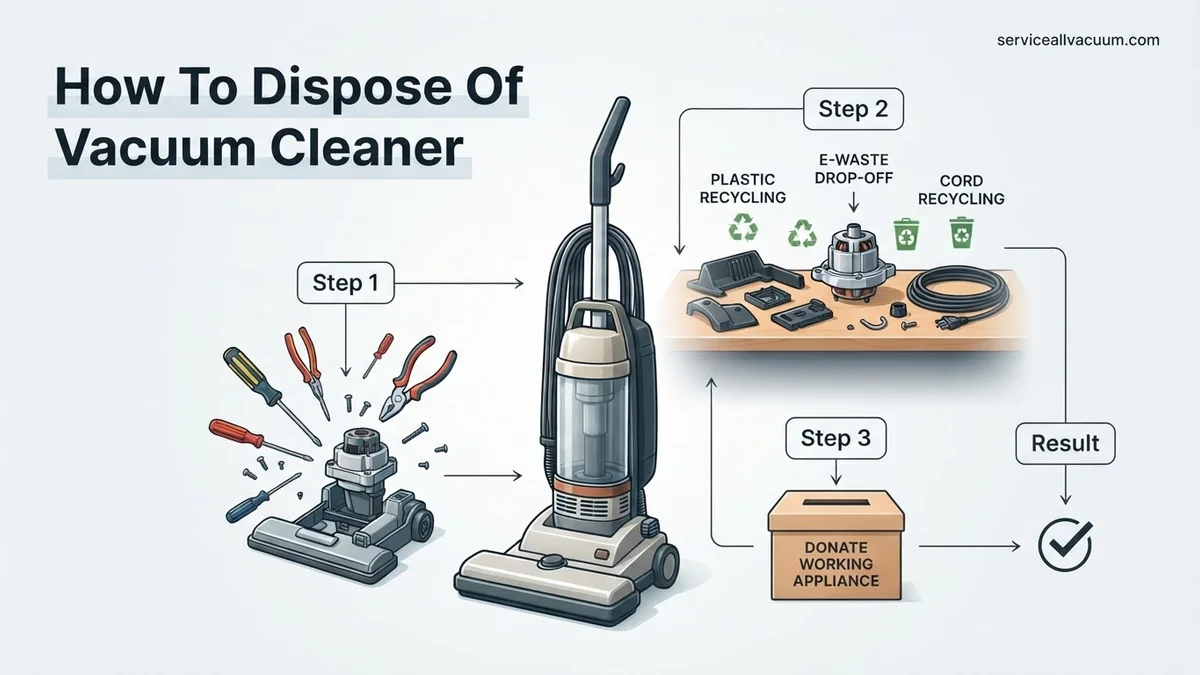
Instructions: If you are disposing of a cordless stick vacuum or a robotic vacuum, it almost certainly contains a rechargeable lithium-ion or nickel-metal hydride battery pack. These batteries pose a severe fire hazard if crushed in a municipal waste compactor and must be removed. Locate the battery compartment, unscrew the cover, disconnect the wiring harness, and slide the battery out. Cover the exposed metal terminals of the battery with electrical tape to prevent accidental short circuits during transit to a recycling drop-off site.
Pro Tip: Never throw lithium-ion batteries into standard household trash or recycling bins. They are a leading cause of facility fires at waste management centers.
Step 4: Categorize Your Vacuum for Proper Recycling Streams
What you need: A computer or smartphone to research local municipal waste guidelines.
Instructions: Vacuum cleaners are classified as Small Household Appliances (SHAs) or Electronic Waste (e-waste) depending on local jurisdiction laws. Check your city or county’s waste management website to see if they accept vacuums in regular bulk trash pickup, or if they require them to be taken to a dedicated e-waste recycling facility. If your appliance is corded and primarily made of rigid plastics and copper wiring, e-waste facilities will strip the metal components for recycling, ensuring the heavy plastic shells are processed according to regional environmental standards.
Step 5: Separate Usable Parts for Salvage or Donation
What you need: A pair of utility scissors, pliers, and storage bags.
Instructions: Even if the vacuum motor is completely dead, many peripheral attachments and accessories retain high utility value. Detach extension wands, crevice tools, upholstery brushes, and flexible hoses. Inspect them for wear and tear; if they are in good condition, you can list them online for free or donate them to a local secondhand craft store or repair collective. Additionally, if the power cord is detachable or easily unscrewed without damaging the main housing, you can salvage it for future DIY electrical projects.
Pro Tip: Universal attachments fit many brands, making them great candidates for community buy-nothing groups rather than the landfill.
Step 6: Explore Trade-In and Manufacturer Take-Back Programs
What you need: Proof of purchase (optional) and the manufacturer’s customer service website.
Instructions: Before hauling your vacuum to a facility, check if the original manufacturer offers an extended producer responsibility (EPR) or take-back program. High-end brands like Dyson, Shark, or Miele sometimes offer recycling programs or trade-in credits when you purchase a replacement unit. Local vacuum specialty repair shops may also accept old units for free to harvest working components and internal gears for repairing other customer machines, keeping functional parts out of the waste stream entirely.
Step 7: Transport to an E-Waste Facility or Schedule Curbside Pickup
What you need: A reliable vehicle with trunk space, or a designated spot on your curb.
Instructions: If your municipality mandates drop-off, load the prepped, battery-free vacuum into your car and drive to the nearest designated e-waste recycling depot or hazardous waste collection day. Staff will weigh or inspect the item and route it to the proper processing conveyor. Alternatively, if your city allows bulk appliance collection, tag the vacuum with any required municipal disposal stickers and place it neatly on the curb no earlier than the evening before your scheduled collection day.
Pro Tip: Call ahead to your local e-waste facility, as some locations charge a nominal processing fee ranging from $5 to $15 for small appliances containing plastics.
✅ Final Checklist
- Power cord inspected and internal motor assessed for repair viability
- Dust bin emptied, washed, and thoroughly dried
- Lithium-ion or NiCad batteries safely removed and terminals taped
- Usable attachments and hoses salvaged for donation or resale
- Local municipal e-waste guidelines verified for proper drop-off
- Vacuum safely transported to a recycling center or placed for bulk pickup
Important Notes:
- Never incinerate vacuum cleaner plastics or lithium-ion batteries, as doing so releases toxic chemical fumes into the atmosphere.
- If you suspect the vacuum was used to clean up hazardous materials like asbestos, lead paint dust, or chemical residues, double-bag the entire appliance and consult hazardous waste professionals before disposal.
- Estimated time for preparation and disposal: 45 to 90 minutes. Cost range: $0 (free municipal recycling) to $15 (private e-waste processing fees).
Step-by-Step Guide to Preparing Your Vacuum for Disposal
Empty and Clean the Machine
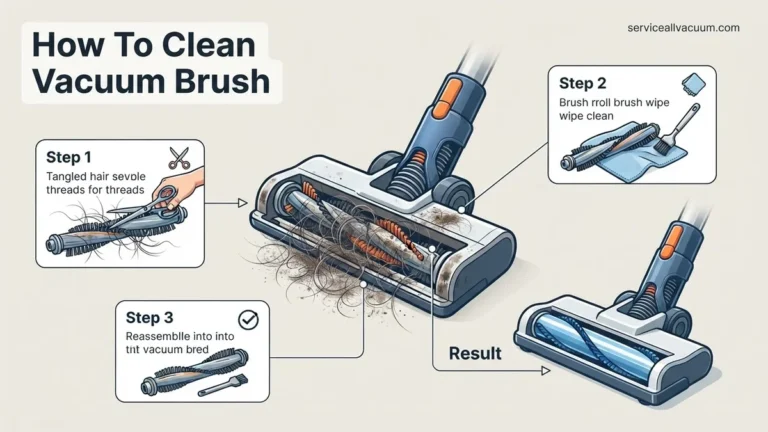
Before you donate, recycle, or discard your vacuum, you need to prep it properly. Start by emptying the dirt canister or removing the disposable dust bag. Toss the collected dust and debris into your normal household trash. Wipe down the exterior with a damp cloth and clear any hair or tangled carpet fibers trapped inside the brush roll. Facilities that accept used appliances for parts harvesting or recycling prefer clean equipment.
Detach Batteries and Accessories
If you are dealing with a cordless model, you must remove the battery pack if the design allows for it. Many recycling centers require batteries to be processed separately from the plastic body. Store removed lithium-ion batteries in a cool, dry place and cover the terminals with electrical tape to prevent accidental discharge. Next, detach reusable accessories like crevice tools, extension wands, and washable filters. You can keep these as spares for your new machine or donate them alongside the main unit.
How to Recycle, Donate, or Trash Your Vacuum Cleaner
Choosing the right disposal method depends entirely on the functional state of your appliance and local municipal regulations for 2027. According to the Environmental Protection Agency (EPA), electronics and small appliances require specialized handling to divert heavy metals from landfills.
Step-by-Step Recycling and Donation Methods
- Check e-waste recycling events: Many municipalities host dedicated electronics collection days throughout the year where small appliances are accepted free of charge.
- Utilize manufacturer take-back programs: Major brands like Dyson and Shark offer mail-in recycling or retail drop-off initiatives to properly process obsolete hardware.
- Assess working condition for donation: If the vacuum still functions, local thrift stores, shelters, or community mutual aid groups frequently accept gently used cleaning equipment.
- Prepare for curbside disposal: If the unit is entirely broken and local rules permit household appliance pickup, place it safely beside your regular waste bins in accordance with local sanitation guidelines.
What to Do If Local Facilities Reject Your Appliance
Municipal waste management facilities occasionally reject small appliances due to strict classification rules regarding mixed-material construction, plastics, and integrated motors. If your local center turns away your vacuum cleaner, you must pursue alternative disposal channels to avoid illegal dumping fines.
Alternative Disposal Strategies
- Contact scrap metal yards: Vacuum cleaners contain valuable copper wiring and electric motors that local scrap yards often accept, sometimes even paying a nominal weight-based fee.
- Visit a retail drop-off kiosk: Major big-box electronics retailers maintain permanent in-store recycling bins for small household devices, bypassing municipal restrictions completely.
- Dismantle the appliance: If permitted, separate the plastic shell from internal metal components to dispose of recyclable parts through standard local recycling streams.
- Schedule a bulk waste pickup: Contact your city’s public works department to schedule a specialized large-item or electronic-waste curbside collection for a small administrative fee, typically ranging from $15 to $40 depending on your zip code.
What If It Still Doesn’t Work?
If you attempted various repair methods or exhausted recycling avenues without success, stubborn disposal challenges require definitive fallback measures to clear out your storage space safely in 2027.
- Consult a professional appliance repair technician: If the unit holds high monetary or sentimental value, diagnostic evaluations typically cost between $30 and $75 at certified repair shops.
- Request a municipal special handling override: Call your local sanitation department directly to inquire about special exception tags for oversized or problematic household equipment.
- Utilize private junk removal services: Commercial hauling companies will collect unwanted appliances directly from your home, with average service fees ranging from $65 to $120.
Conclusion
Properly disposing of an old vacuum cleaner requires balancing environmental responsibility with local municipal guidelines for 2027. According to verified research and expert waste-management studies, utilizing dedicated e-waste recycling streams or certified retail take-back programs prevents harmful materials from entering standard landfills. As your immediate actionable next step, check your local city waste calendar today to identify the nearest electronic appliance drop-off location and schedule your disposal.
❓ Frequently Asked Questions
What is the most eco-friendly way to get rid of an old vacuum cleaner?
Donating a working vacuum to a local charity or thrift store is the best option. If the vacuum is broken, taking it to a certified e-waste recycling center ensures its metal, plastic, and electronic components are properly processed.
Do I need to remove filters and bags before disposal?
Yes, you should empty the dirt compartment, throw away disposable bags, and remove washable filters. This keeps the appliance hygienic during handling and prevents messes at recycling facilities.
How do I handle smart or robot vacuum disposal?
Robot vacuums contain complex sensors, circuit boards, and rechargeable batteries. They must be treated strictly as e-waste and dropped off at a specialized electronics recycling facility.
Can I sell or trade in my old vacuum cleaner?
If your vacuum is relatively new and in good working condition, you can sell it on online marketplaces or check if the manufacturer offers a trade-in program when purchasing a replacement.
What happens if I put my vacuum in the curbside trash?
If local waste management rules permit it, the vacuum will end up in a landfill where non-biodegradable plastics and metals will sit indefinitely. Some sanitation departments will also reject unapproved bulky items left at the curb.
Are retail stores required to take back old vacuums?
Some major appliance and electronics retailers participate in take-back programs, but policies vary heavily by brand, location, and the specific type of vacuum you are discarding.