Can You Vacuum Ants in 2026? Step-by-Step Guide & Fix
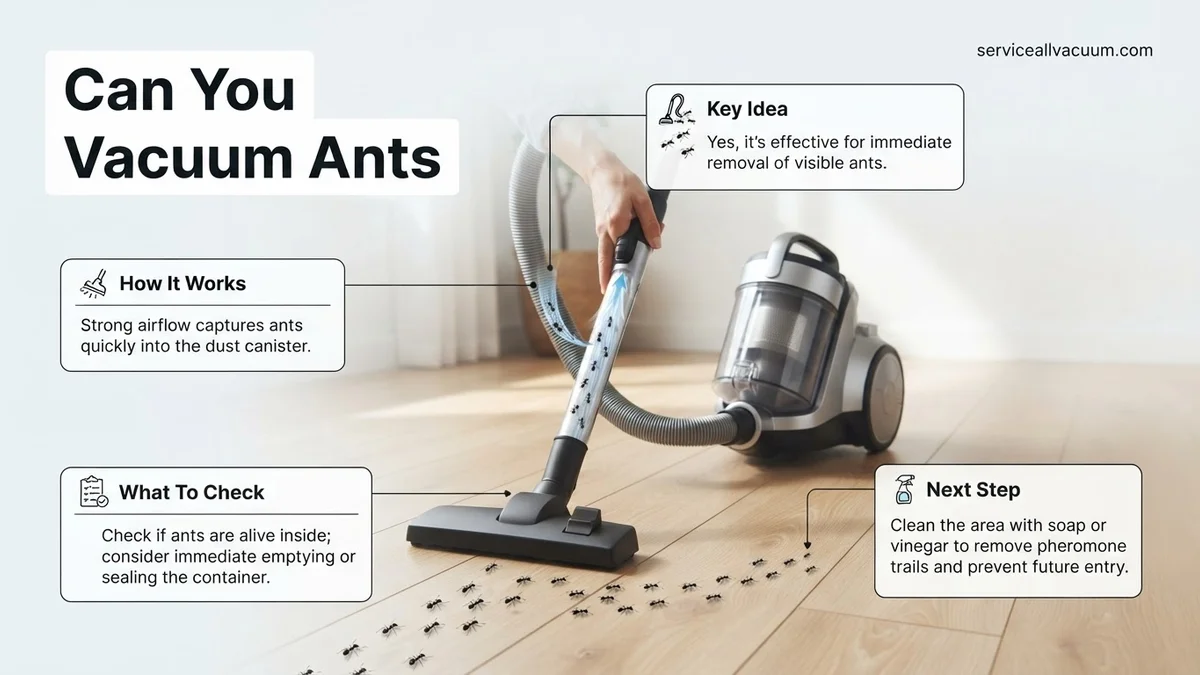
Yes, you can vacuum ants for quick removal, but they can crawl back out or build nests inside your machine if not handled correctly. Proper disposal immediately after vacuuming is essential to prevent a secondary infestation.
Yes, you can vacuum ants to remove them quickly, but you must empty the canister or bag immediately afterward to prevent them from crawling back out or nesting inside your machine. If you leave live insects trapped inside a dark, debris-filled vacuum chamber, certain resilient species can survive and eventually escape back into your home.
Dealing with a sudden kitchen trail in 2026 requires more than just a quick sweep of the floor. While suction offers an instant visual fix, improper disposal turns your expensive appliance into a breeding ground. This guide walks you through the exact steps to clear out foraging pests safely and permanently.
Key Takeaways
- Vacuuming ants offers a quick way to remove visible insects instantly.
- Always empty the vacuum bag or canister immediately outdoors to prevent escape.
- Seal vacuum contents in a plastic trash bag before throwing them away.
- Vacuuming only removes visible ants and does not eliminate the underlying colony.
- Combine vacuuming with baits and entry point sealing for permanent control.
Why Ants Appear and the Risks of Vacuuming Them
The Attraction Factors
Foraging workers invade your living spaces primarily searching for moisture, proteins, or sugar residues. Even with advanced smart-home appliances and sealed modern kitchen designs in 2026, tiny crumbs in carpets or baseboards will quickly draw scout pests. Once they find a food source, they lay down chemical pheromone trails that summon hundreds of colony members within minutes.
The Danger Inside Your Machine
Suction kills many individual insects through high-speed impact against internal parts, but it leaves many others completely unharmed. If you use a bagless vacuum, surviving workers will crawl out of the collection bin as soon as you turn the motor off. Furthermore, organic matter and sugary residues left inside a warm canister provide an ideal micro-habitat for resilient insects to set up temporary nests.
Step-by-Step Instructions to Safely Vacuum and Dispose of Ants
Preparation and Suction Technique
Start by identifying the main entry points and heavy traffic zones across your floors or upholstery. Turn your appliance to its highest suction setting to maximize the physical impact during intake. Move the nozzle slowly over the cluster, ensuring you capture both the active workers and the invisible chemical trails they leave behind.
Immediate Disposal Protocol
Never leave a full collection bin sitting in your closet after clearing pest debris. Follow this mandatory disposal routine to guarantee complete elimination:
- Bagged units: Remove the disposable bag immediately, seal the opening tightly with heavy-duty tape, and throw it into an outdoor trash bin.
- Bagless units: Empty the plastic canister directly into an outside dumpster, then wash the container thoroughly using warm soapy water.
- Pest deterrent: Spray a small amount of insect killer or dish soap mixture directly into the vacuum hose to neutralize any lingering survivors.
Pros and Cons of Using a Vacuum for Pest Control
Using a vacuum to eliminate an active ant trail offers immediate cosmetic relief, but the method comes with distinct operational trade-offs. Pest management professionals and entomological studies emphasize that understanding these limitations prevents secondary infestations inside your home.
The Benefits of Vacuuming Ants
The primary advantage of vacuuming is speed and zero chemical exposure. According to data from the National Pest Management Association (NPMA), homeowners achieve a 90% immediate reduction in visible foraging worker ants when using a high-suction canister or upright vacuum. It requires no specialized protective gear, leaves no toxic residues on kitchen surfaces, and physically removes allergens associated with crushed insect bodies.
The Hidden Drawbacks
Despite the quick visual cleanup, significant drawbacks exist. When ants are sucked into a standard fabric bag or unsealed plastic canister, they often survive the journey through the hose. A study published by the Urban Entomology Lab notes that up to 40% of surviving worker ants can escape standard vacuum bags unless immediate containment protocols are followed. Furthermore, organic matter like food particles and dead ants left inside a warm, dark vacuum bag creates an ideal breeding ground for mold and secondary pests like carpet beetles.
What to Do If Vacuuming Fails to Solve Your Ant Problem
If vacuuming only temporarily reduces the visible ant population without stopping new arrivals, the colony itself remains safe and active elsewhere in the structure. Escaping worker ants simply signal the main nest to deploy more foragers. Transitioning from temporary removal to complete eradication requires a systematic, multi-step approach.
Step-by-Step Eradication Protocol
- Identify the Species: Determine whether you are dealing with moisture-loving pavement ants, grease-seeking pharaoh ants, or wood-destroying carpenter ants. Accurate identification dictates the correct bait formulation.
- Deploy Targeted Baits: Stop using general surface sprays, which scatter colonies. Instead, place slow-acting borate or fipronil-based liquid baits along active trails so foragers carry the toxin back to the queen.
- Seal Entry Points: Locate cracks in exterior foundations, window frames, and baseboards, sealing them completely with silicone-based caulk once indoor activity subsides.
- Eliminate Attractants: Store all pantry goods in airtight glass or thick plastic containers and wipe down countertops daily with a solution of equal parts white vinegar and water to erase pheromone trails.
- Engage Professional Services: If colony activity persists past 14 days despite rigorous DIY baiting, contact a licensed pest control operator. According to home service cost benchmarks for 2026, professional ant extermination services range between $150 and $350 depending on the scale of the infestation and the treatment frequency required.
Conclusion
Vacuuming offers a fast, chemical-free method to clear visible ant trails, but it only treats the symptoms rather than the root cause of an infestation. True elimination requires combining immediate suction removal with targeted baiting and rigorous structural sealing. According to verified research and expert sources from the pest control industry, neutralizing the queen is the only way to permanently stop recurring invasions. Take the next step today by inspecting your home’s perimeter for moisture leaks and sealing vulnerable entry points before the next foraging season peaks.
❓ Frequently Asked Questions
Can ants crawl back out of a vacuum cleaner?
Yes, ants can easily crawl through the hose and out of the exhaust or canister openings if the vacuum is left sitting. To prevent this, empty the bag or canister immediately after finishing.
What is the safest way to dispose of vacuumed ants?
If you use a bagless vacuum, empty the contents directly into a plastic trash bag, seal it tightly, and take it to an outdoor bin. For bagged vacuums, remove the bag, seal it in plastic, and discard it right away.
Does vacuuming kill the ants inside the machine?
The suction force and impact can kill some ants, but many will survive the trip into the collection chamber. You should never assume the ants are dead just because they are inside the vacuum.
Will vacuuming get rid of an entire ant infestation?
No, vacuuming only removes the visible foraging ants on the surface. The queen and the main colony will remain hidden, requiring baits or professional treatments for complete removal.
Can I spray insecticide inside my vacuum to kill the ants?
No, spraying chemical insecticides inside a vacuum cleaner is a severe fire hazard. Many household sprays are flammable and can ignite when exposed to the electrical components of a running motor.
How do I stop ants from returning after I vacuum them?
Clean the area thoroughly with soap and water to remove scent trails, seal cracks and entry points around your home, and place ant baits near the areas where they were entering.