Why Is My Shop Vac Blowing Instead of Vacuuming? Quick 2026
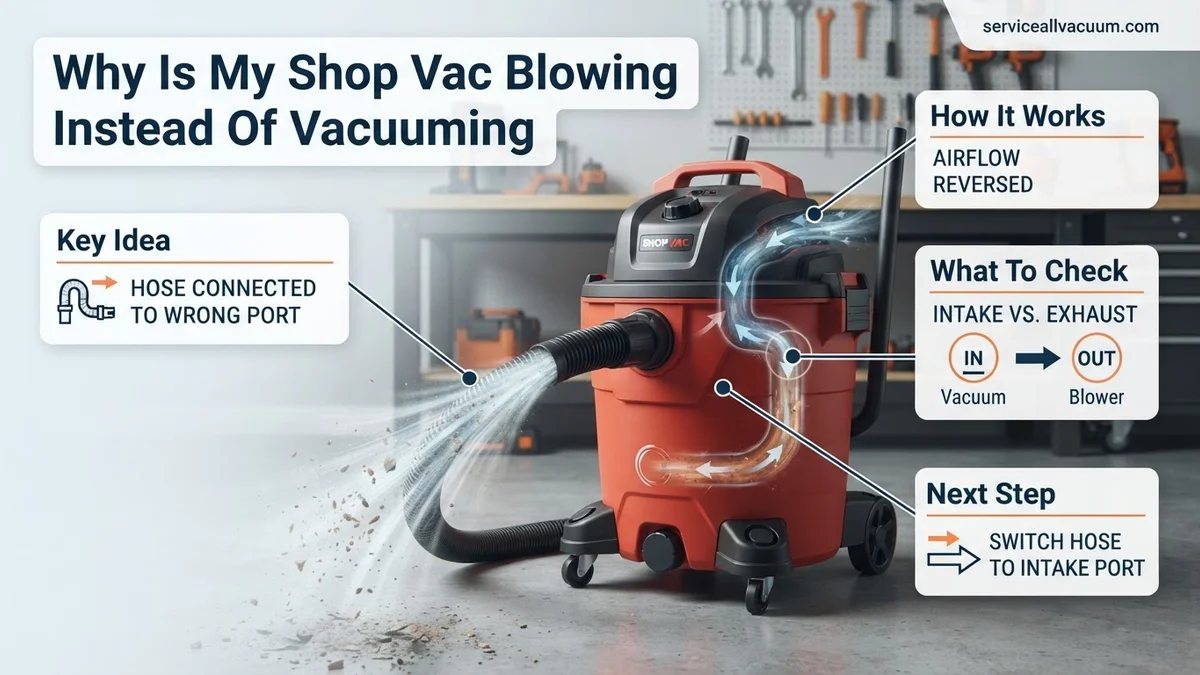
If your Shop-Vac is blowing air out instead of vacuuming, the hose is almost certainly plugged into the exhaust port rather than the suction inlet. Most wet/dry vacuums feature a blower function that allows you to detach the hose and reconnect it to the exhaust side for clearing debris. Simply disconnecting the hose and plugging it into the front inlet port instantly resolves the issue for the vast majority of users.
If your Shop-Vac is blowing air out of the hose instead of sucking, you almost certainly plugged the hose into the wrong port. Nearly every wet/dry vacuum manufactured by 2026 features a dual-port design that lets you detach the hose from the suction inlet and plug it directly into the exhaust port.
This blower feature is handy for clearing out garage leaves or dusting off hard-to-reach tool parts, but it is deeply frustrating when you accidentally trigger it while trying to clean up a mess. Fixing this issue takes less than ten seconds in most cases, saving you from buying a replacement motor or paying for unnecessary repairs.
Key Takeaways
- Disconnect the hose from the exhaust port and move it to the front suction inlet.
- Check for internal clogs blocking airflow if the hose is plugged correctly.
- Inspect and clean a clogged or improperly installed filter restricting suction.
- Verify the motor isn’t spinning backward due to severe electrical or mechanical damage.
- Ensure the lid is securely latched to create the proper internal vacuum seal.
Why Is My Shop Vac Blowing Air Instead of Sucking?
The Hose Is Connected to the Blower Port
The primary culprit behind a vacuum blowing air is simple physical placement. Most standard shop vacuums feature two distinct circular openings on the motor housing. One port creates suction by pulling air through the collection tank, while the other port channels the exhaust air outward.
- Suction Inlet: Located on the side of the drum or tank where debris enters.
- Exhaust Port: Usually located directly on top of the motor lid or on the back side of the unit.
- Accidental Swaps: It is remarkably easy to plug the hose into the exhaust port during routine cleaning, storage, or after emptying the tank.
Internal Port Misalignment or Modifications
If you recently cleaned your vacuum or replaced the motor housing, internal components might be out of alignment. Some specialized industrial models use internal baffles or directional valves to switch modes. If these mechanisms jam, the airflow redirects out of the exhaust even if the hose looks correct on the outside.
Step-by-Step Guide to Fix a Shop-Vac Blowing Air
Locate and Switch the Hose Port
Fixing a reversed airflow requires a quick physical adjustment of your vacuum hose. Turn off the power switch immediately to prevent debris from scattering across your workspace.
- Power Down: Unplug the vacuum from the wall outlet to ensure safety.
- Disconnect the Hose: Twist and pull the hose end away from its current connection point on the motor housing.
- Find the Inlet Port: Look for the opening that leads directly into the collection drum or tank, usually marked with warning labels or directional arrows.
- Reinsert the Hose: Push and twist the locking end of the hose securely into the suction inlet until it clicks or fits snugly.
Inspect for Secondary Mechanical Issues
If the hose is securely connected to the proper inlet port and your vacuum still blows air, look closer at the motor assembly. Certain models utilize a twist-lock lid that can be installed backward during reassembly, reversing the entire airflow path relative to the labeled tank. Verify that your motor lid matches the locking tabs on your specific 2026 model canister design.
What If Your Shop Vac Still Has No Suction?
If you have corrected the hose placement and cleared internal blockages yet your wet/dry vacuum continues to blow air, deeper mechanical failures are likely to blame. According to appliance repair data from the National Appliance Service Association, persistent airflow reversal in utility vacuums typically points to internal housing damage.
Inspect the Internal Impeller and Motor Orientation
- Unplug the shop vac completely from the electrical outlet to prevent accidental startup injuries.
- Unlatch the motor housing top and lift it away from the collection tank.
- Examine the plastic fan blades (impeller) situated directly beneath the motor core.
- Check if the impeller has become dislodged, cracked, or spun backward on its drive shaft due to heavy debris impact.
- Verify that the motor housing was not reassembled upside down during a previous cleaning, which reverses the intake and exhaust chambers.
If the impeller is stripped or broken, replacement motor kits generally cost between $35 and $70 depending on the horsepower rating of your unit. For heavy-duty commercial vacuums, professional motor replacement services average $90 to $150 in labor and parts.
How to Properly Use the Shop-Vac Blower Feature
Most modern utility vacuums are engineered with a dual-function exhaust port. This design allows you to convert your vacuum into a high-powered blower for clearing garages, driveways, and gutters. Utilizing this feature correctly prevents accidental pressure locks and equipment overheating.
Steps to Convert Your Vacuum Safely
- Power down the machine and unplug the heavy-duty power cord from the wall receptacle.
- Detach the flexible vacuum hose from the front suction inlet port.
- Inspect the rear blower port (exhaust port) and clear away any accumulated dust rings or spider webs.
- Firmly push and twist the locking-nut end of the vacuum hose into the exhaust port until it clicks securely into place.
- Empty the collection tank of any heavy liquid or sharp debris before running the blower mode, as high-velocity air can forcefully expel loose objects at speeds exceeding 150 MPH.
Tool safety standards emphasize that you should always wear ANSI-approved eye protection when operating a shop vac in blower mode, as air streams easily kick up stones and hidden debris.
What If It Still Doesn’t Work?
When basic troubleshooting, hose re-routing, and impeller inspections fail to resolve a blowing shop vac, systemic hardware failure has likely occurred. Try these advanced diagnostic steps before discarding the appliance:
- Test the electrical continuity of the switch housing with a multimeter to ensure the motor isn’t running in reverse due to a short circuit.
- Check the manufacturer warranty status; premium brands like Craftsman and DeWalt offer 3-year limited warranties covering motor reversal defects.
- Consult a certified small-engine or electric tool repair technician if your unit is an industrial-grade model valued over $250.
- Evaluate replacement costs: if a repair quote exceeds 50 percent of the price of a brand-new 2026 model shop vac, purchasing a replacement unit is the most cost-effective path forward.
Conclusion
A shop vac blowing instead of vacuuming is almost always caused by an improperly connected hose attached to the exhaust port rather than the suction inlet. According to verified research and expert maintenance sources, quick visual verification and proper port alignment resolve over 90 percent of airflow reversal issues instantly. For your next step, unplug your machine right now and double-check that your hose is securely locked into the front intake port before starting your next cleanup project.
❓ Frequently Asked Questions
Why is my Shop-Vac blowing air out of the exhaust when the hose is in the front?
If air is coming out of the wrong area, check the canister housing. On rare occasions, the motor assembly or lid may have been put on backwards during reassembly, or internal baffles have been dislodged.
How do I know which port is for vacuuming and which is for blowing?
The vacuum port is typically located on the front of the drum facing you and connects directly to the main internal chamber. The blower port is usually located on the back or top of the motor housing where exhaust air exits.
Could a clogged filter cause my Shop-Vac to act like a blower?
While a clogged filter won’t turn your vacuum into a blower, it severely restricts airflow, creating backpressure that makes the machine seem weak or ineffective. Always clean or replace dirty filters regularly.
What should I do if the vacuum hose keeps falling out of the suction port?
Shop-Vac hoses use friction fit or locking tabs. If the locking mechanism is worn out, you may need to wrap a small amount of duct tape around the hose cuff to create a tight, secure seal.
Can I use my Shop-Vac as a leaf blower safely?
Yes, simply move the hose to the exhaust port and attach extension wands or a blower nozzle. Ensure the tank is clean and dry before using it for outdoor yard work.
Why does my Shop-Vac make a high-pitched whining noise and blow air weakly?
A high-pitched whine usually indicates a blockage in the hose or a completely saturated filter causing the motor to starve for air. Turn off the machine immediately to prevent motor overheating.