How Long Can Vacuum Sealed Meat Last in 2027 Expert Guide
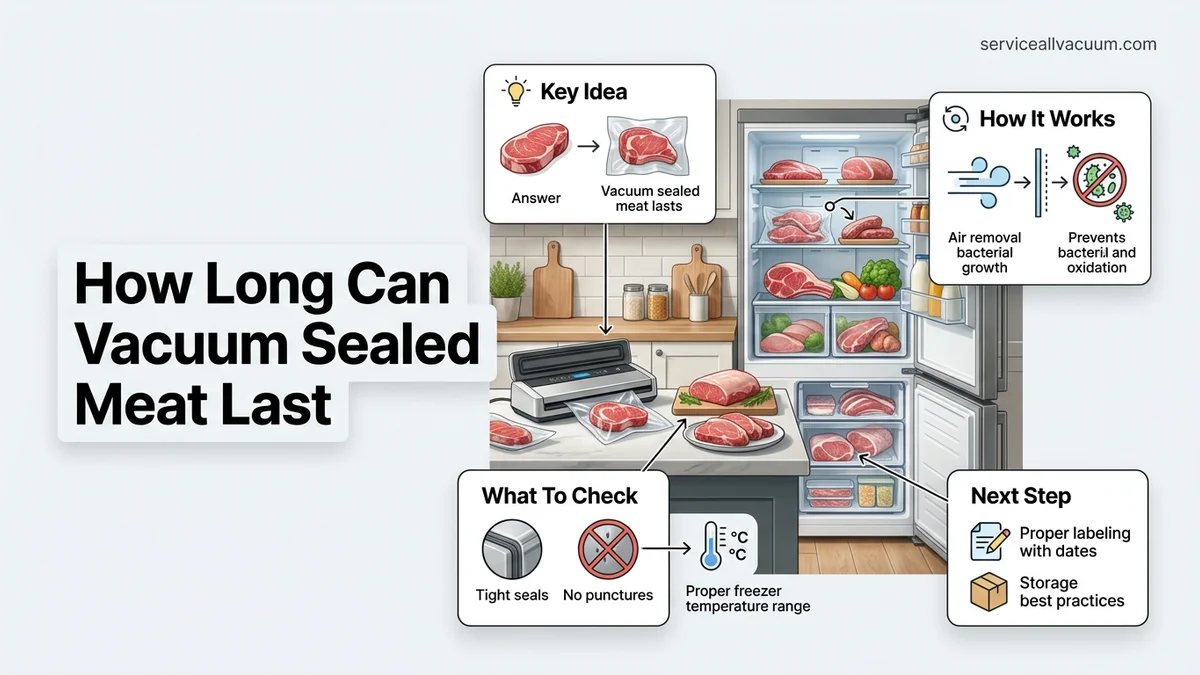
Vacuum-sealed meat lasts significantly longer than traditionally wrapped meat, extending refrigerator life to 1 to 2 weeks and freezer life up to 3 years. However, proper temperature control remains essential to prevent dangerous bacterial growth.
Vacuum-sealed meat lasts significantly longer than conventionally wrapped meat, extending refrigerator life to between one and two weeks and freezer life up to three years. Removing oxygen drastically slows down the oxidation and dehydration processes that cause spoilage.
As food preservation technology advances into 2027, home cooks rely more than ever on vacuum sealers to reduce food waste and stretch grocery budgets. However, extending shelf life requires strict adherence to safety timelines, especially because removing oxygen creates unique bacterial environments.
Key Takeaways
- Vacuum-sealed beef lasts 1-2 weeks in the fridge and up to 3 years frozen.
- Poultry and ground meats last 1-2 weeks refrigerated and 1-3 years in the freezer.
- Never leave vacuum-sealed meat at room temperature due to botulism risks.
- Clostridium botulinum thrives in oxygen-free environments if temperatures rise above 38°F.
- Always thaw vacuum-sealed meat in the refrigerator after cutting the package open.
What Causes Vacuum-Sealed Meat to Spoil and Lose Quality
The Battle Against Aerobic Spoilage Bacteria
Standard spoilage bacteria require oxygen to multiply and break down proteins, producing foul odors and slimy textures. When you vacuum-seal meat, you eliminate most of this oxygen, halting aerobic bacterial growth. This preservation method allows cuts like steak and chicken to remain fresh in your refrigerator for up to 14 days instead of the typical three to five days.
The Hidden Risk of Anaerobic Pathogens
While removing oxygen stops standard spoilage bacteria, it creates an ideal environment for anaerobic organisms. Clostridium botulinum is the most dangerous anaerobic bacterium because it thrives in oxygen-free spaces. Clostridium botulinum produces deadly toxins without altering the smell or appearance of the meat. To keep your household safe in 2027, you must follow strict temperature controls, keeping vacuum-sealed meat either below 40 degrees Fahrenheit or completely frozen.
- Oxygen removal stops aerobic bacteria and mold.
- Anaerobic bacteria survive and multiply without oxygen.
- Temperature abuse turns vacuum-sealed packages into toxin incubators.
- Freezing completely halts bacterial activity, making it the safest long-term storage method.
How to Store and Maximize the Shelf Life of Vacuum-Sealed Meat
Optimizing Freezer Storage for Years of Freshness
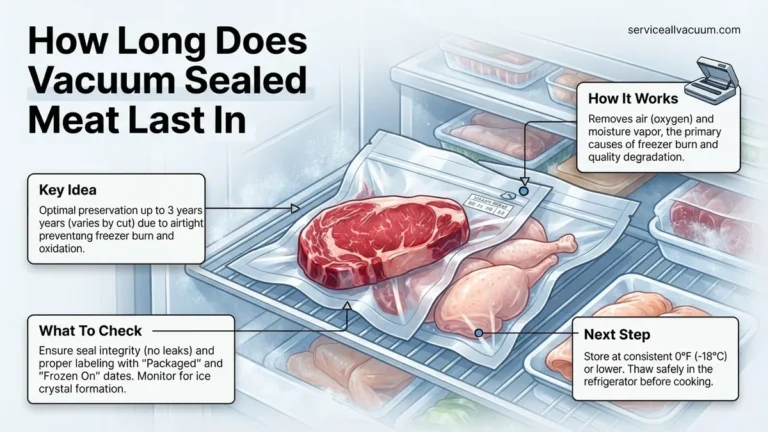
Freezer burn ruins the texture and flavor of meat by drying out the surface cells through direct contact with cold air. Vacuum sealing eliminates air pockets entirely, protecting your protein from freezer burn. While standard freezer wrapping keeps beef safe for six to twelve months, proper vacuum sealing extends that window to two or three years without major quality loss.
- Set your deep freezer to 0 degrees Fahrenheit or lower.
- Pre-freeze raw, juicy meats like marinated chicken for an hour before sealing to prevent liquid from sucking into the seal bar.
- Label every package with the sealing date using 2027 food-safety tracking standards.
Refrigeration and Room Temperature Safety Rules
Refrigerator storage requires vigilance because temperatures above 40 degrees Fahrenheit allow anaerobic pathogens to multiply over time. Never leave vacuum-sealed meat sitting at room temperature. Ambient storage causes dangerous bacteria to double rapidly, creating a severe food poisoning risk within just a few hours.
- Keep refrigerator temperature steady at 38 degrees Fahrenheit or colder.
- Never store vacuum-sealed meat at room temperature, even for short periods.
- Consume refrigerated vacuum-sealed beef within 10 to 14 days, and delicate poultry or ground meat within 6 to 7 days.
What If It Still Doesn’t Work and the Meat Shows Signs of Spoilage
Even with advanced 2027 preservation technology, vacuum-sealed meat can occasionally spoil prematurely due to micro-leaks, power fluctuations, or initial bacterial contamination. When inspecting your stored protein, you must look beyond the seal integrity and evaluate sensory indicators. According to food safety guidelines from the USDA and FDA, vacuum packaging does not inhibit anaerobic bacteria like Clostridium botulinum if proper freezing or refrigeration temperatures are breached.
Recognizing Hidden Spoilage Indicators
Subtle signs often indicate that vacuum-sealed meat is no longer safe for consumption, even if the expiration date has not arrived. Watch for the loss of vacuum pressure, known as a broken seal, where air re-enters the package and creates a loose plastic film. Additionally, check for excessive liquid accumulation, unusual discoloration such as a greyish-brown tint deep within the meat, or a foul, sulfur-like odor upon opening. If any of these red flags appear, discard the item immediately to prevent foodborne illness.
Troubleshooting Failed Preservation Methods
If your vacuum sealer consistently fails to maintain an airtight seal or your meat spoils faster than the established timelines, systematic troubleshooting is required. Follow these steps to diagnose and resolve preservation failures:
- Inspect the sealing strip on your vacuum sealer for residue, burns, or warping that prevents a complete thermal bond.
- Test your machine’s negative pressure output using a calibration chamber or consult manufacturer maintenance guidelines for pump replacement, with replacement parts typically costing between $45 and $120.
- Upgrade your sealing bags to heavy-duty, multi-ply commercial grade materials (at least 4 mil thickness) to prevent bone punctures and micro-tears during storage.
- Verify that your freezer maintains a constant temperature of 0°F (-18°C) or lower using an independent digital thermometer to eliminate ambient temperature spikes.
- Consult a certified appliance technician or manufacturer support service if electronic control boards fail, with professional diagnostic fees averaging $80 to $150.
Conclusion
Maximizing the shelf life of vacuum-sealed meat relies on a strict combination of low temperatures, high-barrier packaging, and diligent seal inspections. By adhering to modern storage benchmarks, you can safely preserve beef, poultry, and fish for years in the freezer without sacrificing texture or nutritional value. According to verified research and food science experts from leading agricultural universities, maintaining a strict 0°F freezer environment remains the single most effective defense against lipid oxidation and bacterial growth. Your immediate next step is to audit your current freezer temperatures and inspect your existing vacuum-sealed inventory for any loss of package integrity.
❓ Frequently Asked Questions
How long does vacuum sealed chicken last in the refrigerator?
Vacuum-sealed chicken, whether breasts, thighs, or whole, lasts between 6 to 9 days in the refrigerator when kept at a consistent 38°F or lower. This is roughly double the shelf life of store-bought plastic packaging.
Why does vacuum sealing extend the shelf life of meat so dramatically?
Vacuum sealing removes oxygen from the packaging, which significantly slows down aerobic bacteria growth, lipid oxidation, and moisture loss. This prevents freezer burn and delays chemical changes that cause spoilage.
What is the danger of Clostridium botulinum in vacuum-sealed foods?
Clostridium botulinum is an anaerobic bacterium that produces a deadly toxin in environments lacking oxygen. If vacuum-sealed meat is left above 38°F, these spores can multiply and produce toxins without warning signs.
Does freezing vacuum-sealed meat kill bacteria?
Freezing does not kill bacteria; it only renders them dormant. When the meat thaws, bacteria can resume multiplying, which is why safe handling and prompt cooking remain crucial.
How long does vacuum-sealed ground beef last in the freezer?
Vacuum-sealed ground beef can last between 1 to 2 years in the freezer. Because ground meat has a larger surface area exposed to handling, its frozen shelf life is slightly shorter than solid cuts like steaks.
Can you vacuum seal raw meat and cook it directly in the bag?
You can cook vacuum-sealed meat directly in the bag only if using food-grade, BPA-free bags designed specifically for high-temperature sous-vide cooking. Standard household vacuum sealer bags may leach chemicals when heated.