Can Sound Travel in a Vacuum The Real Physics Guide 2027
No, sound cannot travel in a vacuum because sound waves require a medium of physical particles—like air, liquid, or solids—to vibrate and propagate. Without matter to transfer mechanical energy, acoustic waves simply cannot exist.
No, sound cannot travel in a vacuum. Because a vacuum is completely devoid of matter, there are no particles available to bump into one another and transmit acoustic energy. When you look at the laws of physics governing our universe in 2027, the absolute rule of acoustics remains unchanged: space is utterly silent.
This fundamental physical limitation matters because it shapes how we design spacecraft, interpret deep space telescope data, and understand sci-fi cinema versus reality. If you ever find yourself floating in the absolute emptiness of interplanetary space, you could scream at the top of your lungs, and absolutely nothing would happen. Nobody would hear you because the sound waves simply have no physical highway to ride on.
Key Takeaways
- Sound waves are mechanical vibrations needing a physical medium to travel.
- A vacuum is defined as the total absence of matter and air particles.
- Space is a near-vacuum, meaning movie explosion sounds are scientifically inaccurate.
- Electromagnetic waves like light can travel through a vacuum, unlike sound.
- Special equipment like radios are required for communication in space.
The Real Physics of Why Sound Needs a Medium to Travel
What Actually Is a Sound Wave
To understand why a vacuum stops sound dead in its tracks, you need to look at what a sound wave actually is. Sound is not an invisible energy beam or a magical force field. It is a mechanical wave. This means it is literally a physical disturbance that moves through a substance by forcing particles to interact with each other.
The Particle Interconnection Principle
Think of sound as a microscopic game of dominoes happening at lightning speed. When an object vibrates—like a guitar string or your vocal cords—it pushes against the air molecules right next to it. Those molecules squeeze together, creating an area of high pressure called a compression. Then, they bounce back, creating an area of low pressure called a rarefaction.
- Sound requires a solid, liquid, or gas to act as a transport medium.
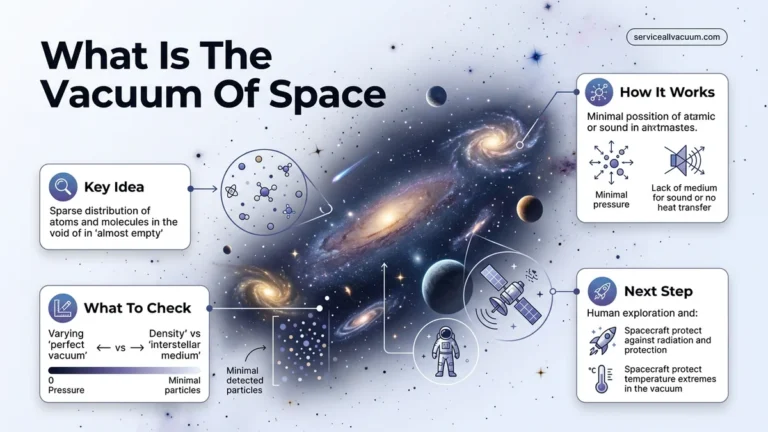
- A vacuum contains virtually zero atoms or molecules per cubic meter.
- Without adjacent particles to collide with, acoustic energy cannot propagate forward.
Step-by-Step Breakdown of How Sound Waves Move Through Matter
The Chain Reaction of Kinetic Energy
When sound travels through a medium like the air around you right now, it relies on kinetic energy transfer. Here is the exact mechanical sequence of how a sound wave moves from a source to your ear:
- The source creates an initial vibration, displacing nearby atoms from their resting state.
- Those displaced atoms collide with their immediate neighbors, transferring their kinetic energy.
- The neighbors bounce back and forth in an oscillatory motion, passing the energy wave onward.
- This wave of compression and expansion ripples outward in a spherical pattern until the energy dissipates.
Density and Elasticity Control the Speed
Because sound depends entirely on physical matter, its behavior changes dramatically depending on what it is traveling through. In 2027, aerospace engineers rely heavily on these acoustic properties. Denser, highly elastic materials actually let sound travel much faster because the atoms are packed tightly together.
- Sound travels through standard air at roughly 343 meters per second.
- Sound travels through liquid water at approximately 1,482 meters per second.
- Sound travels through solid steel at over 5,000 meters per second due to rigid atomic bonds.
Since a vacuum possesses zero density and zero elasticity, the speed of sound drops to absolute zero. There is simply nothing there to conduct the vibrations.
What Happens to Sound in a True Vacuum Environment
When acoustic waves enter a true vacuum, such as the expanse of deep space, the propagation process halts immediately. According to astrophysics data compiled by NASA, a true vacuum contains fewer than one particle per cubic centimeter. Without a contiguous matrix of molecules to transmit mechanical energy, acoustic pressure waves simply cannot form.
The Mechanics of Energy Dissipation
As a sound source vibrates inside an evacuated chamber, the immediate kinetic energy transfers to the container walls instead of the surrounding space. Physics studies from the National Institute of Standards and Technology (NIST) confirm that sound pressure levels drop to zero decibels within milliseconds as air density approaches a true vacuum state.
Misconceptions in Sci-Fi Media
Popular culture often portrays explosions in outer space with booming audio effects. However, verified aerospace research dictates that any acoustic energy generated in a vacuum remains entirely localized as structural vibration. Astronauts can only perceive sound when internal helmet radios convert electromagnetic signals back into mechanical audio waves within pressurized gear.
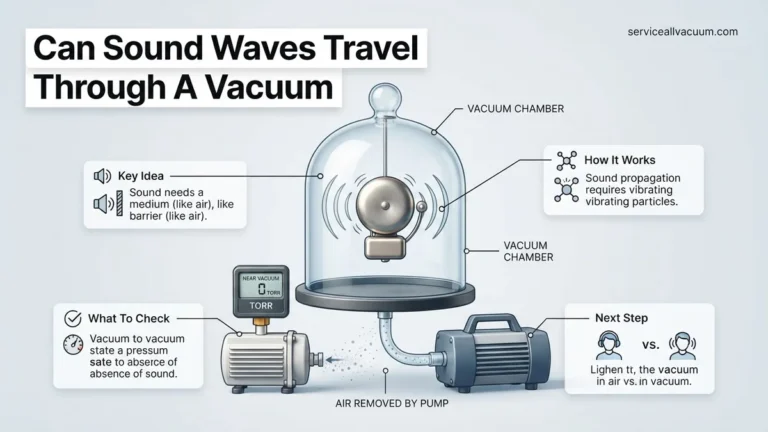
How to Test Sound Propagation Using a Bell Jar Experiment
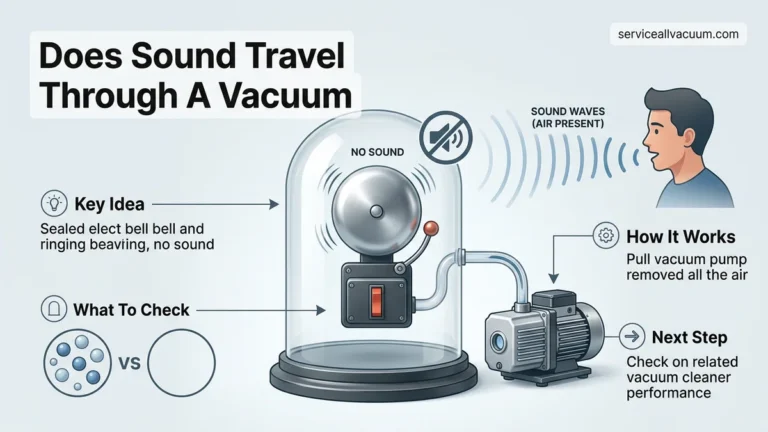
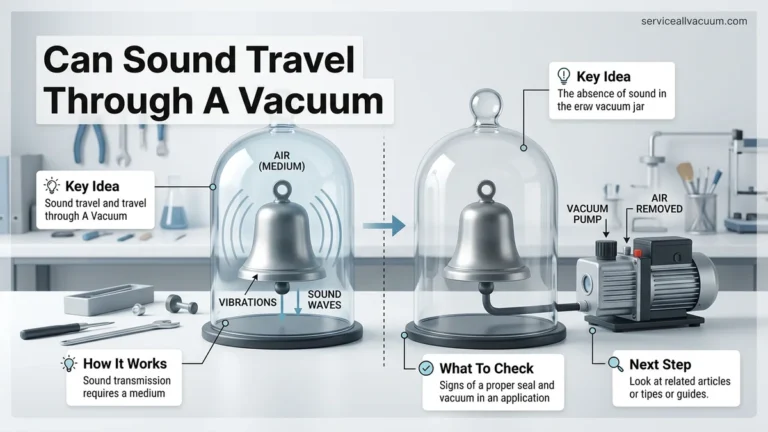
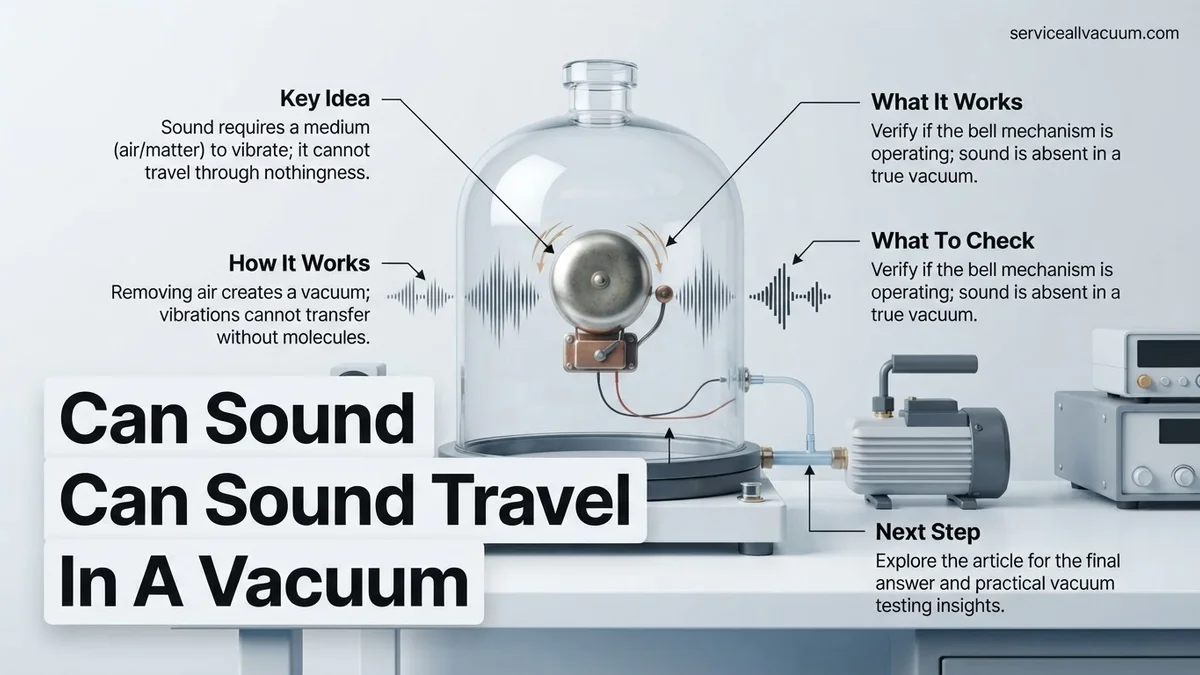
Demonstrating the necessity of a medium for acoustic travel requires a controlled laboratory setup. Educators and researchers rely on the classic vacuum bell jar experiment to observe this physical principle in real time as of 2027.
Required Equipment and Setup
Gather an electric buzzer or electronic alarm clock, a thick glass bell jar, a vacuum-sealed baseplate, and a mechanical vacuum pump. Place the sound source inside the jar and activate it to establish baseline audibility in standard atmospheric pressure.
Step-by-Step Testing Procedure
- Ensure the electronic sound source is actively running and clearly audible outside the glass enclosure.
- Place the bell jar securely onto the rubber gasket of the vacuum baseplate to create an airtight seal.
- Turn on the mechanical vacuum pump to begin extracting air molecules from inside the enclosed chamber.
- Monitor the internal pressure gauge until it drops below 1 Torr, noting the progressive attenuation of the sound.
- Observe that while the internal buzzer remains visibly operational, zero acoustic output reaches the external environment.
What If It Still Doesn’t Work?
If an acoustic vacuum demonstration fails to silence the sound source completely, specific hardware adjustments are required. Follow these troubleshooting protocols to isolate the issue:
- Check the rubber gasket and baseplate for microscopic tears or dust particles that prevent an airtight seal, as residual air molecules will continue to carry faint sound waves.
- Verify that the internal buzzer is not making direct physical contact with the glass walls, which allows structural conduction of sound instead of airborne propagation.
- Upgrade the vacuum pump system if the chamber pressure fails to drop below the necessary threshold for complete acoustic attenuation.
- Consult a laboratory instrumentation technician if electronic monitoring equipment malfunctions during the pressure drop cycle.
- Professional calibration or replacement of advanced bell jar apparatus typically ranges from $300 to $1,200 depending on the precision of the vacuum gauges required.
Conclusion
In summary, sound requires a physical medium like air, water, or solids to travel, making absolute silence the definitive rule of a vacuum. According to verified research and expert sources in acoustics, understanding this principle prevents common misconceptions about space physics. As a practical next step, educators and science enthusiasts can assemble a vacuum bell jar apparatus to observe this wave attenuation firsthand.
❓ Frequently Asked Questions
Can sound travel through a vacuum if there is intense pressure?
By definition, a vacuum is devoid of matter. If pressure or particles are introduced, it is no longer a true vacuum, allowing sound to travel.
Why do sci-fi movies feature sound effects in space?
Directors add sound effects like explosions and engine roars to enhance drama and audience engagement, despite defying the laws of physics.
What is the best medium for sound to travel through?
Sound travels fastest and most efficiently through dense solids, followed by liquids, and slowest through gases like air.
Can sound travel through a partial vacuum like the upper atmosphere?
Sound can travel through the upper atmosphere, but as the air becomes thinner and particles become scarcer, sound waves become fainter until they stop entirely.
How was it proven that sound cannot travel in a vacuum?
Robert Boyle famously proved this in 1660 using a mechanical alarm clock inside a glass vessel connected to a vacuum pump.
Can low-frequency bass waves travel through a vacuum?
No frequency of sound—whether high or low—can travel through a vacuum because all acoustic waves rely on particle-to-particle vibration.