How Long Does Vacuum Packed Meat Last in the Fridge 2026
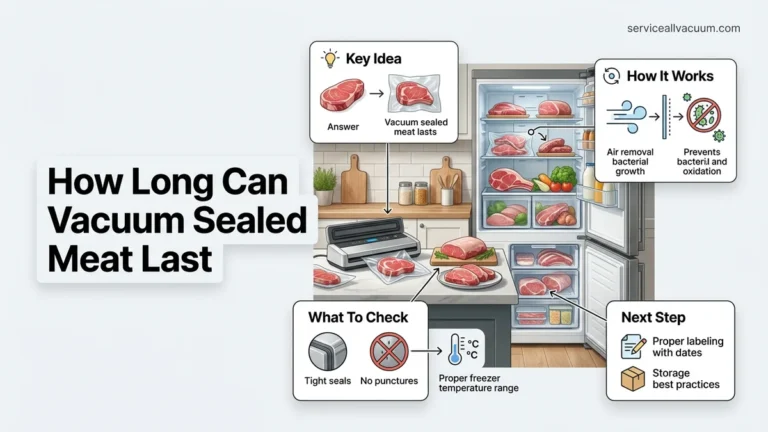
Vacuum-packed meat generally lasts two to four times longer than traditionally wrapped meat, with most cuts remaining fresh for 1 to 2 weeks in a properly chilled refrigerator. However, storage times vary significantly depending on whether the packaging is commercial or home-sealed, as well as the specific type of meat.
Vacuum-packed meat generally lasts in the fridge anywhere from 1 week to upwards of 4 weeks, depending heavily on the specific type of meat, its initial freshness, and whether it was sealed commercially or at home. While removing oxygen drastically slows down aerobic spoilage and prevents freezer burn, it does not stop time or eliminate all bacteria.
Keeping raw proteins safely stored in your refrigerator requires strict adherence to timeline guidelines. As we navigate food safety standards in 2026, understanding exact shelf lives prevents food waste while protecting your household from dangerous foodborne illnesses.
Key Takeaways
- Commercial vacuum-packed beef can last up to 4 weeks in the fridge.
- Home-sealed raw meats typically last 1 to 2 weeks safely.
- Keep refrigerator temperatures at or below 40°F (4°C) to prevent bacteria growth.
- Check for a sour smell, sticky texture, or bulging packages to spot spoilage.
- Always freeze meat if you do not plan to cook it within its window.
What Causes Spoilage in Vacuum Packed Meat
To understand how long your packaged protein will last, you need to look at what drives spoilage in an oxygen-deprived environment. Removing air eliminates the oxygen that aerobic bacteria and molds need to multiply. However, this creates a unique biological landscape inside your refrigerator.
The Danger of Anaerobic Bacteria
While standard spoilage organisms slow down without oxygen, certain anaerobic and facultative bacteria thrive or survive in vacuum packages. Listeria monocytogenes and Clostridium botulinum are primary concerns. Unlike aerobic bacteria that produce foul odors and obvious slime, anaerobic pathogens can multiply silently without dramatically altering the smell or look of the meat until it is dangerously unsafe.
Seal Integrity and Cross-Contamination
The protective barrier of a vacuum seal only works if the plastic remains completely airtight. Micro-leaks, punctures from bones, or weak heat seals allow ambient air to re-enter, rapidly neutralizing the extended shelf-life benefits. Furthermore, if the meat was contaminated before sealing, the trapped environment will not reverse the microbial load.
- Check for loose seals or loss of vacuum pressure before cooking.
- Ensure raw juices do not leak onto other refrigerator items.
- Discard any package that shows bloating or gas accumulation.
How to Store and Track Vacuum Packed Meat Safely
Maximizing the refrigerator life of your vacuum-packed meat requires precise environmental controls and diligent tracking habits. Even the best commercial seal will fail prematurely if your kitchen appliances do not meet optimal safety standards.
Refrigerator Temperature Control
Your refrigerator must maintain a constant temperature at or below 40°F (4°C), though 34°F to 38°F is ideal for raw meat. Even a minor fluctuation of a few degrees can accelerate bacterial growth inside airtight packages. Always store your vacuum-sealed meats on the lowest shelf of the fridge to prevent any potential leaks from contaminating ready-to-eat foods below.
Tracking Dates and Labeling Protocols
Never rely on memory when managing perishable proteins. Commercial vacuum-packed meats usually feature a “use-by” or “freeze-by” date, but home-sealed items require active tracking.
- Always write the sealing date directly on the vacuum pouch using a food-safe marker.
- Treat home-sealed raw poultry and ground meats with a maximum fridge window of 3 to 4 days.
- Consume home-sealed whole cuts of beef or pork within 7 to 10 days for optimal safety and quality.
Step-by-Step Guide to Identifying Spoiled Vacuum Packed Meat
Even though oxygen-depleted packaging extends shelf life, vacuum-packed meat can still spoil due to anaerobic bacteria growth, temperature abuse, or microscopic seal failures. Do not rely solely on the printed expiration date when evaluating meat safety in 2026. Experts recommend a thorough sensory evaluation before preparation.
1. Visual and Tactile Inspection
Always inspect the package and the meat inside before opening. Look for signs of gas production, discoloration, or abnormal texture.
- Examine the package for loss of vacuum, indicated by loose plastic, liquid pooling, or excessive air bubbles inside the seal.
- Check the color of the meat. Beef may turn slightly dark or purplish inside the package due to lack of oxygen, but a grey, green, or brown hue signals oxidation and bacterial breakdown.
- Feel the surface texture through a clean glove or plastic wrap. Slimy, sticky, or tacky surfaces indicate advanced bacterial slime production.
2. Olfactory Test After Opening
The sense of smell remains one of the most reliable indicators of spoilage, though vacuum-packed proteins require a specific protocol.
- Open the vacuum seal in a well-ventilated area. A slight, harmless sulfur-like odor can sometimes dissipate within minutes of opening fresh beef; however, persistent foul odors require immediate discarding.
- If the meat emits a sour, pungent, ammonia-like, or distinctly sulfurous rotten-egg smell, discard it immediately without tasting.
- Never attempt to wash or salvage meat that exhibits a foul odor or slimy texture, as pathogen contamination may have reached dangerous thresholds.
What If Your Vacuum Seal Fails or Spoilage Occurs
If you discover that your vacuum seal has leaked or your stored meat shows early signs of spoilage, immediate corrective action is required to prevent foodborne illness. Relying on outdated food safety assumptions can lead to severe gastrointestinal distress.
- Isolate and Discard: Immediately discard any meat that exhibits a compromised seal combined with off-odors, discoloration, or a slimy texture to prevent cross-contamination in your refrigerator.
- Sanitize Storage Surfaces: Wash all refrigerator shelves, crisper drawers, and contact surfaces using a solution of one tablespoon of chlorine bleach per gallon of water, or an EPA-approved disinfectant spray.
- Check Temperature Settings: Verify that your refrigerator internal thermometer consistently reads 40°F (4°C) or below. Fluctuating temperatures drastically accelerate bacterial growth in compromised vacuum packages.
- Upgrade Equipment: If commercial vacuum seals consistently fail, inspect your chamber or external vacuum sealer. Replacement sealing strips or gaskets typically cost between $15 and $45 depending on the manufacturer.
- Consult Food Safety Authorities: For institutional food safety protocols or commercial storage guidelines, consult the USDA Food Safety and Inspection Service (FSIS) guidelines or local health department resources.
Conclusion
Maximizing the refrigerator shelf life of vacuum-packed meat requires maintaining precise cold chain temperatures and understanding the limitations of oxygen-deprived storage. While vacuum sealing safely extends raw beef, poultry, and pork storage times beyond conventional wrapping methods, sensory checks remain essential. According to verified research and expert sources from the USDA and leading food safety institutions, discarding questionable proteins prevents foodborne illness. Take the next step today by auditing your refrigerator temperature settings and inspecting current vacuum-sealed inventory.
❓ Frequently Asked Questions
What is the difference between commercial and home vacuum sealing for meat storage?
Commercial vacuum packaging uses industrial machines that remove almost all oxygen and use heavy-duty barrier bags, extending shelf life up to a month. Home sealers remove less air and use standard bags, meaning meat usually only lasts 1 to 2 weeks.
Is it safe to keep vacuum-packed ground meat in the fridge?
Ground meat spoils much faster than whole cuts because grinding increases surface area for bacteria. Vacuum-packed ground beef should only be kept in the fridge for 3 to 5 days before cooking or freezing.
What temperature should my refrigerator be set to for safe meat storage?
Your refrigerator must remain at or below 40°F (4°C), ideally between 34°F and 38°F. Proper cold temperatures are essential to slow down anaerobic bacteria like Clostridium botulinum.
Can I refreeze vacuum-packed meat after opening it?
Yes, you can safely refreeze meat as long as it has been kept continuously refrigerated at 40°F or below and shows no signs of spoilage. Quality may slightly degrade due to moisture loss.
Why does vacuum-packed meat sometimes have a slight smell when first opened?
A slight, harmless sulfur-like odor can sometimes occur when opening vacuum-packed meat due to trapped natural gases and lack of oxygen. Let the meat sit for a few minutes; if the odor dissipates and doesn’t smell sour or putrid, it is safe to eat.
Does vacuum sealing prevent freezer burn entirely?
Vacuum sealing drastically reduces freezer burn by eliminating air pockets where moisture can sublimate, keeping meat fresh for months or even years in the freezer.