How Often Should You Vacuum Carpet Expert Guide for 2026
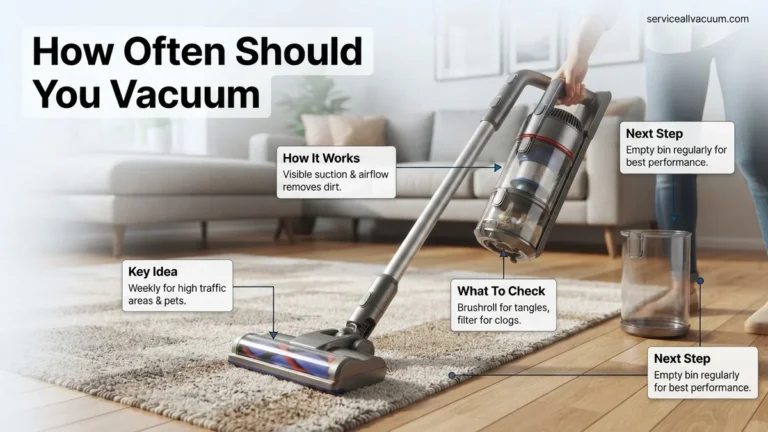
Most carpets require vacuuming once or twice a week to prevent dirt from grinding into the fibers and wearing down the material. However, households with pets, children, or allergy sufferers need a more frequent schedule of three to seven times a week. Adhering to the right routine also helps maintain manufacturer warranties and indoor air quality.
As a general rule for 2026, you should vacuum low-traffic areas of your home once a week, but high-traffic zones, homes with pets, and households with allergy sufferers require vacuuming two to three times per week. Sticking to a consistent schedule removes abrasive dirt before it cuts through backing materials and ruins your floors.
Waiting too long between vacuum sessions allows microscopic debris to settle deep into the pile where regular suction cannot reach it. Understanding your specific household traffic level is the only way to protect your flooring investment and keep indoor air breathable.
Key Takeaways
- Vacuum standard low-traffic carpets at least once a week.
- Increase frequency to 3-5 times weekly in high-traffic zones.
- Pet owners should vacuum high-shed areas daily or every other day.
- Slow, overlapping passes capture embedded dirt better than fast strokes.
- Empty the vacuum canister when it reaches two-thirds capacity for optimal suction.
Why Infrequent Vacuuming Destroys Carpet Fibers
The Abrasion Effect of Trapped Dirt
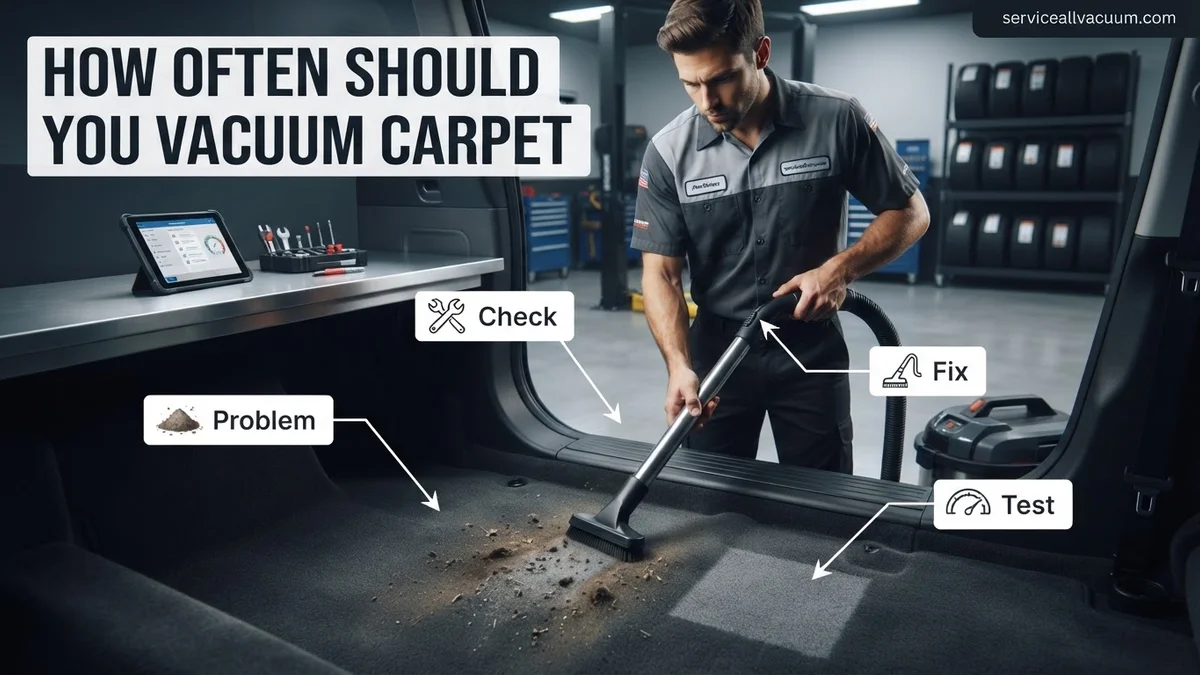
Every time you walk across your floors, you grind microscopic dirt, sand, and dust deep into the base of the pile. These particles act like tiny glass shards that slice and fray the synthetic or natural fibers from the inside out. As you continue to walk on un-vacuumed flooring, these severed fibers turn into fine dust, permanently flattening the pile and creating worn traffic lanes that professional carpet cleaning cannot reverse.
Allergen and Dander Accumulation
Modern carpeting acts as a giant air filter for your home, trapping dust mites, pet dander, pollen, and bacteria right in the weave. When you do not vacuum often enough, this trapped matter builds up exponentially. Every step you take sends these allergens back up into your breathing zone. For allergy and asthma sufferers, neglected floors quickly degrade indoor air quality and trigger chronic respiratory symptoms.
How to Establish the Correct Vacuuming Schedule for Your Home
Traffic-Based Frequency Guidelines
Your vacuuming routine must match how you actually live in your space. A single person living alone generates vastly less debris than a busy family of four with multiple pets. Use these baseline frequencies to structure your routine:
- Low-traffic areas: Guest bedrooms, formal dining rooms, and home offices need attention once per week.
- Moderate-traffic areas: Master bedrooms and living rooms require vacuuming two times per week.
- High-traffic areas: Entryways, hallways, and family rooms demand vacuuming three to four times per week.
Adjusting for Pets and Kids
If you share your home with shedding dogs, cats, or crawling children, you need to double your baseline frequency. Pet hair wraps tightly around fibers and mats down the pile rapidly, while children drop food particles that attract pests. Homes with heavy pet shedding or multiple children often require daily surface passes in main living zones, combined with a thorough weekly deep-vacuum session using a motorized brush roll.
Step-by-Step Guide to Vacuuming Carpets Effectively
Maximizing the efficiency of your 2026 vacuum cleaner requires more than simply pushing the appliance back and forth. Carpet and Rug Institute (CRI) guidelines emphasize proper technique to extract embedded particulate matter without damaging delicate carpet fibers.
Mastering Technique and Speed
According to cleaning specialists, slow, deliberate passes yield superior results compared to rapid movements. Moving too quickly prevents motorized brush rolls from agitating deep-set soil and dust mites.
- Clear the floor of loose items, toys, and debris that could clog the intake hose or damage the roller brush.
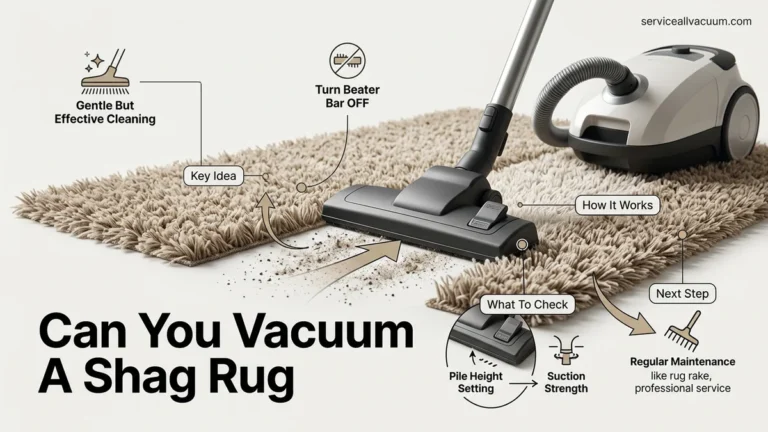
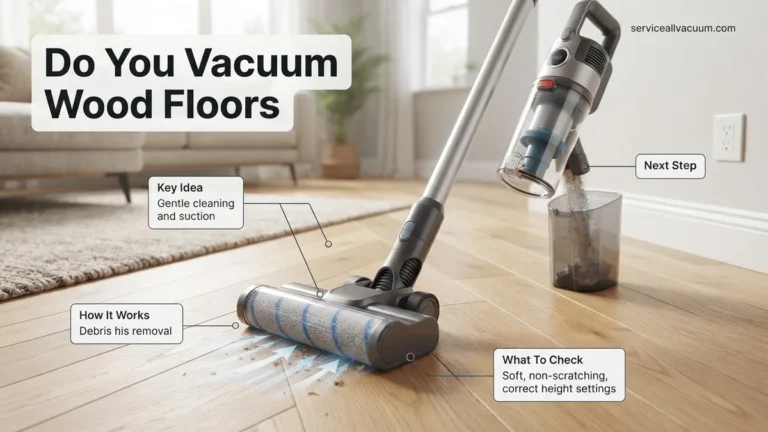
- Adjust the vacuum height setting according to your carpet pile length to ensure optimal airflow and mechanical agitation.
- Push the vacuum forward slowly on the push stroke, and pull it back at an even slower pace on the pull stroke.
- Overlap each pass by approximately three inches to ensure complete coverage of high-traffic walking zones.
- Execute perpendicular passes—vacuuming North-South first, then East-West—in heavily soiled rooms to capture dirt from multiple angles.
What If Regular Vacuuming Fails to Remove Trapped Dirt and Odors
Even with strict adherence to a 2026 vacuuming schedule, residential carpets occasionally retain stubborn embedded grime, chemical residues, and persistent odors. When routine passes fail to restore fiber texture and freshness, targeted fallback interventions become necessary.
Advanced Remediation Strategies
If standard high-efficiency particulate air (HEPA) filtration vacuuming does not resolve stubborn stains or musty smells, implement these escalating measures:
- Apply a professional-grade enzyme carpet deodorizer or baking soda treatment, let it sit for 30 minutes, and extract it thoroughly with a dual-motor vacuum.
- Rent a commercial hot-water extraction machine or deep-cleaning carpet washer to flush out microscopic irritants locked deep within the carpet backing.
- Inspect your vacuum’s brush roll and belt for wear, replacing worn components that reduce agitation efficiency by up to 40 percent.
- Evaluate whether the carpet has reached the end of its lifespan, as backing deterioration traps permanent odors regardless of cleaning frequency.
- Seek professional carpet cleaning services for deep restoration, with estimated costs ranging from $150 to $350 depending on home square footage.
Conclusion
Establishing a consistent carpet vacuuming schedule protects indoor air quality and extends the structural integrity of your flooring throughout 2026 and beyond. By combining high-efficiency filtration equipment with proper room-by-room frequency, households successfully eliminate abrasive soil particles before fiber damage occurs. According to verified research and expert sources from the Carpet and Rug Institute, maintaining a disciplined cleaning routine prevents premature wear and reduces indoor allergen concentrations significantly. Your next actionable step is to assess your home traffic levels today and program a customized vacuuming calendar to match.
❓ Frequently Asked Questions
How often should you vacuum if you have dogs or cats?
Households with shedding pets should vacuum high-traffic areas three to seven times a week. This prevents pet dander, fur, and tracked-in dirt from embedding permanently into the carpet backing.
What is the best time of day to vacuum carpets?
The best time to vacuum is typically in the morning or early afternoon when foot traffic is low, allowing dust kicked up during the process to settle before evening.
Does vacuuming help reduce household allergies?
Yes, using a vacuum equipped with a HEPA filter captures microscopic allergens like dust mites and pollen. Allergy sufferers should aim to vacuum at least twice a week.
Should I adjust my vacuum height setting for different carpets?
Adjusting the brush roll height ensures optimal airflow and agitation. If the vacuum is too hard to push, the height is set too low for the carpet pile.
Do different rooms require different vacuuming frequencies?
Yes, entryways and living rooms need multiple weekly passes, while guest bedrooms or home offices with minimal use only require attention every week or two.
How does vacuum speed impact cleaning effectiveness?
Moving the vacuum too quickly prevents the brush roll from lifting embedded dirt. Slow, deliberate strokes yield significantly better cleaning results.