How Vacuum A Pool How to Vacuum a Pool Step-by-Step 2027
Keeping your pool clean requires knowing how to vacuum a pool properly to remove stubborn dirt and debris from the floor. This step-by-step guide walks you through setup, priming the hose, and efficient cleaning techniques for crystal-clear water.
Vacuuming your pool effectively comes down to choosing the right method—manual or automatic—and following a precise sequence of preparation, priming, and slow, overlapping passes along the pool floor. Whether you are battling seasonal leaf drop or fine desert dust in 2027, mastering this routine keeps your filtration system running at peak efficiency.
Skipping steps like pre-filling your vacuum hose with water or failing to check your filter pressure can lead to lost suction and a frustrating afternoon. This step-by-step guide walks you through exact preparation techniques and manual vacuuming fundamentals to get your pool crystal clear without the guesswork.
Key Takeaways
- Brush your pool walls and floor 24 hours before vacuuming to loosen stuck debris.
- Ensure the water level is halfway up the skimmer opening for proper suction.
- Prime the vacuum hose completely by holding it over a pool jet to eliminate air pockets.
- Move the vacuum head in slow, overlapping strokes to avoid stirring up clouds of dirt.
- Check and clean your pump basket and filter immediately after finishing the job.
What Causes Pool Debris Build-Up and Why Proper Vacuuming Matters
Pool debris is a constant battle influenced by surrounding trees, wind, bather load, and environmental dust. Heavier items like twigs, leaves, and acorns sink directly to the deep end floor, while finer particles settle into a cloudy layer across the entire surface. If left unaddressed, this organic matter decays, staining your pool liner and forcing your sanitation system to work overtime.
The Real Cost of Neglected Debris
- Organic waste consumes chlorine rapidly, leaving your pool vulnerable to algae blooms.
- Decaying leaves stain plaster and vinyl liners within days of settling.
- Clogged skimmer baskets and overloaded filter grids restrict water flow, burning out pump motors.
Manual Versus Automatic Approaches
While robotic and automatic suction-side cleaners are popular in 2027 for daily maintenance, a manual vacuum remains the ultimate tool for deep cleaning. Manual vacuuming gives you total control to target stubborn algae patches, heavy silt, and large debris that automated units often bypass or spit back into the water.
How to Prepare Your Pool and Check Water Levels Before Vacuuming
Proper preparation prevents equipment damage and ensures optimal suction throughout the cleaning process. Rushing straight to vacuuming without checking your pool environment or system valves is the number one cause of lost suction and primed-hose failures.
Pre-Vacuuming Checklist
- Water Level: Ensure your water sits halfway up the skimmer opening. Vacuuming drops the water level quickly, and a low level can draw air into the pump basket.
- Brush Walls and Steps: Brush the walls, steps, and tile lines 24 hours before vacuuming. This gives suspended fine particles time to settle onto the floor.
- Empty Baskets: Clear out both your pump basket and skimmer baskets to maximize water flow and suction strength.
Setting Your Multiport Valve
Before firing up the pump, determine whether you should set your filter valve to Filter or Waste. If your pool has a light layer of normal dirt and dust, setting the valve to Filter captures the debris inside your sand, DE, or cartridge filter. However, if you are cleaning up a heavy storm aftermath, massive amounts of algae, or fine silt that passes right through filter media, switch your valve to Waste. This bypasses the filter entirely and pumps dirty water straight out to your yard or drainage line, preventing constant filter clogging.
Step-by-Step Guide on How to Assemble, Prime, and Vacuum Your Pool
Mastering the manual cleaning process requires following a precise sequence. According to the Association of Pool & Spa Professionals (APSP), improper setup is the leading cause of pump cavitation during manual vacuuming.
1. Equipment Assembly and Connection
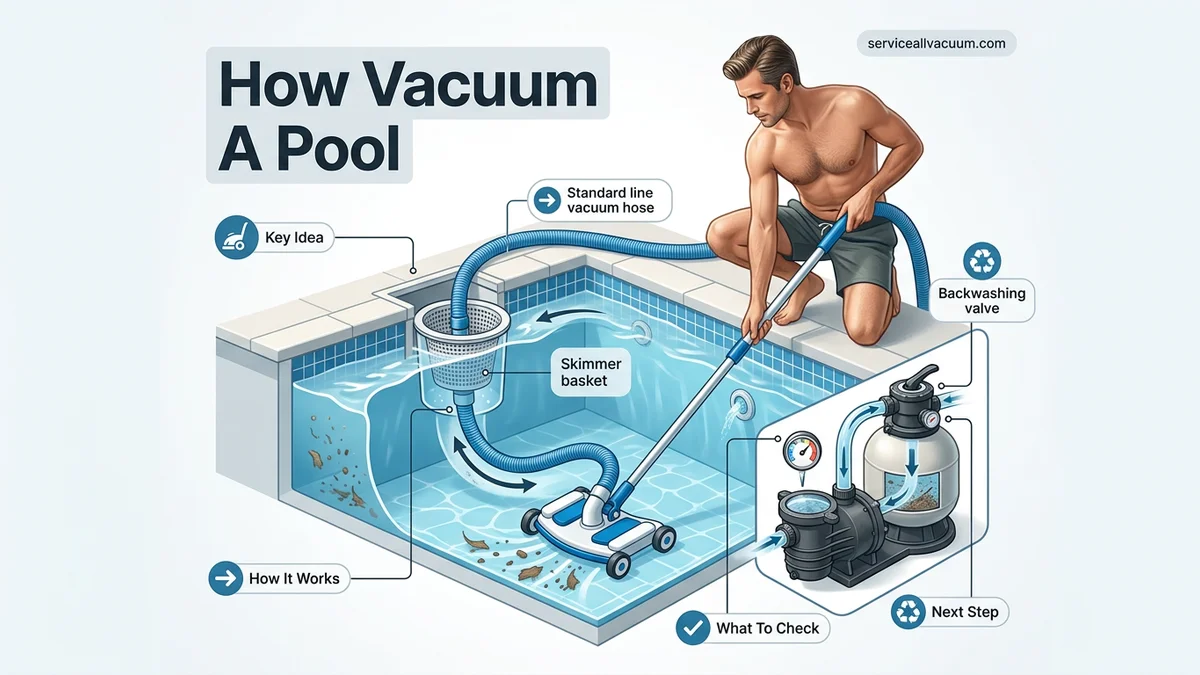
First, attach the swivel cuff of your vacuum hose directly to the pool vacuum head. Next, extend the telescopic pole and lock it securely into place. Submerge the entire hose into the water vertically to force out trapped air pockets.
2. Priming the Hose
Walk the submerged hose toward your pool return jet while the filtration system is actively running. Hold the open end of the hose directly over the active return jet for approximately 30 seconds. You will see bubbles rush out as water fills the entire length of the hose, completely priming it.
3. Executing the Vacuum Sweep
Without letting any air back into the system, push the primed hose end quickly through the skimmer basket and insert the vacuum plate adapter. Connect it directly into the suction port inside the skimmer. Push the vacuum head slowly along the pool floor in overlapping, linear paths to prevent stirring up fine debris. Dedicate 20 to 30 minutes for a standard 16×32 foot residential pool to ensure thorough particulate removal.
What If It Still Doesn’t Work? Troubleshooting Pool Vacuum Suction Loss
Sudden suction loss while vacuuming usually indicates a blockage or an air leak within the closed hydraulic loop. If your vacuum refuses to pull debris, systematically execute these troubleshooting steps:
- Check and empty the baskets: Turn off the pump immediately and clear out the skimmer basket and pump strainer basket. Accumulated leaves and fine silt frequently restrict water flow by up to 80 percent.
- Inspect the hose for micro-cracks: Examine the entire vacuum hose for splits or loose cuff connections. A single tiny tear allows the pump to draw air instead of water, causing an immediate loss of prime.
- Verify valve positions: Ensure your multi-port valve or diverter valves are properly configured to draw suction exclusively from the skimmer rather than the main drain.
- Clean the main filter media: Backwash your sand or DE filter, or rinse your cartridge filter if your pool pressure gauge reads 8 to 10 PSI above your clean baseline.
- Call a professional: If suction remains non-existent after clearing all blockages, an underground plumbing line may be compromised. Professional leak detection and line-clearing services typically cost between $150 and $400 depending on the severity of the obstruction.
Conclusion
Successfully removing debris and maintaining crystal-clear water requires a methodical approach to hose priming, skimmer connection, and steady movement. According to verified research and expert sources from leading aquatic maintenance institutes, regular manual vacuuming every 7 to 10 days drastically extends the operational lifespan of your pool’s filtration system. Your immediate, actionable next step is to test your water chemistry balance and check your filter pressure gauge to prepare for your next cleaning cycle.
❓ Frequently Asked Questions
How do I properly prime a manual pool vacuum hose?
Connect the hose to the vacuum head and pole, submerge the head in the pool, and hold the other end of the hose directly over a return jet. Bubbles will emerge as water forces all the trapped air out of the hose.
What is the correct technique for moving the vacuum head?
Move the vacuum head in slow, overlapping, grid-like strokes across the pool floor. Moving too quickly will stir up the dirt and cloud the water, making it impossible to see where you have cleaned.
Can I vacuum a pool with algae using the standard filter setting?
Vacuuming heavy algae through a standard sand or cartridge filter will often just blow the fine particles right back into the pool. It is best to set your multiport valve to the ‘waste’ position so the algae drains straight out of the pool.
What should I do if my vacuum hose keeps sucking air?
Ensure the hose adapter fits tightly into the skimmer plate and that the hose is pushed completely onto the vacuum head. If a cuff is cracked, it will draw air and kill the pump’s suction.
Do I need to backwash the filter after vacuuming?
Yes, if you vacuumed a significant amount of dirt or used the filter setting, your pressure gauge will likely rise. Backwash your sand or DE filter, or rinse your cartridge filter, to restore optimal water flow.
Can I use an automatic cleaner instead of a manual vacuum?
Automatic robotic or suction-side cleaners are great for daily maintenance and routine cleaning. However, manual vacuuming is still necessary for deep cleaning after storms or handling heavy algae blooms.