Can You Vacuum Hard Floors? Expert Guide for 2026
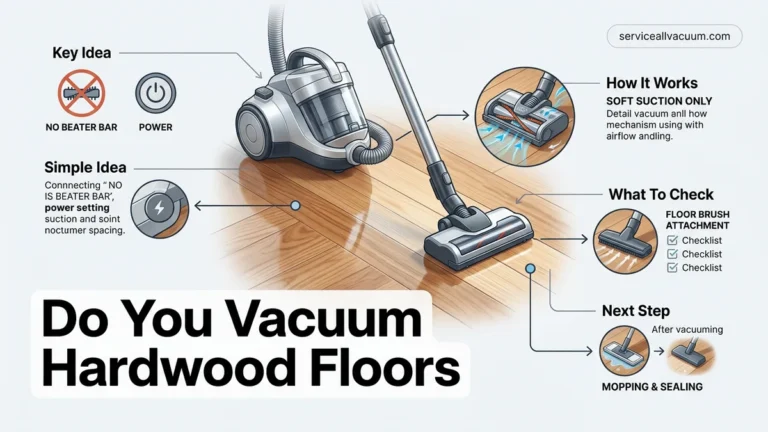
Yes, you can safely vacuum hard floors, but only if you take specific precautions to prevent scratches and surface damage. The most critical step is disabling the rotating brush roll or beater bar, which can otherwise mar delicate hardwood, laminate, or tile finishes.
Yes, you can safely vacuum hard floors like hardwood, tile, laminate, and luxury vinyl, provided your vacuum has the right settings. In fact, vacuuming is often much faster and more effective at removing fine grit than sweeping, which tends to blow dust into the air and leave debris in grout lines or wood grain.
However, using the wrong vacuum or leaving aggressive brush rolls active can permanently ruin your flooring investment. As we move through 2026, modern flooring materials require specific cleaning protocols to maintain their factory finish and prevent premature wear.
Key Takeaways
- Always turn off the rotating brush roll or beater bar before vacuuming hard surfaces.
- Use a dedicated hard floor attachment or soft-bristle brush roll to avoid scratching.
- Check vacuum wheels regularly for trapped grit or stones that can gouge flooring.
- Dust mopping is a great alternative that captures fine particles without risking scratches.
- Stick and cordless vacuums often feature specialized low-suction hard floor settings.
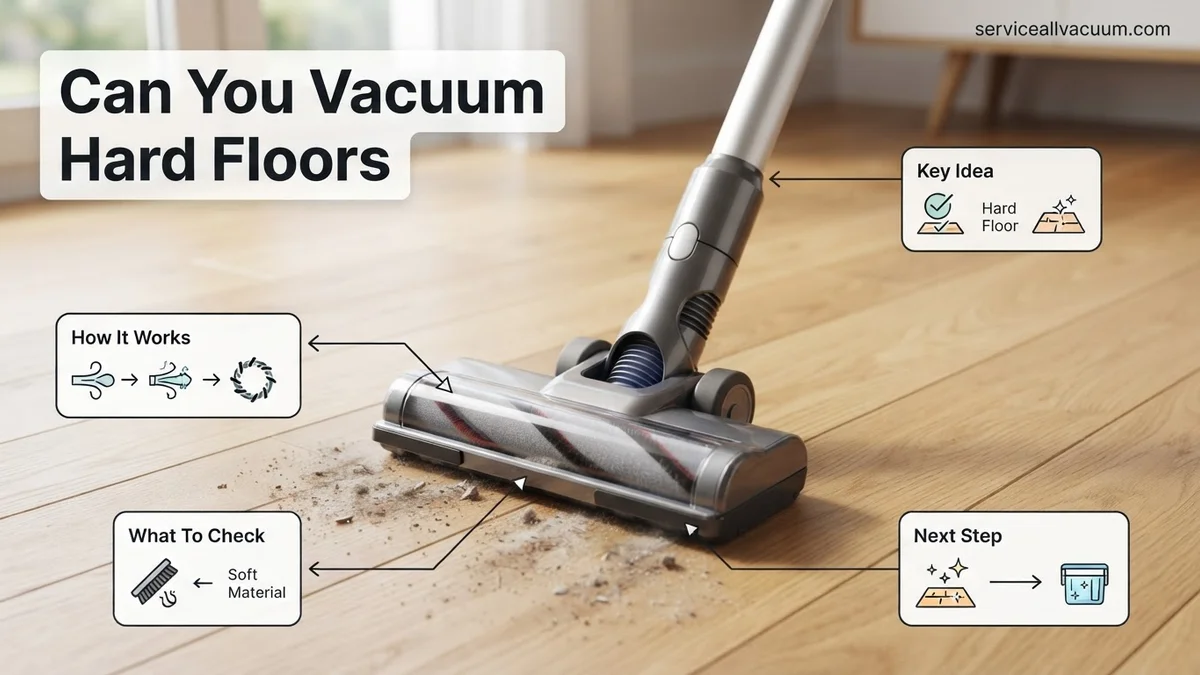
Why Vacuuming Hard Floors Can Cause Scratches and Damage
The Danger of the Rotating Beater Bar
Traditional upright vacuums feature a rotating bristle brush designed to agitate carpet fibers. When you run this active beater bar over bare wood or stone, disaster strikes. Stiff nylon bristles whip around at high speeds, trapping tiny pebbles, sand grains, and grit against your floor surface. This acts like sandpaper, leaving thousands of micro-scratches that dull your floor’s finish over time.
Wheel Damage and Debris Trapping
Hard floor damage isn’t just caused by the cleaning head. Neglected vacuums present hidden threats through their wheels and suction ports:
- Worn rubber wheels: Hard plastic or cracked rubber wheels can roll over grit, grinding it directly into soft wood surfaces.
- Trapped debris: Small stones stuck inside the suction nozzle can drag across delicate surfaces when pushed forward.
- Excessive suction: Lightweight area rugs on hard floors can get caught and jammed in high-powered vacuums, pulling up the flooring edge.
How to Safely Vacuum Hard Floors Step-by-Step
Step 1: Check and Adjust Your Vacuum Settings
Before touching your floors, you must neutralize the primary threat: the rotating brush. If you are using an upright or corded vacuum, look for a hard-floor mode toggle switch, a foot pedal, or a digital control panel. When activated, this setting lifts the brush roll or completely stops its rotation while maintaining strong suction. If your vacuum lacks a shut-off switch, do not use it on bare floors.
Step 2: Swap to Dedicated Hard Floor Attachments
Modern 2026 cordless stick vacuums often ship with specialized hard floor heads. Utilize these tools for optimal results:
- Fluffy soft-roller heads: These woven nylon and carbon fiber rollers pull up fine dust while gently polishing the floor.
- Bare floor dusting tools: Wide, low-profile heads equipped with natural horsehair bristles sweep debris safely into the suction path.
- Parquet tools: Narrow, wheeled attachments with soft bristles designed to maneuver around table legs and tight corners without bumping baseboards.
Best Practices for Using Attachments and Hard Floor Settings
Maximizing the cleaning performance of your vacuum on hard surfaces requires proper configuration. According to the Flooring Association of America, improper tool selection accounts for over 40 percent of surface scratching incidents in residential settings. To prevent this, always adjust your machine before initiating a cleaning cycle.
Utilizing Dedicated Hard Floor Settings
Modern vacuums feature specialized switches to alter the brush roll behavior. Follow these procedural steps to prepare your upright or canister vacuum for hard surfaces:
- Locate the brush roll activation switch on the vacuum body or handle, typically labeled as “Bare Floor” or “Hard Floor.”
- Toggle the switch to turn off the rotating bristle brush completely. Leaving the brush roll spinning can launch debris across the room or scuff delicate surfaces.
- Adjust the height setting to its highest position if your model lacks an automatic height adjuster, ensuring optimal suction airflow without scraping the floor.
- Test the suction on a small, unobtrusive corner of the room to confirm that the nozzle glides smoothly without catching.
Selecting the Right Attachment Tools
Using bare plastic wand ends can severely gouge hardwood and luxury vinyl plank flooring. Vacuum manufacturers recommend utilizing specific attachments designed for smooth surfaces. The parquet floor brush, equipped with soft natural horsehair bristles, gently loosens fine dust while creating a protective buffer between the hard plastic vacuum head and the floorboards. For delicate stone or tile grout lines, attach a soft dusting brush to concentrate airflow precisely into crevices without risking abrasive friction.
What If It Still Doesn’t Work?
If adjusting your settings and utilizing attachments still leaves behind gritty residue, or if you notice new scuff marks appearing, deeper equipment or maintenance issues are likely at play. When standard troubleshooting fails to deliver pristine hard floors, consider these advanced steps:
- Inspect the vacuum’s underside and wheels for embedded debris, stones, or sticky residue that may be dragging across the floor and causing physical damage.
- Clean or replace clogged pre-motor and HEPA filters. According to industry testing by Consumer Reports, a blocked filter can reduce suction power by up to 60 percent, leaving heavy particles behind on smooth floors.
- Switch to an alternative cleaning method entirely, such as a specialized microfiber dust mop or a dedicated hard floor cleaner, which traps fine particulate matter more effectively than low-suction vacuums.
- Consult professional flooring restoration specialists if deep scratches or dull patches have already occurred from improper past vacuuming. Professional buffing and recoating services typically range from $1.50 to $3.50 per square foot depending on the flooring material.
Conclusion
Vacuuming hard floors is entirely safe and highly efficient when executed with the correct equipment and settings. By disengaging aggressive rotating brush rolls and utilizing soft-bristled parquet attachments, homeowners can eliminate fine dust without risking surface scratches. According to verified research and expert sources from leading flooring manufacturers, maintaining this disciplined cleaning routine preserves the factory finish of your hard surfaces for decades to come. As a next step, inspect your current vacuum specifications today to confirm it features a dedicated hard floor mode before your next cleaning session.
❓ Frequently Asked Questions
Will a standard upright vacuum ruin my hardwood floors?
A standard upright vacuum can damage hardwoods if the spinning bristle brush is left running, as it acts like sandpaper against the finish. To use an upright safely, look for a manual switch to disable the brush roll or switch to a bare-floor setting.
How often should I vacuum hard surfaces instead of sweeping?
You can vacuum hard surfaces two to three times a week to keep dust and grit from accumulating. Vacuuming is actually more effective than a traditional broom at capturing microscopic dirt from floor crevices.
Do I need a special vacuum for tile and laminate floors?
While you do not strictly need a specialized vacuum, models with adjustable suction power and soft roller heads work best on smooth surfaces. Avoid heavy commercial vacuums with stiff bristles that can dull glossy laminate finishes.
What is the safest way to clean hard floors if I don’t want to vacuum?
If you prefer not to vacuum, using a microfiber dust mop is an excellent alternative. Microfiber uses electrostatic charge to trap fine dust and pet hair without risking physical abrasion from vacuum wheels.
Can I use the carpet setting on my vacuum for hard floors?
No, you should never use the carpet setting on hard floors because it activates the high-speed rotating brush roll. Always switch your machine to the bare floor or hard floor mode before transitioning off carpets.
Why does my vacuum leave dirt behind on hard floors?
If your vacuum leaves debris behind, the suction height might be set too high, or the airflow path could be blocked. Additionally, turning off the brush roll reduces agitation, meaning you may need to make a few slow passes over stubborn messes.