How Long Can Vacuum Sealed Meat Last in Freezer Best 2026
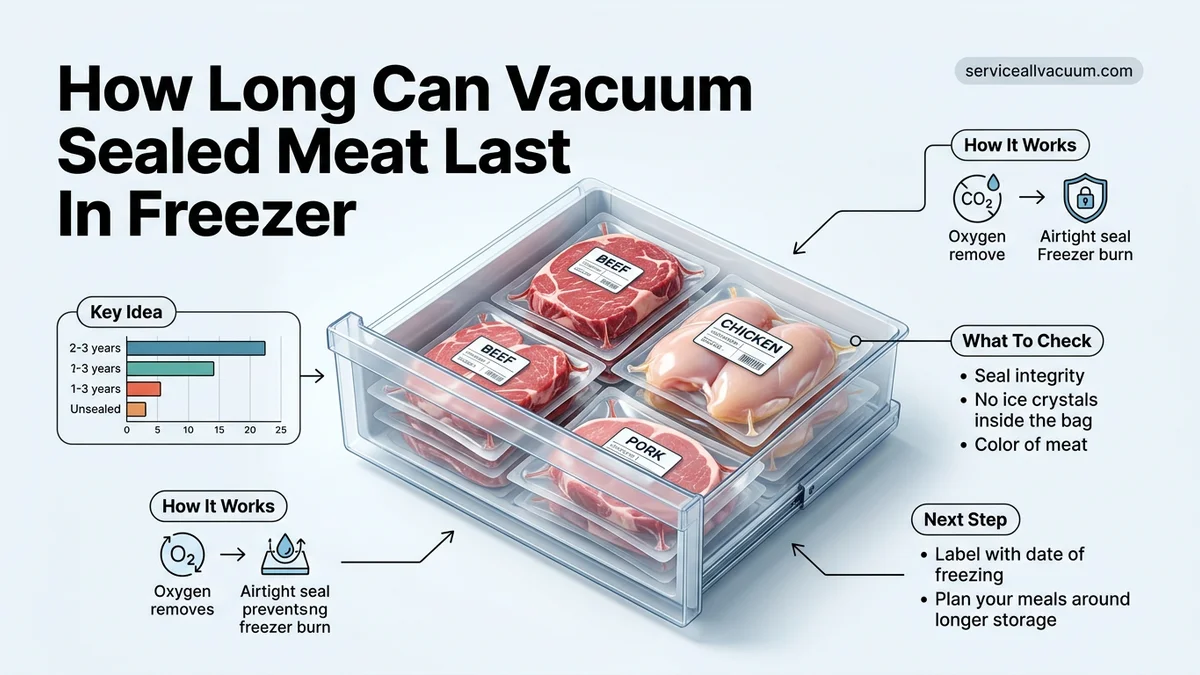
Vacuum sealing drastically extends freezer life by removing air, allowing meat to remain safe and flavorful for 1 to 3 years depending on the cut. While indefinitely safe at 0°F, quality eventually declines due to texture changes and minor moisture loss. Understanding specific storage limits ensures you never waste a valuable cut of meat.
Vacuum-sealed meat can safely last in the freezer anywhere from 4 months to 3 years, depending entirely on the specific cut and animal type. While standard zip-top bags expose your proteins to circulating air that causes rapid freezer burn, removing all oxygen changes the timeline completely. Beef steaks and roasts can survive up to 3 years in a deep freeze without losing their structural integrity, while ground meats max out much sooner due to their high fat surface area.
As you plan your meal prep for 2026, knowing these exact storage thresholds helps you buy in bulk, save money, and prevent food waste. Let us dive into the mechanics of freezing and the exact shelf-life breakdowns for every type of meat in your kitchen.
Key Takeaways
- Vacuum sealed beef steaks and roasts can safely last 1 to 3 years in the freezer.
- Ground meats have a shorter freezer life, lasting roughly 4 to 6 months due to higher surface area.
- Poultry retains optimal quality for 1 to 3 years when properly vacuum sealed.
- Maintaining a consistent freezer temperature of 0°F or lower is crucial for maximum preservation.
- Freezer burn happens when microscopic air pockets remain, causing dehydration in the meat.
What Causes Meat Degradation in the Freezer and How Vacuum Sealing Stops It
Understanding why meat spoils or dries out in sub-zero temperatures helps you maximize your freezer space. When you lock in your cuts using modern sealing technology, you alter the physical environment entirely.
The Science of Freezer Burn and Oxidation
Freezer burn happens when moisture evaporates from the surface of your meat and replaces itself with dry air. This process causes discoloration, tough leathery textures, and a stale, oxidized flavor when cooked. Vacuum sealing removes 99 percent of the air surrounding the protein, creating an airtight barrier. Without oxygen present, moisture cannot evaporate, and lipid oxidation slows down to a crawl.
Bacterial Dormancy at Sub-Zero Temperatures
Many home cooks worry about food safety during long-term freezing. Freezing temperatures do not kill bacteria, but they do render them entirely dormant. Vacuum sealing prevents any outside airborne contaminants from reaching the meat while it sits in your freezer. As long as your freezer maintains a steady temperature of zero degrees Fahrenheit or lower, your vacuum-sealed meat remains biologically stable against pathogen growth indefinitely, though quality still degrades over time.
How to Store and Freeze Vacuum-Sealed Meat for Maximum Lifespan
Simply sealing a cut of meat and tossing it into the freezer does not guarantee peak longevity. Proper technique and preparation dictate whether your proteins taste farm-fresh three years from now or suffer from early texture breakdown.
Pre-Freezing and Flash Chill Techniques
- Pre-chase chill: Always chill your meat thoroughly in the regular refrigerator before vacuum sealing. Warm meat releases internal steam and moisture, which interferes with a tight seal.
- Flash freezing juicy cuts: If you are sealing meat with heavy marinades or natural juices, freeze the item slightly on a tray for an hour before applying the vacuum. This stops the liquid from getting sucked into the machine’s seal bar.
- Double sealing: For long-term storage exceeding one year, apply a second seal line right below the first to prevent micro-leaks.
Optimal Freezer Organization and Temperature Control
Keep your vacuum-sealed packages flat on wire freezer shelves during the initial 24 hours of freezing to ensure uniform shape. Once frozen solid, stack them neatly or file them vertically like books in a bin for easy visibility. Avoid storing your meat in self-defrosting chest freezers if possible, as the cyclical temperature fluctuations can cause microscopic ice crystals to melt and refreeze, gradually degrading the cellular structure of your meat.
Step-by-Step Guide to Safely Thawing Vacuum-Sealed Meat
Thawing vacuum-sealed meat requires careful handling to prevent bacterial growth in oxygen-deprived environments. According to food safety guidelines from the USDA, improper thawing can allow harmful pathogens to multiply rapidly even at cold temperatures. Follow these strict protocols when preparing your frozen cuts for the kitchen in 2026.
The Cold Water Method
Submerge your vacuum-sealed package in cold tap water, changing the water every 30 minutes to ensure continuous thawing. Never use warm or hot water, as this pushes the outer layers of the meat into the danger zone where bacteria thrive. Most standard cuts thaw within one to three hours using this technique.
The Refrigerator Method
Place the sealed package on a plate on the bottom shelf of your refrigerator to catch any potential condensation or leaks. This method is the safest approach backed by culinary experts, though it requires advance planning. Smaller cuts typically need 24 hours, while larger roasts may require up to three days to thaw completely.
- Cut a small slit in the vacuum pouch immediately before cooking to allow air to enter the package.
- Verify that the internal temperature reaches safe FDA-recommended thresholds using a reliable digital meat thermometer.
- Cook the thawed meat immediately if using the cold water method, or within one to two days if using the refrigerator method.
- Discard any meat that exhibits off odors, unusual discoloration, or compromised packaging integrity upon opening.
What If Your Vacuum Seal Fails or Freezer Burn Occurs
A compromised vacuum seal exposes meat to circulating cold air, leading to dehydration and unappealing freezer burn. While freezer-burned meat remains safe to consume according to the USDA, texture and flavor degrade significantly. If you notice ice crystals or grayish-white spots on your stored protein, execute these corrective measures immediately.
When minor packaging failures happen, professional intervention or high-end equipment replacement may be necessary to protect your bulk food investments. Commercial-grade chamber vacuum sealers typically cost between $300 and $800, while heavy-duty external suction units range from $100 to $250. Assess whether resealing or immediate cooking is the most economical path forward.
- Inspect the package thoroughly to determine if the seal failure is localized or if the entire plastic barrier is compromised.
- Trim away any dry, discolored, or freezer-burned edges with a sharp knife before seasoning or cooking the meat.
- Repackage the remaining unaffected meat using a fresh vacuum seal bag and a clean machine to prevent further moisture loss.
- Cook the meat using a moisture-rich method like braising, slow cooking, or stewing to compensate for lost internal juices.
Conclusion
Maximizing the freezer life of vacuum-sealed meat relies on precise temperature control, high-quality barrier bags, and proper handling practices. By following strict storage timelines, you preserve both nutritional value and culinary quality for years. According to verified research and expert sources from food safety authorities, proper freezing effectively halts bacterial growth indefinitely. Your actionable next step is to audit your current freezer inventory today, label every package with exact freezing dates, and discard any items exceeding recommended maximum thresholds.
❓ Frequently Asked Questions
How long can vacuum sealed fish last in the freezer?
Vacuum sealed fatty fish like salmon lasts about 6 months, while lean white fish can last up to 12 months in the freezer without losing its delicate texture.
Does vacuum sealed meat go bad if the freezer loses power?
If the freezer stays closed, a full freezer holds temperature for about 48 hours. If the meat thaws completely and reaches above 40°F, it should be cooked immediately or discarded.
Why did my vacuum sealed meat turn brown in the freezer?
A slight brownish tint is usually caused by lack of oxygen or minor oxidation and is normally safe, provided the seal remains intact and it smells fine upon opening.
Should I freeze meat raw or cooked when vacuum sealing?
Both raw and cooked meats freeze exceptionally well when vacuum sealed, though cooked meat generally has a slightly shorter freezer life of about 2 to 3 months.
How can I tell if vacuum sealed meat has spoiled?
Check for a compromised seal, a foul or sour odor upon opening, unusual sliminess, or severe discoloration that persists after a few minutes of exposure to air.
Does freezing meat kill bacteria?
Freezing does not kill bacteria; it merely renders them dormant. This is why proper thawing and cooking methods remain essential even for vacuum-sealed items.