Are Vacuum Seal Bags Reusable? Expert 2026 Guide
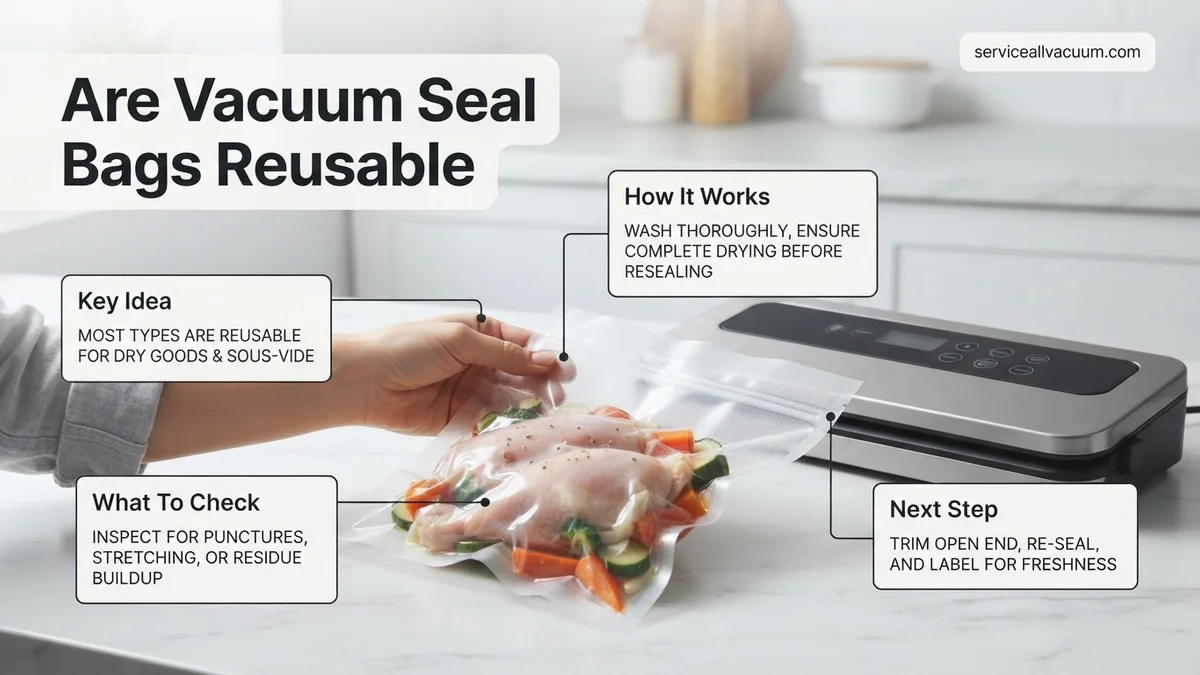
Yes, vacuum seal bags are generally reusable as long as they are made from heavy-duty textured plastic and haven’t previously contained raw meats with high contamination risks. Proper washing, sanitizing, and complete drying are essential steps to make sure they remain safe for future food storage.
Yes, you can reuse vacuum seal bags, but only under specific conditions. Whether a bag is worth washing and saving depends entirely on what it held previously and its remaining physical length.
As households across the country navigate kitchen economics in 2026, reusing quality plastic goods makes practical sense. However, safety and material degradation dictate where you should draw the line between tossing a bag and running it through the wash.
Key Takeaways
- Standard heavy-duty textured vacuum bags can be washed and reused multiple times.
- Never reuse bags that previously held raw meat, fish, or high-risk allergens for food safety.
- Trim away the sealed end before washing, keeping in mind that bags shrink with each use.
- Hand wash bags thoroughly in warm, soapy water or use a dishwasher top rack.
- Ensure bags are 100% dry inside before resealing to prevent dangerous mold growth.
What Causes Vacuum Seal Bags to Wear Out and Limit Reusability
Vacuum sealer bags face extreme mechanical stress during the sealing and suction process. Understanding how they degrade helps you determine which bags to keep and which to discard before wasting your time cleaning them.
The Loss of Bag Length Over Time
Every time you cut open a sealed bag to retrieve your food, you sacrifice roughly one inch of total length. Because your machine requires a minimum amount of empty space at the opening to grab and seal the plastic properly, bags shrink rapidly with each reuse cycle.
- Standard 8×12 inch bags typically allow for a maximum of two to three reuses before they become too short to fit securely into your machine’s vacuum channel.
- Attempting to use an overly shortened bag can lead to failed seals, air leaks, and ruined food.
- If a bag drops below four inches in usable length, it is time to retire it.
Material Fatigue and Punctures
Bags that have stored foods with sharp edges, such as bone-in meats or dried grains, suffer from micro-abrasions. Even if you cannot see a hole, microscopic tears will let air back into the package.
- Textured channel bags used in external clamp machines stretch and lose their grip over time.
- Commercial-grade smooth bags handle heavy duty use better, but still suffer from heat fatigue near the sealing strip.
How to Safely Clean, Sanitize, and Reuse Vacuum Seal Bags
Washing vacuum seal bags requires more effort than a standard dish, especially if they came into contact with raw proteins. Skipping proper sanitization steps creates a breeding ground for harmful bacteria.
Washing and De-greasing
You must remove all oil and food residue before you can safely sanitize the plastic. Oily foods like cheese or seasoned meats require extra care.
- Turn the bags completely inside out to expose the contaminated surfaces.
- Wash them thoroughly in warm, soapy water using a bottle brush to scrub the corners.
- Rinse completely under hot running water to eliminate all soap residue.
Sanitizing and Drying
Once physically clean, the bags need proper disinfection, particularly if they held raw meat, poultry, or seafood. Food safety standards in 2026 recommend specific sanitation steps for plastic kitchenware.
- Soak washed bags in a mild bleach solution (one tablespoon of bleach per gallon of water) for two minutes.
- Alternatively, place them on the top rack of your dishwasher if the manufacturer rates them as heat-safe.
- Hang the bags upside down on a drying rack and ensure they are 100 percent dry before storage to prevent mold growth.
Step-by-Step Guide to Washing and Drying Reusable Bags
Proper sanitation is critical when reusing vacuum seal bags, especially after storing raw proteins. According to food safety guidelines from the USDA, cross-contamination is the primary risk of improper plastic recycling in domestic kitchens. Follow this verified protocol to clean your bags effectively for 2026 meal prep standards.
1. Initial Rinsing and Pre-Soaking
- Rinse the interior of the bag thoroughly with lukewarm water to remove large food particles and surface oils.
- Submerge the bag in a basin of warm water mixed with a few drops of dish soap and one tablespoon of white vinegar to neutralize odors.
- Allow the bag to soak for 10 to 15 minutes, loosening stuck-on residues without weakening the polymer structure.
2. Scrubbing and Sanitizing
- Use a soft-bristle bottle brush to gently scrub the interior corners and the zip-lock or textured channels. Avoid abrasive scouring pads that create micro-scratches.
- Submerge bags used for raw meat in a sanitizing solution of one teaspoon of unscented household bleach per gallon of water for exactly one minute, as recommended by the CDC.
- Rinse all soap and sanitizer thoroughly under running tap water to prevent chemical residues from tainting future food batches.
3. Air Drying Completely
- Invert the bag over a bottle drying rack or a weighted cup to allow maximum airflow into the interior.
- Ensure the bag dries completely for a minimum of 24 hours. Trapped moisture inside a sealed bag creates an ideal breeding ground for anaerobic bacteria.
- Never apply high heat from a hairdryer or microwave to accelerate drying, as temperatures exceeding 160°F can warp the food-grade plastic.
What If It Still Doesn’t Work and When to Discard the Bag
If your vacuum seal bag fails to hold a tight seal after proper cleaning and drying, underlying structural damage is usually the cause. Implement these fallback troubleshooting steps before throwing the plastic away:
- Inspect the seal zone: Check the opening for microscopic tears, pinholes, or stretched plastic edges caused by overfilling.
- Trim the damaged edge: Use sharp kitchen shears to cut off the top 0.5 inches of the bag above the original seal line to expose fresh, undamaged material.
- Test with water: Fill the bag with cold water, seal it manually or via vacuum, and invert it on a paper towel for five minutes to detect slow leaks.
- Evaluate usage history: Discard any bag that has been boiled or microwaved more than three times, as thermal fatigue degrades the BPA-free nylon-polyethylene blend.
- Know when to replace: Commercial-grade reusable heavy-duty bags typically cost between $0.50 and $1.50 per unit. If troubleshooting fails, replacement is more cost-effective and safer than risking food spoilage.
Conclusion
Reusing vacuum seal bags is an effective way to reduce kitchen waste and save money when done with proper safety protocols. Thorough washing, complete air drying, and knowing when to discard compromised materials ensure your food stays fresh and safe. According to verified research and food storage experts, inspecting bags for structural integrity before every use prevents premature spoilage. Take the next step today by organizing your current vacuum bag inventory and discarding any items showing signs of discoloration or persistent odors.
❓ Frequently Asked Questions
Are vacuum seal bags reusable for raw meat?
No, you should never reuse vacuum sealer bags that previously held raw meat, poultry, or seafood. Even after washing, microscopic pores in the plastic can harbor dangerous bacteria like salmonella or E. coli, posing a severe food safety risk.
How many times can you reuse a single vacuum seal bag?
Most durable bags can be reused 2 to 4 times, depending on their original thickness and initial size. However, because you must cut off the top seal each time you open the bag, its usable length decreases with every single reuse.
Can you put used vacuum seal bags in the dishwasher?
Yes, many heavy-duty commercial-grade bags are top-rack dishwasher safe. To prevent them from flipping over or melting against the heating element, secure them with dishwasher clips and run them on a normal washing cycle.
What is the safest way to dry reusable vacuum bags?
The safest method is to drape the inverted bags over a clean drying rack or bottle tree to allow air circulation. Ensure the interior is 100% bone-dry before storing or using them again to prevent trapped moisture from causing mold.
How do you know when a vacuum seal bag is too old to reuse?
Discard the bag immediately if it shows signs of thinning, stretching, deep scratches, or persistent food odors. Additionally, if the bag is too short to securely fit into your vacuum sealer machine, it is time to throw it away.
Can you reuse vacuum sealer bags used for sous vide cooking?
Yes, bags used exclusively for sous vide cooking in clean water can typically be washed and reused. Just ensure the food inside didn’t leak, and thoroughly sanitize the plastic before sealing new items inside.