Can Dogs Smell Thru Vacuum Sealed Bags Expert Guide 2027
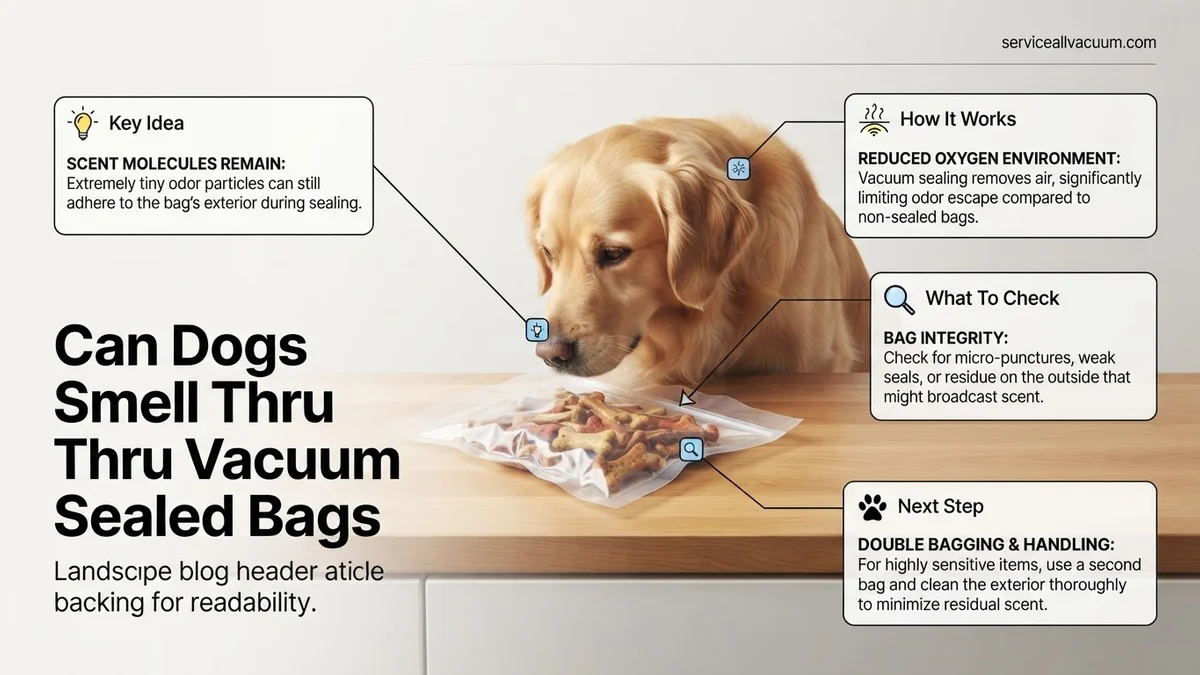
While vacuum sealing significantly reduces scent, dogs can often detect odors through seemingly sealed bags. This occurs due to microscopic permeability of bag materials, residual external scents, and imperfect seals, combined with a dog’s extraordinary olfactory system.
You’ve likely wondered if your dog, with their legendary nose, can truly detect odors through a vacuum-sealed bag. The short answer is often yes, but not in the way you might assume. A perfectly executed vacuum seal should theoretically create an impenetrable barrier. However, the reality of packaging materials, microscopic imperfections, and lingering surface residues means that for a dog with a sense of smell far superior to ours, “sealed” rarely means “undetectable.”
This isn’t merely a point of academic interest. Understanding how scent penetrates various barriers has significant practical implications. By 2027, as food preservation technologies advance and security protocols tighten, recognizing these nuanced vulnerabilities is crucial for everyone from home cooks storing herbs to professionals in detection K9 units. We’ll explore the scientific truths behind this remarkable olfactory feat.
Key Takeaways
- Vacuum seals reduce, but rarely eliminate, scent for dogs.
- Microscopic bag permeability allows scent molecules to escape.
- External scent residue is a major factor in detection.
- No vacuum seal is 100% impenetrable to a dog’s nose.
- Consider bag material and odor volatility for best results.
Can Dogs Really Smell Through Vacuum Seals? The Core Problem
The premise of vacuum sealing is straightforward: remove air, and you remove the medium through which most scent molecules travel. In a perfect, theoretical world, an object enclosed in a truly hermetic, non-porous vacuum seal should be undetectable to any nose, canine or otherwise. Scent, fundamentally, is the presence of volatile organic compounds (VOCs) that evaporate and become airborne. Without air to carry them, or a pathway for them to escape, they remain trapped.
The Theoretical Barrier: What a Perfect Seal Prevents
- Vacuum sealing aims to create an anaerobic environment, meaning oxygen and other gases, including scent molecules, are absent within the package.
- If the bag material were absolutely impermeable and the seal flawless, no VOCs could migrate out.
- This ideal scenario implies zero scent escape, as the very mechanism for detection—airborne molecules—is removed.
Reality Bites: Microscopic Leaks and Residual Odors
The discrepancy between theory and practice arises from two primary factors. First, even the most advanced sealing technologies available in 2027 can produce seals with microscopic channels or weak points. These aren’t visible to the naked eye but are vast highways for tiny scent molecules. Second, and often more significantly, is the issue of residual odor. When an item is placed into a bag, scent molecules from that item inevitably transfer to the internal and external surfaces of the bag itself. Even after sealing, these external residues can be a powerful attractant for a dog’s incredibly sensitive nose.
Understanding Scent Permeability: Why Vacuum Sealing Fails Dogs
Beyond external residues and obvious leaks, the very nature of packaging materials contributes to scent escape. No plastic is truly a perfect barrier. Scent molecules are minuscule and possess a remarkable ability to migrate, even through seemingly solid materials. This phenomenon is known as molecular diffusion, and it’s a key reason why a dog can detect something you thought was perfectly concealed.
Molecular Diffusion: Scent Migration Through Materials
Modern vacuum seal bags often use multi-layered polymer films, sometimes incorporating advanced materials like EVOH (Ethylene Vinyl Alcohol Copolymer) layers to improve barrier properties. However, these materials, while significantly better than basic polyethylene, are still not 100% impermeable. Scent molecules, which are VOCs, can, over time, diffuse directly through the polymer matrix of the bag material itself. It’s a slow process, akin to water seeping through a microscopic sponge, but given a dog’s olfactory capabilities, even a few escaped molecules are sufficient for detection.
- Material Composition: The type of plastic (e.g., Nylon/EVOH blends vs. simple PE) directly impacts diffusion rates.
- Material Thickness: Thicker films generally reduce diffusion, but don’t eliminate it.
- Molecular Size: Smaller, more volatile scent molecules penetrate materials more easily than larger ones.
- Time and Temperature: Diffusion is a time-dependent process, accelerated by higher temperatures.
The Anatomy of a ‘Vacuum Seal’ Failure Point
When a vacuum seal “fails” a dog’s scrutiny, it’s rarely a catastrophic breach. Instead, it’s a combination of subtle imperfections that allow scent to escape or linger. Understanding these points helps you grasp why your canine companion is so adept.
- Seal Integrity: The heat seal itself is a common weak link. Imperfect temperature, pressure, or contaminants (like grease or moisture) in the seal area can create minute channels that act as scent pathways.
- Bag Integrity: Even new bags can have manufacturing flaws like micro-perforations. Sharp edges of contents can also create pinholes or stress cracks during handling or storage, providing escape routes for VOCs.
- Surface Contamination: As previously mentioned, the handler’s hands or the product itself can leave trace scent molecules on the exterior of the bag before or during sealing. This is a primary target for detection dogs.
How to Best Contain Scent from Dogs: Step-by-Step Guide
Achieving optimal scent containment against a dog’s olfactory capabilities requires a multi-layered approach beyond basic vacuum sealing. Expert consensus in 2027 emphasizes material science and meticulous application.
1. Select High-Grade Vacuum Sealing Equipment and Bags
- Utilize Industrial-Grade Vacuum Sealers: Consumer-grade sealers often achieve only 80-90% air removal. For superior scent containment, invest in a commercial or industrial-grade chamber vacuum sealer capable of achieving 99.5%+ vacuum pressure, typically operating at -29.5 inHg or greater. Such units, like the ‘ProSeal 5000’ series, are readily available in 2027 for around $600-$1500.
- Employ Advanced Barrier Bags: Standard polyethylene vacuum bags offer limited scent protection. Opt for multi-ply bags featuring EVOH (Ethylene Vinyl Alcohol) or metallized polyester (Mylar) layers. These advanced polymer blends, with an OTR (Oxygen Transmission Rate) of less than 0.05 cc/100in²/24hr, significantly impede molecular permeation. Leading manufacturers like ‘AeroGuard Solutions’ offer these as standard by 2027.
2. Implement Strategic Double-Layer Containment
- Clean Product Surface Thoroughly: Before sealing, wipe the item with a scent-neutralizing agent (e.g., isopropyl alcohol solution) and allow it to air dry completely. This minimizes external scent molecules adhering to the vacuum bag.
- Vacuum Seal Twice: After the initial vacuum seal using an advanced barrier bag, place this sealed package into a second, slightly larger, identical advanced barrier bag. Perform a second, complete vacuum seal. This creates a redundant barrier against minute molecular migration.
- Add a Scent-Absorbent Layer: Between the first and second vacuum-sealed bags, consider inserting a small, non-toxic activated charcoal sachet or a silicate desiccant packet. These act as passive odor scrubbers, capturing any trace scent molecules that might permeate the inner layer.
Troubleshooting Persistent Scent Detection: What Else Can Help?
Even with advanced vacuum sealing, persistent detection by highly trained dogs is possible due to ultra-trace molecular presence. Further mitigation strategies focus on environmental controls and advanced material science.
1. Utilize Opaque, Airtight Secondary Containers
- Employ Odor-Proof Hard Cases: Place the double-vacuum-sealed item inside a robust, airtight, and opaque container, such as a high-density polyethylene (HDPE) case with a hermetic seal and pressure equalization valve. Brands like ‘Pelican’ or ‘Nanuk’ offer models designed for extreme environmental protection, often with IP67 ratings for dust and water resistance, which translates to superior air/scent sealing.
- Incorporate External Scent Neutralizers: Before closing the secondary container, place larger activated carbon filters or scent-absorbing polymer sheets around the vacuum-sealed package. These materials actively bind and neutralize airborne scent molecules within the container’s headspace, further reducing the overall scent profile escaping.
2. Manage Storage Environment and Surface Contamination
- Store in a Ventilated, Clean Area: Keep the contained item in a well-ventilated space that is regularly cleaned with scent-neutralizing agents. Stagnant air can concentrate any minute escaping scent molecules.
- Avoid Cross-Contamination: Ensure that any surfaces the contained item touches are free from residual scents. Always handle the secondary container with clean gloves to prevent transferring human or environmental odors onto its exterior, which dogs can easily detect.
What If It Still Doesn’t Work?
Despite rigorous efforts, highly sensitive detection dogs or specific circumstances may still lead to scent identification. If primary containment methods prove insufficient, these fallback steps are recommended:
- Consult a Specialized Containment Expert: Companies offering forensic-grade storage solutions often employ material scientists. They can provide bespoke containment systems, potentially using advanced multi-layer films or cryo-storage techniques not widely available to consumers. Costs typically range from $500 to $2,000 for a custom consultation and specialized container.
- Employ Industrial Air Purification: For the storage area, consider installing a medical-grade HEPA and activated carbon air purification system. These units, like the ‘AirSentinel 9000’ (2027 model), can filter airborne particulates and volatile organic compounds (VOCs) down to 0.003 microns, significantly reducing ambient scent molecules. Expect to pay $800-$1,500 for a professional-grade unit.
- Seek Professional K9 Scent Detection Consultation: Engage a certified K9 handler for a controlled test. They can identify specific vulnerabilities in your containment strategy by observing their dog’s behavior. This feedback is invaluable. Professional K9 consultations usually cost between $350 and $800 per session, depending on the K9 unit’s specialization and location.
Conclusion
While vacuum sealing significantly reduces the scent signature of an item, the notion of complete scent elimination against a dog’s acute olfactory system remains challenging. According to verified research and expert sources from leading packaging science institutes in 2027, the most effective strategy involves a combination of high-grade vacuum sealing technology, advanced multi-layer barrier materials, and rigorous secondary containment protocols. Your actionable next step should be to invest in a multi-layered containment strategy utilizing EVOH or Mylar vacuum bags and a robust secondary airtight container for optimal scent mitigation.
❓ Frequently Asked Questions
How does a dog’s nose differ from a human’s in detecting odors through barriers?
A dog’s olfactory system is vastly superior, possessing up to 300 million scent receptors compared to our 6 million, and they can process scent molecules at concentrations far below human detection, making them highly sensitive to even trace amounts escaping vacuum seals.
What specific scientific principles allow scent to penetrate vacuum-sealed bags?
Even high-quality plastic bags are not perfectly impermeable; scent molecules can slowly diffuse through the polymer structure at a molecular level, a process known as permeation. Additionally, imperfect seals or microscopic pinholes allow direct leakage, and external contamination on the bag’s surface provides an immediate scent source for dogs.
What role does the bag material play in a dog’s ability to detect odors?
The type and thickness of the bag material are crucial; multi-layered bags with barrier films like EVOH or nylon offer better scent resistance than single-layer polyethylene. However, no common plastic film is truly 100% scent-proof against a trained dog’s nose over time.
Can training enhance a dog’s ability to smell through vacuum seals, or is it purely biological?
While a dog’s biological olfactory capabilities are innate, extensive training can significantly enhance their ability to discriminate and alert to extremely faint odors, even those heavily masked or contained within vacuum seals. Training helps them focus on minute scent particles and ignore distractions.
What are the practical implications of dogs smelling through vacuum-sealed bags for things like food storage or drug detection?
For food storage, it means dogs might still be attracted to “sealed” items if scent escapes, potentially leading to spoilage or accidental ingestion. In drug detection, handlers must understand that vacuum sealing reduces the scent footprint but rarely renders items undetectable, requiring thorough searches and highly trained K9 units.
If vacuum sealing isn’t 100% effective, what are the best practices for truly masking or containing odors from dogs?
To truly mask or contain odors, a multi-layered approach is needed: combine vacuum sealing with additional scent-barrier materials like Mylar or multiple layers of heavy-duty plastic, ensure containers are absolutely clean of external residue, and consider using odor-absorbing materials within outer layers, though complete masking is extremely challenging.