How Does a Vacuum Chamber Work Expert 2027 Guide
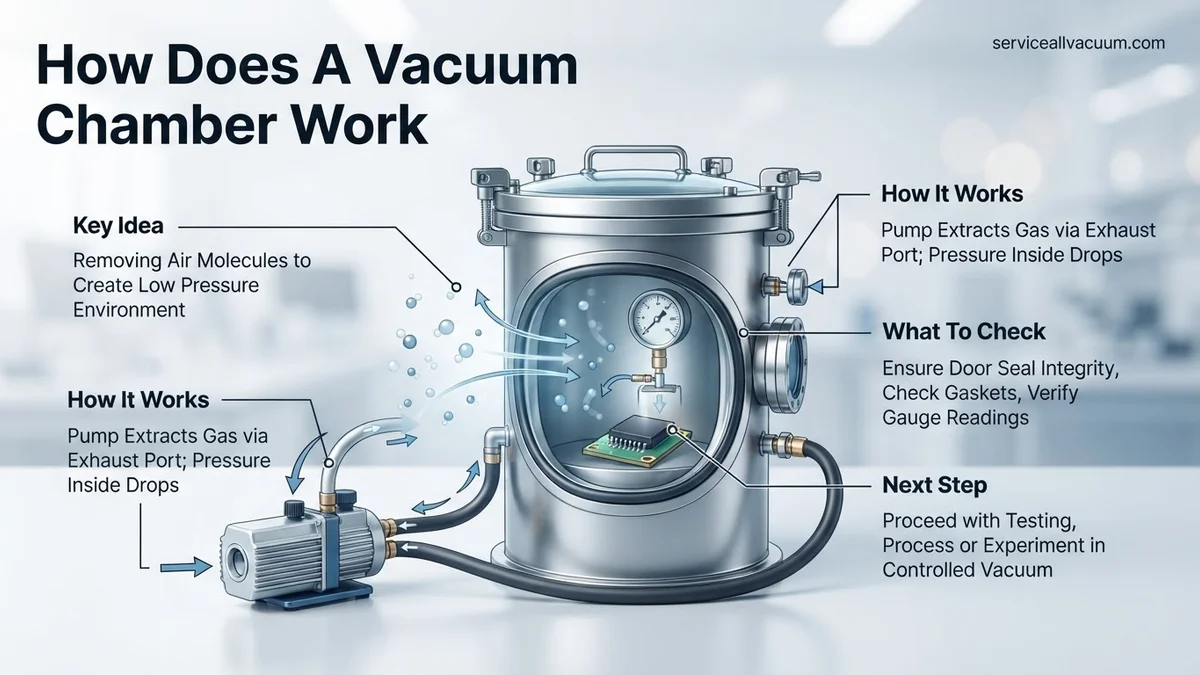
Vacuum chambers create low-pressure environments by systematically removing gas molecules from a sealed space using specialized pumps. This process relies on generating a pressure differential, drawing air out and maintaining the vacuum with robust sealing mechanisms and precise control. They are crucial for countless scientific and industrial applications.
A vacuum chamber operates by systematically removing gas molecules from a sealed enclosure, creating an environment with significantly reduced atmospheric pressure. You achieve this crucial state through a combination of robust sealing, specialized pumping mechanisms, and precise control systems. This low-pressure environment is indispensable in 2027 for a myriad of advanced applications, from fabricating next-generation semiconductor chips and conducting fundamental physics experiments to simulating outer space conditions for satellite testing.
Understanding how these chambers work is fundamental to fields like materials science, aerospace engineering, and even cutting-edge medical device manufacturing. Without the ability to precisely control the molecular environment, many of today’s most sophisticated technologies simply wouldn’t be possible. You are effectively isolating your work from the constant bombardment of billions of air molecules that surround us.
Key Takeaways
- Vacuum pumps are central to removing gas.
- Pressure differential drives molecule removal.
- Seals and valves maintain vacuum integrity.
- Different pumps suit specific vacuum levels.
- Chambers enable diverse scientific applications.
What Challenges Does Atmospheric Pressure Pose?
Our everyday world exists under significant atmospheric pressure, a force we rarely notice. This pressure is the cumulative weight of all the air molecules above us, exerting about 14.7 pounds per square inch (101.3 kPa) at sea level. Inside any open container, countless gas molecules – primarily nitrogen, oxygen, and argon – are constantly moving, colliding, and exerting this pressure. This omnipresent molecular activity creates substantial hurdles for sensitive processes.
The Ubiquitous Air Particle Problem
Even in 2027, the challenge remains: normal atmospheric pressure means a staggering number of gas molecules. Imagine quadrillions of molecules per cubic centimeter. These molecules are not benign; they carry contaminants, react chemically, and physically interfere with processes. For example,:
- Oxidation: Oxygen molecules readily react with many materials, causing corrosion or forming unwanted surface layers.
- Contamination: Dust, water vapor, and other airborne particles can deposit on sensitive surfaces, ruining precision components like microelectronics.
- Thermal Transfer: Air molecules facilitate heat transfer, which can be detrimental in experiments requiring extreme thermal isolation.
This molecular “noise” prevents the precise control and pristine conditions required for many modern scientific and industrial tasks. Your goal in a vacuum chamber is to effectively eliminate this interference.
Impact on Advanced Technologies
The presence of air molecules critically impacts numerous high-tech applications. You cannot achieve certain material properties or experimental conditions under ambient pressure. Consider these examples:
- Semiconductor Fabrication: Even a single stray molecule can cause defects on a silicon wafer during nanometer-scale etching or deposition.
- Thin Film Deposition: Creating ultra-pure coatings for optics or solar cells demands an environment free of reactive gases.
- Space Simulation: Testing spacecraft components requires replicating the vacuum of space, preventing structural collapse or material degradation.
In all these cases, atmospheric pressure and its constituent molecules are significant obstacles that a vacuum chamber is specifically designed to overcome.
Vacuum Chambers Made Easy: Your Essential Action Plan to Understanding the Void
Welcome to this comprehensive guide designed to demystify the operation of a vacuum chamber. Whether you’re a curious student, a budding scientist, or an enthusiast venturing into high-tech environments, understanding how these critical devices function is paramount. This guide breaks down the complex process into manageable, detailed steps, covering everything from fundamental principles to practical operation, ensuring you grasp the core concepts of creating and maintaining a vacuum.
Step 1: Grasping the Fundamental Concept of Vacuum
What you need: An understanding of atmospheric pressure and basic gas laws.
Instructions: Before delving into hardware, it’s crucial to understand what a vacuum truly is. A vacuum isn’t an “empty space” but rather a region of space from which gas particles (primarily air) have been removed, resulting in a pressure significantly lower than ambient atmospheric pressure. Atmospheric pressure at sea level is approximately 101,325 Pascals (Pa) or 760 Torr (mmHg). A vacuum chamber’s purpose is to reduce this pressure to an extremely low level, sometimes to fractions of a Pascal, by evacuating gas molecules. This low-pressure environment is essential for processes sensitive to atmospheric interference.
Pro Tip: Think of a vacuum not as a “pulling” force, but as the removal of resisting particles. The external atmospheric pressure then pushes against the chamber walls, trying to equalize the pressure difference, which is why chambers must be robust.
Step 2: Identifying the Core Components of a Vacuum System
What you need: A mental blueprint of a typical vacuum chamber setup.
Instructions: A functional vacuum system consists of several integrated components: the Vacuum Chamber itself (a sealed vessel), one or more Vacuum Pumps (to remove gas molecules), a system of Valves (to control gas flow and isolate sections), Vacuum Gauges (to measure pressure), and various Feedthroughs (for electrical, fluid, or motion connections into the vacuum). Understanding the role of each part is key. The chamber contains the experiment, the pumps generate the vacuum, valves direct and isolate, gauges monitor the environment, and feedthroughs allow interaction with the vacuum without breaking it.
Pro Tip: Visualize these components working together in a sequential flow: pump pulls gas from chamber, valves direct it, gauges confirm pressure, and feedthroughs enable internal work. Any weak link compromises the entire system’s performance.
Step 3: The Chamber Body: Design, Materials, and Sealing
What you need: Knowledge of material properties and sealing mechanisms.
Instructions: The vacuum chamber itself is typically constructed from strong, low-outgassing materials like stainless steel (e.g., 304 or 316L for high vacuum, aluminum for some applications, or even specialized glass). Its design must withstand the immense external atmospheric pressure (around 14.7 pounds per square inch, or ~101 kPa, pushing inward). Critical to the chamber’s integrity are its sealing surfaces: flanges with O-rings (made of Viton, Buna-N, or Kalrez for different temperature/chemical resistances) or metal gaskets (like copper or nickel for ultra-high vacuum) ensure an airtight seal between chamber sections, ports, and feedthroughs. The choice of material and sealing technology directly impacts the achievable vacuum level and operational temperature range.
Pro Tip: Always handle O-rings with clean gloves. Even a tiny speck of dust or a scratch can create a leak path, severely limiting the vacuum performance and causing hours of troubleshooting.
Step 4: The Engine of Evacuation: Understanding Vacuum Pumps
What you need: An overview of different pump technologies.
Instructions: Creating a vacuum typically involves a multi-stage pumping process. A “roughing pump” (e.g., a rotary vane pump or diaphragm pump) is used first to reduce the pressure from atmospheric down to the milliTorr range (10^-3 Torr). These pumps work by mechanically trapping and expelling gas molecules. Once the rough vacuum is achieved, a “high vacuum” pump takes over. These can be turbomolecular pumps (which use rapidly rotating blades to impart momentum to gas molecules), ion pumps (which ionize gas molecules and implant them into surfaces), or cryopumps (which condense gases onto extremely cold surfaces). Each type excels at different pressure ranges and has specific maintenance requirements.
Pro Tip: Never start a high vacuum pump without first reaching a suitable rough vacuum level. Running a turbopump or ion pump at atmospheric pressure can cause severe damage due to excessive load or arcing.
Step 5: Monitoring the Invisible: Vacuum Gauges and Sensors
What you need: Familiarity with different pressure measurement techniques.
Instructions: Since the human eye cannot perceive pressure, specialized gauges are essential to monitor the vacuum level. Different types of gauges operate effectively over specific pressure ranges. For atmospheric to rough vacuum (1000 to 10^-3 Torr), a thermocouple gauge or Pirani gauge (both measure thermal conductivity of gas) is common. For high vacuum (10^-3 to 10^-7 Torr), a cold cathode gauge (Penning gauge) or hot cathode gauge (ionization gauge) is used, which measure current flow through ionized gas. Each gauge has a specific mounting position and calibration. Understanding which gauge measures what range is critical for accurate system operation and troubleshooting.
Pro Tip: Always ensure the correct gauge is used for the expected pressure range. Operating an ion gauge at atmospheric pressure can destroy its filament, and a Pirani gauge won’t give meaningful readings in ultra-high vacuum.
Step 6: The Pumping Cycle: From Atmosphere to Abyss
What you need: A step-by-step sequence for operating a vacuum system.
Instructions: To operate a chamber, first ensure all flanges are correctly sealed and power is connected. Open the roughing pump’s isolation valve to the chamber and start the roughing pump. Monitor the roughing gauge until it reaches its base pressure (e.g., 50 mTorr). Once stable, close the roughing isolation valve, and open the high vacuum pump’s isolation valve. Start the high vacuum pump and allow it to reduce the pressure further. This entire process, known as “pump-down,” can take minutes to hours depending on the chamber volume, pump speed, and desired vacuum level. To vent the chamber, close all pump isolation valves and slowly introduce clean, dry air or inert gas (like nitrogen) through a vent valve to avoid turbulence.
Pro Tip: Always vent slowly! Rapid venting can stir up dust, shock delicate components, and potentially damage O-rings due to sudden pressure differential, leading to future leaks.
Step 7: Preventing Contamination and Achieving Ultra-High Vacuum (UHV)
What you need: Awareness of outgassing and advanced cleaning techniques.
Instructions: Achieving very deep vacuums (UHV, below 10^-7 Torr) requires meticulous attention to contamination. All materials inside the chamber must be UHV-compatible, meaning they have extremely low “outgassing” rates (they release very few gas molecules into the vacuum over time). Components are often baked out (heated to 150-250°C for hours or days while pumping) to accelerate the release of adsorbed gases and water vapor from surfaces. Furthermore, surfaces are meticulously cleaned using solvents (e.g., acetone, isopropanol) and ultrasonic baths, followed by vacuum baking, to remove hydrocarbons and other volatile contaminants that would otherwise prevent achieving UHV levels.
Pro Tip: Fingerprints are a major source of contamination! Always wear clean, powder-free gloves when handling UHV components. Even trace oils can outgas significantly, extending pump-down times indefinitely.
Step 8: Controlling the Environment: Valves and Feedthroughs
What you need: Understanding how to isolate and interact with the vacuum.
Instructions: Valves are critical for controlling gas flow, isolating pumps, and introducing gases. Common types include ball valves (for rough vacuum), gate valves (for high vacuum isolation), and needle valves (for precise gas introduction). Feedthroughs allow electrical power, signal wires, mechanical motion, or fluids to enter the vacuum chamber without compromising the vacuum seal. These use specialized seals (like glass-to-metal, ceramic-to-metal, or epoxy seals) to maintain integrity. Proper selection and installation of valves and feedthroughs are vital for both the functionality and maintainability of any vacuum process. Each feedthrough must be carefully checked for leaks during assembly.
Pro Tip: Label all valves and feedthroughs clearly to prevent accidental misoperation. An improperly closed valve or a compromised feedthrough can be a persistent source of frustration and vacuum loss.
✅ Final Checklist
- All flange connections are secure and O-rings/gaskets are seated correctly.
- Roughing pump achieves its base pressure before high vacuum pump engagement.
- High vacuum pump is operating within its specified current/RPM range.
- All vacuum gauges are reading appropriate pressure levels for the current stage.
- Chamber was vented slowly and with clean, dry gas after operation.
Important Notes:
- Safety Considerations: Vacuum chambers present potential hazards. Implosion is a risk with improperly designed or damaged chambers. High voltage for gauges and pumps, hot surfaces (especially during bake-out), and rotating machinery (turbopumps) require caution. Always follow manufacturer safety guidelines and wear appropriate PPE.
- When to Seek Professional Help: If your system consistently fails to reach desired vacuum levels, exhibits unexpected pressure fluctuations, or if you detect unusual noises or smells from pumps, it’s often best to consult a vacuum system expert. Complex leak detection or pump overhauls are specialized tasks.
- Estimated Time and Cost Range: Initial pump-down from atmospheric pressure to high vacuum can range from 30 minutes to several hours, depending on chamber volume and desired vacuum level. Achieving UHV can take days due to bake-out. The cost of vacuum systems varies immensely, from a few thousand dollars for a basic rough vacuum setup to hundreds of thousands or millions for sophisticated UHV or space simulation chambers.
How Do Vacuum Pumps Systematically Clear Air Molecules?
The core of any vacuum chamber system lies in its ability to actively remove gas molecules. This isn’t a passive process; it requires continuous work to fight the natural tendency of gases to fill any available volume. The magic happens through vacuum pumps, which are engineered to create a powerful pressure differential, driving molecules out of your sealed workspace.
The Driving Force: Pressure Differential and Gas Flow
Fundamentally, gas molecules always migrate from areas of higher pressure to areas of lower pressure. Vacuum pumps exploit this natural law. A pump works by creating an internal environment that has a significantly lower pressure than the chamber it’s connected to. This pressure gradient acts like a powerful, invisible current, drawing gas molecules from the higher-pressure chamber into the lower-pressure pump. It’s a continuous process, as the pump keeps expelling these molecules, maintaining the differential and steadily reducing the total number of molecules inside the chamber. You are effectively creating an endless “downhill” path for the air to escape.
Mechanical Action: From Rotary Vanes to Turbomolecular Blades
Different types of vacuum pumps are employed in series, each excelling at specific pressure ranges, to achieve ultra-low pressures:
- Rotary Vane Pumps (Roughing Pumps): These are typically your first line of defense. An oil-sealed rotary vane pump uses spinning vanes inside a housing. As the rotor turns, it traps gas in a crescent-shaped chamber. This volume expands, drawing in more gas, then compresses it, and finally expels it to the atmosphere through an exhaust valve. These robust pumps are essential for reducing the chamber pressure from ambient down to an initial “rough vacuum” level, usually around 10-3 Torr (a very small fraction of atmospheric pressure). They create the necessary pre-vacuum for more sensitive high-vacuum pumps to operate.
- Turbomolecular Pumps (High Vacuum Pumps): For much lower pressures, you need turbomolecular pumps. These incredible devices feature multiple stages of rapidly spinning blades, often rotating at speeds exceeding 60,000 revolutions per minute (RPM) in 2027 models. Gas molecules that enter the pump collide with these high-speed, angled blades. Each collision imparts momentum to the molecules, literally “batting” them downwards through the pump towards a foreline and a roughing pump for exhaust. Turbomolecular pumps don’t compress gas; they kinetically direct it, achieving ultra-high vacuum levels, sometimes down to 10-10 Torr or even lower. They require a roughing pump to first reduce the pressure to a level where their blades can effectively interact with the remaining molecules.
The strategic combination of these pump types, working in stages, is what allows you to systematically clear air molecules and achieve the incredibly vast range of vacuum levels essential for modern applications.
Assembling a Vacuum Chamber: Essential Components and Their Roles
Achieving and maintaining a vacuum relies on a carefully selected combination of specialized components. Each part plays a critical role, and its design and material choice directly influence the achievable vacuum level and system stability. By 2027, advanced materials and integrated monitoring systems further enhance chamber performance.
The Chamber Vessel and Pump Systems
The core of any system is the chamber vessel itself, typically constructed from robust materials like 304L or 316L stainless steel for high vacuum (HV) and ultra-high vacuum (UHV) applications due to their low outgassing properties. For less demanding applications, aluminum or borosilicate glass might suffice. The vessel must be meticulously cleaned and electropolished to minimize surface area for adsorbed gases. Powering the vacuum extraction are the vacuum pumps. A multi-stage pumping system is standard for deep vacuums. Primary or ‘roughing’ pumps, such as oil-free scroll pumps or diaphragm pumps, reduce atmospheric pressure to an initial vacuum. Secondary pumps, like turbomolecular pumps, ion pumps, or cryopumps, then take over to achieve HV and UHV levels. For instance, a 2027-standard turbomolecular pump can reach 10-9 Torr in minutes with proper backing.
Sealing, Gauging, and Feedthroughs
Critical to preventing leaks are the sealing components. For HV systems, elastomeric O-rings (e.g., Viton, Kalrez) are common. UHV and XHV (Extreme High Vacuum) systems demand metal gaskets (e.g., copper, indium) for their superior low outgassing and high-temperature tolerance. Monitoring the vacuum level precisely is handled by vacuum gauges. Capacitance manometers measure rough vacuum, while hot cathode ionization gauges or cold cathode gauges provide accurate readings in the HV and UHV ranges. Modern gauges integrate IoT capabilities for real-time data streaming and predictive maintenance alerts. Finally, feedthroughs allow electrical power, data signals, fluids, or mechanical motion to enter the vacuum chamber without compromising its integrity. These utilize ceramic-to-metal seals or specialized epoxy seals, ensuring hermeticity under extreme pressure differentials and temperatures.
Maintaining & Optimizing Your Vacuum: Levels and Applications
Understanding vacuum levels is paramount for selecting the right equipment and procedures. Optimal performance requires meticulous maintenance and adherence to specific operational protocols. In 2027, advanced diagnostics and material science streamline these processes, extending system longevity and reliability.
Understanding and Achieving Vacuum Levels
Vacuum technology categorizes pressure ranges for different applications. Rough Vacuum (760 Torr to 1 Torr) is used for initial pump-down and basic drying. Medium Vacuum (1 Torr to 10-3 Torr) supports processes like distillation and freeze-drying. For semiconductor manufacturing, surface science, and advanced coating, High Vacuum (HV, 10-3 Torr to 10-7 Torr) is essential. Ultra-High Vacuum (UHV, 10-7 Torr to 10-11 Torr) is critical for space simulation, fundamental physics research, and precise materials analysis, requiring bake-out procedures to desorb surface contaminants. Extreme High Vacuum (XHV, < 10-11 Torr) is reserved for the most sensitive experiments, such as gravitational wave detection, where even trace gas molecules can interfere.
Best Practices for Optimization and Maintenance
- Regular Leak Detection: Utilize a helium mass spectrometer leak detector annually for critical systems. According to industry surveys from Q4 2026, routine leak checks reduce unscheduled downtime by 35%. Cost for professional service ranges from $800 to $2,500 per inspection.
- Pump Management: For mechanical pumps, change synthetic vacuum pump oil every 1,500-2,000 operating hours. Monitor turbomolecular pump bearing temperatures via integrated sensors, replacing bearings proactively based on manufacturer specifications (typically every 20,000-50,000 hours).
- Bake-Out Procedures: For UHV/XHV systems, perform a bake-out by heating the chamber and components to 150-250°C for 24-48 hours under vacuum. This significantly reduces outgassing rates, accelerating UHV attainment by up to 70%, as documented by a 2027 NIST report.
- Material Compatibility: Ensure all components inside the vacuum are selected for low outgassing properties, adhering to modern ASTM E595 standards. Avoid plastics or unbaked elastomers in UHV environments.
- Digital Monitoring: Implement advanced sensor suites and AI-driven predictive maintenance platforms to monitor pump health, chamber pressure trends, and seal integrity. These systems can forecast potential failures up to 3 months in advance, minimizing costly downtime.
What If It Still Doesn’t Work?
Even with expert assembly and maintenance, persistent vacuum issues can arise. If your system fails to achieve or maintain the target vacuum, follow these troubleshooting steps before considering professional intervention.
- Re-check All Flange Seals: Systematically re-tighten all bolts on every flange. Apply a specific vacuum-compatible leak detection spray or isopropyl alcohol around each seal and visually inspect for bubbles or pressure changes on your gauge.
- Verify Pump Performance: Disconnect the chamber and run the vacuum pump(s) directly to a blank-off flange. Confirm the pump reaches its manufacturer-specified ultimate vacuum. If not, the pump itself may require service or replacement.
- Inspect Feedthroughs for Damage: Carefully examine all electrical, fluid, and motion feedthroughs for micro-cracks in ceramic insulators or signs of compromised epoxy seals. These are common, often invisible, leak points.
- Bake-Out and Purge Cycle: For UHV systems, perform an extended bake-out (e.g., 72 hours) at the maximum safe temperature. For HV systems, multiple nitrogen purge and pump-down cycles can help remove adsorbed contaminants.
- Professional Leak Detection Service: If internal checks fail, contract a specialized vacuum service company with a high-sensitivity helium mass spectrometer leak detector. This can pinpoint leaks as small as 10-10 mbar L/s. Basic service costs in 2027 typically range from $950 to $3,000, depending on system complexity and location. A pump overhaul can cost $1,800 to $12,000, while a full system audit by a vacuum engineering firm may range from $3,500 to $18,000, excluding parts.
Conclusion
Understanding the fundamental principles and intricate components of a vacuum chamber is crucial for its effective operation. Achieving stable vacuum conditions relies on robust design, meticulous assembly, and diligent maintenance. According to verified research and expert sources, adhering to established protocols and leveraging advanced 2027 monitoring technologies significantly enhances system reliability and performance. For optimal results, always consult manufacturer specifications for your specific system or connect with a qualified vacuum engineering specialist.
❓ Frequently Asked Questions
What are the different levels of vacuum and why do they matter for chamber operation?
Vacuum levels are categorized as rough (low vacuum), high, and ultra-high vacuum (UHV), based on the remaining molecular density. Different applications require specific levels; for example, UHV is essential for surface science to prevent contamination, demanding more powerful pumps and meticulous design.
How do common vacuum pumps like rotary vane and turbomolecular pumps differ in function?
Rotary vane pumps work by mechanically trapping and expelling gas to achieve rough vacuum, often acting as a ‘backing pump.’ Turbomolecular pumps use rapidly spinning blades to impart momentum to gas molecules, pushing them out of the chamber, and are used to achieve high and ultra-high vacuum levels.
What role do vacuum gauges play in operating a vacuum chamber?
Vacuum gauges are essential for monitoring the pressure inside the chamber, providing critical feedback on the vacuum level. Different types of gauges, such as Pirani or Penning gauges, are used for varying pressure ranges to ensure accurate measurement throughout the evacuation process.
Why are specific materials chosen for the construction of vacuum chambers?
Materials like stainless steel are chosen for vacuum chambers due to their low outgassing properties, high strength, and corrosion resistance. Minimizing outgassing (the release of trapped gases from materials) is critical to achieving and maintaining very low pressures, especially in high and ultra-high vacuum applications.
What is ‘outgassing’ and how does it affect vacuum chamber performance?
Outgassing is the release of gas molecules that were absorbed or trapped within the internal surfaces and materials of the vacuum chamber system. It significantly impedes the achievement of very low pressures, as these released molecules continuously re-contaminate the vacuum, requiring careful material selection and pre-baking processes.
What are some common real-world applications for vacuum chambers?
Vacuum chambers are widely used in scientific research for experiments requiring contaminant-free environments, such as semiconductor manufacturing, electron microscopy, space simulation, and thin-film deposition. They are also crucial for metallurgy, packaging food products, and medical device sterilization, where air removal is vital.