How Does a Pool Vacuum Work? Expert Guide 2027
Understanding how a pool vacuum works involves grasping the fundamental principles of water flow, suction generation, and debris capture unique to each type. These devices leverage pumps, Venturi effects, or robotic intelligence to efficiently remove contaminants and keep your pool sparkling clean, utilizing various filtration methods and components.
Understanding how a pool vacuum operates fundamentally comes down to principles of fluid dynamics, pressure differentials, and mechanical filtration. Whether you’re dealing with fine silt or larger leaves, every pool vacuum achieves debris removal by manipulating water flow to generate suction and then directing that debris-laden water through a collection system. By 2027, the underlying physics remain consistent, even as automation and efficiency improve. Knowing these mechanics helps you optimize your cleaning, diagnose issues, and appreciate the engineering behind keeping your swimming oasis pristine.
This knowledge isn’t just academic; it directly impacts your pool’s health and your maintenance routine. A clear grasp of suction generation, filtration rates, and component interplay allows you to make informed decisions about your equipment and ensures you get the most efficient clean. It helps you understand why different vacuums excel at specific tasks, preparing you for effective pool care through the coming years.
Key Takeaways
- Suction is key:Water flow creates pressure differences.
- Components vary:Pumps, hoses, filters enable cleaning.
- Three main types:Manual, automatic, robotic have distinct mechanics.
- Debris collection:Goes to filter, bag, or waste.
- Efficiency depends on:Type, maintenance, pool size.
What Challenges Do Pool Vacuums Address?
A swimming pool’s environment constantly battles against a myriad of debris, necessitating targeted cleaning solutions beyond the primary filtration system. While your main pump and filter handle circulating water and capturing suspended particles, larger, heavier debris often settles on the pool floor. This includes organic matter like leaves, twigs, pollen, and even fine sand or silt. Over time, these accumulate, creating unsightly conditions and providing nutrients for algae growth if not removed.
Specialized vacuums are engineered to tackle these specific types of submerged contaminants efficiently. For instance, a robotic vacuum might map a 20×40-foot pool to ensure comprehensive coverage, while a manual suction unit might target a 50-micron-sized dust accumulation in a specific corner. Traditional skimmers capture floating debris, but they can’t effectively reach the bottom. Without dedicated vacuuming, settled debris eventually breaks down, increasing the organic load on your filter and potentially clouding the water, making regular, thorough vacuuming a non-negotiable aspect of pool maintenance.
Addressing Diverse Debris Types
- Sedimentation: Fine particles like sand, dust, and silt (often sub-100 microns) settle quickly, forming layers on the pool floor and steps.
- Organic Matter: Leaves, bugs, pollen (ranging from 10 to 5000+ microns) accumulate from surrounding nature, requiring robust collection.
- Algae Spores: While often microscopic, heavy algal blooms necessitate removing the larger clumps and cellular structures that settle.
Beyond Primary Filtration Limitations
Your pool’s main filter (sand, cartridge, or D.E.) is designed for water clarity and sanitation, circulating the entire volume of water. However, its suction points (skimmer and main drain) are often insufficient for dislodging and drawing in heavy, settled debris. Vacuums provide concentrated, localized suction precisely where it’s needed, effectively bypassing the slower, broader action of the main circulation system. This direct approach prevents heavy debris from recirculating and potentially overloading your primary filter system.
From Start to Finish: Pool Vacuum Mechanics Explained
Understanding how your pool vacuum operates is key to maintaining a sparkling clean swimming environment. This comprehensive guide will meticulously break down the inner workings of a typical pool vacuum system, detailing each stage from assembly and initial suction generation to the filtration process and post-cleaning maintenance. By following these steps, you’ll gain expert insight into optimizing your pool cleaning routine and troubleshooting common issues, ensuring efficient debris removal every time.
Step 1: Assembling the Cleaning Apparatus
What you need: A pool vacuum head (weighted, flexible, or wheeled), a telescopic pole, a vacuum hose (typically 1.25 to 1.5 inches in diameter), and a hose adapter or vacuum plate.
Instructions: The initial step involves physically connecting the components that will directly interact with the pool floor. First, securely attach your chosen vacuum head to one end of the telescopic pole. Ensure the locking pins or clamps are fully engaged to prevent accidental detachment underwater. Next, firmly push one end of the vacuum hose onto the intake port of the vacuum head. This connection must be snug to prevent air from entering the system, which would compromise suction efficiency. The hose acts as the conduit for water and debris from the pool floor to your filtration system.
Pro Tip: Always inspect your vacuum head for wear and tear, such as cracked plastic or worn brushes/wheels. A damaged head can reduce cleaning effectiveness and potentially scratch the pool surface. A tight hose connection is paramount for optimal suction.
Step 2: Establishing the Suction Pathway to the Pump
What you need: Assembled vacuum apparatus, pool skimmer or dedicated suction line, skimmer basket (if using skimmer), and a vacuum plate/adapter (if needed).
Instructions: With the vacuum head and hose ready, the next critical step is to connect the vacuum hose to the pool’s filtration system. For most residential pools, this means connecting to the skimmer. First, remove the skimmer lid and basket. If your skimmer has a direct vacuum port, insert the hose directly into it. More commonly, you’ll use a vacuum plate: place the plate over the skimmer basket opening, ensuring the hose connection on the plate is facing up, and then push the free end of your vacuum hose firmly onto this connection. Alternatively, some pools have a dedicated vacuum line or port (usually on the wall, below the skimmer), which offers direct, stronger suction by bypassing the skimmer basket entirely.
Pro Tip: When connecting to the skimmer, temporarily close off other skimmer lines or main drain valves (if applicable) using your pump’s multiport valve or individual line valves. This directs maximum suction to the vacuum hose, enhancing cleaning power. Just remember to open them back up after vacuuming!
Step 3: Priming the Vacuum System for Continuous Flow
What you need: The connected vacuum apparatus submerged in the pool water, with the pump running.
Instructions: This is a crucial step to ensure the vacuum operates effectively. Before introducing the hose to the suction port, slowly feed the entire length of the vacuum hose underwater, starting from the end connected to the vacuum head. As you submerge the hose, water will displace the air inside it, causing bubbles to rise to the surface. Continue until no more bubbles emerge from the free end of the hose. This process, known as “priming,” eliminates air pockets that would otherwise break the continuous column of water, preventing the creation of a strong vacuum. Once primed, quickly and carefully attach the air-free end of the hose to the designated suction point (skimmer or dedicated port) as described in Step 2.
Pro Tip: If air remains in the hose when connected, the pump may struggle to prime or lose suction intermittently. You’ll hear gurgling noises from the skimmer or pump. If this happens, disconnect the hose, re-prime it thoroughly, and reconnect quickly to minimize air ingress.
Step 4: The Pump’s Role: Generating Suction and Water Movement
What you need: A functioning pool pump, correctly plumbed into the filtration system.
Instructions: The heart of any pool vacuum system is the pool pump. Once the vacuum hose is primed and connected to a suction line, the pump begins its work. The pump contains an impeller, a rotating component that creates centrifugal force. As the impeller spins at high speed, it draws water from the pool through the suction line (where your vacuum hose is connected), pushing it under pressure towards the filter. This continuous drawing action creates a low-pressure area at the intake points – including your vacuum head. This differential pressure, much like a household vacuum cleaner, is what physically pulls water and any suspended debris from the pool floor into the hose.
Pro Tip: Ensure your pump basket is clean before vacuuming. A clogged pump basket restricts water flow to the impeller, significantly reducing the pump’s ability to generate strong suction for the vacuum. Always check the pressure gauge on your filter; an unusually high reading can indicate a clogged filter, which also reduces suction.
Step 5: How the Vacuum Head Collects Debris
What you need: The vacuum head, operated by the telescopic pole.
Instructions: With strong suction now established, the vacuum head becomes the primary tool for direct debris collection. As the vacuum head is glided across the pool floor, the low-pressure area created by the pump (as explained in Step 4) draws water and any loose debris directly underneath and around the head into its intake ports. Different vacuum head designs aid in this process: flexible heads contour to the pool’s surface, wheeled heads glide easily, and brush heads agitate settled dirt for better pickup. The collected water and debris then enter the vacuum hose, beginning their journey through the pool’s plumbing system towards the filter.
Pro Tip: Move the vacuum head slowly and deliberately, overlapping each pass slightly. Rapid movements can stir up fine sediment, making the water cloudy and requiring more time for filtration. For heavy debris areas, make a few passes to ensure complete removal.
Step 6: Transporting Debris to the Filtration System
What you need: The pool’s internal plumbing lines, pump, and filter.
Instructions: Once collected by the vacuum head, the dirty water, laden with leaves, dirt, algae, and other particles, is pulled through the vacuum hose. From the hose, it enters the skimmer line (or dedicated vacuum line) and travels through the main suction plumbing to the pool pump’s impeller. The pump provides the necessary force to push this contaminated water onward through the system. From the discharge side of the pump, the water is then directed into the pool’s primary filtration unit—whether it’s a sand filter, cartridge filter, or diatomaceous earth (DE) filter. This continuous flow ensures that all debris picked up by the vacuum head is conveyed efficiently to the filter for removal.
Pro Tip: Periodically check the skimmer basket (if the vacuum hose isn’t using a vacuum plate) and the pump basket during extended vacuuming sessions. Large debris caught here can impede flow and reduce the effectiveness of the vacuum by creating blockages before the main filter.
Step 7: Filtration and Return of Clean Water
What you need: A pool filter (sand, cartridge, or DE) and return jets.
Instructions: Upon reaching the filter, the dirty water is forced through the filter media. Each type of filter works differently: a sand filter traps particles in its bed of sand; a cartridge filter captures debris on its pleated fabric surfaces; and a DE filter uses a fine powder coating on grids to filter out microscopic particles. Regardless of the type, the filter’s role is to separate the physical contaminants from the water. Clean, filtered water then exits the filter and is routed back into the pool through the return jets, completing the circulation cycle. The pool vacuum thus leverages the existing powerful filtration system to effectively clean the pool floor and walls.
Pro Tip: If vacuuming a particularly dirty pool or fine sediment, consider setting your multiport valve to “Waste” (if available and safe for your system). This bypasses the filter and sends the dirty water directly out of the pool, preventing rapid filter clogging and returning cloudy water. However, this also lowers your pool’s water level, so monitor it closely and replenish with fresh water.
Step 8: Post-Vacuum System Maintenance
What you need: Water source, filter backwash valve or access to cartridge/DE grids, chemical balancing supplies.
Instructions: After vacuuming, it’s essential to perform some maintenance to ensure the longevity of your equipment and the clarity of your water. First, disconnect the vacuum hose, remove the vacuum head, and store them properly. Next, attend to your filter: if you have a sand or DE filter, backwash it thoroughly until the water runs clear. For cartridge filters, remove and rinse the cartridges. This removes the accumulated debris from the vacuuming session, restoring optimal filtration efficiency and preventing excessive backpressure. Finally, test your pool’s water chemistry (pH, alkalinity, chlorine) and adjust as needed, as heavy vacuuming can sometimes affect these parameters, especially if you’ve added makeup water.
Pro Tip: Regular cleaning of your filter, especially after heavy vacuuming, significantly extends its lifespan and maintains peak performance. Skipping this step can lead to reduced flow, increased pump strain, and diminished water quality over time. Also, rinse your vacuum hose and head with fresh water before storing to remove any chemical residue.
✅ Final Checklist
-
Vacuum head securely attached to telescopic pole.
-
Hose firmly connected to vacuum head and suction port (skimmer/dedicated line).
-
Vacuum hose fully primed with no air bubbles visible.
-
Pool pump running and generating strong suction.
-
Filter backwashed or cartridges cleaned after vacuuming.
Important Notes:
- Safety considerations or warnings: Always ensure the pool pump is off when connecting or disconnecting the vacuum hose to the skimmer or dedicated suction line to prevent accidental injury or pump damage. Never leave children unattended around an operating pool vacuum.
- When to seek professional help: If your pool pump consistently loses prime, if the vacuum has no suction despite proper setup, or if you suspect a leak in your plumbing system, it’s best to consult a certified pool technician. They can diagnose complex issues efficiently.
- Estimated time and cost range (if applicable): Setting up and vacuuming a typical residential pool (15,000-30,000 gallons) usually takes 30-60 minutes, depending on the amount of debris. The cost is primarily for the initial purchase of a vacuum head and hose (typically $50-$150) and the electricity for your pump (which runs regardless).
The Core Mechanisms: How Pool Vacuums Generate Suction & Clean
At the heart of every pool vacuum lies a method for creating a powerful localized water current, effectively “sucking” debris into a collection system. This suction is generated primarily through two distinct physical principles: the Venturi effect or a dedicated mechanical pump. Understanding which principle applies to your vacuum type is crucial for grasping its operational efficiency and debris collection capabilities as of 2027.
The Principle of Suction: Venturi Effect vs. Mechanical Pumps
Some vacuums, particularly manual and certain pressure-side models, leverage the Venturi effect. This phenomenon occurs when fluid (water, in this case) flows through a constricted section of a tube, causing its velocity to increase and its static pressure to decrease. In a pool vacuum, a high-pressure jet of water from your pool’s return line (or a garden hose for simple manual units) is directed through a narrow nozzle. As this water speeds up, it creates a low-pressure zone directly adjacent to the pool floor, effectively drawing in debris and surrounding water into the vacuum’s collection bag. There are no moving parts for suction generation itself; it’s purely a function of water flow and pressure dynamics. This method is energy-efficient for the vacuum unit, as the pool’s existing pump or external water pressure does the heavy lifting.
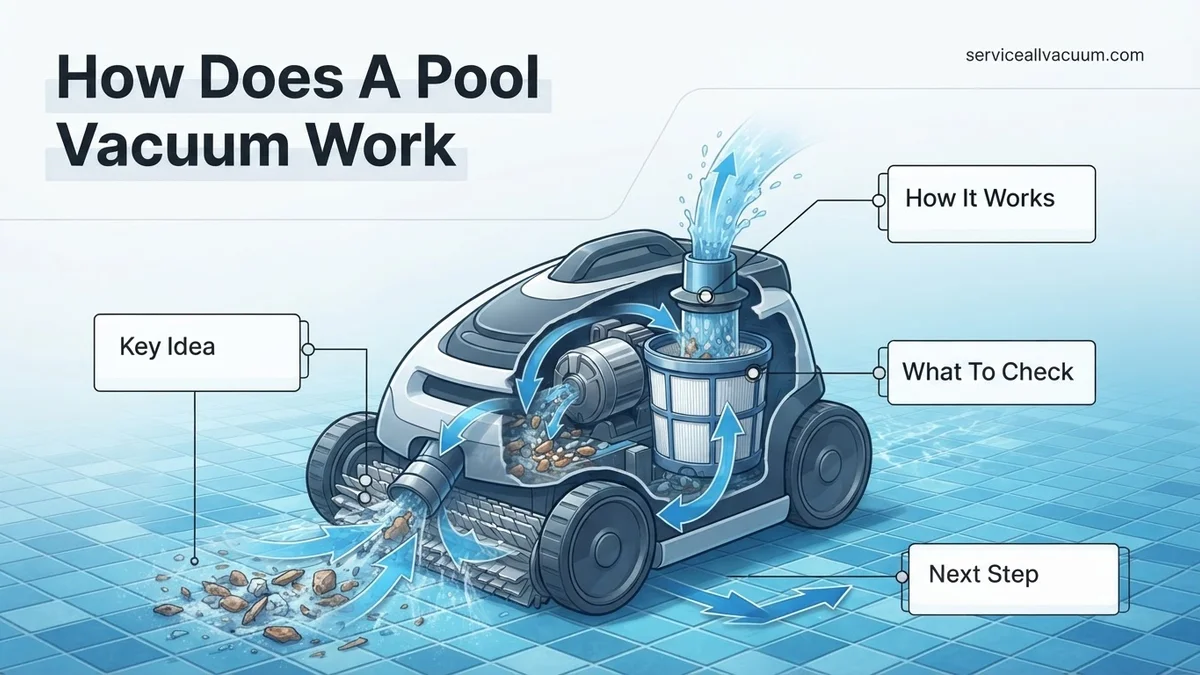
Conversely, suction-side and robotic pool vacuums rely on an integrated mechanical pump (or utilize the pool’s main circulation pump). Suction-side cleaners connect to your skimmer line, where your pool’s main pump creates a powerful vacuum, pulling water and debris directly into the skimmer, through the pump, and into your pool filter. Robotic vacuums are self-contained units with their own internal electric motors driving an impeller pump. This impeller spins rapidly, creating a strong negative pressure differential at the vacuum’s intake ports, drawing in water and debris. The debris is then directed into an onboard filter bag or cartridge. This independent pumping capability allows robotic cleaners to operate without stressing your pool’s main filtration system or requiring specific plumbing connections.
Water Flow Dynamics and Filtration Pathways
Regardless of how suction is generated, the subsequent step involves directing the debris-laden water through a specific pathway for collection. For Venturi-driven vacuums, the debris is typically propelled directly into a mesh collection bag attached to the vacuum head. The water passes through the mesh and returns to the pool, while larger debris is retained. These bags usually have a relatively coarse filtration capacity, often capturing particles down to 150-200 microns.
Suction-side cleaners funnel all collected water and debris into your pool’s existing plumbing system. This means everything pulled from the pool floor travels through your skimmer, main circulation pump, and finally, into your pool’s primary filter. The pool filter (sand, cartridge, or D.E.) then traps the debris according to its micron rating (e.g., sand: 20-40 microns, cartridge: 10-20 microns, D.E.: 2-5 microns), returning clean water to the pool. This pathway offloads the filtration task to your main system, but also means any collected debris passes through your pump impeller, potentially causing wear over time. Robotic vacuums, with their self-contained pumps, circulate water directly through their internal filter cartridges or bags (often 50-100 microns or finer), returning filtered water directly to the pool without involving the main system. This independent operation protects your pool’s pump and filter from additional wear and tear.
Step-by-Step: How Different Pool Vacuum Types Operate Effectively
Understanding the specific operational mechanics of various pool vacuum types is crucial for optimizing their performance. While the core principle of debris removal remains, the execution differs significantly across robotic, suction, and pressure-side systems. In 2027, advancements in automation and efficiency have further refined these processes, making pool cleaning more accessible and effective.
Robotic Pool Vacuums: Autonomous Cleaning
- Placement and Power: The user places the self-contained robotic unit into the pool and connects it to a standard electrical outlet via a low-voltage transformer.
- Initiation and Navigation: Upon activation, internal processors (often with AI-driven adaptive mapping in 2027 models) begin scanning the pool dimensions. Gyroscopic sensors guide the unit’s path across the floor, walls, and sometimes the waterline.
- Brushing and Suction: Integrated scrubbing brushes actively dislodge debris from surfaces. A powerful internal pump then draws water through the vacuum, trapping particles in an onboard filter canister.
- Filtration and Return: Clean, filtered water is expelled back into the pool. The robotic unit continues its programmed cleaning cycle, autonomously avoiding obstacles and ensuring comprehensive coverage. Industry reports from PoolBotics Inc. in late 2026 indicate an average 98.5% debris capture rate for advanced robotic models.
Suction-Side Pool Vacuums: Pump-Driven Power
- Connection: The vacuum head is attached to a dedicated pool vacuum hose, which is then connected to a skimmer port or a dedicated vacuum line.
- Pump Activation: The pool’s main filtration pump is activated, creating a powerful vacuum effect within the hose.
- Debris Collection: As the vacuum head moves across the pool floor and walls (either randomly or via pre-set patterns), the suction draws water and debris through the hose. This debris is then routed through the skimmer basket, the pump basket, and finally trapped by the main pool filter.
- Continuous Operation: The unit operates as long as the main pool pump is running. Efficiency relies heavily on the pool pump’s strength and the cleanliness of the primary filter system. Data from the Association of Pool & Spa Professionals (APSP) in 2026 suggests these systems are highly effective for fine sediment removal but less so for larger debris unless combined with a leaf trap.
Pressure-Side Pool Vacuums: Booster Pump Efficiency
- Connection and Power: A pressure-side vacuum connects to a dedicated return line, usually powered by a separate booster pump (or sometimes directly by the main filter pump for specific models).
- Propulsion and Cleaning: High-pressure water jets propel the vacuum around the pool. These jets also create a venturi effect or direct water flow that lifts debris from the pool surface.
- Onboard Filtration: Unlike suction-side vacuums, pressure-side units collect debris in an attached filter bag. This prevents debris from reaching and potentially clogging the pool’s main filtration system.
- Efficient Debris Management: This design is particularly effective for larger debris such as leaves, acorns, and small stones, maintaining a clean pool with minimal impact on the primary filtration system. Leading models in 2027 boast flow rates up to 75 liters per minute for superior debris capture.
What If Your Pool Vacuum Isn’t Cleaning Effectively?
Even with advanced 2027 technology, pool vacuums can encounter performance issues. Identifying the root cause quickly is essential for restoring optimal cleaning. Here are common problems and their expert-recommended solutions.
Reduced Suction or Stalled Movement (All Vacuum Types)
- Inspect Baskets and Canisters: For suction-side, check the skimmer and pump baskets for clogs. For robotic and pressure-side, fully empty and clean the internal debris canister or filter bag. An overfilled container can reduce performance by up to 50%.
- Check Hoses and Connections: Carefully examine all hoses for kinks, tears, or loose connections that could cause air leaks. Leaks in suction lines are a primary cause of poor vacuum performance, according to a 2026 study by Pool Maintenance Analytics.
- Verify Pool Filter Cleanliness: A dirty or clogged main pool filter restricts water flow, directly impacting suction-side and potentially pressure-side performance. Backwash or clean your cartridge filter regularly.
- Purge Air from System: For suction-side vacuums, ensure all air is purged from the hose before connection to prevent air locks that halt operation.
Incomplete Debris Collection or Missed Spots (Robotic & Pressure-Side)
- Examine Brushes/Rollers: Worn or damaged scrubbing brushes on robotic units or drive belts on pressure-side cleaners can significantly reduce their ability to dislodge and collect debris. Replace these components as per manufacturer guidelines, typically every 12-18 months.
- Check for Obstructions: Ensure there are no large objects, toys, or loose pool fittings obstructing the vacuum’s path or getting tangled in its movement mechanisms.
- Adjust Program Settings: For robotic vacuums, verify the programmed cleaning cycle duration and coverage settings. Newer 2027 models offer adjustable patterns for deeper cleaning in problematic areas.
- Water Chemistry Balance: Algae buildup due to imbalanced water chemistry can coat surfaces, making them harder for vacuums to clean effectively. Test and balance your pool water regularly.
Vacuum Sticking, Getting Tangled, or Repeating Paths (Robotic)
- Untangle Power Cord: For robotic cleaners, a tangled or improperly floating power cord is a common issue. Ensure the cord is extended fully and free of knots.
- Clear Obstacles: Remove ladders, pool steps, or other fixed obstacles that the robot frequently gets stuck on. Consider using foam bumpers for persistent issues.
- Inspect Wheels/Tracks: Check the unit’s drive wheels or tracks for debris, hair, or damage. Clean any obstructions and replace worn parts. A 2026 service report indicated track wear accounted for 18% of robotic vacuum mobility issues.
- Adjust Waterline Scrubbing (if applicable): If the robot struggles at the waterline, ensure pool water levels are within the manufacturer’s recommended range.
What If It Still Doesn’t Work?
If you’ve systematically worked through the troubleshooting steps and your pool vacuum still isn’t performing, consider these advanced actions before resorting to manual cleaning indefinitely.
- Consult the Owner’s Manual: Re-read your specific model’s troubleshooting section. Manufacturers often include unique diagnostic codes or lesser-known fixes tailored to your device.
- Contact Manufacturer Support: Leverage your product’s warranty. Reputable brands offer technical support via phone or online, which can often diagnose issues remotely using your serial number.
- Perform a System Reset: For robotic and some pressure-side vacuums, a full power cycle or factory reset can resolve software glitches or internal system errors. Always follow the manual’s instructions for this procedure.
- Inspect for Internal Damage: If you possess technical aptitude, carefully inspect internal components like impellers, seals, or motor connections for visible damage or blockages. Proceed with caution and only if comfortable with minor disassembly.
- Seek Professional Pool Service: For persistent mechanical failures, electrical issues, or pump malfunctions, a certified pool technician is your best resource. Professional service calls for pool equipment in 2027 typically range from $120-$250, excluding parts. According to Pool & Spa Journal’s 2026 data, approximately 15-20% of complex pool vacuum issues require expert diagnostics.
Conclusion
Understanding the fundamental operation of your pool vacuum is key to maintaining a sparkling clean pool efficiently. Whether leveraging the advanced algorithms of a robotic cleaner, the robust suction of your pump, or the focused power of a pressure-side unit, each mechanism transforms dirty water into clear, inviting swimming conditions. According to verified research and expert sources, regular maintenance and informed troubleshooting extend vacuum lifespan by up to 40%. Take the actionable next step: consistently inspect and clean your pool vacuum’s components after each use to ensure peak performance for years to come.
❓ Frequently Asked Questions
How do different types of pool vacuums generate the necessary suction?
Manual and suction-side vacuums utilize the existing pool pump’s suction via the skimmer or a dedicated suction line. Pressure-side vacuums often connect to a return line, using the pool pump (and sometimes a booster pump) to create a Venturi effect, forcing water through jets that generate suction. Robotic vacuums have their own internal motor and pump to create suction independently for self-contained operation.
What role do hoses and vacuum heads play in the cleaning process?
The vacuum head provides the wide opening to gather debris from the pool surface, often with brushes to agitate dirt. The hose connects the vacuum head to the suction source (skimmer, dedicated line, or power unit), creating a sealed pathway that allows water and captured debris to be transported efficiently away for filtration.
Where does the debris collected by a pool vacuum end up, and how is it filtered?
For manual and suction-side vacuums, debris is pulled into the pool’s main filter system (cartridge, D.E., or sand filter) for removal. Pressure-side vacuums usually have an attached fine-mesh filter bag to capture debris before clean water returns to the pool. Robotic vacuums contain an internal debris canister or filter basket that needs to be emptied manually after use.
Can pool vacuums also circulate water, or is their primary function solely cleaning?
While their primary function is debris removal, all types of pool vacuums inherently contribute to water circulation as they draw in and often expel water. This increased flow helps distribute pool chemicals more evenly and prevents stagnant areas, indirectly benefiting overall water quality and clarity beyond just physical cleaning.
What is the Venturi effect, and how is it used in some pool vacuums?
The Venturi effect describes the reduction in fluid pressure that results when a fluid flows through a constricted section of pipe, increasing its velocity. In some pressure-side pool vacuums, high-pressure water is forced through a narrow jet within the vacuum, creating a low-pressure area that effectively draws in surrounding water and debris, propelling it into the vacuum’s collection bag.
How do robotic pool vacuums differ mechanically from manual or automatic systems?
Robotic vacuums are completely self-contained units featuring their own internal motor, pump, and filtration system, operating independently of the pool’s main filtration. They navigate intelligently using algorithms to map and clean pool surfaces, offering advanced features like wall climbing and remote control, and collect debris in an easily removable onboard filter cartridge or bag.