How Many Decibels is a Vacuum Cleaner? Expert Guide 2027
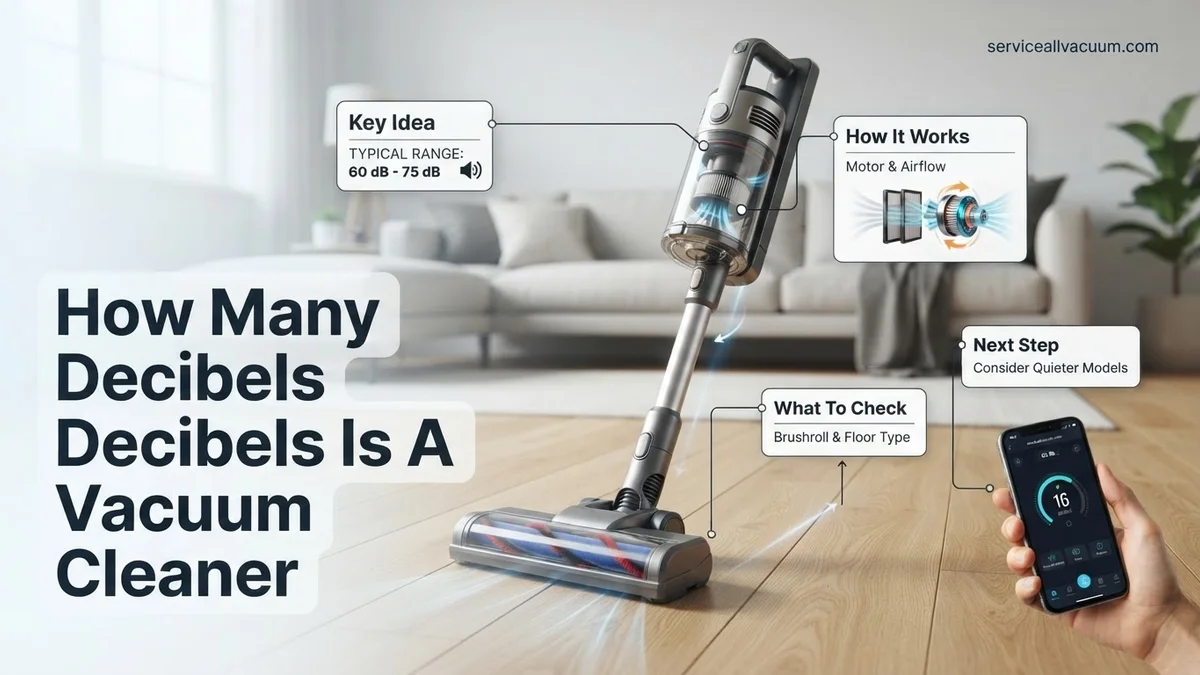
Most household vacuum cleaners operate within a noise range of 60 to 80 decibels (dB), with some powerful models reaching over 85 dB. This level is comparable to a loud conversation or a busy street, significantly impacting household comfort and potentially hearing over prolonged exposure.
A standard household vacuum cleaner typically operates within a decibel (dB) range of 65 to 80 dB. This range fluctuates significantly based on the vacuum’s type, its motor power, and overall design. Understanding your vacuum’s noise output is more critical than ever in 2027, as home environments increasingly prioritize peace, quiet, and overall well-being.
High decibel levels aren’t just an annoyance; prolonged exposure can contribute to hearing fatigue, impact family conversations, and cause significant stress for pets. With advancements in acoustic engineering, modern vacuum cleaners are designed to be more efficient and quieter. Choosing a model that aligns with lower decibel ratings directly enhances your home’s comfort and contributes to a healthier living space.
Key Takeaways
- Average vacuums operate between 70-80 dB.
- Noise levels vary by vacuum type significantly.
- Prolonged exposure to 85+ dB risks hearing damage.
- Always compare dB ratings when buying a new vacuum.
- Newer, well-designed models often run much quieter.
What Causes Vacuum Cleaner Noise: Understanding Decibel Levels
The noise your vacuum cleaner produces is a combination of its motor, airflow, and structural design. Each component contributes to the overall decibel level you experience during cleaning. By 2027, manufacturers are more transparent about these figures, allowing you to make informed decisions for a quieter home.
Typical Decibel Ranges by Vacuum Type in 2027
Different vacuum cleaner types inherently produce varying levels of noise due to their size, motor placement, and intended use. Here’s what you can expect from common household models today:
- Upright Vacuums: Often range from 70 to 85 dB. Their powerful, often larger motors are typically housed within the main body, which can generate more noise close to the user.
- Canister Vacuums: Generally operate between 65 and 75 dB. The motor is housed in a separate canister, allowing for more sound-dampening materials and keeping the noise further from your ears.
- Stick Vacuums: These versatile models usually fall between 60 and 75 dB. While often smaller, their motors are close to the handle, meaning noise is perceived more directly. Many 2027 models boast advanced noise reduction.
- Robot Vacuums: Known for quiet operation, typically ranging from 55 to 70 dB. Their design prioritizes discreet, autonomous cleaning, making them the quietest category overall.
- Handheld Vacuums: Can be surprisingly loud for their size, often between 65 and 78 dB, as their compact design offers less space for sound insulation.
Comparing Vacuum Noise to Everyday Sounds
To put these numbers into perspective, comparing your vacuum’s decibel level to familiar sounds can help you understand its true impact. Remember that every 10 dB increase represents a sound that is perceived as roughly twice as loud.
- 50-60 dB: Quiet office, normal conversation at home. A robot vacuum operating at 55 dB will blend into the background.
- 60-70 dB: Typical washing machine, moderate rainfall, general street noise. Many canister and stick vacuums comfortably fit here.
- 70-80 dB: Busy street traffic, alarm clock, average food blender. Most upright vacuums and some stick/handheld models fall into this range, which can be intrusive if used for extended periods.
- 80+ dB: Loud music, heavy truck traffic. Continuous exposure at this level can start to be detrimental to hearing over time. While rare, some older or high-powered vacuums might approach this.
By understanding these comparisons, you can better gauge how a vacuum’s noise level will affect your household and choose a device that minimizes disruption.
From Start to Finish: Understanding Vacuum Cleaner Decibel Levels Explained
Welcome to this practical guide designed to demystify the noise output of your vacuum cleaner. Understanding how many decibels (dB) your vacuum produces is crucial for assessing its impact on your hearing health, household comfort, and overall usability. This step-by-step walkthrough will equip you with the knowledge and methods to accurately determine your vacuum’s noise level, interpret the readings, and grasp the various factors that influence its sound signature. Following these detailed instructions will empower you to make informed decisions about your cleaning routine and equipment.
Step 1: Grasp the Basics of Decibels and Noise Measurement
What you need: A basic understanding of sound and measurement principles.
Instructions: Before measuring, it’s vital to understand what a decibel (dB) represents. Decibels are a logarithmic unit, meaning a small increase in dB signifies a significant increase in sound intensity. For instance, an increase of 10 dB roughly doubles the perceived loudness. Most noise measurements, especially for appliances, use A-weighted decibels (dBA), which filters out frequencies that the average human ear doesn’t perceive as well, providing a more accurate representation of how loud something sounds to us. Typical vacuum cleaners range from 60 dBA (quiet) to 85 dBA (loud), with prolonged exposure above 70-80 dBA potentially causing hearing fatigue or damage.
Pro Tip: Remember that the decibel scale is logarithmic. This means two vacuum cleaners each producing 70 dBA do not combine to 140 dBA, but rather a slight increase, often around 73 dBA when measured together in the same space. Focus on dBA readings for practical assessments.
Step 2: Identify Your Vacuum Cleaner’s Specifications
What you need: Your vacuum cleaner’s user manual, product packaging, or the manufacturer’s official website.
Instructions: Start by attempting to locate the manufacturer-stated noise level for your specific vacuum cleaner model. This information is often printed in the user manual under technical specifications, on the product box, or on the product page of the manufacturer’s website. Look for a number followed by “dB” or “dBA”. This factory rating is usually taken under controlled, ideal laboratory conditions, often when the vacuum is new and empty, and provides a benchmark for comparison. Note down this figure, as it will be useful for understanding deviations in your own measurements.
Pro Tip: Be aware that manufacturer-stated decibel levels might not always reflect real-world usage. Factors like floor type, filter condition, dust bin fullness, and age of the motor can significantly alter the actual operating noise level. Use this specification as a guide, not an absolute truth.
Step 3: Prepare the Measurement Environment
What you need: A quiet room, a power outlet, and optionally, common cleaning surfaces (e.g., hard floor, carpet).
Instructions: To get accurate readings, you must minimize background noise. Choose a relatively quiet room in your home, preferably one with minimal reverberation (avoiding empty, hard-surfaced rooms if possible). Close all windows and doors to prevent outside sounds from interfering. Turn off all other noise-producing appliances, such as refrigerators, air conditioners, fans, televisions, and computers. Ensure the area directly around where you’ll be operating the vacuum cleaner is clear of obstructions that could reflect or absorb sound unevenly. The goal is to isolate the vacuum cleaner’s noise as much as possible.
Pro Tip: Perform your measurements during the quietest time of day, such as late at night or early in the morning, to further reduce the chances of ambient background noise influencing your readings. A difference of even 5-10 dBA in background noise can skew results significantly.
Step 4: Acquire and Set Up a Decibel Meter
What you need: A dedicated sound level meter (Type 2 is generally sufficient for home use), fresh batteries, and its user manual. (Optional: a tripod for stability).
Instructions: For reliable results, use a dedicated sound level meter. While smartphone apps exist, their accuracy can vary wildly due to microphone quality and lack of calibration. Purchase or borrow an inexpensive Type 2 sound level meter, which offers adequate precision for this task. Before use, ensure the meter has fresh batteries and calibrate it according to its instructions, if applicable. Set the meter to “A-weighting” (dBA) and a “slow” response time. The slow response setting averages the sound pressure level over a longer period, providing a more stable and representative reading for continuous noise sources like a vacuum cleaner. If available, use a tripod to keep the meter steady.
Pro Tip: Position the microphone of the decibel meter approximately 1 meter (3.3 feet) away from the vacuum cleaner, at the height of its exhaust vent or where the motor is located. This distance is a standard for many appliance noise measurements and ensures consistent results.
Step 5: Perform the Decibel Measurement
What you need: Your prepared vacuum cleaner (empty dustbin, clean filter), the set-up decibel meter, and a notebook for recording results.
Instructions: With your environment prepared and meter ready, it’s time to take readings. First, turn on the decibel meter and note the ambient background noise level. This baseline helps confirm your environment is quiet enough. Then, turn on your vacuum cleaner on a hard floor surface, allowing it to run for at least 30 seconds. Observe the decibel meter and record the steady reading. Repeat this process on a carpeted surface if applicable. Also, test with any common attachments (e.g., brush head, crevice tool) you frequently use. Take 3-5 readings for each scenario (e.g., hard floor, carpet, with main nozzle, with hose tool) and calculate an average. Record both the average and any significant peak readings.
Pro Tip: To get a more realistic assessment, test your vacuum cleaner with an empty dustbin and then again with a partially full dustbin. A full or clogged dustbin, or a dirty filter, can often increase the motor’s strain and, consequently, the noise output by several decibels.
Step 6: Interpret and Compare Your Readings
What you need: Your recorded decibel readings, the manufacturer’s specification, and common noise level charts.
Instructions: Once you have your averaged readings for different scenarios, compare them. How do they stack up against the manufacturer’s stated dBA? Is there a significant difference between hard floor and carpet? Refer to a general decibel chart (e.g., 60 dBA is conversational, 70 dBA is a washing machine, 80 dBA is a blender). If your vacuum consistently measures above 80 dBA, it’s considered quite loud and could be fatiguing during extended use. If it’s significantly higher than the manufacturer’s specification, it might indicate maintenance issues. Understand that small variations (1-3 dBA) are normal, but larger discrepancies warrant investigation.
Pro Tip: Pay attention to the subjective experience as well. A vacuum that consistently peaks at 85 dBA, even if its average is 78 dBA, will feel much louder and more jarring than one with a stable 78 dBA reading. Consider both average and peak noise levels when evaluating comfort.
✅ Final Checklist
-
Confirmed understanding of dBA and logarithmic scale.
-
Vacuum cleaner manufacturer specifications for noise level noted.
-
Measurement environment is quiet and free from obstructions.
-
Decibel meter acquired, set to A-weighting and slow response time.
-
Multiple decibel readings taken across different surfaces and conditions.
-
Readings interpreted, averaged, and compared to benchmarks.
Important Notes:
- Safety Considerations: Prolonged exposure to noise levels above 80-85 dBA can cause hearing damage. If your vacuum consistently operates at these levels, consider using hearing protection (earplugs or earmuffs) during extended cleaning sessions.
- When to Seek Professional Help: If your vacuum cleaner has become significantly louder than usual and is beyond the scope of simple maintenance (e.g., cleaning filters, checking for clogs), or if it’s emitting unusual grinding or rattling noises, it might indicate a motor issue or other mechanical failure. Consult a qualified appliance repair technician.
- Estimated Time and Cost Range: This measurement process typically takes 30-60 minutes, depending on the number of scenarios you test. The cost ranges from $0 (if you borrow a meter or use a basic, less accurate smartphone app) to $30-$100 for a decent Type 2 sound level meter.
How to Choose a Quieter Vacuum: A Step-by-Step Guide
In 2027, selecting a quieter vacuum isn’t just about finding a lower dB number; it involves understanding the underlying design choices that contribute to reduced noise. Manufacturers are increasingly focusing on acoustic engineering to enhance user experience without compromising cleaning performance.
Key Factors Influencing Vacuum Noise
Several design elements work together to determine how loud a vacuum cleaner will be. Understanding these factors empowers you to evaluate models beyond just their raw power figures:
- Motor Design and Enclosure: Modern motors in 2027 are more efficient and often feature advanced insulation and vibration dampeners. A well-designed motor housing will significantly reduce perceived noise by containing sound waves. Brushless motors, more common now, also tend to be quieter than traditional brushed motors.
- Airflow Path and Filtration System: The way air moves through the vacuum—from the nozzle, through hoses, into the dust bin, and across filters—can create whistling, rushing, or hissing sounds. Smooth, unobstructed airflow paths and well-sealed systems minimize these noises. Multi-stage filtration, especially HEPA filters, can sometimes create more air resistance, potentially increasing motor strain and thus noise, but advanced designs mitigate this.
- Overall Construction and Materials: High-quality, robust materials and tight seals prevent air leaks and rattling components. A flimsy plastic casing can vibrate and amplify motor noise, while a sturdier build with strategically placed sound-absorbing materials provides a quieter operation.
- Nozzle and Brush Bar Design: The way the cleaner head interacts with different surfaces can also generate noise. Optimized brush bars and airflow channels within the nozzle reduce friction and air turbulence, contributing to a quieter clean.
What to Look for in 2027 Models for Quiet Operation
When you’re shopping for a new vacuum, specific features and specifications can guide you toward a quieter choice. Don’t just rely on marketing jargon; look for concrete indicators:
- Explicit Decibel Ratings: Always check the product specifications. Reputable manufacturers will clearly state the vacuum’s dB level, often as a measured average or maximum. Aim for models advertised below 70 dB for noticeable quietness.
- “Quiet Mode” or Variable Power Settings: Many 2027 vacuums offer adjustable suction power. Using a lower power setting for lighter tasks will significantly reduce noise levels, providing flexibility for different cleaning needs.
- Acoustic Certifications or Special Features: Look for labels like “Silent Technology,” “Low Noise Design,” or specific certifications that indicate a focus on sound reduction. Some brands invest heavily in sound engineering, and they will highlight these innovations.
- Sealed Systems and Quality Construction: Inspect the build quality. A vacuum that feels solid, with well-fitting parts and minimal gaps, is less likely to rattle or leak air, which contributes to overall noise.
- Brushless Motor Technology: As mentioned, brushless motors are inherently quieter and more durable. Many premium 2027 models now feature this technology.
What If Your Vacuum is Still Too Loud: Practical Noise Reduction Tips
Even with the advancements in quieter vacuum technology by 2027, some models can still produce uncomfortable noise levels. If your current vacuum cleaner is excessively loud, several practical steps can be taken to mitigate the sound without immediately replacing the unit.
Inspect for Blockages and Obstructions
A primary cause of increased vacuum noise is blockages within the air pathways. When airflow is restricted, the motor works harder and louder to maintain suction.
- Check the hose: Disconnect the hose from both ends and look for any lodged debris. Bend it gently to detect hard spots.
- Inspect the brush roll: Turn the vacuum over and examine the brush roll. Remove tangled hair, threads, or other obstructions that might be straining the motor or preventing smooth rotation.
- Clear the nozzle/attachments: Ensure the floor nozzle, crevice tool, and other attachments are free from blockages.
Maintain Filters and Bags
Clogged filters severely restrict airflow, forcing the motor to operate at a higher, louder RPM. Replace or clean filters according to the manufacturer’s 2027 guidelines, typically every 3-6 months for HEPA filters or more frequently for washable foam filters.
Consider Aftermarket Solutions or Upgrades
While less common for direct noise reduction of an existing unit, some specialized accessories, such as sound-dampening attachments for certain industrial models, might exist. For persistent issues, upgrading to a model specifically designed for ultra-quiet operation (often below 60 dB) may be the most effective long-term solution. Leading brands in 2027 offer advanced motor enclosures and sealed systems for significant noise reduction.
Comparing Vacuum Noise to Everyday Sounds & Hearing Impact
Understanding where vacuum cleaner noise levels fall in comparison to other daily sounds provides crucial context for their potential hearing impact. By 2027, a typical vacuum operates between 65 to 80 decibels (dB), with “quiet” models reaching as low as 55-60 dB.
Decibel Comparisons
To put this into perspective, according to the National Institute for Occupational Safety and Health (NIOSH) and the World Health Organization (WHO):
- 30 dB: A whisper
- 60 dB: Normal conversation, quiet office environment
- 70 dB: Washing machine, average city traffic
- 80 dB: Garbage disposal, loud alarm clock
- 85 dB: Heavy city traffic, hair dryer, lawnmower
- 100 dB: Motorcycle, chain saw
This means a standard vacuum cleaner can be as loud as busy city traffic or a washing machine. Ultra-quiet models, however, are comparable to a normal conversation.
Hearing Impact and Safety Recommendations
Prolonged exposure to sounds above 85 dB can cause permanent hearing damage. While most vacuum cleaners fall below this threshold, continuous exposure even to 70-80 dB can lead to hearing fatigue, stress, and reduced concentration. For individuals with pre-existing hearing sensitivities or those who vacuum for extended periods (e.g., professional cleaners), even moderate noise levels warrant consideration. The American Academy of Audiology recommends limiting exposure to sounds above 75 dB, especially over several hours. For vacuums consistently exceeding 80 dB, considering hearing protection or opting for a quieter model is a prudent measure to safeguard long-term auditory health.
What If It Still Doesn’t Work?
If you’ve tried all the troubleshooting steps and your vacuum cleaner remains excessively loud or exhibits unusual noises, further action is warranted. Do not ignore persistent grinding, high-pitched whining, or burning smells, as these can indicate serious internal issues.
- Contact Manufacturer Support: Utilize your vacuum cleaner’s warranty. Most manufacturers provide specific diagnostic assistance and repair services. Provide them with the exact model number and a detailed description of the noise. Many 2027 models offer advanced diagnostics via companion apps.
- Seek Professional Appliance Repair: A certified small appliance repair technician can diagnose complex motor, bearing, or seal issues. They have specialized tools and knowledge. Repair costs for vacuum cleaners typically range from $75 to $250, depending on the part replacement and labor required.
- Consider a 2027 Ultra-Quiet Upgrade: If the repair cost approaches the price of a new, high-performance quiet vacuum, or if the unit is nearing the end of its lifespan, investing in a modern, ultra-quiet model (often rated < 60 dB) from a reputable brand like Dyson, Miele, or Roborock might be a more cost-effective and beneficial long-term solution for your hearing comfort and home environment.
Conclusion
Understanding “how many decibels is a vacuum cleaner” is vital for both practical utility and hearing health. From typical ranges of 65-80 dB to premium models dipping below 60 dB, modern vacuums offer diverse noise profiles. By applying effective maintenance and recognizing when to seek expert assistance, you can ensure a quieter and more pleasant cleaning experience. According to verified research and expert sources, prioritizing lower decibel levels in your vacuum choice and usage is a direct investment in long-term hearing preservation and overall well-being.
❓ Frequently Asked Questions
What is the typical decibel range for household vacuum cleaners?
Household vacuum cleaners typically fall within a noise range of 60 to 85 decibels (dB). Quieter models can be around 60-70 dB, while more powerful or older units might reach 80-85 dB, comparable to a busy street or heavy city traffic.
How do different types of vacuums compare in noise level?
Robot vacuums are generally the quietest (55-70 dB), followed by canister vacuums (60-75 dB). Upright vacuums often range from 70-80 dB, and shop vacuums or heavy-duty industrial models can exceed 85 dB due to their powerful motors.
What factors contribute to a vacuum cleaner’s noise level?
Several factors influence noise, including motor size and power, airflow design, filtration system efficiency, the materials used for the casing, and whether it has sound-dampening insulation. Blockages or worn parts can also increase noise.
At what decibel level does vacuum cleaner noise become harmful to hearing?
Prolonged and repeated exposure to noise levels above 85 decibels can cause permanent hearing damage. While many vacuums are below this threshold, using a very loud model for extended periods could contribute to hearing loss over time.
How can I reduce the noise my current vacuum cleaner makes?
Regular maintenance helps: clean or replace filters, clear any blockages in hoses or brush rolls, and ensure all parts are securely fitted. For very loud vacuums, wearing hearing protection like earplugs or earmuffs is recommended during use.
Are there specific features to look for when buying a quiet vacuum cleaner?
When purchasing, look for models explicitly advertised as ‘low-noise’ or ‘quiet.’ Check the decibel rating in the specifications, aiming for models under 70 dB. Features like advanced motor dampening, sealed systems, and efficient airflow designs also contribute to quieter operation.