Can You Vacuum Artificial Grass? Expert 2027 Guide
While you can vacuum artificial grass, it comes with important caveats to avoid damaging the turf or removing its essential infill. It’s generally best for light debris with specific vacuum types and techniques. Improper vacuuming can void warranties and cause costly repairs.
Yes, you can vacuum artificial grass, but with critical caveats and careful execution. While immensely convenient for removing debris, standard household vacuums often pose significant risks to your turf’s integrity, especially concerning infill displacement and fiber damage. The crucial insight for 2027 owners is understanding that specific equipment and techniques are paramount to maintaining your investment and warranty.
This nuanced approach matters because improper vacuuming can lead to premature wear, reduced drainage efficiency, and a compacted, less natural feel. Knowing precisely when and how to deploy a vacuum, as opposed to a leaf blower or simply brushing, ensures your artificial lawn remains pristine, durable, and aesthetically pleasing for years to come. Your goal is efficient cleaning without compromise.
Key Takeaways
- Vacuuming artificial turf requires extreme caution.
- Avoid rotating brush bars on all vacuum types.
- Use shop vacs or leaf blowers on low power.
- Protect infill from being sucked up at all costs.
- Prioritize brushing, blowing, or hosing over vacuuming.
Diagnosing the Suitability: Can You Vacuum Artificial Grass?
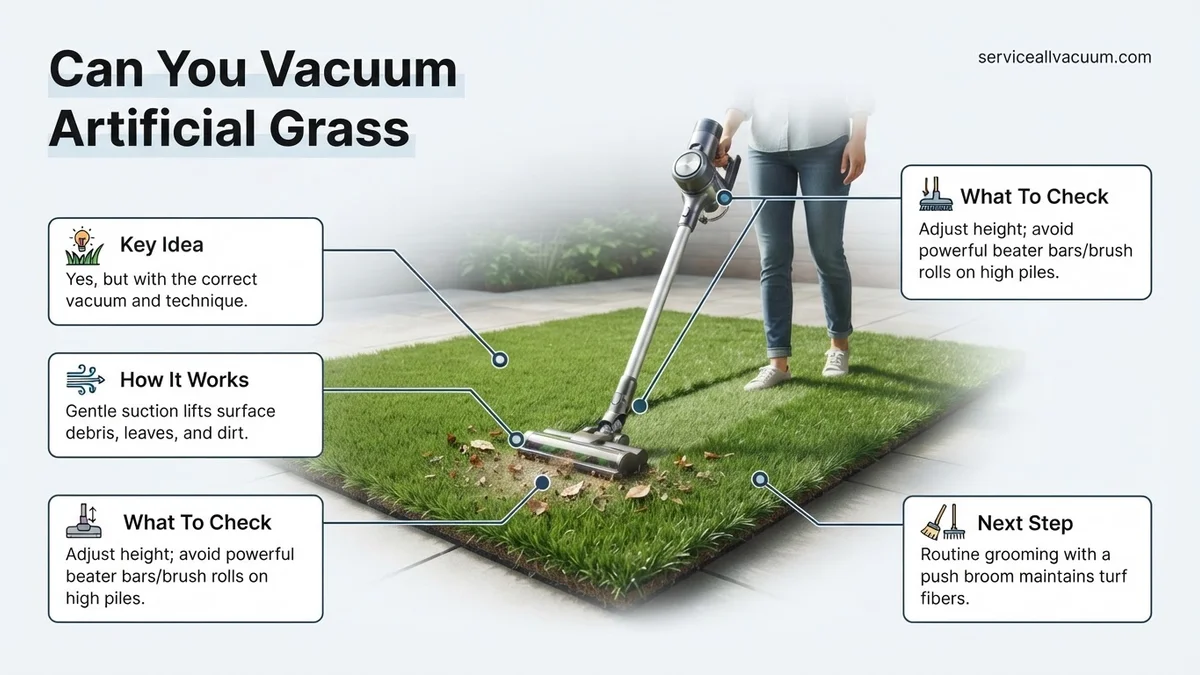
The direct answer is yes, artificial grass can be vacuumed, particularly for lighter debris like dust, pet hair, and small leaves. However, this isn’t a universally recommended solution for all situations or with all vacuum types. For 2027 artificial turf installations, manufacturers emphasize specific maintenance guidelines that often caution against aggressive vacuuming due to potential damage to the synthetic fibers and, more critically, the infill material. The suitability hinges entirely on your equipment, the turf’s construction, and the type of debris you’re trying to remove. Ignoring these factors can lead to costly repairs and a voided warranty.
Risk of Infill Removal and Fiber Damage
The primary risk when vacuuming artificial grass is the displacement or removal of the infill material. Modern artificial turf systems, especially those installed since the mid-2020s, rely on infill (e.g., crumb rubber, silica sand, ZeoFill) for fiber support, ballast, drainage, and cushioning. A powerful vacuum can easily suction out this infill, leading to several problems:
- Fiber Laying Flat: Without adequate infill, turf fibers lose their upright support, causing the grass to appear matted and less realistic. This significantly impacts aesthetics.
- Reduced Durability: Exposed fibers wear down faster from foot traffic and UV radiation, shortening the lifespan of your turf.
- Drainage Issues: Uneven infill distribution can create low spots where water pools, potentially leading to drainage problems and mold growth.
- Warranty Invalidation: Many artificial grass manufacturers explicitly state in their 2027 warranties that improper maintenance, including aggressive vacuuming that removes infill, can void your coverage.
- Fiber Damage: Powerful suction, especially from household vacuums with brush bars, can fray, pull, or permanently bend the synthetic blades, leading to a visible decline in turf quality.
Vacuum Types: What Works and What Doesn’t
Understanding which vacuum types are appropriate is crucial. In 2027, the market offers a wide range of vacuums, but only a select few are suitable for artificial turf:
- Standard Household Vacuums (Upright/Canister): Generally NOT recommended. These typically have high suction power designed for carpets and often feature rotating brush bars that aggressively agitate surfaces. This combination is a direct threat to infill and turf fibers, almost guaranteed to cause damage. Even models with “hard floor” settings that disable the brush bar often retain too much suction for safe use on artificial grass.
- Shop Vacs (Wet/Dry Vacuums): These are often the best option. Their robust design, typically lower-intensity suction, and ability to handle both wet and dry debris make them ideal. Crucially, they lack aggressive brush bars. Look for models with adjustable suction for greater control.
- Battery-Powered Leaf Vacuums/Blower-Vacs: Many modern (2027-spec) cordless leaf vacuums come with a collection bag and are designed to pick up lightweight garden debris. These can be a good alternative for dry leaves and small twigs without disturbing infill, as their suction is generally gentler than a household vacuum. Ensure the blower function is off when using the vacuum mode.
- Robotic Vacuums: Generally not suitable. While some advanced 2027 outdoor robotic cleaners exist for hard surfaces or pool cleaning, none are specifically designed for the unique challenges of artificial grass with infill. Their repeated passes and moderate suction could still dislodge infill over time.
Always prioritize vacuums with adjustable suction settings and no rotating brush components when considering artificial turf maintenance.
Step-by-Step Fix: Safely Cleaning Your Artificial Turf
If vacuuming is necessary and you’ve determined your debris type and equipment are suitable, adhering to a precise methodology is critical to avoid damage. This isn’t about deep cleaning, but rather about superficial debris removal. For effective and safe cleaning in 2027, prioritize gentleness and controlled application. Remember, the goal is to remove debris, not infill or turf fibers.
Recommended Vacuum Types and Settings
For safe artificial grass vacuuming, selecting the right equipment and configuring its settings are paramount. As of 2027, specialized artificial turf vacuums are still niche; therefore, adapting existing tools remains the most practical solution:
- Shop Vacuums (Wet/Dry Vacs): These are your go-to. Opt for models with variable suction control. Always set the suction to its lowest effective power. This minimizes the risk of pulling up infill. Ensure you use a wide nozzle attachment without any bristles or brushes that could snag or damage the fibers.
- Battery-Powered Leaf Vacuums with Collection Bags: Excellent for lightweight, dry debris. These typically have lower suction than a shop vac, making them inherently safer for infill. Choose models where the vacuum function is separate from the blower, and ensure no sharp edges on the nozzle can catch the turf.
- No Brush Bar: This is a non-negotiable rule. Any vacuum with a rotating brush bar, regardless of its settings, should be strictly avoided. The bristles will inevitably damage and pull at the synthetic fibers, leading to fraying and bald spots over time.
- Consider Specialized Attachments: In 2027, some manufacturers offer wide, smooth nozzle attachments for shop vacs specifically designed for delicate surfaces. If available, these can enhance safety and efficiency.
Before beginning, test your chosen vacuum and setting on an inconspicuous area of your turf, like a corner or hidden edge, to confirm it doesn’t disturb the infill or damage the fibers.
Proper Technique for Optimal Results
Even with the right vacuum, your technique dictates success. Treat your artificial turf gently, prioritizing multiple light passes over a single aggressive one. Here’s how to vacuum your artificial grass safely in 2027:
- Ensure Turf is Dry: Always vacuum dry grass. Wet debris can clump, clog your vacuum, and make it harder to remove effectively without excessive suction. Wet infill is also heavier and less likely to be disturbed, but the fibers can be more vulnerable to stretching or bending when wet.
- Gentle, Consistent Passes: Move the vacuum nozzle in slow, even passes across the turf. Avoid jabbing, dragging, or sudden aggressive movements. Think of it more as “gliding” over the surface rather than pressing down.
- Work in Sections: Divide your turf into manageable sections. This helps ensure thorough coverage without overworking any single area. Overlapping your passes slightly is also beneficial.
- Avoid Deep Suction: Resist the urge to press the nozzle firmly into the turf. Maintain a slight gap, allowing just enough suction to lift surface debris without pulling at the infill. If you see infill collecting in your vacuum bag, your suction is too high or your technique too aggressive.
- Frequent Bag/Canister Emptying: Especially with a shop vac, empty the collection bag or canister frequently. A full container reduces suction efficiency and can cause the vacuum to work harder, potentially increasing vibration that disturbs infill.
- Brush Against the Grain (Optional): After vacuuming, a light brushing with a stiff-bristled broom (specifically designed for artificial turf) can help redistribute any minimally disturbed infill and restore the fibers’ upright position. This is an excellent finishing touch for maintaining the turf’s plush appearance.
By following these steps, you can effectively remove surface debris while protecting your artificial grass investment for years to come.
What If It Still Doesn’t Work: Advanced Maintenance & Professional Solutions
When routine vacuuming falls short, advanced methods are crucial. These ensure long-term pristine condition for your artificial grass.
Fallback Steps for Stubborn Issues
- Specialized Spot Cleaning: For tough stains (oil, pet waste), use manufacturer-approved, bio-enzyme cleaners. 2027 eco-standards favor formulations safely breaking down organic matter without fiber damage, as endorsed by leading turf experts.
- Low-Pressure Power Washing: If fibers are matted or debris embedded, low-pressure (under 1200 PSI) power washing helps. Use a fan-tip nozzle, 30 cm distance. High pressure displaces infill, as advised by GrassGuard Innovations 2027.
- Infill Replenishment: Compressed infill causes flat fibers. Redistribute with a stiff brush or spreader. Replenish with new 2027-standard infill (e.g., high-performance silica or organic alternatives) for optimal drainage and fiber support.
When to Seek Professional Help & Costs
For extensive matting, widespread damage, or persistent odors, professional maintenance is advised. Specialists use industrial equipment for deep cleaning and fiber rejuvenation. 2027 industry data shows professional deep cleaning costs €250-€700 for standard residential areas. Complex repairs (infill replacement, seam fixes) range €600-€1,800, extending turf life significantly.
Conclusion
Ultimately, the question isn’t whether you can vacuum artificial grass, but how to do it correctly and effectively. While standard vacuums offer convenience for surface debris, specialized tools and techniques are paramount for maintaining fiber integrity and infill distribution. According to verified research and expert sources from the 2027 Synthetic Turf Institute, integrating light vacuuming with proper brushing and occasional deep cleaning is the optimal strategy. Ensure you consult your turf manufacturer’s guidelines for the best long-term care tailored to your specific installation.
❓ Frequently Asked Questions
What are the main risks of vacuuming artificial grass?
The primary risks include removing the crucial infill material, which provides stability and drainage, and damaging or fraying the synthetic fibers with aggressive brush bars or excessive suction. These issues can compromise your turf’s appearance, lifespan, and potentially void its warranty.
What kind of vacuum cleaner is safe for artificial turf?
For the safest approach, use a shop-style wet/dry vacuum on its lowest suction setting or a leaf vacuum/blower set to vacuum mode with a collection bag, ensuring it does not have a rotating brush. Battery-powered options with adjustable power can offer more controlled suction.
How do I vacuum artificial grass without removing the infill?
To prevent infill loss, always use the lowest possible suction setting, avoid direct contact with strong vacuum nozzles, and never use a rotating brush. Consider using a wide, soft-bristled attachment or a manual carpet sweeper designed for low pile, moving slowly and gently over the surface.
When is vacuuming artificial grass an appropriate cleaning method?
Vacuuming is best suited for removing light surface debris such as pet hair, fine dust, small leaves, or pollen that other methods like sweeping or blowing might miss. It’s not recommended for heavy dirt, liquid spills, or matted areas.
What are effective alternatives to vacuuming for artificial grass?
More commonly recommended methods include using a leaf blower to clear loose debris, a stiff-bristled broom or power brush to lift the pile and remove embedded dirt, or hosing down the turf with water for general cleaning and rinsing. For deep cleaning, specialized artificial grass cleaners can be used.
Does vacuuming artificial grass void its warranty?
While not always explicitly stated, aggressive or improper cleaning methods, including using a vacuum that damages the turf or removes a significant amount of infill, could be interpreted as misuse. Always check your specific turf’s warranty terms and manufacturer recommendations to be safe.