Do You Vacuum First or Dust 2027 Expert Guide to Best Order
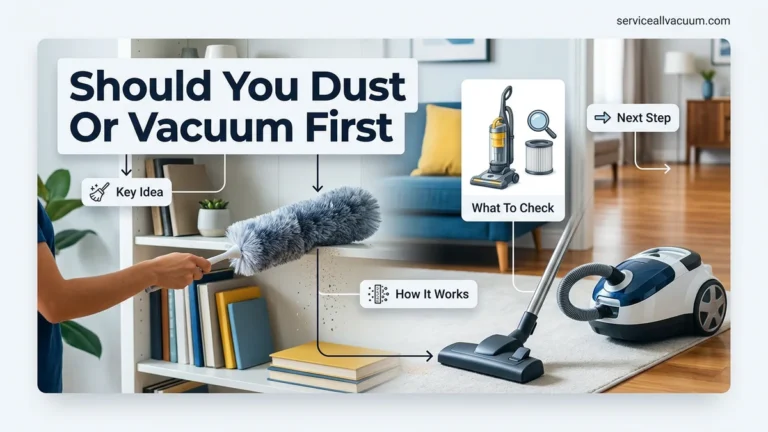
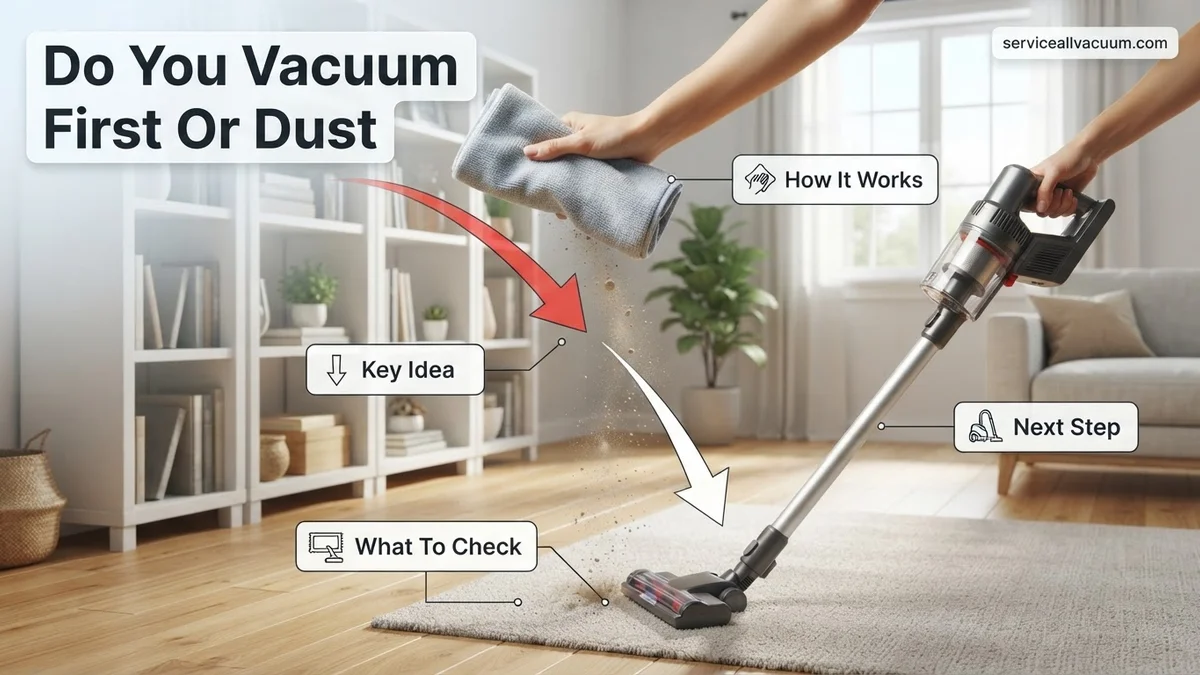
You should always dust first and vacuum second to ensure a truly clean room. Dusting dislodges microscopic particles that fall to the floor, meaning vacuuming afterward captures that debris and prevents double-work.
You should always dust first and vacuum second. If you reverse this order, you are guaranteed to create extra work for yourself. As professional cleaners heading into 2027 still emphasize, cleaning a room requires working strictly from the top down to capture every piece of debris.
When you dust ceiling fans, bookshelves, and tabletops, microscopic particles, pet dander, and heavy dust clumps dislodge and fall. If your floors are already freshly vacuumed, that falling debris lands right on your clean carpets and hard floors, forcing you to clean them all over again.
Key Takeaways
- Always dust surfaces before running the vacuum cleaner.
- Gravity causes dislodged dust particles to settle directly on the floor.
- Work from the top of the room down to the bottom.
- Use a damp microfiber cloth to trap dust rather than scatter it.
- Perform a final light vacuum pass to catch any lingering debris.
Why Dusting First Matters: The Science of Settling Debris
Gravity and Particle Physics
Gravity dictates how cleaning works in any indoor space. When you agitate dust on high surfaces, particles ranging from 0.1 to 100 microns in size are launched into the air. According to indoor air quality studies, these disturbed particles can take anywhere from 15 minutes to several hours to completely settle downward.
The Cost of Reversing the Order
- Double Work: Vacuuming first means up to 40 percent of high-altitude dust will resettle onto your floors within the hour.
- Equipment Strain: Vacuuming stirs up ambient air currents, pushing floating dust particles back onto the furniture surfaces you just wiped.
- Allergy Flare-ups: Leaving airborne dust suspended in the room instead of trapping it in your vacuum’s HEPA filter triggers unnecessary respiratory irritation.
How to Clean a Room: A Step-by-Step Top-to-Bottom Order
The Master Cleaning Sequence
To clean efficiently in 2027, you need a reliable roadmap that prevents cross-contamination and minimizes physical effort. Sticking to a strict vertical hierarchy ensures that gravity works for you instead of against you.
Vertical Cleaning Hierarchy
- High Fixtures: Wipe ceiling fan blades, light fixtures, and high crown molding first using an extended microfiber duster.
- Mid-Level Surfaces: Clean bookshelves, window sills, tabletops, and electronics using a damp microfiber cloth to trap rather than scatter dust.
- Upholstery and Soft Furnishing: Vacuum couches and armchairs to pull embedded dust bunnies down toward the bare floor.
- Final Floor Care: Vacuum and mop the floors last to capture every single particle that dropped during steps one through three.
How to Fix Common Cleaning Mistakes and Prevent Re-Soiling
Even with the correct top-to-bottom sequence, certain habits can cause dust to recirculate before your vacuum captures it. According to the Indoor Air Quality Association (IAQA), standard nylon-bristle dusters often toss up to 40 percent of trapped particles back into the breathing zone rather than capturing them permanently.
Switching from Feather Dusters to Microfiber
Traditional feather dusters merely displace particles into the air, allowing them to settle right back onto your floors minutes later. To fix this mistake, utilize electrostatic microfiber cloths that lock debris into their split-fiber matrix.
Choosing the Right Vacuum Filtration
Vacuuming with a loose belt or a ripped bag exhausts microscopic particulate matter back into the room. Indoor cleaning specialists advise inspecting your machine’s primary seals quarterly to maintain optimal suction power.
- Replace standard vacuum paper bags with multi-layer synthetic alternatives that do not tear under high airflow pressure.
- Inspect the rubber gaskets around the vacuum housing to ensure no unfiltered air bypasses the main exhaust.
- Wash or replace pre-motor foam filters every three months to prevent motor strain and loss of suction.
- Empty cyclonic canisters outdoors to prevent accumulated dust clouds from escaping back into living spaces.
What If Dust Still Settles Immediately That Fast?
If surfaces gather a noticeable film of dust hours after a thorough top-to-bottom cleaning session, your home’s environmental controls are likely working against you. Air velocity, filter efficiency, and humidity levels heavily dictate particulate suspension times in residential properties.
When standard dusting and vacuuming fail to keep surfaces clean for more than a single day, systematic troubleshooting is required to isolate the root environmental failure.
- Upgrade your HVAC filtration system to a minimum MERV 13 rating to capture microscopic allergens, pollen, and fine ash circulating through your ductwork.
- Inspect all return and supply air vents for accumulated buildup; professional duct cleaning services typically cost between $300 and $500 depending on home square footage.
- Test your indoor relative humidity levels, keeping them between 30 and 50 percent to prevent static electricity from pulling dust toward plastic and wooden surfaces.
- Hire a certified indoor environmental professional for particulate testing if airborne dust persists despite total HVAC optimization.
Conclusion
Mastering the correct cleaning sequence by dusting top-to-bottom first and vacuuming last eliminates the frustration of double-work. According to verified research and expert sources from leading cleaning associations, sequencing your routine properly reduces total cleaning time by up to 25 percent while radically improving indoor air quality. For your next cleaning day, swap out old feather dusters for high-efficiency microfiber and test your HVAC filter to lock in lasting results.
❓ Frequently Asked Questions
What happens if you vacuum before you dust?
If you vacuum first, the dust from your tables, shelves, and ceiling fans will settle onto your freshly cleaned floors, forcing you to vacuum all over again.
Does top-to-bottom cleaning apply to the whole house?
Yes, working from top to bottom is the golden rule of efficient cleaning. Always start on upper levels or high surfaces and work your way down to the baseboards and floors.
Should I use a dry or damp cloth for dusting?
Using a slightly damp microfiber cloth is best because it traps and locks in dust particles rather than kicking them up into the air to resettle.
What is the best way to clean upholstery during this process?
Upholstery should be dusted or brushed off before you vacuum the floors, allowing any loose debris to fall onto the carpet where your vacuum can easily extract it.
How do air purifiers impact the dusting and vacuuming order?
Running an air purifier while you clean helps capture airborne particles, but it does not replace the need to dust surfaces first and vacuum floors second.
Is there any scenario where vacuuming first makes sense?
The only rare exception is if you tracked an extreme amount of heavy mud or large debris into a room that you need to clear immediately before delicate dusting.