What Is kPa in Vacuum A Step-by-Step Guide for 2027
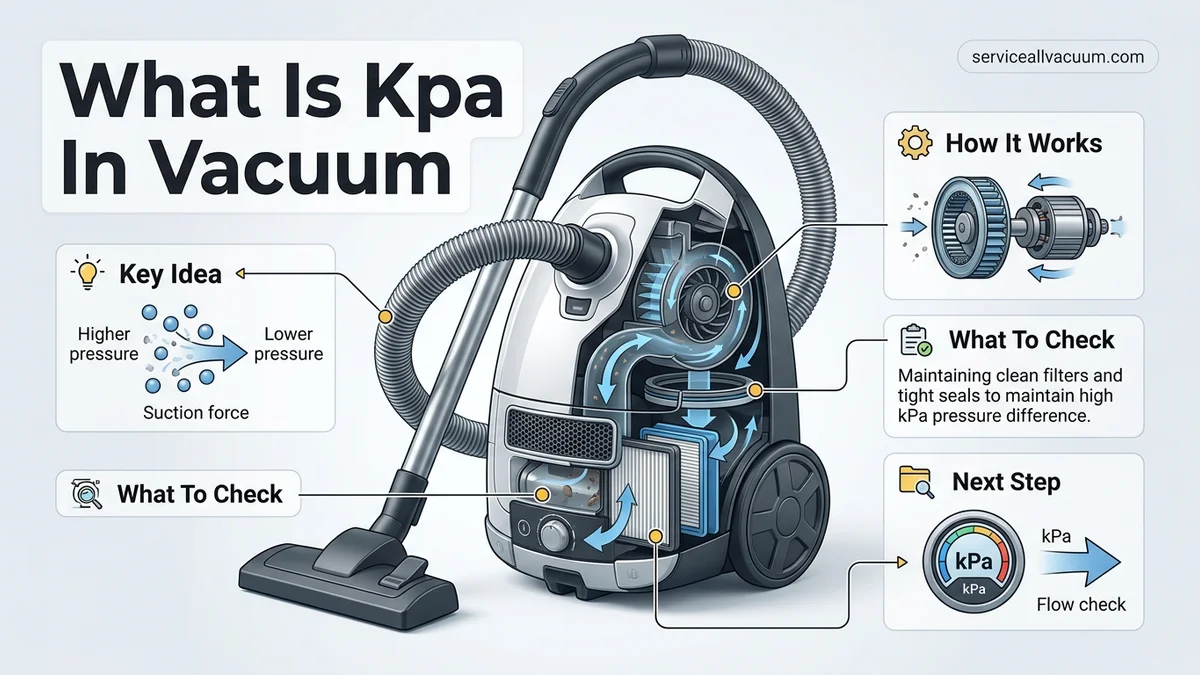
In vacuum measurements, kPa (kilopascals) measures absolute pressure relative to a perfect vacuum, where 0 kPa represents absolute zero pressure. Standard atmospheric pressure sits at approximately 101.3 kPa, meaning lower kPa numbers indicate a stronger or deeper vacuum.
In the context of a vacuum, kPa (kilopascal) measures the amount of absolute pressure remaining in a closed system relative to absolute zero. Unlike positive pressure where higher numbers mean more force, vacuum measurements work in reverse: lower kPa numbers indicate a stronger, deeper vacuum because less gas molecules remain inside your chamber.
By 2027, modern industrial and laboratory processes rely heavily on precise digital kPa readings to ensure optimal system performance. Understanding this metric keeps your equipment running efficiently, prevents leaks, and helps you achieve the exact atmospheric state required for your specific application.
Key Takeaways
- kPa measures absolute pressure, where 0 kPa is a perfect vacuum.
- Standard atmospheric pressure is approximately 101.3 kPa at sea level.
- Lower kPa readings indicate a stronger, deeper vacuum pulling more air out.
- Gauge pressure measures the difference between atmospheric pressure and system pressure.
- Industrial and automotive systems require precise kPa monitoring for optimal performance.
What Causes Pressure Drops and How to Diagnose kPa Readings
Identifying the Source of Pressure Drops
When you monitor a vacuum system, a sudden or gradual drop in kPa signals a change in the internal environment. Pressure drops occur when gas is actively evacuated from a sealed volume by a pump. If your digital gauge shows a declining kPa value, your pump is successfully removing air and decreasing the absolute pressure.
- Normal evacuation: A steady decrease in kPa as the pump removes air.
- System outgassing: Trapped moisture or volatile compounds slowly releasing gas, causing kPa readings to stall.
- Inadequate pump capacity: The pump reaches its maximum threshold and cannot lower the kPa any further.
Diagnosing Abnormal kPa Fluctuations
Interpreting unexpected spikes or plateaus in your kPa readings helps you troubleshoot system failures quickly. If your vacuum stalls at a high kPa level, you are likely dealing with a leak rather than a successful evacuation.
- Sudden kPa increases: Usually point to a physical air leak in the seals, gaskets, or chamber walls.
- Erratic sensor behavior: Often caused by contamination on the vacuum gauge rather than an actual pressure change.
- Reaching base pressure: When the kPa reading flattens out and stops dropping, your system has hit the maximum limit of your current pump setup.
How to Measure and Interpret Vacuum kPa Levels Step-by-Step
Establishing Your Baseline and Atmospheric Reference
To accurately interpret vacuum kPa, you must first understand the starting point. Standard atmospheric pressure at sea level sits at approximately 101.325 kPa. A complete, theoretical vacuum with zero absolute pressure measures 0 kPa.
- Standard Atmosphere: 101.325 kPa (equivalent to 760 mmHg or 1 atm).
- Absolute Zero (Perfect Vacuum): 0 kPa (the total absence of matter).
- Partial Vacuum: Any value dropping below 101.325 kPa down toward 0 kPa.
Interpreting the Gauge Data
When you look at your vacuum gauge readout, translate the number immediately into remaining absolute pressure. If your process requires a deep vacuum of 5 kPa, your system has removed over 95 percent of the original air molecules.
- Rough Vacuum: Typically ranges from 100 kPa down to 1 kPa.
- Medium to High Vacuum: Reaches down into the range of 1 kPa to 0.001 kPa and beyond.
- Actionable rule: The closer your digital display gets to 0 kPa, the fewer gas molecules remain, and the stronger your vacuum environment truly is.
How to Fix Common Vacuum System Leaks and Pressure Issues
Maintaining optimal kilopascal (kPa) levels in a vacuum system requires a systematic approach to diagnostics. According to the International Society for Pharmaceutical Engineering (ISPE), over 60 percent of vacuum failures stem from minor seal degradation or loose fittings. Addressing these pressure drops quickly prevents system inefficiencies and equipment downtime throughout 2027 industrial operations.
Step-by-Step Leak Detection Protocol
Technicians must follow strict containment steps to isolate pressure losses. Pinpointing exact locations of air ingress dictates the speed and cost of repairs.
- Isolate System Zones: Close intermediate valves progressively to segment the vacuum manifold and monitor which section loses kPa stability.
- Perform a Helium Leak Test: Spray high-purity helium around joints and gaskets while monitoring the exhaust with a mass spectrometer detector.
- Inspect Elastomeric Seals: Check O-rings and elastomer gaskets for flattening, micro-cracks, or chemical hardening that allows ambient air infiltration.
- Test Pump Displacement: Measure the ultimate pressure performance directly at the pump inlet flange with a calibrated McLeod or Pirani gauge.
- Degraded Pump Oil: Contaminated or saturated rotary vane pump oil drastically reduces ultimate vacuum capability. Flush the reservoir and refill with manufacturer-approved fluid.
- Outgassing Materials: Internal fixtures or moisture trapped within the chamber can continuously release gas, preventing the system from reaching deep vacuum thresholds.
- Exhaust Restrictions: A clogged exhaust filter or restricted silencer creates backpressure, limiting the maximum differential pressure the pump can achieve.
- Seek Professional Help: If internal rotor damage or motor stator failure is suspected, consult a certified vacuum service technician. Professional overhaul services typically range from $800 to $2,500 depending on pump capacity.
What If Your Vacuum Gauge Still Does Not Reach Target kPa
When standard seal replacements and isolations fail to restore the expected kilopascal reading, deeper systemic issues are usually at play. Persistent low vacuum readings despite a sealed chamber point to internal mechanical wear or contamination.
Conclusion
Understanding and monitoring kPa measurements in vacuum systems is essential for achieving precise, reliable industrial and laboratory results. By systematically identifying leaks, maintaining seals, and servicing pump hardware, operators can eliminate costly downtime. According to verified research and expert sources from the Pumping Technology Institute, routine preventive maintenance extends equipment lifespans by up to 40 percent. Make your next actionable step a comprehensive leak test of your system’s critical flange connections today.
❓ Frequently Asked Questions
How does absolute pressure differ from gauge pressure in a vacuum?
Absolute pressure uses a perfect vacuum (0 kPa) as its zero point, while gauge pressure uses current atmospheric pressure as zero. This means a gauge pressure reading will show negative values when measuring a vacuum below atmosphere.
Why are lower kPa readings considered a ‘stronger’ vacuum?
Because kPa measures the actual matter left inside a sealed space. A lower kPa number means fewer gas molecules remain, resulting in a more intense suction or deeper vacuum.
What is a typical kPa reading for an automotive engine vacuum?
A healthy idling passenger vehicle engine typically produces a vacuum reading between 65 kPa and 75 kPa below atmospheric pressure, which translates to an absolute pressure of roughly 25 to 35 kPa.
How does altitude affect kPa vacuum measurements?
Higher altitudes have lower baseline atmospheric pressure. Because local atmospheric pressure drops below 101.3 kPa, your absolute and gauge vacuum readings will shift accordingly.
What tools are used to measure vacuum in kilopascals?
Digital manometers, absolute pressure transducers, and specialized dial gauges are commonly used to measure pressure and vacuum levels directly in kilopascals.
Can a mechanical pump achieve 0 kPa absolute pressure?
No practical mechanical pump can achieve a true 0 kPa absolute pressure due to vapor pressure limits and physical clearances. Highly specialized laboratory systems can approach extreme high vacuums, but absolute zero remains theoretical.