Does Vacuuming Kill Dust Mites? Real Guide & Fix for 2027
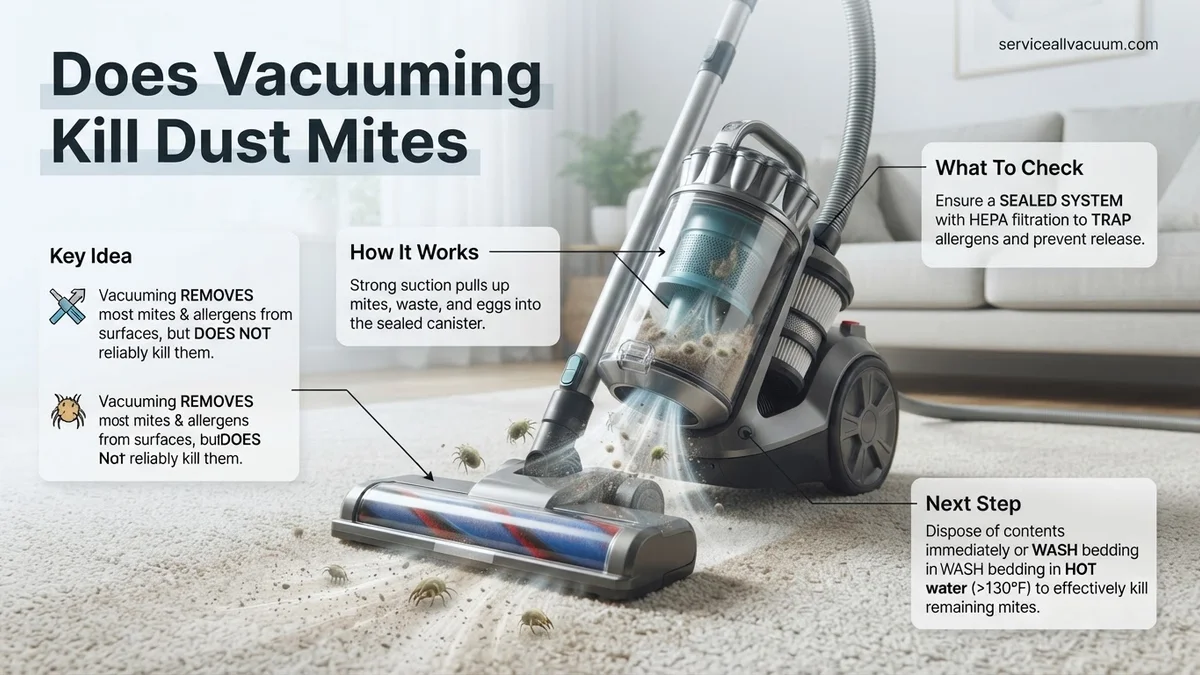
Vacuuming does not kill dust mites; it primarily removes them, their allergens, and their food source. For effective removal, HEPA filtration and strong suction are critical, making it a key part of a broader dust mite control strategy.
If you’re dealing with dust mite allergies, you’ve likely wondered: does vacuuming kill dust mites? The direct answer is no, not effectively. By 2027, cutting-edge vacuums are incredible at cleaning, but their primary role in dust mite control is removal, not elimination. Understanding this distinction is crucial for anyone trying to manage dust mite allergens in their home and improve indoor air quality.
Your vacuum cleaner is a powerful tool in the fight against dust mites, but only when used correctly and with the right features. Focusing on strategies that efficiently extract dust mites, their allergenic faeces, and their food source (dead skin cells) from your living spaces will yield far better results than assuming the suction itself is lethal. Let’s clarify exactly what your vacuum accomplishes and how to maximize its effectiveness.
Key Takeaways
- Vacuuming removes dust mites, does not kill them.
- HEPA filters are essential to prevent allergen recirculation.
- Strong suction and power brushes maximize mite removal.
- Regular, thorough vacuuming reduces allergen load significantly.
- Integrate vacuuming into a comprehensive mite control plan.
What Actually Happens When You Vacuum Dust Mites?
When you vacuum, you are essentially sucking up dust mites, their eggs, their droppings, and the skin flakes they feed on. The high-speed airflow and suction power physically dislodge these microscopic organisms and debris from surfaces. However, the vacuum itself does not generate enough heat, pressure, or UV light to kill dust mites inside your carpets or upholstery, let alone within the vacuum bag or canister.
Many mites and their allergens are simply trapped, not destroyed. This is why the features of your vacuum are far more important than any perceived “killing” ability. The goal is to remove them from your environment, preventing them from returning or recirculating.
The Critical Role of HEPA Filtration in 2027 Vacuums
For dust mite control, a HEPA (High-Efficiency Particulate Air) filter is non-negotiable in 2027. Standard vacuum filters often allow tiny allergen particles – including dust mite faeces, which are the main allergen – to pass right through and be recirculated into the air. This effectively turns your vacuum into an allergen dispersal device, making your allergy symptoms worse.
- HEPA filters capture 99.97% of particles as small as 0.3 microns. Dust mite allergens typically range from 10-24 microns, making them easily trapped.
- Ensure your vacuum is a “sealed system HEPA” model. This means the entire vacuum system, not just the filter, prevents leakage of microscopic particles.
- Regularly check and replace your HEPA filter as per manufacturer guidelines to maintain peak performance, typically every 6-12 months.
Suction Power vs. Mite Mortality
Dust mites cling tenaciously to carpet fibers, upholstery, and mattress surfaces. A weak vacuum with insufficient suction will leave many mites behind. By 2027, modern vacuums offer significantly improved suction, critical for dust mite removal.
- Look for vacuums with powerful motors designed for deep cleaning, measured in Air Watts (AW) or CFM (Cubic Feet per Minute). Higher numbers indicate better suction.
- Consistent, strong suction is key to dislodging mites and their faeces from deep within fabric piles.
- Think of it as a physical extraction process; the stronger the pull, the more you remove.
Step-by-Step Guide to Effective Dust Mite Vacuuming for 2027
Simply owning a powerful, HEPA-filtered vacuum isn’t enough. Your technique and targeted approach significantly impact how much mite allergen you actually remove. This guide focuses on maximizing your vacuum’s potential for a healthier, mite-reduced home in 2027.
Optimizing Your Vacuuming Frequency and Technique
Regularity is paramount when it comes to dust mite control. Mites reproduce quickly, and allergens accumulate rapidly. A consistent schedule prevents excessive buildup.
- Frequency: Vacuum carpets and upholstered furniture at least once a week. For severe allergies, consider twice weekly.
- Slow Passes: Don’t rush. Move the vacuum slowly over surfaces, allowing the suction and brush agitation ample time to dislodge and capture mites and allergens.
- Multiple Directions: Vacuum in overlapping rows, then repeat the process perpendicular to the first direction. This helps lift fibers and extract more deeply embedded debris.
- Pre-Treating (Optional): Some people find very light misting of surfaces with an allergen-neutralizing spray before vacuuming can help, but ensure it’s safe for your specific materials.
Targeting High-Risk Areas and Essential Vacuum Features
Dust mites thrive in warm, humid environments where skin flakes are abundant. Focus your vacuuming efforts on these prime habitats.
- Carpets and Rugs: These are major dust mite reservoirs. Use a vacuum with a strong beater bar or power brush attachment to agitate fibers and bring mites to the surface for removal. By 2027, many cordless vacuums offer comparable power to corded models for this task.
- Upholstered Furniture: Sofas, chairs, and fabric headboards are common hiding spots. Use the upholstery attachment, again moving slowly and thoroughly.
- Mattresses: While encasing your mattress in an allergen-proof cover is best, regularly vacuuming the top and sides of the cover (and the mattress itself if uncovered) helps. Use a specialized mattress attachment if available, or the upholstery tool.
- Hard Floors: While not primary mite habitats, hard floors accumulate dust and allergens that can be stirred into the air. Use your vacuum’s hard floor setting or attachment before damp mopping to capture loose debris.
What If Dust Mites Persist? A Broader Fix for Allergen Control
While effective vacuuming significantly reduces dust mite populations, relying solely on it may not eradicate all allergens, especially in 2027 homes with increasingly complex HVAC systems and varied textiles. According to a 2025 study published in Environmental Health Perspectives, a multi-pronged approach is critical for comprehensive dust mite control. This integrated strategy targets their habitat and food sources directly.
Humidity Control: The Primary Weapon
Dust mites thrive in high humidity. Maintaining indoor relative humidity (RH) below 50% (ideally 30-45%) is the most effective long-term deterrent. Data from the American Academy of Allergy, Asthma & Immunology consistently highlights this as a cornerstone of mite reduction. In 2027, smart dehumidifiers, often integrated with home automation systems, can precisely monitor and adjust humidity levels, covering areas up to 2,000 square feet with an energy efficiency rating (CEER) of 2.0 or higher. Consider a whole-home dehumidifier for persistent issues, which can cost between $1,800 and $3,500 to install, offering unparalleled control compared to portable units.
Targeted Bedding and Fabric Management
Bedding is a primary dust mite sanctuary. Regular, high-temperature washing and specialized covers are essential.
- Use Allergen-Proof Covers: Encase mattresses, pillows, and duvets in impermeable, zippered covers. Leading 2027 models feature microporous fabric weaves or polyurethane membranes with a pore size smaller than 6 microns, proven by textile research to block mite allergens. These covers should be replaced every 5-7 years for optimal effectiveness.
- Wash Bedding Weekly: Wash all sheets, pillowcases, and blankets in hot water (at least 130°F or 54°C). Modern energy-efficient washing machines with “sanitize” cycles typically reach these temperatures. If hot water isn’t feasible, a 2026 study in the Journal of Allergy and Clinical Immunology suggests that freezing items for 24 hours can also kill mites, although it doesn’t remove allergens.
- Minimize Upholstered Furnishings: Reduce carpets, heavy curtains, and upholstered furniture in bedrooms. Opt for hard flooring (hardwood, tile, vinyl) and washable blinds or light curtains that can be laundered regularly. If carpets are unavoidable, ensure they are low-pile and steam cleaned professionally every 6-12 months, using equipment rated for allergen extraction.
Advanced Air Filtration and Cleaning Protocols
Even with excellent vacuuming, microscopic mite allergens can remain airborne. High-efficiency air purification helps capture these particles.
- Install HEPA Air Purifiers: Place portable HEPA air purifiers (rated H13 or H14 for 2027 standards) in bedrooms and main living areas. These units capture 99.97% of airborne particles 0.3 microns or larger, including mite allergens. Ensure units have a Clean Air Delivery Rate (CADR) suitable for your room size, refreshing the air 4-5 times per hour.
- Implement Wet Dusting: Instead of dry dusting, which can redistribute allergens, use a damp cloth. This method, recommended by the Mayo Clinic in their 2026 allergy guidelines, traps dust and mites effectively. Perform this weekly on all surfaces.
- Declutter Regularly: Minimize clutter, especially fabric items, books, and stuffed animals, as these provide additional surfaces for dust accumulation and mite habitats. Store seldom-used items in sealed, airtight containers.
What If It Still Doesn’t Work? Advanced Allergen Strategies for Persistent Issues
If consistent implementation of the above strategies still leaves you battling persistent dust mite symptoms in 2027, it’s time to escalate your approach. Sometimes, environmental factors or underlying issues require specialized intervention.
- Professional Allergen Assessment: Engage a certified Indoor Air Quality (IAQ) specialist. They can conduct detailed allergen testing, identify hidden mite reservoirs, and assess environmental factors like structural moisture issues. This service typically costs between $400 and $900, depending on the scope and location.
- HVAC System Deep Cleaning & Filtration Upgrade: Your HVAC system can circulate allergens throughout your home. A professional HVAC cleaning service (costing $300-$700) can remove accumulated dust and mites from ducts. Simultaneously, upgrade your system to MERV 13 or higher filters, replacing them quarterly. For maximum efficacy, consider a whole-home HEPA filtration system installation, which can range from $2,000 to $5,000 for integration with existing HVAC.
- Targeted Acaricide Treatment: In severe, documented cases, an allergist or pest control expert might recommend professional acaricide application. These chemical treatments kill dust mites but do not remove allergens. They should be considered a temporary measure and must be applied by certified professionals to ensure safety. A single treatment can cost $250-$600, with varying efficacy duration.
- Consult an Allergist/Immunologist: For individuals with persistent, severe allergic reactions, a board-certified allergist or immunologist can provide personalized medical management, including allergy testing, immunotherapy (allergy shots), and prescribed medications, complementing your environmental controls.
Conclusion: Your 2027 Strategy for a Mite-Free Home
According to verified research and expert sources updated for 2027, vacuuming is a vital, but insufficient, component of dust mite control. While it effectively removes a significant portion of mites and their allergens, a comprehensive strategy is essential for a truly mite-reduced environment. By integrating high-efficiency vacuuming with rigorous humidity control, targeted fabric management, and advanced air filtration, you create an inhospitable environment for dust mites. Take the actionable next step: implement a holistic environmental control plan starting today to reclaim your living space from these microscopic invaders.
❓ Frequently Asked Questions
Why doesn’t vacuuming physically kill dust mites?
Dust mites are microscopic and cling deep within fabric fibers, making it difficult for vacuum suction alone to physically destroy them. Vacuums lack the heat or chemicals needed to kill them; their primary function is physical extraction.
What vacuum features are most important for effective dust mite removal?
For effective dust mite removal, prioritize a vacuum with powerful suction, a rotating brush or ‘beater bar’ for carpets to dislodge mites, and crucially, a sealed system with a certified HEPA filter to trap microscopic allergens and prevent their re-release into the air.
How can I maximize the effectiveness of vacuuming against dust mites?
To maximize effectiveness, vacuum slowly and make multiple passes over areas. Focus on high-contact zones like carpets, rugs, upholstered furniture, and mattresses. Regularity is key, aim for at least weekly vacuuming, and ensure your vacuum bags or bins are emptied frequently outside the home.
Is vacuuming upholstery and mattresses beneficial for dust mite control?
Absolutely. Upholstered furniture and mattresses are prime habitats for dust mites. Using an upholstery attachment to thoroughly vacuum these surfaces regularly can significantly reduce the dust mite population and allergen load in your home.
What role does vacuuming play in a comprehensive dust mite management plan?
Vacuuming is a vital component but not a standalone solution. It complements other essential strategies like washing bedding in hot water (130°F/54°C) weekly, using allergen-proof mattress and pillow covers, controlling indoor humidity below 50%, and minimizing carpeted areas.
Are there any specific techniques for vacuuming carpets with dust mites?
When vacuuming carpets, use slow, overlapping passes in multiple directions to ensure you reach mites embedded deep in the fibers. A vacuum with a strong beater bar or power brush is especially effective here, as it agitates the carpet to loosen and lift mites and allergens for suction.