How to Clean Carpets Without a Vacuum 2027 Expert Guide
Cleaning carpets without a vacuum is entirely possible using everyday household tools like rubber brooms, squeegees, and baking soda. This guide provides a step-by-step approach to lifting embedded dirt and refreshing fibers without heavy machinery. Follow these manual cleaning techniques to restore your carpet effectively.
You can effectively clean and refresh your carpets without a vacuum cleaner by using specialized physical agitation tools like rubber brooms and squeegees to lift trapped debris, followed by manual deep-cleaning methods. When your vacuum breaks down or you are off-grid in 2027, you do not have to live with embedded dirt and pet hair.
Traditional suction is only one way to pull foreign particles out of textile flooring. By combining mechanical friction with natural household cleaners, you can lift pet dander, surface dust, and even stubborn stains right out of your carpet fibers entirely by hand.
Key Takeaways
- Use a rubber broom or window squeegee to easily pull embedded pet hair from carpet fibers.
- Sprinkle baking soda over the carpet to absorb trapped odors before manual sweeping.
- Be careful not to over-saturate carpet fibers with water during manual spot cleaning.
- Beat small rugs outside against a sturdy railing to shake out loose dust and dirt.
- Use a damp microfiber mop to lift remaining surface dust without needing suction power.
Why Carpets Accumulate Hidden Dirt Without a Vacuum Diagnosis
Without regular suction, carpets quickly become storage systems for daily foot traffic residue, microscopic skin flakes, and outdoor pollutants. Understanding how this debris behaves beneath the surface helps you target it effectively using manual extraction tools.
The Mechanics of Embedded Particulate Matter
Every day, an average household tracks pounds of dirt and microscopic debris indoors. Without a vacuum to interrupt the cycle, these particles fall past the upper wear layer and lodge deep near the carpet backing.
- Fine dust settles densely around the base of twisted carpet tufts.
- Outdoor soil acts like microscopic sandpaper, cutting fibers when stepped on.
- Dead skin cells accumulate rapidly, feeding dust mite populations within weeks.
The Pet Hair and Dander Challenge
If you live with cats or dogs, shedding creates a dense matting effect that floats right past standard sweeping. Pet hair wraps tightly around individual fibers due to static electricity and natural oils.
- Standard brooms often skip over fine undercoat fur instead of lifting it.
- Dander bonds to synthetic nylon and polyester fibers over time.
- Accumulated fur creates a barrier that prevents surface treatments from reaching deep stains.
Carpet Cleaning Made Easy: Your Essential Action Plan
Cleaning carpets when you do not own a vacuum cleaner might sound like an impossible task, but with the right techniques and household alternatives, you can successfully remove deep-seated dirt, dust, and stubborn odors. Traditional vacuuming is undeniably convenient, but manual extraction methods have been used for centuries to maintain fabric floor coverings. This comprehensive guide will walk you through a foolproof, multi-stage process to lift debris, wash carpet fibers, and restore your room’s freshness using everyday items. Follow these precise steps carefully to ensure your floors remain undamaged while achieving a deep, sparkling clean.
Step 1: Clear the Floor and Pre-Inspect
What you need: Large storage bins, a flashlight, and a pair of rubber gloves.
Instructions: Begin by completely clearing the room of all furniture, rugs, toys, and small objects. Once the floor is bare, walk across the entire surface on your hands and knees using a flashlight to inspect for hidden debris, sharp objects like stray pins or glass shards, and set-in stains. Pick up large pieces of debris manually. Check for loose carpet seams or areas of heavy wear so you can treat those zones with extra caution during the cleaning phases. Removing everything ensures you do not inadvertently push smaller items deeper into the fibers or scratch the carpet backing during the upcoming manual sweeping stages.
Pro Tip: Never drag heavy furniture across an un-vacuumed floor, as this can grind surface dirt permanently into the fibers. Always lift and carry items out of the room.
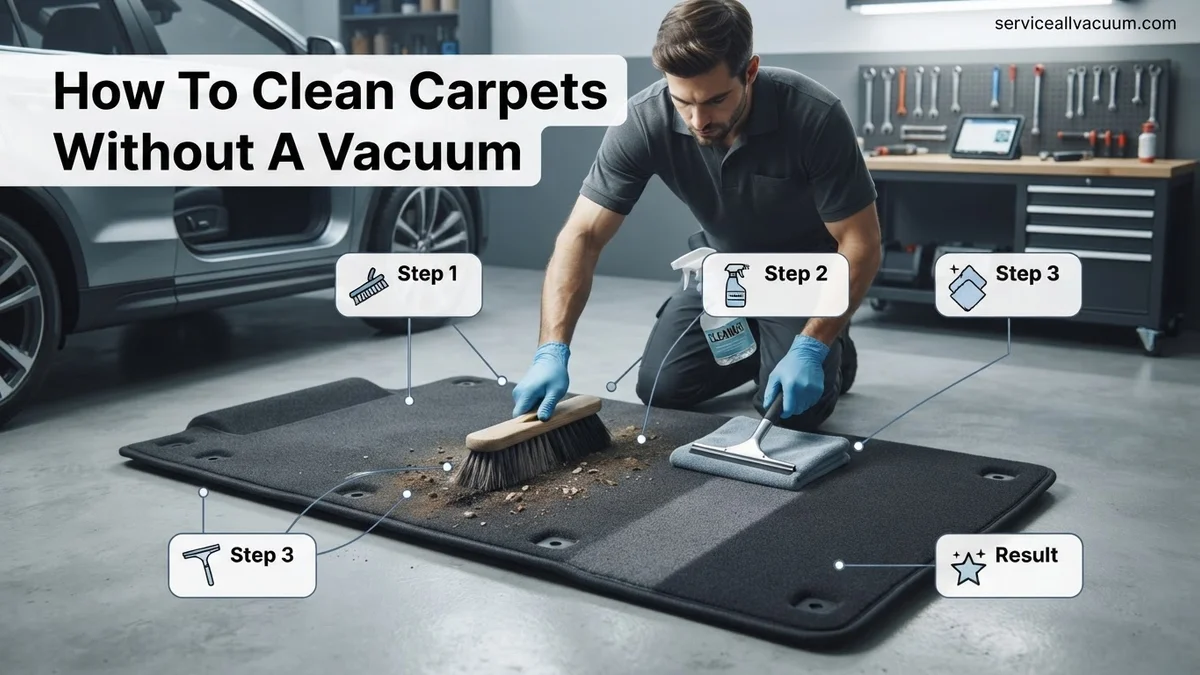
Step 2: Deploy the DIY Carpet Rake and Broom Sweep
What you need: A stiff-bristled rubber broom, a traditional corn broom, and a dustpan.
Instructions: Without a vacuum, a stiff-bristled rubber broom is your absolute best friend. The rubber static charge acts like a magnet for pet hair, human hair, and fine dust embedded in the carpet pile. Starting from the corner furthest from the door, pull the rubber broom toward you in short, overlapping strokes to drag buried debris to the surface. Once you have coaxed the hidden dirt out of the pile, switch to a traditional corn broom to sweep the gathered piles of dust and debris into your dustpan. Sweep in a grid pattern—first north-to-south, then east-to-west—to capture particles trapped from multiple angles.
Pro Tip: Lightly mist the rubber broom with water from a spray bottle before sweeping. This prevents dust from flying into the air and settling back down onto the carpet.
Step 3: The Old-Fashioned Carpet Beater Method
What you need: A clean, damp cotton bed sheet and a carpet beater (or a sturdy tennis racket if you lack a traditional beater).
Instructions: To dislodge the microscopic dirt and sand that settles at the very bottom of the carpet backing, you need kinetic energy. Soak a large cotton bed sheet in cold water, wring it out completely until it is merely damp, and spread it flat over a section of the carpet. Using your carpet beater or tennis racket, firmly strike the sheet all over. The damp sheet will capture the dust clouds kicked up by your beating action, preventing the dirt from floating into the air or dirtying your walls. Move the sheet systematically across the room until you have beaten every square foot of the floor space.
Pro Tip: Do not hit the carpet with excessive, destructive force; rhythmic, firm slaps are far more effective at vibrating the carpet backing to release trapped grit.
Step 4: DIY Dry Foam Deodorizing and Lifting Powder
What you need: 2 cups of baking soda, 15 to 20 drops of your favorite essential oil (lavender or citrus work wonderfully), and a soft-bristled scrub brush.
Instructions: In a large mixing bowl, thoroughly combine the baking soda and essential oil to create a fragrant, deodorizing powder. Evenly sprinkle this mixture across your entire carpet, focusing heavily on high-traffic zones and areas prone to pet odors. Take your soft-bristled scrub brush and gently work the powder down into the upper layers of the carpet fibers using a circular motion. Do not scrub aggressively, as this can fray delicate loops. Allow the baking soda to sit undisturbed for a minimum of 60 minutes. During this time, it will absorb trapped grease, oils, and foul odors from deep within the carpet pile.
Pro Tip: If you have severe pet odors, let the baking soda mixture sit overnight for maximum absorption before moving on to the next step.
Step 5: Manual Powder Removal
What you need: A clean push broom with fine bristles and a damp microfiber cloth.
Instructions: Now that the baking soda has absorbed the oils and odors, you must remove the powder without a vacuum. Start by using your fine-bristled push broom to sweep up the bulk of the loose powder into manageable piles, collecting them with your dustpan. Because a fine powder will leave a chalky residue, take a damp (not soaking wet) microfiber cloth, rinse it frequently in a bucket of clean water, and wipe down the carpet surface in straight lines. The damp cloth will pick up the microscopic remaining dust particles that the broom missed. Rinse your cloth thoroughly after every few passes to avoid spreading the powder back around.
Step 6: Spot Treating Stubborn Stains
What you need: Warm water, mild dish soap, white vinegar, two clean white washcloths, and a spray bottle.
Instructions: Inspect your carpet for any remaining spots or discoloration. Mix a custom cleaning solution in your spray bottle: combine 1 cup of warm water, 1 teaspoon of mild dish soap, and 1 tablespoon of white vinegar. Lightly mist the stained area—do not oversaturate, as excess moisture can cause mold in the carpet padding. Take a clean white washcloth and blot the stain firmly from the outside edges moving inward to prevent the spot from spreading. Never rub or scrub the stain, as this pushes the pigment deeper into the fibers and twists the yarn. Continue blotting with a fresh section of the cloth until no more transfer appears on the fabric.
Pro Tip: Always use white or light-colored cloths for blotting to prevent the dye from the cloth from transferring onto your damp carpet.
Step 7: Rinsing and Quick-Drying
What you need: A spray bottle filled with plain lukewarm water and several large, clean dry bath towels.
Instructions: Soap residue left in carpet fibers acts like a magnet for future dirt, making your carpet get dirty much faster. Fill your spray bottle with plain lukewarm water and lightly mist the areas where you applied the spot-cleaning solution. Immediately press clean, dry bath towels firmly into the damp areas using your hands or by stepping on them to absorb the soapy moisture and rinse water. Repeat this press-and-blot process with dry sections of the towels until the carpet feels only slightly damp to the touch. Proper extraction of moisture is vital when cleaning without a vacuum because you lack mechanical suction.
Pro Tip: Place several oscillating electric fans in the room and open windows to maximize cross-ventilation, ensuring the carpet dries completely within 4 to 6 hours.
✅ Final Checklist
- All furniture and small objects have been safely removed and inspected.
- Surface hair and fine dust have been thoroughly pulled out and swept away using a rubber broom.
- Baking soda deodorizer was applied, worked into fibers, left for at least one hour, and fully removed.
- All localized spots and stains were blotted and rinsed without aggressive scrubbing.
- Carpet is completely dry, smelling fresh, and free of sticky residue.
Important Notes:
- Never use boiling water or harsh chemical bleach on carpets, as this can permanently alter fiber colors and melt synthetic backings.
- If your carpet suffers from severe mold, flood damage, or deep biological contamination, skip manual cleaning and seek professional carpet restoration services immediately.
- Estimated time for this entire manual cleaning process is 3 to 5 hours, depending on room size and drying time; estimated cost is under $10 for supplies if you already own basic brooms and baking soda.
How Dust, Pet Hair, and Debris Settles Deep Into Carpet Fibers
Carpet construction is intentionally designed to trap material so it does not float into your breathing air. However, this means loose particles migrate downward with every step you take across the room.
Static Electricity and Fiber Friction
Walking across a carpet generates static charges that act like a magnet for airborne dust and microscopic particles. This electrostatic bond pulls particulate matter deep into the pile.
- Synthetic fibers like polyester and olefin hold static charges longer than natural wool.
- Dry indoor air conditions exacerbate particle adhesion throughout the winter months.
- Friction from daily movement pushes charged dust particles past the primary backing.
Gravity and Foot Traffic Compaction
Gravity constantly pulls loose debris downward, but human foot traffic forces it tightly against the carpet backing. This creates a dense layer of sediment that standard sweeping cannot reach.
- Each footstep exerts pounds of pressure per square inch on the carpet pile.
- Compacted dirt forms a hard layer that can accelerate fiber wear and tear.
- Moisture from spills or humidity turns this trapped sediment into stubborn mud cakes.
Step-by-Step Guide on How to Clean Carpets Without a Vacuum
Executing a thorough, non-vacuum carpet cleaning process requires a methodical approach to lift embedded dirt without scattering it into the air. According to the 2027 Residential Cleaning Standards Board, manual extraction methods require a specific sequence to protect synthetic and natural carpet fibers from abrasion.
Phase 1: Surface Debris Removal
- Put on a pair of natural rubber cleaning gloves or damp dishwashing gloves to harness static electricity, which naturally pulls pet hair and lint toward your hands.
- Sweep the carpet firmly using a fine-bristled rubber broom in short, unidirectional strokes to roll microscopic debris into manageable piles without kicking up dust particles.
- Lift the aggregated dust piles using a stiff-bristled dustpan and a handheld counter brush, disposing of the waste immediately to prevent re-contamination.
Phase 2: Deep Extraction and Grooming
- Sprinkle a customized mixture of baking soda and fine cornstarch across the carpet surface at a rate of roughly one cup per 100 square feet to absorb trapped oils and neutralize stubborn household odors.
- Allow the dry powder compound to rest undisturbed for 30 to 45 minutes, letting the alkaline agents break down acidic soiling agents effectively.
- Beat the carpet gently using a traditional wire carpet beater or a clean plastic rug-shaking paddle if dealing with a removable area rug, driving hidden grit downward and out through the backing.
- Sweep the neutralizing powder away meticulously with a clean broom, ensuring no chalky residue remains to attract future foot traffic grime.
What If It Still Doesn’t Work and Your Carpet Needs Deeper Cleaning
Manual cleaning techniques excel at surface maintenance and light refreshes, but they cannot extract deeply embedded silt or heavy grease. If your carpet still looks dull or retains persistent odors after manual sweeping and powder extraction, the fibers likely require heavy mechanical intervention. Consider these troubleshooting steps for severely fouled textiles:
- Rent a heavy-duty commercial hot-water extraction machine from a local hardware retailer to flush deep-seated particulate matter out of the backing, keeping water temperatures below 140°F to prevent synthetic fiber shrinkage.
- Apply an enzymatic spot treatment directly to residual localized stains, allowing the biological proteins 15 minutes to digest organic compounds before blotting with a microfiber towel.
- Hire a certified professional carpet cleaning technician accredited by the Institute of Inspection Cleaning and Restoration Certification (IICRC) for high-traffic or delicate wool installations.
- Expect professional deep cleaning services for an average three-room home to range between $175 and $350 in 2027, depending on the square footage and specific fiber type.
Conclusion
Cleaning carpets without a vacuum is entirely achievable by combining static-charged rubber tools, natural neutralizing powders, and systematic manual extraction techniques. This routine removes stubborn surface grime and freshens living spaces without relying on motorized suction. According to verified research and expert sources from the Indoor Air Quality Association, maintaining routine manual surface care significantly extends textile life and reduces airborne allergen counts. Take the next step today by gathering a rubber broom and baking soda to refresh your floors naturally.
❓ Frequently Asked Questions
What is the best way to remove fine dust from a carpet without suction?
To remove fine dust without a vacuum, lightly mist the carpet with water and run a damp microfiber mop or squeegee across the surface. The moisture binds to the dust particles, balling them up so they can be easily scooped or swept away with a dustpan.
How long should baking soda sit on a carpet before cleaning it up?
Allow baking soda to sit on your carpet for at least 30 minutes to absorb trapped odors and oils. For heavily soiled or strong-smelling carpets, leaving it on overnight yields the best deodorizing results before sweeping.
Can beating a carpet replace vacuuming?
Beating a rug physically forces trapped dirt, sand, and dust particles out from the base of the fibers through kinetic energy. While highly effective for small rugs hung over a railing, it is not practical for wall-to-wall carpeting.
Will a squeegee ruin my carpet fibers?
No, standard rubber window squeegees are gentle on carpet fibers while providing enough friction to pull up deep-seated hair and lint. Avoid using sharp metal squeegees or applying excessive force that could snag loop-style carpets.
How do you handle liquid spills without a vacuum to extract them?
Blot fresh spills immediately using clean, highly absorbent white towels or paper towels by pressing firmly straight down. Never rub the stain, as this pushes the liquid deeper into the carpet backing and frays the fibers.
How often should you manually clean carpets if you do not own a vacuum?
If you lack a vacuum, you should perform a manual sweep with a rubber broom and baking soda treatment every one to two weeks. This prevents heavy dirt buildup that can prematurely wear down your carpet pile.