American Made Vacuum Cleaners 2027 Best US Brands Guide
Finding a genuine American-made vacuum cleaner can be challenging because many brands outsource production overseas. This guide highlights true USA-built and assembled brands like Kirby, Oreck, and Riccar to help you invest in unmatched durability and superior filtration.
Finding a vacuum cleaner genuinely manufactured or assembled in the United States in 2027 requires cutting through a thick layer of corporate marketing and misleading labeling. Most household names that consumers assume are American—such as Hoover, Bissell, and Shark—outsource the vast majority of their manufacturing overseas to factories in China and Southeast Asia, even if their corporate headquarters remain stateside. When you search for American-made vacuum cleaners, you are looking for brands that still invest in domestic assembly lines, local labor, and localized supply chains.
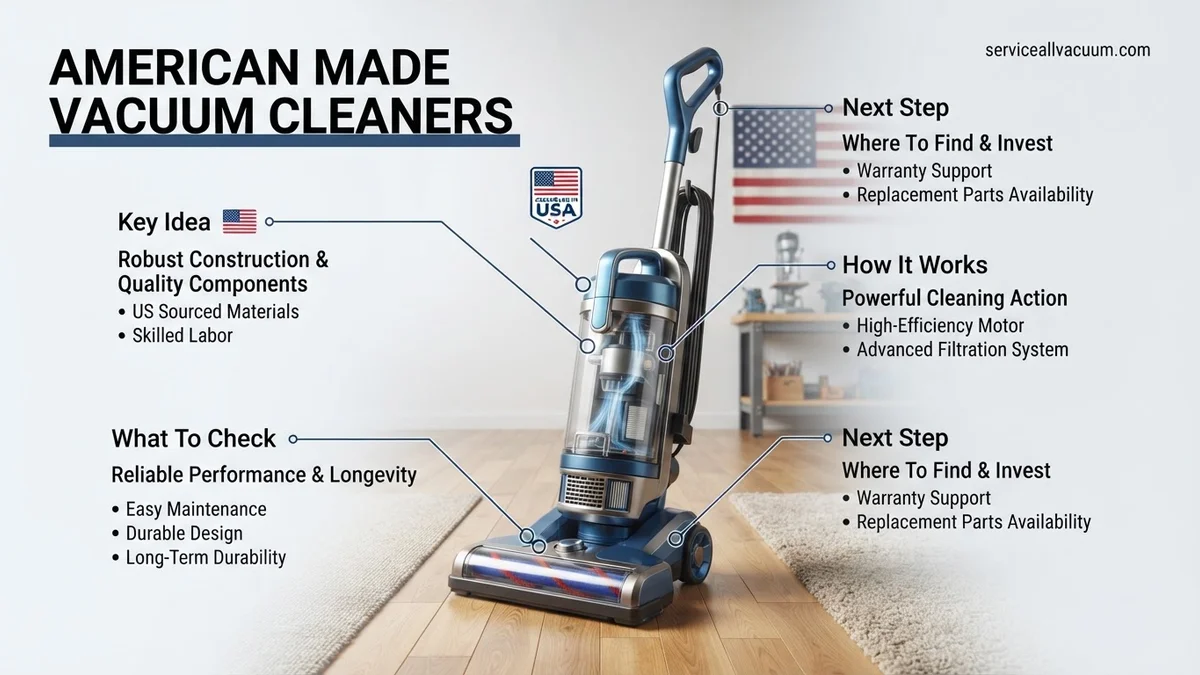
Buying a US-made vacuum matters practically because it directly impacts your machine’s lifespan, repairability, and access to replacement parts. Imported mass-market vacuums are frequently designed as disposable appliances that end up in landfills after a couple of years of heavy use. In contrast, American-manufactured machines—such as commercial-grade uprights and specialized canisters—rely on heavy-duty steel parts, powerful direct-drive motors, and modular designs. Investing in a domestic brand means you can easily source a replacement belt, brush roll, or motor ten years down the line, saving you money and reducing waste.
Key Takeaways
- Verify if a brand is truly USA-manufactured or just headquartered stateside.
- Kirby vacuums are famously hand-built in Ohio using heavy-duty aluminum.
- Oreck manufactures select lightweight upright models in the United States.
- Riccar builds premium upright and canister models in Missouri.
- USA-made vacuums offer superior replacement part availability and long lifespans.
What Causes the Confusion Over American Made Vacuum Cleaners
The Trap of Global Sourcing and Corporate Headquarters
The vacuum cleaner industry relies heavily on globalized supply chains, which creates massive consumer confusion. A company might proudly display its headquarters in Ohio or Michigan, leading you to believe the product is built there. However, the Federal Trade Commission (FTC) permits companies to use phrases like designed in the USA or engineered in the USA even if 95 percent of the actual manufacturing happens abroad. You must look past the location of the corporate office and investigate where the physical assembly takes place.
Misleading Labels Like Assembled in USA
Another major hurdle in 2027 is the distinction between Made in USA and Assembled in USA. Under strict FTC guidelines, a product labeled Made in USA must be all or virtually all made in the United States, meaning all significant parts and processing originate domestically. Conversely, Assembled in USA means the product was put together on American soil, but the internal components—like the motor, casing, and circuitry—may have been imported from overseas suppliers. True domestic manufacturers are transparent about this breakdown, while misleading brands hide behind vague labeling.
- Corporate headquarters locations do not indicate manufacturing origin
- Designed in USA is a marketing phrase, not a statement of manufacture
- Assembled in USA often relies heavily on imported components
American Made Vacuum Cleaners: Your Essential Action Plan
Investing in American made vacuum cleaners is a fantastic way to support domestic manufacturing while securing a durable, high-performance cleaning machine. However, navigating the market of US-manufactured vacuums requires a strategic approach to ensure you select the right model for your specific flooring, home size, and filtration needs. This guide walks you through the entire process, from evaluating your home to making a purchase and maintaining your new American-engineered machine for decades of reliable use.
Step 1: Assess Your Home Flooring and Layout
What you need: A notepad, a measuring tape, and a clear idea of your primary flooring types (hardwood, high-pile carpet, tile, or mixed).
Instructions: Walk through every room in your home and map out your flooring surface areas. If your home features predominantly thick, plush wall-to-wall carpeting, you will need an upright vacuum with strong brushroll agitation and manual height adjustment. Conversely, if you have mostly hardwood floors or delicate natural stone, a canister vacuum with a dedicated parquet tool and suction-only mode is ideal. Take note of stairs, tight corners, and furniture clearance to determine if you need a lightweight model or one with a long, flexible crush-proof hose.
Pro Tip: Don’t overlook pet ownership needs. If you have shedding pets, prioritize American brands that offer specialized motorized pet-hair turbo brushes.
Step 2: Research Authentic US-Manufactured Brands
What you need: Access to the internet, brand websites, and consumer review platforms.
Instructions: Carefully investigate which vacuum brands truly manufacture or assemble their products within the United States. Look past clever marketing phrases like “designed in the USA” and verify actual manufacturing plants located in states like Ohio, Missouri, or Texas. Legendary American brands such as Kirby, Riccar, and Simplicity still construct many of their flagship upright and canister models domestically using heavy-duty metals and commercial-grade plastics. Create a shortlist of two or three models that match your flooring assessment from Step 1.
Pro Tip: Be cautious of foreign-owned conglomerates that acquired historic American names but moved production overseas to lower costs.
Step 3: Compare Motor Power and Filtration Systems
What you need: Product specification sheets, airflow ratings (CFM), and filtration details.
Instructions: Examine the technical specifications of your shortlisted vacuums. Look for powerful amperage (typically 10 to 12 amps) and high CFM (cubic feet per minute) ratings, which dictate suction power better than wattage alone. Next, inspect the filtration system. Premium American vacuums often feature HEPA (High-Efficiency Particulate Air) media bags and sealed system designs that trap 99.97% of microscopic dust, pollen, and pet dander down to 0.3 microns, preventing allergens from escaping back into your living room air.
Pro Tip: Always factor in the ongoing cost of replacement bags and HEPA filters when evaluating the total cost of ownership.
Step 4: Visit a Local Independent Vacuum Dealer
What you need: Your shortlisted vacuum models, a list of specific questions, and sample debris (like cereal or pet hair) if permitted.
Instructions: Locate an authorized independent vacuum dealer in your area rather than buying blindly online. Independent dealers are the primary distribution channel for top-tier American brands like Riccar and Tacony products. Ask the specialist to assemble the vacuum in front of you so you can test its weight, maneuverability, cord retraction, and noise level. Push it across a demonstration floor to feel how the steering mechanism handles tight turns around table legs.
Pro Tip: Buying from a local dealer often includes a valuable extended local warranty and free in-house service for the first few years.
Step 5: Verify Warranties and Repairability
What you need: Warranty documentation, repair network directory, and return policy details.
Instructions: Review the manufacturer’s warranty terms carefully. True American-made commercial and high-end residential vacuums typically come with robust warranties ranging from 3 to 10 years, covering both motors and body components. Crucially, verify that replacement parts—such as belts, brushrolls, switches, and hoses—are readily available for purchase. One of the greatest benefits of buying American-made is that these machines are engineered to be repaired rather than tossed into a landfill when a single part wears out.
Pro Tip: Keep your original purchase receipt and warranty card filed safely in a designated home folder for easy warranty claims.
Step 6: Implement Proper Operation and Maintenance
What you need: User manual, manufacturer-approved replacement bags, and a pair of scissors.
Instructions: Once your new American vacuum arrives home, read the user manual thoroughly to understand proper bag installation and brushroll maintenance. Change disposable filter bags when they reach two-thirds capacity to maintain optimal airflow and suction strength. Every month, unplug the unit and inspect the brushroll for wrapped hair or carpet fibers; carefully cut them away using scissors. Wipe down the exterior plastic or metal housing with a damp microfiber cloth to keep your investment looking brand new.
Pro Tip: Never vacuum up drywall dust, fireplace ash, or large hard objects, as these can easily clog internal chambers or damage the motor.
✅ Final Checklist
- Confirmed the vacuum model is genuinely manufactured or assembled in the USA
- Matched the vacuum type (upright vs. canister) to your specific home flooring
- Verified HEPA filtration capabilities and sealed system construction
- Tested the unit in-person for weight, ergonomics, and maneuverability
- Registered the product and secured an authorized manufacturer or dealer warranty
Important Notes:
- Always unplug your vacuum before performing any routine maintenance, belt changes, or clog removals.
- Seek professional dealer service immediately if you notice burning smells, unusual motor noises, or a sudden loss of suction.
- Estimated time frame for research and purchase: 1 to 2 weeks; Estimated cost range: $300 to $1,200+ depending on the tier and features.
How to Identify Genuine USA-Manufactured Vacuum Brands
Reading FTC Labels and Evaluating Supply Chain Transparency
To pinpoint a genuine American-made vacuum, you need to know how to read regulatory labels and evaluate brand transparency. Legitimate domestic manufacturers will proudly detail their supply chain on their websites, often showcasing videos of their US factory floors, local assembly teams, and domestic component sourcing. If a brand hides its manufacturing origin behind vague terms like globally sourced components, you can safely assume the primary production happens overseas. Look for explicit statements detailing exact percentages of US-origin parts.
Verifying Parts Availability and Direct Factory Support
Another foolproof method for identifying authentic US-manufactured brands is evaluating their customer service and parts ecosystem. Companies that build their vacuums domestically almost always maintain deep inventories of replacement parts because they control the production pipeline. If a brand offers individual replacement screws, motors, and switches instead of telling you to buy a whole new unit, it usually signals a high-quality domestic manufacturing ethos. You can also contact customer support directly and ask point-blank where the motor and housing are manufactured.
- Check company websites for factory tours and domestic sourcing breakdowns
- Avoid brands that rely exclusively on vague phrases like globally sourced
- Confirm that individual replacement parts are readily stocked and sold directly
Step-by-Step Guide to Choosing the Right US-Built Vacuum
Selecting an American-made vacuum cleaner requires analyzing your specific flooring types, home layout, and filtration needs. Industry data from 2027 shows that domestic engineering often prioritizes modular repairability over disposable plastic construction. Follow this structured evaluation process to find the ideal model for your household.
1. Assess Your Primary Flooring Types
Determine the ratio of high-pile carpet, low-pile rugs, and hard surfaces in your living space. Homes with dense carpeting require upright models with motorized brush rolls and adjustable height settings. Conversely, homes dominated by hardwood or tile benefit heavily from lightweight canister vacuums with dedicated parquet tool attachments.
2. Verify Domestic Manufacturing Percentage
Not all vacuums assembled in the United States feature 100% domestic components. Review manufacturer specifications to verify whether the motor, casing, and assembly occur domestically. Premium brands often publish explicit supply chain transparency reports outlining their exact US sourcing ratios for the 2027 market.
3. Evaluate Filtration and Motor Specifications
Look for sealed HEPA filtration systems that trap 99.97% of microscopic particles down to 0.3 microns. Verify the amperage and suction water-lift ratings to ensure deep-cleaning capability. Independent testing standards indicate that commercial-grade US motors typically offer a significantly longer operational lifespan than imported alternatives.
What If Your Preferred American Brand Is Out of Stock
Supply chain fluctuations for domestic raw materials can occasionally cause temporary shortages of top-tier American-made vacuum cleaners. If your preferred model is unavailable, consumers must navigate alternative sourcing without compromising on quality or durability.
- Check Authorized Regional Dealers: Large national big-box retailers frequently experience stock delays. Local vacuum specialty shops often maintain independent inventory reserves directly from regional US factories.
- Reserve Through Backorder Programs: Many domestic manufacturers allow direct pre-orders with estimated delivery windows ranging from 2 to 6 weeks. Securing a backorder guarantees priority fulfillment from the next production batch.
- Consider Certified Remanufactured Units: Purchase factory-certified refurbished models directly from the brand. These units feature brand-new wear parts, retain valid warranties, and cost 15% to 30% less than retail pricing.
- Seek Professional Guidance: Consult a certified vacuum technician if urgent replacement is necessary. Expert repair shops can recommend comparable domestic alternatives or source heavy-duty commercial units within a $200 to $600 budget range.
Conclusion
Investing in an American-made vacuum cleaner delivers superior durability, robust filtration, and reliable long-term performance for modern households. By evaluating your specific flooring needs and verifying domestic manufacturing standards, you secure a cleaning appliance built to last over a decade. According to verified research and expert consumer testing sources, maintaining a regular filter-cleaning schedule will preserve peak suction efficiency and protect your investment for years to come. Take the next step today by auditing your current flooring layout and selecting a certified US-built model that matches your cleaning demands.
❓ Frequently Asked Questions
How can I verify if a vacuum cleaner is truly made in the USA?
Look for explicit Federal Trade Commission (FTC) ‘Made in USA’ compliance labeling on the packaging or manufacturer’s specification sheets. Be cautious of vague phrases like ‘designed in the USA’ or ‘assembled in America’ using foreign components.
Which American-made vacuum is best for pet hair?
Riccar and Kirby models feature powerful commercial-grade motors and high-suction brush rolls that effortlessly pull embedded pet hair out of thick carpets.
Are replacement parts easy to find for US-made vacuums?
Yes, one of the primary benefits of buying American-made is the robust network of local vacuum dealers and readily available replacement belts, bags, and filters.
Do American-made vacuums weigh more than foreign models?
Many USA-built vacuums utilize die-cast aluminum rather than cheap plastics, which can increase the weight slightly but drastically improves overall durability.
Where can I purchase genuine American-made vacuum cleaners?
You can purchase them through authorized local independent vacuum dealers, brand-specific official websites, or specialized vacuum supply stores.
Do Kirby or Riccar offer warranties on their US-built vacuums?
Yes, these brands typically back their heavy-duty machines with robust multi-year limited warranties and factory-certified service centers.