Can You Vacuum Bed Bugs? Expert Step-by-Step Guide 2026
Yes, you can vacuum bed bugs and their eggs, but vacuuming alone will not eliminate an infestation. You must use proper technique, specialized attachments, and immediate disposal methods to prevent pests from escaping.
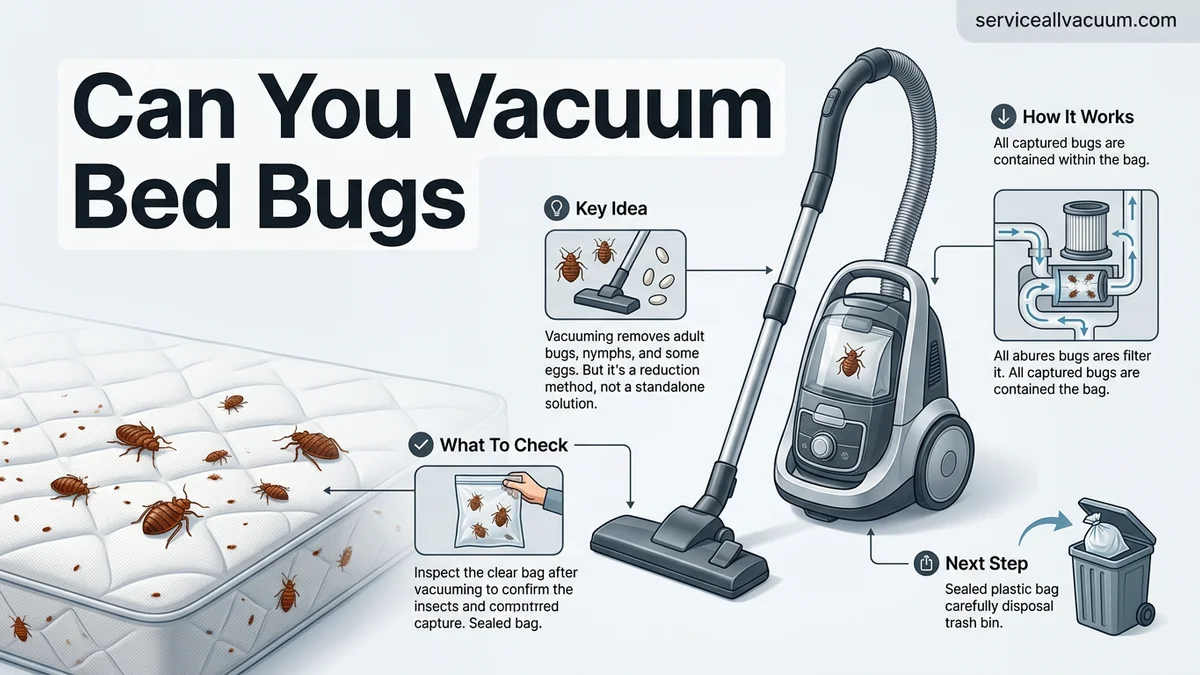
Yes, you can physically vacuum bed bugs, nymphs, and their eggs to instantly lower your room’s pest population. However, vacuuming alone will rarely eradicate an entire infestation because it only removes the bugs you can physically reach with suction.
Knowing how to use your vacuum properly is a crucial part of modern pest control in 2026. This guide details the exact mechanical techniques and equipment required to maximize your vacuuming efforts without spreading the bugs further around your home.
Key Takeaways
- Vacuuming physically removes live bed bugs, nymphs, and fragile eggs from surfaces.
- Always use a vacuum with a physical crevice tool to target deep seams.
- Immediately empty bagged vacuums into sealed trash bags outside your home.
- Scrape mattress seams with the nozzle to dislodge sticky bed bug eggs.
- Vacuuming is only an early suppression step and requires pairing with other treatments.
What Causes Bed Bug Outbreaks and Why Vacuuming Helps Diagnose Infestations
Bed bug outbreaks happen when travelers, secondhand furniture, or visitors inadvertently bring these hitchhikers into your living space. They rapidly multiply in dark, hidden cracks near your sleeping areas. Understanding their movement patterns helps you use your vacuum not just for cleaning, but as an active inspection tool.
Identifying Harborage Zones Before You Start
Bed bugs do not live on open surfaces. They cluster tightly together in seams, folds, and crevices. Before turning on your machine, scan these primary outbreak areas:
- Mattress piping, button tufts, and box spring seams
- Wooden bed frames, headboards, and joint connections
- Baseboard cracks within six feet of the bed
- Upholstered furniture creases and armchair cushions
Using the Vacuum as an Inspection Tool
You can use your vacuum nozzle to flush hidden bugs out of tight crevices. By attaching a piece of pantyhose over the vacuum hose end, you can capture live bugs and dark fecal spots for positive identification. This diagnostic step confirms the severity of your outbreak before you apply any intensive treatment methods.
How to Fix a Bed Bug Problem: Step-by-Step Vacuuming Instructions for 2026
Standard household vacuuming will not solve a severe infestation on its own. You need a targeted approach that utilizes strong suction power and specialized attachments. Modern 2026 pest protocols emphasize mechanical removal as the safest first line of defense before relying on heat or targeted treatments.
Choosing the Right Equipment and Attachments
Not all vacuums are equally effective against bed bugs. You need equipment that can physically disrupt eggs glued to fabric surfaces.
- HEPA Filtration: Ensure your vacuum features a sealed HEPA filter to trap microscopic allergens and prevent live bugs from escaping through the exhaust.
- Crevice Tool: Use a narrow, hard-plastic crevice attachment to maximize suction pressure along mattress seams and tight joints.
- Stiff-Bristled Brush: A manual hand brush helps dislodge sticky bed bug eggs that are otherwise anchored firmly to fabric fibers.
The Step-by-Step Surface Extraction Process
- Strip the Bed: Remove all sheets, pillowcases, and blankets immediately and place them into sealed plastic bags until laundering.
- Scrape and Agitate: Run the stiff-bristled brush along all mattress and box spring seams to loosen hidden eggs.
- Apply Direct Suction: Press the crevice tool firmly against seams, folds, tufts, and tuft buttons, moving slowly to capture everything.
- Transition to Surrounding Areas: Vacuum outward from the bed, covering baseboards, electrical outlet covers, and nearby carpet edges.
Safe Post-Vacuum Disposal Methods to Prevent Re-Infestation
Vacuuming up bed bugs is only half the battle. Improper disposal can allow these resilient pests to crawl right back out into your living space. According to the National Pest Management Association (NPMA), vacuum contents must be handled immediately to neutralize live bugs and microscopic eggs.
Disposing of Bagged Vacuum Contents
If you use a bagged vacuum cleaner, your disposal protocol must be swift and airtight. Leaving a full bag inside the machine is a critical mistake.
- Carefully remove the vacuum bag immediately after finishing the cleaning session.
- Seal the opening of the bag tightly with heavy-duty packing tape to prevent any bugs from escaping.
- Place the sealed vacuum bag inside a thick, heavy-duty plastic trash bag and tie it securely.
- Take the double-bagged waste directly to an outdoor garbage bin with a tightly fitting lid.
Disposing of Bagless Vacuum Canisters
Bagless models require extra caution because emptying them exposes you directly to the captured debris. Follow these precise steps to eliminate the risk of spreading the infestation:
- Take the entire vacuum canister directly to an outdoor trash receptacle before opening it.
- Empty the contents into a large plastic trash bag while wearing protective gloves.
- Seal the trash bag immediately and secure the outdoor bin lid.
- Wash the vacuum canister thoroughly using hot, soapy water and allow it to dry completely before reattaching it to the machine.
What If It Still Doesn’t Work?
Vacuuming is an effective mechanical removal tool, but it rarely eradicates a severe, established bed bug population on its own. If you continue finding live bugs or waking up with new bites after multiple cleaning sessions, the infestation has likely penetrated deep structural voids.
- Apply high-heat steam treatments: Utilize a professional-grade steam cleaner that reaches surface temperatures of at least 200°F (93°C) to kill remaining eggs hidden deep inside box springs and baseboards.
- Install encasements: Seal mattresses and box springs in certified, bite-proof encasements designed specifically to trap existing pests inside and starve them over time.
- Implement targeted chemical controls: Apply residual insecticides or botanical knockdown sprays registered with the EPA specifically for bed bug control along cracks and crevices.
- Hire a licensed pest control professional: When DIY measures fail after two to three weeks, enlist certified exterminators to perform whole-home heat treatments or specialized chemical applications. Professional extermination services for bed bugs typically range from $300 to $5,000 depending on the severity of the infestation and the square footage of the property.
Conclusion
Vacuuming serves as an essential, highly effective first line of defense in managing and reducing a bed bug infestation. By utilizing a specialized crevice attachment, maintaining high suction power, and executing safe disposal protocols, you can drastically lower the population density in your home. According to verified research and expert sources from leading entomological associations, combining mechanical removal methods with heat or chemical treatments yields the highest eradication success rate. Your actionable next step for 2026 is to inspect your mattress seams today, grab your vacuum, and execute a thorough zone-by-zone sweep.
❓ Frequently Asked Questions
Can you vacuum bed bugs directly off a mattress?
Yes, you can and should vacuum the mattress surface, focusing on piping, tufts, and seams. Use a stiff brush attachment to loosen any trapped debris or eggs before pulling them into the suction hose.
What should I do immediately after vacuuming bed bugs?
If using a bagged vacuum, seal the bag tightly, place it inside an outdoor trash bin, and replace the bag immediately. If using a bagless model, empty the contents directly into a plastic trash bag, seal it, and wash the canister thoroughly in hot, soapy water.
Can bed bugs live and multiply inside a vacuum cleaner bag?
Yes, bed bugs can survive inside a vacuum bag or canister for days or even weeks. Without proper disposal, they can crawl back out through the hose or escape when the vacuum is turned on again.
Is a HEPA filter necessary when vacuuming bed bugs?
While not strictly required to kill the bugs, a HEPA filter traps fine dust, allergens, and microscopic skin flakes, preventing them from being expelled into the air while you clean.
Can I use steam alongside vacuuming?
Yes, vacuuming first removes the bulk of the bugs and debris, allowing a high-temperature steam cleaner to penetrate deeper into fabric seams and effectively kill remaining pests and eggs.
Why is vacuuming alone not enough to get rid of bed bugs?
Vacuuming only captures bugs and eggs that are exposed on the surface or within reach of the nozzle. Insects hiding deep inside wall voids, electronics, or thick furniture padding will be missed, requiring comprehensive pest control methods.