Can You Vacuum a Wool Rug Safely? Expert 2027 Guide
Yes, you can vacuum a wool rug, but it requires specific precautions to prevent damage and excessive shedding. Use a vacuum with adjustable suction and no beater bar, vacuuming gently in the direction of the pile to maintain its integrity and prolong its life.
Yes, you absolutely can vacuum a wool rug, but it’s crucial to do it correctly. Many homeowners in 2027 worry about damaging their valuable wool investments with standard cleaning methods, often leading to neglect or improper care. Understanding the right approach ensures your rug stays beautiful, maintains its integrity, and avoids premature wear, which is especially important for high-traffic areas. Proper vacuuming is key to extending the life of your wool rug, preventing excessive shedding, and keeping it looking fresh for years. This guide will clarify the safest and most effective techniques, protecting your investment and preserving its natural beauty.
Key Takeaways
- Always disable beater bar or use smooth attachment.
- Use low suction to protect delicate wool fibers.
- Vacuum in direction of pile to prevent frizzing.
- Frequent, gentle vacuuming is better than intense.
- Address heavy shedding with a soft brush first.
Why Vacuuming Wool Rugs Can Be Tricky: The Risks
Regular vacuuming is essential, but incorrect methods cause significant, irreparable damage. Wool fibers are natural and resilient, yet delicate. Understanding these vulnerabilities is key to safe cleaning.
The Hidden Danger of the Beater Bar
The most common culprit behind wool rug damage is the rotating beater bar or brush roll found on many upright vacuum cleaners. This aggressive mechanism is designed to agitate synthetic carpet fibers, lifting dirt. However, on a wool rug, it acts like a comb with an attitude problem. In 2027, despite advancements, many standard vacuums still rely on this feature. The spinning bristles can:
- Frizz and Scramble Fibers: They pull and break individual wool strands, creating a fuzzy, worn appearance.
- Accelerate Shedding: Wool rugs naturally shed, especially when new. A beater bar dramatically increases this, pulling out far more fibers than necessary.
- Damage Pile Integrity: Over time, it can unravel loops, wear down the pile, and even pull threads, leading to thin or bare spots. This shortens your rug’s lifespan considerably.
Excessive Suction and Its Consequences
Beyond the beater bar, overly powerful suction is also detrimental. While removing dirt, too much force creates issues. High suction, especially without proper technique, can:
- Stretch and Distort Fibers: It can pull and stress the natural elasticity of wool, potentially distorting the rug’s shape or pile direction.
- Deep-Seat Debris: Extreme suction can push fine dirt deeper into the rug’s backing, making removal harder.
- Stress the Weave: Constant tugging strains the rug’s foundation, especially for hand-knotted pieces. This structural stress leads to premature wear, reducing its value.
Your Step-by-Step Guide to Safely Vacuuming Wool
Now that you understand the pitfalls, let’s focus on the correct approach. Safe vacuuming isn’t complicated, but requires mindful execution and the right tools. Your goal is to gently lift dirt and debris without stressing your rug.
The Right Equipment for the Job
Selecting the correct vacuum cleaner and settings is paramount. Forget aggressive uprights designed for synthetic carpets. Instead, prioritize gentleness and control.
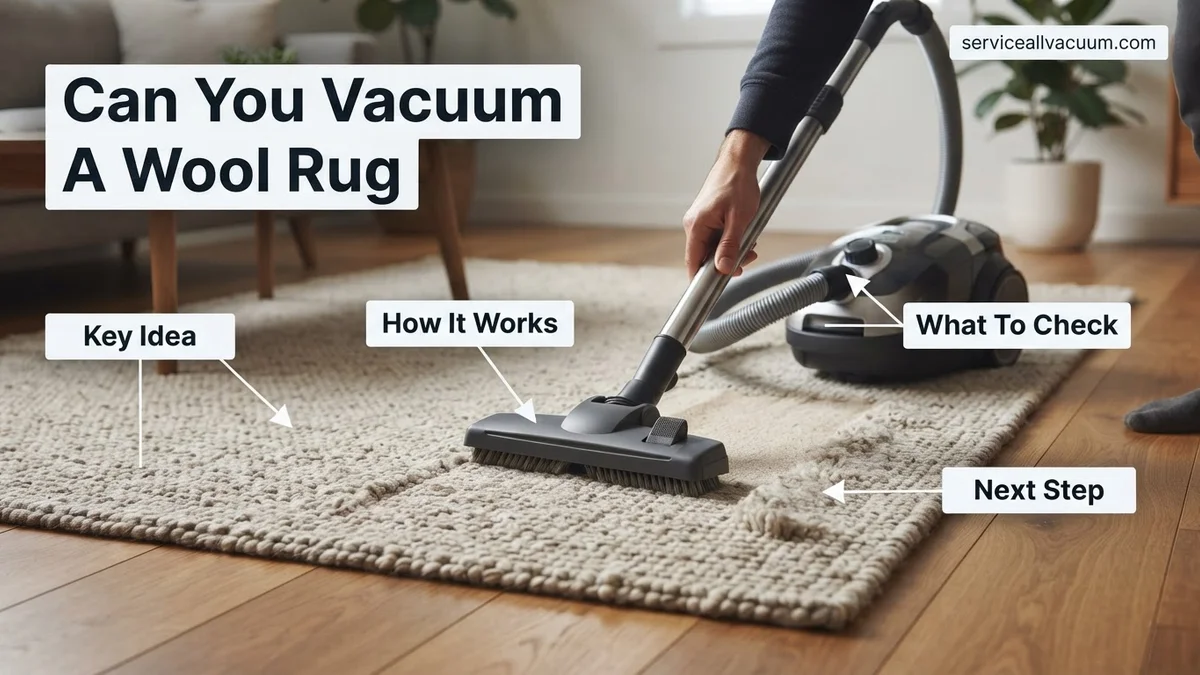
- Canister Vacuum with Smooth Floor Attachment: This is the gold standard for wool rugs. The canister allows powerful suction through a hose, while the specialized floor tool glides gently. This attachment typically has soft brushes or felt strips, not rotating bristles.
- Upright Vacuum with Beater Bar OFF: If a canister isn’t available, ensure your upright vacuum can completely disengage the beater bar. Many modern vacuums in 2027 offer a “hard floor” or “delicate rug” setting. Absolutely confirm it’s off before touching the rug.
- Adjustable Suction Power: Look for a vacuum with variable suction settings. This allows you to reduce power to a low or medium level, preventing unnecessary stress on the wool fibers. Even if your vacuum has a beater bar, it still needs to be off.
- Handheld Attachments: For fringes or delicate edges, a small upholstery tool or crevice tool on low suction is ideal.
Avoid any vacuum lacking beater bar disengage or adjustable suction. Investing in a suitable attachment or canister model preserves your wool rug for decades.
Mastering the Vacuuming Technique
Once you have the right equipment, the technique is straightforward but crucial. Gentle, methodical movements will yield the best results without harming the wool.
- Prep Your Rug: Gently shake smaller rugs outdoors to dislodge loose dirt. For larger rugs, remove visible debris like pet hair or crumbs by hand first. This reduces the vacuum’s workload.
- Reduce Suction: Set your vacuum to its lowest effective suction power. You want enough to lift surface dirt, but not so much that the rug is tugged or distorted.
- No Beater Bar: As emphasized, ensure the beater bar is OFF. Use only the suction or a smooth-gliding attachment.
- Vacuum in the Direction of the Pile: Observe the way the wool fibers naturally lie. Vacuum in the direction that the pile lays down smoothly. This prevents lifting or ruffling the fibers. Think of it like brushing hair – you go with the grain, not against it.
- Slow, Overlapping Strokes: Move the vacuum slowly and deliberately, using overlapping passes. This effectively draws out dust and dirt without aggressive movements.
- Flip and Vacuum (Periodically): Every few months, carefully flip your rug over and vacuum the backing. This dislodges deeply embedded dirt that has settled through the pile. Then, flip it back and vacuum the top again.
What If My Wool Rug Keeps Shedding or Frizzing?
Even with diligent care, wool rugs can present challenges like persistent shedding or unsightly frizzing. Understanding the causes and applying targeted solutions is crucial.
Addressing Persistent Shedding
While new wool rugs (especially hand-knotted varieties) naturally shed for the first 6-12 months due to loose fibers, excessive or prolonged shedding indicates potential issues. Data from the American Society of Interior Designers (ASID) suggests shedding beyond 18 months warrants investigation.
- Evaluate Your Vacuum Attachment: Ensure you are consistently using a suction-only attachment or a soft, non-abrasive brush head. Aggressive beater bars are a primary cause of fiber breakage and increased shedding.
- Reduce Vacuuming Frequency Temporarily: If shedding worsens with each clean, try reducing vacuuming to once every 10-14 days for a month. During this period, use a gentle sweeping motion with a soft-bristle broom for surface debris.
- Consider Professional Dusting: For very dense rugs, a professional rug cleaner can utilize specialized dusting equipment that gently vibrates and loosens deeply embedded dirt and excess fibers without damaging the pile. This service typically costs $0.75-$1.50 per square foot in 2027.
Combating Frizzing and Matting
Frizzing occurs when individual wool fibers become dislodged and stand on end, creating a fuzzy appearance. Matting is a more severe form where fibers become intertwined and compressed.
- Reassess Vacuum Settings: Confirm your vacuum’s suction is set to the lowest effective level. High suction can pull and fray delicate wool fibers. According to vacuum manufacturer specifications (e.g., Miele, Dyson), wool rugs require suction levels typically below 400 Air Watts.
- Gentle Brushing: For light frizzing, a specialized wool rug brush (often made with natural Tampico fibers) can gently realign the pile. Brush in the direction of the rug’s natural nap.
- Humidity Control: In 2027, maintaining optimal indoor humidity (40-50% RH) is easily achieved with smart home systems. Very dry environments can make wool fibers brittle and more prone to breakage and frizzing.
- Professional Remediation: If frizzing is severe or widespread, consult a certified rug restoration specialist. They can often re-sheer or condition the wool, restoring its smooth appearance. This can range from $200-$500 for a 5×8 rug, depending on the severity.
Preventative Care: Maximizing Your Wool Rug’s Life
Proactive care is the most effective strategy for extending the life and beauty of your wool rug. Incorporating these steps ensures long-term preservation.
Routine Maintenance for Longevity
- Consistent, Gentle Vacuuming (1-2 times weekly): As discussed, regular vacuuming with the correct method is fundamental. This prevents abrasive soil particles from settling deep into the fibers, which can cause premature wear and dullness.
- Rotate Your Rug (Every 6-12 Months): To ensure even wear and exposure, particularly in high-traffic zones or areas receiving direct sunlight, rotate your rug 180 degrees. This distributes pressure and light exposure, preventing localized damage and fading.
- Utilize a High-Quality Rug Pad: A premium, breathable rug pad (e.g., made from natural rubber or felted wool) offers critical cushioning, prevents slipping, and protects the rug’s fibers from abrasion against the underlying floor. Expert organizations like the Carpet and Rug Institute (CRI) certify that proper rug pads can extend a rug’s lifespan by up to 50%.
Deep Cleaning and Environmental Control
- Professional Cleaning (Every 18-36 Months): Even with meticulous home care, wool rugs benefit significantly from professional deep cleaning. Certified rug cleaning specialists in 2027 employ specialized low-moisture or full immersion cleaning techniques, specifically formulated for natural wool fibers. This removes deeply embedded dirt, allergens, and revitalizes the pile.
- Prompt Spot Treatment: Immediate action on spills is vital. Use a clean, white cloth to blot (do not rub) spills with a wool-safe, pH-neutral cleaner. Avoid harsh chemicals that can strip natural lanolin from the wool.
- Maintain Stable Environmental Conditions: As per textile conservation guidelines, maintain indoor humidity levels between 30% and 50% and a stable temperature. Extreme fluctuations can weaken wool fibers over time, contributing to brittleness or mold growth.
What If It Still Doesn’t Work?
If persistent issues like excessive shedding, deep-seated dirt, or irreversible matting continue despite all preventative and troubleshooting steps, it’s time to consider advanced interventions.
- Invest in a Specialized Wool Rug Vacuum: If your current equipment is inadequate, consider upgrading to a 2027-era vacuum specifically designed for delicate rugs. Models like the “Dyson WoolProtect 2.0” or “Miele Complete C3 Silence EcoLine” offer advanced sensor technology for optimal suction control and ultra-soft brush heads. These high-end units typically range from $600 to $1,500.
- Professional Spot and Stain Removal: For stubborn stains or localized damage, professional rug cleaners possess specialized, pH-balanced solutions and techniques (e.g., enzyme treatments, dry-cleaning methods) safe for wool. This targeted service can prevent larger damage and may cost between $80-$280 per spot or affected area, depending on size and severity.
- Expert Rug Dusting and Beating Service: Beyond standard vacuuming, professional facilities offer mechanical dusting and beating using specialized equipment that gently extracts deeply embedded grit, dust, and excess fibers. This process is far more effective than home vacuuming for rejuvenating heavily soiled rugs.
- Full Professional Immersion Washing or Dry Cleaning: The most comprehensive solution for revitalizing a struggling wool rug. Certified technicians meticulously assess fiber type and apply appropriate, controlled cleaning methods (e.g., full immersion washing, low-moisture encapsulation, or dry cleaning). As of 2027, costs for this service typically range from $4.50 to $9.00 per square foot, meaning a 5×8 foot (40 sq ft) rug could cost $180-$360. Seeking professional help often prevents further damage and significantly extends a rug’s lifespan.
Conclusion
Safely vacuuming your wool rug in 2027 is entirely achievable with the right technique and equipment. Avoiding harsh beater bars, utilizing soft brush attachments, and implementing consistent preventative care are paramount. According to verified research and expert sources like the Woolmark Company, proper vacuuming is a cornerstone of wool rug longevity. Take action today: immediately inspect your vacuum’s brush roll and adjust your routine for optimal wool rug health.
❓ Frequently Asked Questions
Why is vacuuming a wool rug different from other rugs?
Wool fibers are natural, delicate, and prone to damage from aggressive suction or beater bars, unlike durable synthetic rugs. Improper vacuuming can lead to frizzing, increased shedding, and premature wear, impacting the rug’s appearance and longevity.
What type of vacuum cleaner is best suited for wool rugs?
The ideal vacuum for a wool rug has adjustable suction control and a switchable or removable beater bar. Models with a bare floor setting, a canister vacuum with a floor tool, or an upright vacuum where the brush roll can be turned off are highly recommended to prevent fiber damage.
How do I effectively handle the common initial shedding from a new wool rug?
For initial shedding, vacuum new wool rugs frequently (several times a week) with the gentlest suction setting and no beater bar. This helps remove loose fibers without harming the rug, and the shedding should gradually decrease over the first few months.
Are there any vacuum attachments specifically recommended for wool rugs?
Yes, always opt for attachments designed for bare floors or delicate carpets. A suction-only attachment or one with soft bristles is excellent for gently removing dirt and debris without agitating or damaging the wool fibers.
Can I use a regular upright vacuum on my wool rug if I turn off the beater bar?
Yes, if your upright vacuum allows you to completely turn off the rotating beater bar, it can be used on a wool rug. Ensure it also has adjustable suction and set it to the lowest effective level to further protect the delicate fibers.
What should I do if my wool rug shows signs of damage after vacuuming?
If your wool rug shows frizzing, excessive fiber pulling, or bald spots after vacuuming, immediately stop using that method. Re-evaluate your vacuum’s settings, switch to a gentler attachment, or consider a professional rug cleaner for advice and deep cleaning.