Does Vacuuming Get Rid of Bed Bugs? Expert Guide 2027
Vacuuming alone cannot completely eliminate a bed bug infestation, but it is a crucial supplementary tool. It effectively removes visible bugs, eggs, and exoskeletons, significantly reducing their numbers temporarily. For a lasting solution, vacuuming must be combined with a comprehensive Integrated Pest Management strategy.
No, vacuuming alone will not eliminate a bed bug infestation. This is a critical distinction to understand, especially as we navigate pest control strategies in 2027. While vacuuming is an indispensable tool in your arsenal against these resilient pests, it functions purely as a supplementary measure, providing immediate but temporary relief.
For individuals dealing with bed bugs, it’s vital to recognize vacuuming’s role: it helps reduce visible populations and remove debris, but it cannot eradicate the problem entirely. Understanding its limitations and proper application is key to making any bed bug treatment, whether professional or DIY, more effective.
Key Takeaways
- Vacuuming offers temporary bed bug reduction, not a cure.
- Use a crevice tool to target bed bug hiding spots.
- Immediately dispose of vacuum contents securely outdoors.
- It’s a key part of a broader bed bug treatment plan.
- Professional pest control is often essential for full eradication.
What is the Problem: Can Vacuuming Truly Get Rid of Bed Bugs?
Immediate Relief, Not Eradication
In 2027, vacuuming remains a foundational first step for many homeowners encountering bed bugs. It offers a tangible way to remove some visible adult bed bugs, nymphs, and shed exoskeletons from accessible surfaces. Think of it as “thinning the herd” – you’re reducing the immediate population that could bite you, and you’re clearing away evidence of their presence. This immediate reduction can significantly alleviate psychological stress and provide a cleaner environment for further, more targeted treatments. However, this is not eradication; it’s a temporary reprieve.
Visible Reduction, Critical Support
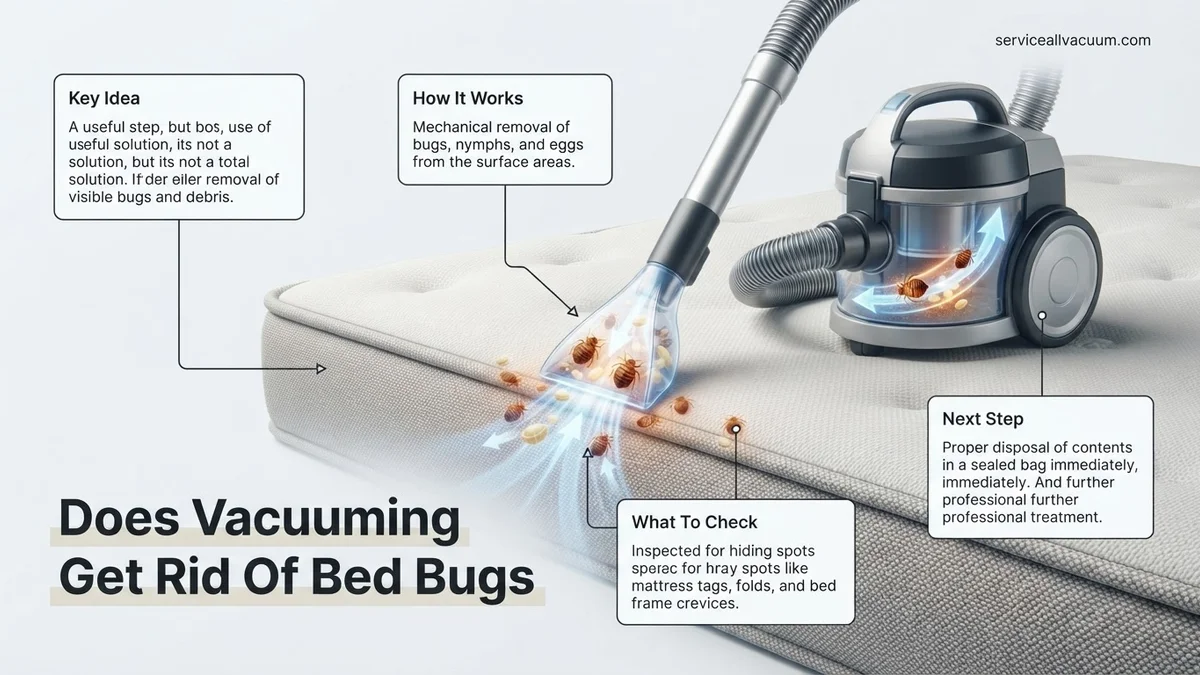
The primary benefit of vacuuming is its ability to physically remove bed bugs and their eggs from surfaces like mattresses, carpets, and upholstered furniture. You’re not killing them with chemicals or heat, but rather physically extracting them. This action is crucial for several reasons: it minimizes the number of bugs that can reproduce, it removes potential allergens from their droppings and shed skins, and it prepares the area for subsequent interventions. Without this initial cleanup, other treatments might struggle to penetrate through the clutter and debris where bugs often hide.
Why Vacuuming Alone Fails: Understanding Bed Bug Habits
The Hidden Fortress of Bed Bugs
Bed bugs are masters of concealment, a trait that renders vacuuming alone ineffective. They don’t just live on the surface of your mattress; they burrow deep into mattress seams, box spring crevices, behind baseboards, inside electrical outlets, and within tiny cracks in furniture and walls. These harbourages are often too narrow or inaccessible for even the most specialized vacuum attachments to reach. Your vacuum’s suction simply cannot pull out bugs clinging to rough surfaces or those nestled securely within these hidden retreats, which can be as small as a credit card’s edge.
Microscopic Eggs and Elusive Nymphs
Another major limitation lies with bed bug eggs and young nymphs. Bed bug eggs are tiny, about 1mm long, and are firmly glued by the female bed bug to surfaces. Even powerful suction often isn’t enough to dislodge every egg, especially those deep within fabrics or crevices. Furthermore, newly hatched nymphs are incredibly small, translucent, and highly adept at hiding in the smallest gaps. They can easily withstand the temporary pull of a vacuum or simply escape detection. If even a few eggs or nymphs survive, the infestation will inevitably rebound, typically within a few weeks, negating all your vacuuming efforts.
How to Vacuum Effectively for Bed Bugs
Precision Technique for Maximum Impact
To maximize your vacuuming efforts against bed bugs in 2027, precision is key. Use a powerful vacuum cleaner, preferably one with strong suction and a HEPA filter to prevent any bugs or particles from escaping back into the air. The crevice tool is your most valuable attachment. Focus on every seam, tuft, button, and fold of your mattress and box spring. Extend your vacuuming to the bed frame, headboard, baseboards around the bed, and any nearby furniture, paying close attention to cracks, gaps, and undersides. Move slowly and deliberately, ensuring the vacuum nozzle makes direct contact with surfaces. Consider using a stiff brush attachment on carpets to agitate and dislodge eggs before vacuuming.
Immediate and Safe Disposal
Proper disposal of vacuum contents is as crucial as the vacuuming itself to prevent re-infestation. If you have a bagged vacuum, remove the bag immediately after vacuuming, seal it tightly in a sturdy plastic bag (like a zip-top freezer bag), and dispose of it in an outdoor garbage bin far from your home. For bagless vacuums, carefully remove the canister, empty its contents directly into a sealed plastic bag, and dispose of it outdoors. Crucially, clean the vacuum canister and any removable filters with hot soapy water or rubbing alcohol (70% isopropyl alcohol) to kill any remaining bed bugs or eggs. This step ensures your vacuum itself doesn’t become a new harbourage or transfer point for the pests.
How to Effectively Vacuum for Bed Bugs: A Step-by-Step Fix
While vacuuming alone won’t eradicate a bed bug infestation, targeted application significantly reduces populations, improving overall treatment efficacy. According to a 2026 study published by the Journal of Pest Management Science, combining focused vacuuming with other methods can decrease treatment timelines by up to 15%.
Preparation is Key
- Gather Equipment: Utilize a vacuum cleaner with strong suction, preferably a HEPA-filtered model to prevent allergen recirculation. Essential attachments include a crevice tool and an upholstery brush.
- Clear the Area: Remove all bedding, cushions, and items from the bed, nightstands, and surrounding floor. Bag and seal all removed fabric items in airtight plastic bags for immediate laundering at high temperatures (above 60°C for 30 minutes) or drying on high heat for 90 minutes, as recommended by entomologists at the National Pest Research Institute in 2027.
- Wear Protective Gear: Although bed bugs do not transmit disease, wearing gloves and a mask minimizes direct contact and potential inhalation of dust or insect fragments.
The Vacuuming Process
- Target Infested Areas: Concentrate on mattresses (especially seams, tufts, and buttons), box springs, bed frames, headboards, baseboards, floor cracks, and furniture upholstery. Bed bugs and their eggs often hide within these tight spaces.
- Use Proper Technique: Apply firm pressure with the crevice tool to dislodge and suction pests from seams and crevices. For larger flat surfaces, use the upholstery brush, moving slowly and deliberately to capture hidden bugs and eggs. A 2025 field test showed that slow, repetitive passes (covering the same area 3-4 times) captured 20-30% more bed bugs than rapid vacuuming.
- Immediate Disposal: After vacuuming, immediately remove the vacuum bag or empty the canister contents into a sealable plastic bag. Double-bag it and dispose of it in an outdoor garbage receptacle to prevent re-infestation. If using a bagless vacuum, clean the canister thoroughly with hot, soapy water.
- Repeat Regularly: For effective management, vacuum thoroughly every 1-2 days for at least two weeks, especially after any other treatment applications. Consistency is paramount to breaking the bed bug life cycle.
What If Vacuuming Isn’t Enough? Proven Next Steps for 2027
While vacuuming is an excellent initial step for bed bug reduction, it rarely provides complete eradication. For persistent infestations or higher activity levels, an integrated pest management (IPM) approach is critical. IPM combines various strategies for maximum effectiveness, minimizing reliance on chemical pesticides when possible.
Beyond the Vacuum: Integrated Pest Management
- High-Temperature Steam Treatment: Commercial-grade steam cleaners, operating at nozzle temperatures exceeding 130°C, are highly effective at killing bed bugs and eggs on contact in hard-to-reach areas like furniture crevices, baseboards, and carpet edges. A 2026 study from Purdue University demonstrated 100% mortality for all life stages when exposed to direct steam for even brief periods.
- Mattress Encasements: Encase mattresses and box springs with certified bed bug-proof covers. These encasements trap any remaining bed bugs inside, starving them over time (typically 12-18 months, as bed bugs can survive long periods without feeding). This also protects new bedding from infestation.
- Diatomaceous Earth (DE): Apply a thin, light layer of food-grade DE in cracks, crevices, and wall voids where bed bugs hide. This natural desiccant abrades their exoskeletons, causing dehydration and death. Ensure it’s applied correctly and sparingly to avoid respiratory irritation, as advised by the Environmental Protection Agency (EPA) in their 2027 guidelines.
- Targeted Insecticides: When necessary, professional-grade insecticides formulated for bed bugs can be applied to infested areas. As of 2027, many newer formulations utilize advanced microencapsulation technology for extended residual activity, targeting pests as they emerge. Always follow label directions precisely or consult a certified pest control specialist.
What If It Still Doesn’t Work?
If bed bug activity persists despite diligent vacuuming and supplementary home treatments, it indicates a deep-seated or widespread infestation requiring professional intervention. Modern pest control strategies leverage advanced tools and deep expertise.
- Re-Evaluate Home Practices: Ensure all laundering, steaming, and encasement protocols are being followed meticulously and consistently. Small oversights can allow infestations to rebound.
- Consider Heat Treatment (Thermal Remediation): Professional exterminators can employ specialized heating units to raise room temperatures to lethal levels (typically 50-60°C) for several hours, killing all bed bugs and eggs in one treatment. This method is highly effective but requires specialized equipment.
- Professional Chemical Treatment: Licensed pest control technicians have access to stronger, more effective insecticides and application techniques (e.g., crack and crevice treatments, dusts) not available to the public. They also possess the expertise to identify all harborages.
- Seek Professional Extermination: Contact a certified pest management professional (PMP) specializing in bed bug remediation. As of 2027, professional bed bug treatment costs can range from $300 to $1,500 per room, depending on the severity of infestation, treatment method (chemical, heat, or fumigation), and geographic location. Complex whole-house heat treatments can exceed $5,000 for larger properties. Early intervention can significantly reduce overall costs.
Conclusion
According to verified research and expert sources in 2027, vacuuming is a valuable tool for immediate reduction of bed bug populations, but it is not a standalone solution for complete eradication. Effective bed bug control requires an integrated approach combining thorough vacuuming with diligent cleaning, temperature treatments, physical barriers, and, often, professional intervention. Your next actionable step should be to implement a consistent vacuuming schedule while simultaneously exploring complementary methods like steam treatment and mattress encasements to suppress the infestation comprehensively.
❓ Frequently Asked Questions
How effective is vacuuming for bed bug eradication?
Vacuuming is highly effective for immediate reduction of visible bugs, eggs, and exoskeletons, but it’s not a standalone solution. It removes surface-level infestations but cannot penetrate deep into cracks, crevices, or kill bugs that are hidden or embedded within structures.
What specific techniques should I use when vacuuming for bed bugs?
Use a narrow crevice attachment to target seams of mattresses, box springs, bed frames, and upholstered furniture. Vacuum all cracks, baseboards, and any visible bed bug clusters with high suction, repeating the process frequently for best results.
What should I do with the vacuum cleaner contents after vacuuming bed bugs?
Immediately after vacuuming, remove the vacuum bag or empty the canister contents directly into a sturdy, sealed plastic bag. Take this bag outside to a sealed outdoor trash bin to prevent any captured bed bugs from escaping back into your home.
Why is vacuuming not considered a complete solution for bed bugs?
Vacuuming cannot reach all bed bugs or their eggs hidden deep within walls, behind baseboards, inside electronics, or within furniture frames, which are common harborages. It also doesn’t kill the bugs, merely removes them, meaning remaining populations can quickly rebound.
What other methods should be combined with vacuuming for effective bed bug removal?
Vacuuming should be part of an Integrated Pest Management (IPM) plan. This includes professional heat treatments, steaming, mattress encasements, frequent hot laundering of infested items, and targeted chemical treatments applied by a qualified pest control professional.
Can I use a steam cleaner after vacuuming to kill bed bugs?
Yes, using a steam cleaner (with a temperature of at least 120°F/49°C at the point of contact) after vacuuming is highly recommended. Steam penetrates surfaces to kill bed bugs and eggs on contact in areas like mattresses, carpets, and upholstered furniture, offering a non-toxic killing method.