How Long Do Vacuum Sealed Meats Last? Expert 2027 Guide
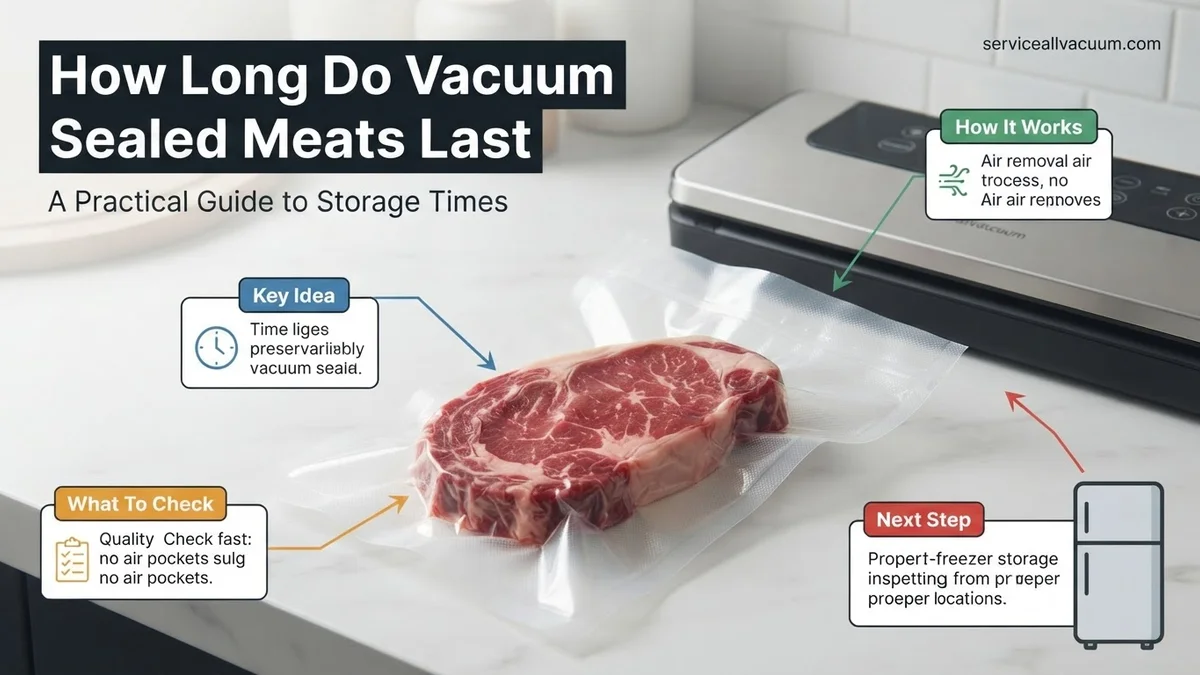
Vacuum sealing significantly extends the shelf life of meat by removing oxygen, keeping refrigerated cuts fresh for up to two weeks and frozen cuts safe for up to three years. However, proper temperature control remains essential to prevent dangerous bacterial growth.
Vacuum-sealed meat lasts significantly longer than conventionally wrapped meat, extending refrigerator storage from a few days to several weeks and freezer life from months to several years. By removing oxygen and preventing freezer burn, proper vacuum sealing locks in moisture, texture, and flavor for the long haul.
As food preservation technology and home sealers advance through 2027, understanding exact shelf-life timelines prevents food waste and protects your family. Whether you are meal prepping bulk cuts for the week or stocking your deep freezer for the next few years, knowing these storage limits is essential for safety and quality.
Key Takeaways
- Vacuum-sealed raw beef lasts 1 to 2 weeks in the refrigerator.
- Freezing vacuum-sealed meats extends their shelf life up to 3 years without freezer burn.
- Vacuum sealing does not replace refrigeration or stop anaerobic bacteria entirely.
- Ground meats have a shorter shelf life than solid muscle cuts.
- Always thaw vacuum-sealed meat in the refrigerator rather than on the counter.
What Causes Vacuum-Sealed Meat to Spoil and Lose Quality
Oxygen Deprivation and Anaerobic Bacteria
While removing oxygen stops aerobic spoilage and mold growth, certain anaerobic bacteria like Clostridium botulinum can survive and multiply in oxygen-free environments if meat is improperly stored. Temperature control remains your primary line of defense against these invisible pathogens.
Enzyme Activity and Freezer Burn
Even without oxygen, natural enzymes within the meat continue to break down proteins and fats very slowly over time. Furthermore, poor temperature stability in your freezer causes ice crystals to shift, gradually degrading the cellular structure of your meat and causing microscopic punctures in the packaging.
- Enzymatic breakdown causes subtle texture changes over long storage periods.
- Temperature fluctuations weaken the airtight seal over time.
- Freezer burn only occurs if the plastic seal fails and air re-enters the package.
How to Fix Storage Timelines and Maximize Meat Freshness
Strict Temperature Control in Refrigeration and Freezing
To hit the maximum shelf-life benchmarks expected in 2027, your refrigerator must maintain a steady temperature at or below 38 degrees Fahrenheit, while your freezer needs to remain at 0 degrees Fahrenheit or lower. Even a few degrees of fluctuation can cut your vacuum-sealed meat’s lifespan in half.
Raw Versus Cooked Meat Variables
The preparation state of your meat drastically alters how long it will last after sealing. Cooked meats generally last longer in the refrigerator because the cooking process kills active spoilage bacteria, whereas raw meats carry a higher initial bacterial load that continues to work against the preservation timeline.
- Raw vacuum-sealed beef lasts 1 to 2 weeks in the fridge, compared to 3 to 5 days normally.
- Cooked meats safely stretch up to 3 weeks in the refrigerator when sealed correctly.
- Poultry and ground meats have shorter overall safety windows than dense red meat cuts.
What If It Still Doesn’t Work and the Meat Shows Signs of Spoilage
Even with advanced 2027 vacuum sealing technology, preservation can sometimes fail due to micro-leaks, power outages, or improper initial freezing. When vacuum-sealed meat displays abnormalities, immediate action is required to prevent foodborne illness. Relying solely on expiration dates is dangerous if the package integrity has been compromised.
According to safety guidelines from the United States Department of Agriculture (USDA) and food science experts, you must evaluate the meat using sensory checks rather than just the clock. If you suspect your preservation method failed, execute the following evaluation and corrective steps:
- Inspect the seal integrity: Check for any loss of vacuum pressure, known as losing the “tight skin” effect, or the presence of excess liquid pooling inside the bag, which indicates air has entered.
- Perform a strict sensory test: Completely thaw the meat and check for a sour, pungent, or ammonia-like odor. Slimy or sticky textures upon touch are definitive indicators of bacterial spoilage.
- Assess color changes safely: Minor darkening due to lack of oxygen is normal in vacuum-sealed beef, but a bright green, gray, or discolored surface signals advanced microbial growth.
- Consult food safety professionals: If you run a commercial kitchen or process large game and suspect equipment failure, consult a local food safety extension office or certified food manager for validation testing. Commercial diagnostic services generally range from $50 to $150 per pathogen screen.
- Safely discard compromised stock: When in doubt, throw it out. Wrap the spoiled meat securely and dispose of it in an outdoor bin to prevent cross-contamination in your kitchen.
Conclusion
Maximizing the shelf life of vacuum-sealed meats requires a strict balance of proper temperature control, quality sealing equipment, and vigilant safety checks. While freezing extends beef, poultry, and fish storage significantly up to three years, monitoring package integrity remains essential through 2027. According to verified research and expert food science sources, adhering to these precise timeframes eliminates guesswork and prevents food waste. Take your next step today by auditing your current freezer inventory and labeling every package with exact sealing dates.
❓ Frequently Asked Questions
How long do vacuum-sealed meats last at room temperature?
Vacuum-sealed meats should never be stored at room temperature. Without refrigeration, anaerobic bacteria can multiply rapidly, posing a severe food poisoning risk within hours.
Why does vacuum sealing extend meat shelf life?
Vacuum sealing removes oxygen from the packaging, which dramatically slows down aerobic bacteria growth, oxidation, and the chemical changes that cause meat to spoil.
How can you tell if vacuum-sealed meat has gone bad?
Check for a sour or off odor, a slimy texture, or a dull, gray-brown discoloration. If the seal has broken and air entered, discard the meat to be safe.
Does the type of meat affect vacuum-sealed shelf life?
Yes, solid muscle cuts like steaks and roasts last significantly longer than ground meats or delicate seafood, which spoil faster due to higher surface bacteria.
Can you vacuum seal cooked meat?
Yes, cooked meat can be vacuum sealed and stored in the refrigerator for 1 to 2 weeks or frozen for up to 6 months without losing flavor.
What is the best way to thaw vacuum-sealed meat?
Always thaw vacuum-sealed meat in the refrigerator. Before opening the package, cut a small slit in the bag to allow oxygen in, reducing botulism risks.