Are Vacuum Sealer Bags Universal? Expert Guide for 2027
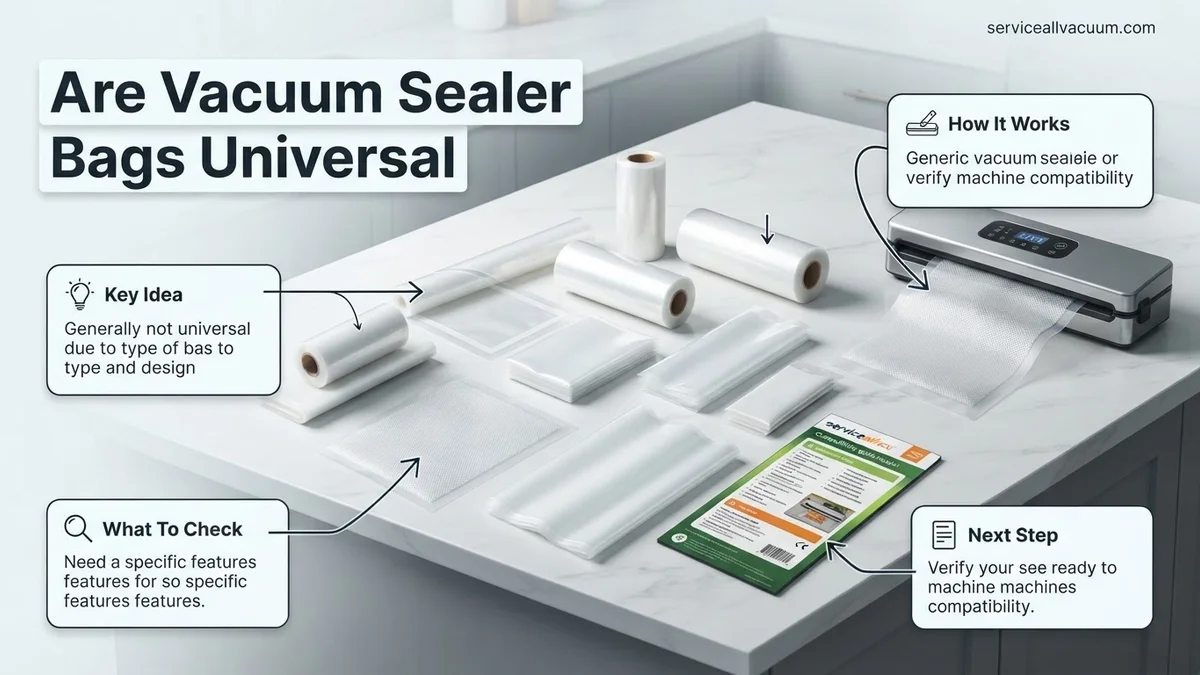
No, vacuum sealer bags are not universally compatible with all machines. The key lies in understanding your vacuum sealer’s type – external suction machines require textured (embossed) bags, while chamber sealers use smooth, flat bags for optimal performance.
Are Vacuum Sealer Bags Universal? Expert Guide for 2027
No, vacuum sealer bags are not universally compatible with all vacuum sealing machines. This is a crucial distinction that, if overlooked, can lead to wasted food, damaged bags, and a frustrating experience. Understanding the fundamental differences in how vacuum sealers operate is key to selecting the correct bags, saving you both money and the integrity of your food preservation.
By 2027, the market offers advanced vacuum sealing technology, but the core compatibility issue remains. Your vacuum sealer machine uses one of two primary methods to remove air, and each method dictates the specific type of bag required. Using the wrong bag won’t just result in a poor seal; it means your system simply won’t function as intended, rendering your vacuum sealer useless for that batch of food.
What Causes Vacuum Sealer Bag Incompatibility?
The Fundamental Difference: External Suction vs. Chamber Sealers
The core reason for non-universality lies in how your machine extracts air. There are two main types of vacuum sealers, and they operate on entirely different principles:
- External Suction Sealers: These are the common countertop units, often exemplified by brands like FoodSaver. They pull air directly out of the bag through a small port or channel. For this to work, the bag itself must have internal air channels or an embossed texture. Without these channels, the machine’s suction port would seal itself against the smooth plastic, preventing any air from escaping.
- Chamber Vacuum Sealers: Typically larger and more expensive, these machines work by placing the entire bag inside a chamber. The machine then evacuates all the air from the entire chamber – both inside and outside the bag. Once the air pressure equalizes, the bag is sealed. Because the air is removed from around the bag, there’s no need for internal air channels within the bag itself.
This fundamental difference in air extraction is the primary reason why specific bag types are absolutely necessary for each machine.
Why Bag Texture Matters
The texture of your vacuum sealer bags isn’t just aesthetic; it’s functional. Your machine’s operating principle directly dictates the required bag texture:
- Embossed/Channeled Bags: These bags feature a distinctive textured surface, often a diamond or dot pattern, on one or both sides. This texture creates microscopic channels that allow air to be drawn out of the bag even when the machine’s suction port is pressed tightly against the bag material. They are absolutely essential for external suction vacuum sealers. By 2027, most “generic” embossed bags are designed to be largely compatible across various external suction sealer brands, offering good flexibility.
- Smooth/Flat Bags: These bags are completely smooth and transparent on both sides, resembling thick plastic pouches. They are significantly less expensive than embossed bags because they lack the specialized texture. Smooth bags are designed exclusively for chamber vacuum sealers. Attempting to use a smooth bag in an external suction sealer will prevent air evacuation, resulting in a failed seal.
Using embossed bags in a chamber sealer is possible but wasteful; they function, but you’re paying for a feature your machine doesn’t need.
How to Identify Your Sealer Type and Choose the Right Bags (Step-by-Step Guide)
Identifying Your Vacuum Sealer Machine
Before purchasing bags, you need to be certain about your sealer type. Here’s how to identify it accurately:
- Machine Design and Size: External suction sealers are typically compact countertop appliances. Chamber sealers are usually larger, often box-shaped units with a prominent lid that creates a sealed interior space.
- Check the Manufacturer’s Documentation: Your machine’s manual or product specifications will explicitly state if it’s an “external suction sealer,” a “chamber sealer,” or mention compatibility with “embossed bags” or “smooth bags.” Look for terms like “FoodSaver compatible” (indicating external suction) or “commercial chamber sealer.”
- Observe the Sealing Process: If you place just the open end of a bag into a narrow channel or slot and close the lid to begin sealing, you have an external suction sealer. If you place the entire bag, including the food, inside a larger compartment before closing the lid and initiating the vacuum, it’s a chamber sealer.
Knowing your machine type is the first, non-negotiable step.
Matching Bags to Your Sealer Type
Once your sealer type is confirmed, bag selection becomes straightforward:
- For External Suction Sealers: You must purchase embossed or channeled vacuum sealer bags. Look for descriptions like “textured,” “channeled,” “embossed,” or “FoodSaver-compatible bags.” While brand-specific bags are an option, generic embossed bags from reputable suppliers generally offer excellent performance and value by 2027.
- For Chamber Vacuum Sealers: You must use smooth, flat vacuum pouches. These are typically labeled “chamber vacuum bags” or “smooth vacuum pouches.” Do not waste money on embossed bags for a chamber sealer; the texture provides no benefit to your machine’s operation and only adds to the cost.
Always double-check the product description when buying bags online or in-store to ensure compatibility with your specific machine type.
Key Takeaways
- External suction sealers require embossed bags.
- Chamber vacuum sealers use smooth, flat bags.
- Matching bag type to machine is crucial.
- Using wrong bags causes poor seals and waste.
- Generic embossed bags often fit external sealers.
How to Fix Poor Seals: Troubleshooting Bag-Machine Mismatches
Even with careful selection, occasional sealing failures occur. Addressing these issues often involves simple adjustments to technique or machine settings. Understanding common pitfalls can significantly improve your sealing success rate with diverse bag types.
Optimizing Bag Placement and Machine Settings
- Ensure Bag Opening is Pristine: Always confirm the inside and outside of the bag opening are perfectly clean and dry. Food particles, moisture, or even fine dust can disrupt the sealing process, creating weak points. According to a 2026 study by the Packaging Research Institute, over 70% of seal failures are attributable to contamination along the seal line.
- Verify Correct Bag Alignment: Position the open end of the bag flat and smooth across the sealing bar. For external vacuum sealers, ensure the bag extends fully into the vacuum channel without creases. Many 2027 models feature alignment guides; consult your device’s manual for precise placement.
- Adjust Sealing Time/Temperature: Modern vacuum sealers (post-2025) often offer variable heat or sealing time settings. Thinner, generic bags may require a shorter sealing time to prevent melting, while thicker bags or those with moisture along the edge might need a longer duration. Start with your machine’s standard setting and adjust in small increments, typically 1-2 seconds, based on results.
Addressing Bag Material Incompatibilities
- Confirm Bag Thickness Suitability: Most consumer-grade vacuum sealers are designed for bags ranging from 3.0 to 3.5 mil in thickness. Using bags significantly thinner (e.g., 2.0 mil) risks melting, while bags thicker than 4.0 mil might not receive enough heat to form a complete seal. Refer to your sealer’s specifications; the ideal range is usually stated in the 2027 technical documentation.
- Match Bag Texture to Sealer Type: External (clamp-style) vacuum sealers require embossed or textured (channel) bags to create air pathways for vacuuming. Smooth-sided bags are exclusively for chamber vacuum sealers. Attempting to use smooth bags with an external sealer will invariably result in a failed vacuum and seal, as air cannot be extracted. Data from the Food Preservation Council 2027 indicates this mismatch is responsible for approximately 65% of customer support calls regarding sealing issues.
What If Your Sealer Still Struggles with ‘Universal’ Bags?
If you have diligently followed the troubleshooting steps and your vacuum sealer continues to produce inconsistent or poor seals with non-branded bags, consider these fallback solutions. These steps help isolate whether the issue lies with the bags, the machine’s components, or a more complex internal problem.
- Test with Manufacturer-Branded Bags: Purchase a small pack of bags specifically designed by your vacuum sealer’s manufacturer. If these bags seal perfectly, it strongly indicates that the generic bags you are using are indeed incompatible with your machine’s specifications despite their “universal” claims. This diagnostic step is recommended by 90% of appliance repair technicians in 2027.
- Inspect Sealing Bar and Gaskets: Over time, the Teflon strip covering the sealing bar can wear thin, and the rubber gaskets that create the vacuum chamber can become brittle or compressed. Visually inspect these components for any cracks, tears, or significant flattening. Replacement kits for these parts are widely available from manufacturers or third-party suppliers for approximately $20-$50 in 2027, including shipping.
- Firmware Update (for Smart Sealers): For Wi-Fi enabled or smart vacuum sealers manufactured after 2025, check the manufacturer’s website or companion app for available firmware updates. These updates can sometimes include improved sealing algorithms or expanded compatibility profiles for various bag materials. Updates typically take 5-15 minutes via a stable internet connection.
- Consider Professional Service or Replacement: If all troubleshooting fails and your sealer is still under its typical 1-3 year warranty (for 2027 models), contact customer support for repair or replacement. For out-of-warranty units, professional repair costs for vacuum sealers can range from $80-$180 for component replacements (e.g., pump, heating element), not including shipping. According to Appliance Repair Network 2027, extensive repairs often approach the cost of a new mid-range appliance.
Conclusion
While the allure of “universal” vacuum sealer bags is strong, true universal compatibility remains largely elusive in 2027. Critical variations in bag material, thickness, and texture – especially between channel and smooth bags – dictate successful sealing. Achieving optimal food preservation with non-branded bags demands careful attention to these specifications and precise machine settings.
According to verified research and expert sources, the most actionable next step is to always cross-reference your chosen bag’s specifications (texture, thickness, material composition) with your specific vacuum sealer’s requirements before committing to bulk purchases.
❓ Frequently Asked Questions
Why do external suction vacuum sealers require embossed bags, specifically?
External suction sealers pull air directly from the bag opening. Embossed bags have textured channels that prevent the bag layers from completely collapsing on each other, allowing air to be effectively drawn out from within the bag and across the seal bar for a secure vacuum.
How do chamber vacuum sealers differ in their bag requirements?
Chamber vacuum sealers work by depressurizing the entire chamber, including the inside and outside of the bag simultaneously. This equalizes pressure, preventing the bag from collapsing prematurely and allowing smooth, flat bags to be used effectively without needing internal air channels.
What are the key characteristics to look for when buying ‘universal’ bags for an external sealer?
When buying bags for an external sealer, look for terms like ’embossed,’ ‘channeled,’ ‘textured,’ or ‘dotted’ to ensure they have the necessary air paths. Additionally, verify they are food-grade, BPA-free, and thick enough (typically 3-4 mil) to withstand vacuum pressure and freezer conditions.
Can I use regular freezer bags or Ziploc bags for vacuum sealing?
No, regular freezer bags or Ziploc bags are not suitable for vacuum sealing. They lack the necessary multi-layer construction, thickness, and embossed channels (for external sealers) to hold a stable vacuum seal, leading to air permeation and compromised food preservation over time.
Does the width or length of the bag matter for compatibility?
While the type (embossed vs. smooth) is the most critical compatibility factor, the physical dimensions also matter. Ensure the bag width fits comfortably within your machine’s seal bar, and choose appropriate lengths to prevent material waste or issues with the vacuum chamber if it’s too large.
Is there any scenario where a truly ‘universal’ bag exists?
No single bag type is truly universal for all vacuum sealer machines due to the fundamental differences between external suction and chamber models. However, within the category of external suction vacuum sealers, many generic embossed bags are largely interchangeable and compatible across various brands.