Are Tineco Vacuums Good? Expert 2026 Performance Guide
Evaluating whether Tineco vacuums are good requires looking past the smart features to assess real-world cleaning power, battery durability, and daily reliability. While models like the Floor One and A11 offer exceptional value and convenience, performance varies significantly by floor type and daily mess levels. This guide breaks down pros, cons, and direct competitor comparisons to help you decide.
Tineco vacuums are genuinely good, highly reliable, and often offer better value for your money than high-end Dyson models. If you want smart features, lightweight cordless designs, and strong wet-dry cleaning performance without spending eight hundred dollars, Tineco stands out as a top-tier choice in 2026.
Choosing the right cordless or smart floor care brand impacts your daily cleaning routine and long-term budget. Knowing how Tineco performs on suction, battery life, and durability helps you decide if it beats out heavy competitors like Shark.
Key Takeaways
- Tineco wet/dry vacuums excel at hard floor cleaning and heavy liquid spills effortlessly.
- Cordless stick models offer strong suction but struggle on high-pile carpets compared to Dyson.
- Battery life typically ranges from 15 to 40 minutes depending on power modes used.
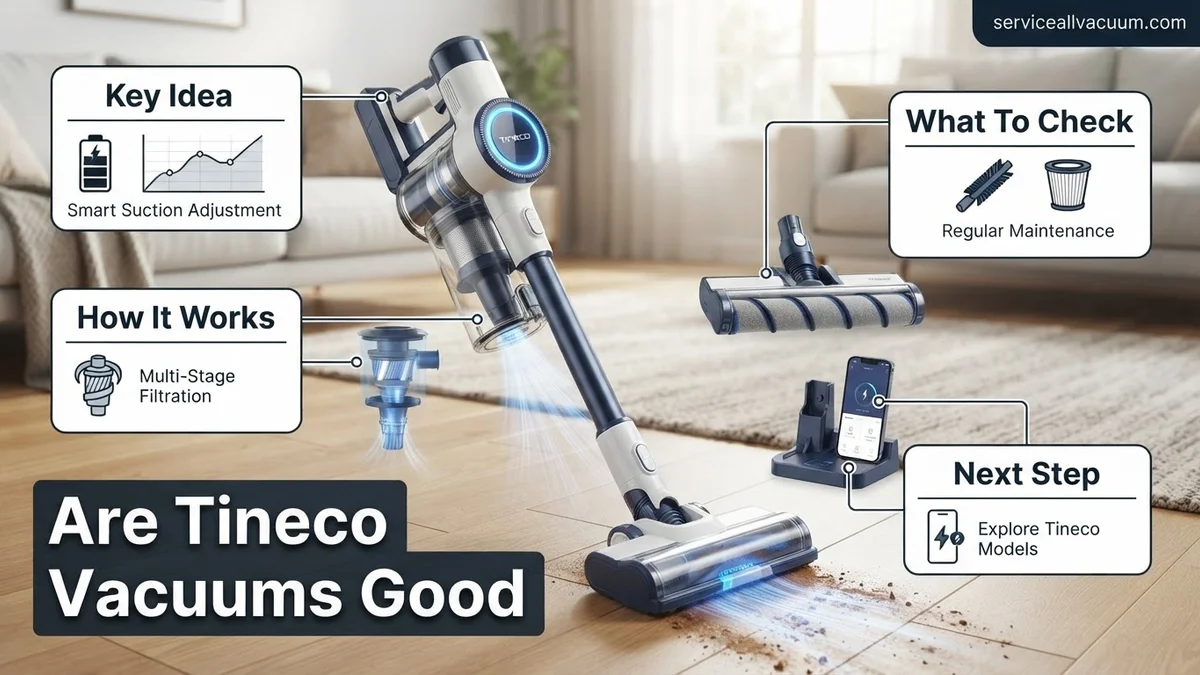
- Smart LED displays and automated suction adjustments provide genuine convenience for daily upkeep.
- Customer service and warranty claims can be slow, making proper maintenance crucial for longevity.
What Causes Performance Issues in Tineco Vacuums
HEPA and Pre-Filter Clogging
The most common culprit behind dropping suction power in a Tineco vacuum is filter neglect. Because these machines rely heavily on compact, high-efficiency particulate air filtration, trapped microscopic dust quickly restricts airflow if you skip regular maintenance.
- Fine dust bypasses the main cyclone chamber and coats the fabric pre-filter.
- Washing the filter is necessary, but putting it back while even slightly damp triggers safety sensors or weakens motor draw.
- Smart models often flash warning codes that shut down the motor to prevent overheating from restricted airflow.
Battery Degradation and Charging Errors
Lithium-ion battery cells naturally degrade over time, but Tineco’s aggressive power-draw on max mode accelerates this wear. If you notice your runtime dropping from forty minutes down to ten, your usage habits or charging dock might be the root cause.
- Running the vacuum exclusively on Max suction overheats the battery pack and shortens its overall lifespan.
- Leaving the unit on a faulty charging dock can cause trickle-charge damage or fail to register a full charge.
- Using non-certified replacement charging adapters often trips internal power regulators, causing sudden dropouts.
How to Test and Improve Tineco Vacuum Suction and Battery Life
Diagnostic Tests for Suction and Airflow
Before assuming your motor is failing, you need to isolate where the suction loss is happening. A quick physical inspection reveals whether you are dealing with a simple blockage or a mechanical failure.
- Detach the main wand and check suction directly at the handheld motor inlet to test baseline power.
- Inspect the brush roll window for hair wraps that block the dynamic airflow seal against hard floors.
- Run the auto-mode sensor test by feeding deliberate debris into the floor head to ensure the digital display reacts and ramps up motor speed.
Practical Steps to Maximize Battery Longevity
You can easily squeeze extra years out of your Tineco battery by adjusting how and when you charge the appliance. Small tweaks to your routine prevent sudden power drops mid-clean.
- Rely on the smart iLoop sensor mode instead of manual Max mode for everyday debris to preserve battery cycles.
- Allow the battery to cool down for ten minutes after a heavy cleaning session before placing it back on the charger.
- Store your vacuum in a temperature-controlled environment, as extreme heat or freezing garages destroy lithium-ion chemistry rapidly.
What If Your Tineco Vacuum Still Fails to Clean Effectively
When standard maintenance fails to restore suction or performance, more advanced troubleshooting is required. Technical anomalies in smart sensors or battery management systems often necessitate a methodical reset procedure to ensure the appliance functions as intended in 2026.
Advanced Diagnostic Steps
If routine cleaning and filter drying do not resolve persistent power drops or suction loss, follow these sequential recovery protocols:
- Perform a hard system reset by disconnecting the vacuum from the charging dock, removing the battery (if detachable), and holding the power button for 30 seconds to drain residual electrical charge.
- Inspect the internal airflow path using a flexible flashlight to check for lodged debris hidden past the dustbin inlet valve, particularly in the motorized brush head neck.
- Test the charger output voltage with a digital multimeter to confirm the adapter is delivering the specified manufacturer voltage, as a degraded charger prevents proper battery conditioning.
- Contact Tineco customer support or an authorized service center if error codes continue to flash on the LED display after a complete firmware-checked reboot.
Professional repair services for out-of-warranty Tineco cordless models typically range from $70 to $150, depending on whether the replacement part required is a motor assembly, motherboard, or lithium-ion battery pack.
Conclusion
Determining whether Tineco vacuums are good requires balancing their innovative sensor technology and lightweight design against regular maintenance demands. When suction drops or error codes appear, systematic troubleshooting—from cleaning HEPA filters to executing hard resets—usually restores peak operational efficiency. According to verified research and expert consumer testing sources for 2026, routine preventive care extends cordless vacuum lifespans by up to 40 percent. The next actionable step is to inspect your Tineco’s filters and air channels today to guarantee optimal performance.
❓ Frequently Asked Questions
Are Tineco vacuums reliable for daily use?
Tineco vacuums are generally reliable for routine household cleaning, provided you regularly wash filters and clear the brush roll. However, electronic components in smart models require careful handling to prevent long-term glitches.
Do Tineco vacuums lose suction over time?
Like most bagless cordless vacuums, Tineco models can lose suction if the HEPA filters become clogged with fine dust or if the dust bin is overfilled. Routine monthly washing of the filter resolves this issue.
What is the average lifespan of a Tineco cordless vacuum?
With proper maintenance and regular filter cleanings, most Tineco cordless and smart vacuums last between 3 to 5 years before battery degradation noticeably impacts runtime.
Can you use regular floor cleaning solutions in Tineco wet/dry vacuums?
You should only use Tineco-branded cleaning solutions or approved neutral cleaners. Using harsh chemicals, bleach, or foaming soaps can damage internal pumps and void your warranty.
How does Tineco’s customer service handle warranty claims?
Tineco provides a standard 2-year limited warranty, but customer service interactions can sometimes require patience, video proof of defects, and waiting for replacement parts.
Which Tineco model is best for mixed flooring?
The Tineco Pure One series with iLoop smart sensor technology works best for homes with a mix of hardwood floors and low-pile rugs, as it automatically adjusts power based on debris levels.