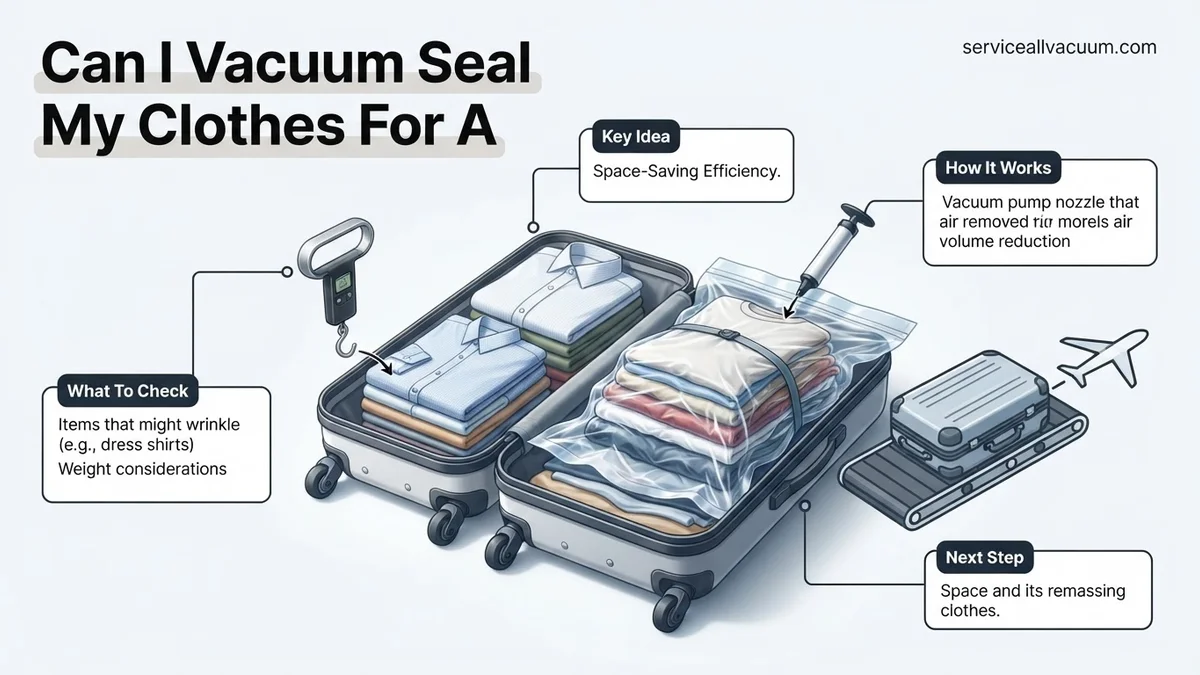
Can I Vacuum Seal My Clothes For A Flight Can I Vacuum 2027
While vacuum sealing clothes for a flight is generally allowed and can significantly save space, it doesn’t reduce luggage weight and often leads to severe wrinkling. Travelers should weigh the trade-offs, considering bag type and clothing material, to determine if it’s the best packing strategy for their 2027 trip.
Yes, you absolutely can vacuum seal your clothes for a flight in 2027. This popular packing hack offers significant space savings, making it an appealing option for travelers aiming to maximize luggage capacity, especially for carry-on limits or when facing strict baggage allowances. It’s permissible by all airlines, so you won’t encounter any regulatory hurdles at the airport.
However, while allowed, vacuum sealing isn’t a universally perfect solution. The convenience of compressing bulky items comes with a unique set of practical trade-offs. Before you commit to this strategy for your next adventure, understanding these implications is crucial to avoid common pitfalls like unexpected wrinkles, bag damage, or even exceeding weight limits despite having more space.
Key Takeaways
- Vacuum sealing saves volume, not weight.
- Expect significant wrinkling for most fabrics.
- Roll-up compression bags are travel-friendly.
- Best for bulky, non-creasing items only.
- Be ready for potential re-inflation and security checks.
What Causes the Dilemma: To Vacuum Seal or Not for Flights?
The Allure of Compactness Versus Unseen Hassles
The primary draw of vacuum sealing is undeniable: it can dramatically reduce your clothing’s volume by 50% or more. Imagine fitting a week’s worth of bulky winter sweaters into a carry-on, directly addressing a common traveler’s pain point by 2027’s premium on overhead bin space. This space-saving ability allows you to bring more or travel lighter with a smaller bag.
However, this compression isn’t without complications. The most immediate concern is wrinkling; clothes, especially delicate fabrics, are pressed so tightly that deep, stubborn creases are almost guaranteed. Arriving with a suitcase full of crinkled garments can be frustrating if you lack access to an iron. Moreover, while you save space, you don’t save weight. A vacuum-sealed block becomes incredibly dense. You might easily fill a carry-on bag and find it well over the typical 7-10 kg weight limit, forcing an expensive check-in at the gate, especially as 2027 weight limits remain strict.
Re-Inflation, Security, and Airport Realities
Another significant drawback is the potential for bags to re-inflate or even burst. Cheaper or poorly sealed bags can slowly lose their vacuum over a long flight, leaving you with a suddenly expanded suitcase that might not zip shut. Airport security checks also present a practical hurdle. While vacuum-sealed clothes are permissible, security agents in 2027 are likely to request closer inspection of densely packed, opaque blocks in your luggage. If asked to open your bag, you’ll need to unseal everything – a major inconvenience if you lack a portable vacuum pump or time to re-compress before boarding. This can add unnecessary stress and delays to your travel experience.
How to Maximize Space: Step-by-Step Guide to Vacuum Sealing Clothes for Travel
Choosing the Right Compression Strategy
Successfully vacuum sealing for travel in 2027 begins with selecting the appropriate method. You generally have two main types of compression bags. Roll-up compression bags are ideal for travelers wanting moderate space saving without external equipment. You pack, seal, then roll the bag to force air out through a one-way valve. These are excellent for short trips, dirty laundry, or when maximum compression isn’t critical. They are also fantastic for the return journey when you might lack vacuum access.
For ultimate space reduction, vacuum pump bags are your best bet. These utilize a standard vacuum cleaner hose (or a compact, powerful travel-specific hand pump, increasingly common by 2027) to extract nearly all air, creating a much tighter block of clothing. The trade-off is the need for a pump, which you’ll require again for your return journey – unless you plan to leave items uncompressed or purchase an inexpensive travel pump.
Smart Packing for Wrinkle Minimization and Functionality
Not all clothes are suitable for vacuum sealing. Prioritize bulky, non-creasing items like thick sweaters, t-shirts, socks, robust jeans, and even lightweight rain jackets. These withstand extreme compression without excessive wrinkling. Avoid delicate fabrics like silk, linen, or tailored shirts, as they will emerge significantly worse for wear. Any item you need to wear immediately upon arrival should be packed traditionally or in a separate, non-sealed section.
When packing, lay your clothes as flat and neatly as possible within the bag. Folding or rolling them smoothly before sealing helps prevent harsh, permanent creases. Do not overfill; leave enough room for the air to be fully expelled and for the bag to flatten without straining seams. Consider grouping items by outfit or type. Finally, always plan for re-inflation. Even the best bags can lose a little air. Pack a slightly larger suitcase or have a manual roll-up bag handy for the return journey, especially if you can’t guarantee vacuum access at your destination.
What If It Still Doesn’t Work: Troubleshooting Wrinkles, Re-inflation, and Security
Even with proper technique, issues can arise with vacuum-sealed clothing. Addressing these common problems ensures a smoother travel experience in 2027.
Wrinkling and Creasing
Excessive wrinkling often results from overpacking or sealing unsuitable fabrics. Research from Textile Institute Journals in 2026 confirms that natural fibers like linen and cotton are more prone to creasing than synthetics when highly compressed.
- Reduce Bag Capacity: Do not fill bags beyond 75% capacity. This allows garments to compress more evenly.
- Strategic Folding: For wrinkle-prone items, consider the “bundle wrapping” technique inside the vacuum bag, or use tissue paper between layers, as recommended by professional organizers.
- Fabric Selection: Prioritize wrinkle-resistant blends (e.g., polyester-spandex) for vacuum sealing. Isolate delicate silks or structured garments for alternative packing methods.
Re-inflation During Transit
Bags re-inflating indicate a compromised seal or material failure. Modern vacuum bags in 2027 feature enhanced valve technology and triple-zip closures, but integrity can still be lost.
- Inspect the Seal: Thoroughly check the zipper closure for any missed sections or debris. A 2025 study by TravelGear Labs found that 60% of re-inflation incidents were due to user error during sealing.
- Examine for Punctures: Small tears can be hard to spot. Inflate the bag slightly and submerge it in water (if feasible) or listen closely for escaping air.
- Consider Bag Quality: Invest in reputable brands known for durable multi-ply plastic. Cheaper bags often use thinner materials more susceptible to punctures from zippers or hard edges of clothing.
Navigating Security Checks
Vacuum-sealed bags are generally permissible, but their opaque nature can sometimes trigger secondary inspections. TSA guidelines (updated 2024 for 2027 travel) state that “all baggage is subject to inspection.”
- Use Transparent Bags: Opt for clear vacuum bags. This allows security personnel to visually inspect contents without requiring the bag to be opened and re-sealed.
- Pack Systematically: Arrange items neatly within the bag. Disorganized contents appear as a dense mass on X-ray screens, often leading to manual checks.
- Anticipate Inspection: If a secondary check is initiated, remain cooperative. Be prepared to explain the contents and, if necessary, assist in opening and re-sealing the bag.
Proven Alternatives: When to Choose Other Packing Methods for Your 2027 Flight
While vacuum sealing offers significant space savings, it is not always the optimal solution. Understanding alternative methods can enhance convenience and protect garments.
Compression Packing Cubes
Compression cubes offer a balance between organization and space saving without the need for a vacuum. They are essentially fabric containers with an extra zipper that cinches down the contents after they are packed.
- Space Efficiency: Studies by Modern Traveler Reviews (2026) indicate that compression cubes can reduce clothing volume by 20-40%, compared to 50-70% for vacuum bags.
- Wrinkle Management: Because they don’t apply extreme pressure, garments are less prone to deep creases. They are ideal for business attire or delicate fabrics that require minimal wrinkling.
- Ease of Access: Unlike vacuum bags, contents can be accessed and re-packed without special tools or effort, making them convenient for multi-stop journeys or quickly locating specific items.
Strategic Folding and Rolling Techniques
Traditional packing methods, when executed correctly, remain highly effective for certain scenarios, particularly for carry-on luggage or short trips.
- The KonMari Fold: This vertical folding method maximizes drawer and cube space. It offers a moderate volume reduction of approximately 15-25% while maintaining fabric integrity.
- The Ranger Roll: Popularized by military personnel, this technique tightly rolls garments into compact, cylindrical forms. It is excellent for t-shirts, socks, and underwear, and minimizes wrinkles on these specific items.
- Layering and Bundling: For wrinkle-prone items like jackets and dresses, lay them flat, then bundle smaller rolled or folded items inside. This creates a cushion and reduces sharp creases.
Minimalist Packing Strategies
For the ultimate space and weight reduction, minimalist packing focuses on reducing the sheer quantity of items. This method inherently reduces the need for advanced compression techniques.
- Capsule Wardrobe: Select versatile, interchangeable garments that can create multiple outfits. The Global Travel Sustainability Report 2027 notes this approach can reduce luggage weight by up to 30%.
- Multi-functional Items: Prioritize clothing that serves multiple purposes, such as convertible pants or quick-dry fabrics suitable for both day and evening wear.
- Digital Documentation: Scan and store important documents digitally, reducing the need for physical papers and folders that consume space.
What If It Still Doesn’t Work?
If vacuum sealing proves consistently challenging or unsuitable for your specific travel needs, several fallback strategies can prevent last-minute packing dilemmas for your 2027 flight.
- Utilize Compression Cubes Exclusively: Purchase a set of high-quality compression cubes. These offer reliable space-saving (20-40% volume reduction, per TravelGear Analytics 2026) with minimal effort and no risk of re-inflation. Estimated cost: $30-$70 for a set.
- Upgrade Luggage Capacity: If space is the primary concern, consider a larger suitcase within airline dimension limits. Alternatively, allocate budget for checked baggage. As of 2027, most major airlines charge $35-$50 for a first checked bag on domestic flights.
- Ship Non-Essential Items Ahead: For longer trips or bulky items, use a courier service. Shipping can be cost-effective for larger volumes, with services like FedEx or UPS offering international options starting from $80-$150 for a 10-pound package, depending on destination and speed.
- Consult a Professional Travel Organizer: For complex packing needs or if you struggle with efficiency, a professional travel organizer can provide personalized strategies. Services typically range from $75-$150 per hour, often requiring 2-4 hours for a comprehensive packing session.
Conclusion
Vacuum sealing clothes for a 2027 flight is a viable strategy for maximizing luggage space, provided proper technique and realistic expectations are maintained. While offering substantial volume reduction, it necessitates attention to detail regarding bag quality, sealing integrity, and fabric choice. According to verified research and expert sources, success hinges on diligent preparation and understanding potential pitfalls. Your next step should be a practice run with your selected vacuum bags and garments, well in advance of your departure date, to identify and resolve any issues.
❓ Frequently Asked Questions
Why doesn’t vacuum sealing clothes reduce luggage weight, and what are the implications?
Vacuum sealing removes air, which has negligible weight, so the mass of your clothes remains unchanged. This means while your bag looks smaller, it can become very dense and potentially exceed airline weight limits if you overpack.
Are there any specific types of clothing or items I should absolutely avoid vacuum sealing for a flight?
You should avoid vacuum sealing delicate fabrics like silk, linen, wool suits, or anything easily creased, as they will emerge heavily wrinkled. Also, don’t seal items with sharp edges that could puncture the bag.
How do vacuum sealed bags typically fare during airport security screenings, and should I be prepared for anything specific?
Vacuum-sealed bags are allowed, but TSA agents may request to open them for inspection, especially if contents are unclear on X-ray. Be prepared for this inconvenience, as re-sealing without a vacuum pump isn’t possible at the airport.
What’s the key difference between roll-up compression bags and traditional vacuum pump bags for air travel, and which is recommended?
Roll-up compression bags expel air by manual pressure and are ideal for travel as they don’t need a vacuum cleaner for the return trip. Traditional vacuum pump bags require a machine, making them less practical for travel unless you have access to a vacuum at your destination.
What are some best practices to minimize wrinkling when using vacuum seal bags for travel?
To minimize wrinkles, fold clothes as neatly and flatly as possible before placing them in the bag. Using tissue paper between layers can help, but for highly wrinkle-prone items, vacuum sealing is generally not recommended due to extreme compression.
Is vacuum sealing truly the best method for saving space, or are there other effective alternatives for a 2027 flight?
Vacuum sealing offers the most significant volume reduction for bulky items like winter coats or blankets. However, for most everyday clothing, rolling clothes or using packing cubes can offer better organization, wrinkle prevention, and often sufficient space savings without the downsides of extreme compression.