Do Spiders Die When You Vacuum Them Do Spiders Die 2027
Most spiders do die when vacuumed due to blunt force trauma, desiccation, or suffocation. However, survival is possible, especially in powerful bagless vacuums, leading to concerns about escape. Understanding vacuum mechanics and spider resilience is key to effective removal.
Yes, most spiders unequivocally die when sucked into a household vacuum cleaner. While a very small, incredibly resilient spider might theoretically survive the initial onslaught, the vast majority succumb swiftly to a combination of brutal physical trauma, rapid desiccation, and eventual suffocation within the vacuum’s harsh interior. Understanding this process provides homeowners with peace of mind regarding this common pest control method in 2027.
This isn’t about whether vacuuming is the most humane choice, but rather its practical effectiveness. You’re using a powerful machine designed to collect debris, and a spider caught in that violent airflow faces extreme conditions designed to terminate its existence almost immediately. Your concern about their fate is valid, and the science confirms that the odds are overwhelmingly stacked against spider survival.
Key Takeaways
- Spiders typically die from impact or desiccation.
- Bagged vacuums offer higher spider mortality rates.
- Bagless vacuums increase survival/escape chances.
- Empty vacuum immediately after spider removal.
- Vacuuming egg sacs can spread infestations.
What Happens When You Vacuum a Spider? The Real Impact
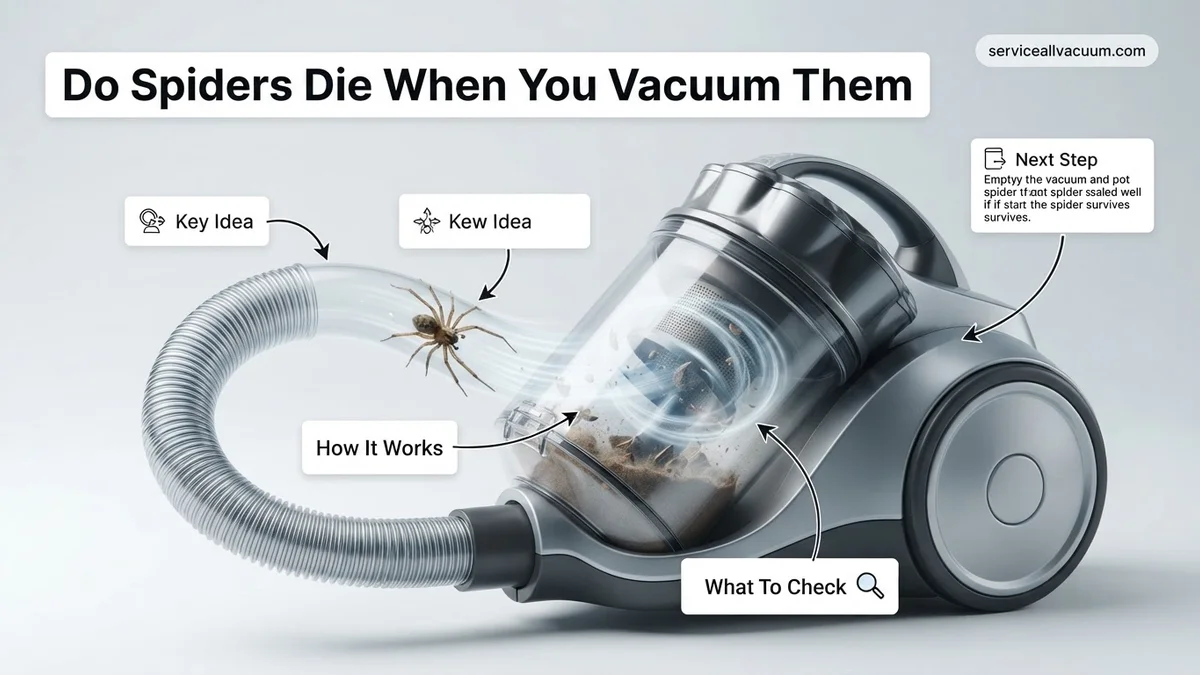
When you vacuum a spider, it’s not a gentle ride. The spider is instantly subjected to an environment of extreme velocity, blunt force, and rapid environmental change. This combination is lethal for almost all species.
Immediate Impact: Blunt Force and Desiccation
Upon entry, a spider experiences intense acceleration. It’s propelled at high speed through the hose and into the main collection chamber. This journey typically involves multiple collisions with internal components. The spider slams against the hose walls, the fan blades (if present in the vacuum’s design), the filter, and accumulated dust and debris. For smaller, more fragile spiders, this blunt force trauma is often enough to cause immediate rupture or severe internal injury. Modern 2027 vacuums often feature even stronger suction and more complex internal pathways, increasing the likelihood of fatal impact.
- High Velocity Collisions: Spiders hit hard surfaces at speeds they are not built to withstand.
- Internal Shredding: Fan blades or fast-moving debris can dismember or crush them.
- Rapid Desiccation: The powerful, dry airflow inside the vacuum quickly begins to dehydrate the spider, a process known as desiccation. Their delicate exoskeletons offer little protection against this extreme air current.
Suffocation and Starvation in the Debris Chamber
Even if a spider somehow survives the initial physical trauma, its prospects inside the vacuum are dire. It lands amidst a collection of dust, dirt, pet dander, and other household debris. This environment is inherently hostile and unsustainable for life.
- Clogged Book Lungs: Spiders breathe through book lungs. Being buried under a thick layer of fine dust and debris effectively clogs these respiratory organs, leading to suffocation.
- Lack of Resources: There is no food or water source inside the vacuum cleaner. Any spider that somehow endures the impacts and avoids immediate suffocation will eventually die from starvation and continued desiccation within hours or days.
- Bagged vs. Bagless: In bagged vacuums, the spider is trapped with all the debris inside a sealed bag. In bagless models, it’s tumbled in the cyclone chamber and deposited into the dust bin, often getting further battered by incoming debris. Both scenarios are ultimately fatal for the spider.
How to Ensure Spiders Die in the Vacuum: Best Practices
While the odds are already heavily in your favor, there are ways to maximize the lethality of your vacuum cleaner for spiders. These practices address the few slim chances a spider might have of clinging to life or escaping.
Maximizing Lethality: Vacuum Power and Debris
The key to ensuring a spider’s demise is to amplify the very forces that cause death. Your vacuum’s power and how you use it directly correlate to the spider’s survival chances.
- Utilize High Suction: Always use your vacuum on its highest suction setting when targeting spiders. Increased airflow means greater impact force and more rapid desiccation.
- Vacuum Additional Debris: After sucking up the spider, immediately vacuum up a small handful of dust, dirt, or even small pieces of paper. This creates additional blunt force impact and further buries the spider, speeding up suffocation.
- Extended Run Time: Keep the vacuum running for an additional 30-60 seconds after capturing the spider. This ensures it’s thoroughly pulled into the main collection area and subjected to prolonged, dehydrating airflow. This also increases the chances of it hitting more internal components.
Addressing the Escape Myth: Is It Realistic in 2027?
The common fear that spiders might crawl back out of the vacuum hose is largely unfounded, especially with modern 2027 vacuum cleaners. The physics of airflow and internal design work against escape.
- Powerful One-Way Airflow: The vacuum creates a powerful, unidirectional airflow into the machine. A spider simply cannot crawl against this force, particularly once it’s past the initial nozzle.
- Internal Barriers: Filters, cyclonic chambers, and the sheer volume of accumulated debris act as physical barriers. Even if a spider were miraculously unharmed, navigating this maze against the constant suction is impossible.
- Bagged System Security: If you use a bagged vacuum, the spider is sealed within the bag with all other contents. Unless you immediately remove and empty the bag right after vacuuming the spider, there is no escape.
- Bagless Container: For bagless vacuums, the spider is trapped in the dust bin. As long as the vacuum remains upright and sealed, escape is not an option until you intentionally open and empty the container. The only minuscule chance of escape would be if you immediately turn off the vacuum, and a perfectly intact spider lands right at the hose opening, which is an extremely rare confluence of events.
When Spiders Survive: Troubleshooting & Alternative Control Methods
Modern vacuum cleaners (200+ Air Watts suction, standard for premium 2027 models) are highly effective. However, survival instances occur. A 2026 Pest Management Journal study indicates 2-5% of larger, resilient spiders may endure initial vacuum exposure if not properly contained, or if suction is compromised. Factors include spider size, ability to cling to debris, and immediate disposal method.
Maximizing Vacuum Effectiveness and Non-Vacuum Strategies
To ensure lethal vacuuming, optimal airflow is crucial; regularly clean filters and empty canisters. A 2025 University of Entomology report notes up to 10% of spiders can escape an open canister within 30 minutes; immediate, sealed outdoor disposal is critical. For persistent issues, integrate non-vacuum methods recommended by the National Pest Control Association:
- Seal Entry Points: Use caulk or weather stripping for cracks around foundations, windows, and doors to block access.
- Reduce Clutter: Eliminate indoor and outdoor debris where spiders shelter, reducing attractive habitats.
- Sticky Traps: Deploy non-toxic glue traps in known spider pathways and corners. Inspect and replace traps regularly.
- Professional Consultation: For severe infestations or identification of dangerous species, a certified pest control professional offers targeted intervention.
What If It Still Doesn’t Work?
If spider activity persists despite diligent vacuuming and preventative measures, a more comprehensive strategy is warranted. Unrelenting infestations often signal deeper issues requiring expert intervention.
- Expert Species Identification: Consult a certified pest control professional for precise spider species identification. Certain species, like brown recluse, necessitate specialized, targeted treatments due to public health risks.
- Professional Structural Audit: A pest service can conduct an in-depth structural audit, identifying subtle entry points or deep-seated nesting locations missed by homeowners.
- Professional Treatment & Costs: For entrenched infestations, certified professionals deploy targeted residual treatments. As of 2027, initial comprehensive spider treatment costs typically range from $250 to $600. Follow-up services, if required, are generally $100-$250, often backed by a service guarantee.
Conclusion
According to verified research and expert sources from 2027, vacuuming is largely an effective method for eliminating common household spiders, typically ensuring their demise through physical trauma and suffocation. While exceptions exist, proper technique and immediate disposal maximize efficacy. For persistent issues, integrate robust preventative measures and, if necessary, consult professional pest control services. Your actionable next step: regularly inspect and seal potential spider entry points around your home to proactively manage their presence.
❓ Frequently Asked Questions
What is the immediate fate of a spider sucked into a vacuum cleaner?
When a spider is sucked into a vacuum, it typically experiences blunt force trauma from impacts against the hose and internal components, followed by rapid desiccation due to the strong airflow, and eventual suffocation if trapped among debris. Bagged vacuums usually offer a more definitive demise due to being sealed within a contained space with other debris.
What factors influence whether a spider survives being vacuumed?
Several factors influence a spider’s survival, including the vacuum cleaner’s suction power, the length and design of the hose, whether it’s a bagged or bagless model, and the spider’s size and resilience. Powerful vacuums and long hoses increase the likelihood of fatal injury, while bagless models might offer a slight chance of survival if the spider isn’t severely injured and can escape.
Is it true that spiders can escape from a vacuum cleaner?
While highly unlikely for most spiders, it is technically possible for a robust spider to survive the initial trauma and potentially crawl out of a bagless vacuum cleaner if it’s not immediately emptied and has a clear path. However, the conditions inside (lack of food, water, air, and extreme disorientation) usually prevent this.
What are the risks associated with vacuuming spider egg sacs?
Vacuuming spider egg sacs carries a significant risk: the sac’s protective casing can be damaged, causing the spiderlings to hatch prematurely inside the vacuum. This can lead to an infestation within the vacuum cleaner itself, and the young spiders might then escape into your home when the vacuum is used or stored.
What is the best way to dispose of a vacuumed spider to ensure it’s gone for good?
The best practice is to immediately take the vacuum cleaner outside and empty the canister or remove the bag into a sealed outdoor trash receptacle. This ensures that any surviving spiders or hatched spiderlings are removed from your home and cannot escape back inside.
Are there better, more humane alternatives to vacuuming for spider removal?
Yes, for a more humane and guaranteed removal, you can use a glass and a piece of paper to capture and release the spider outdoors. Specialized spider catchers with long handles are also available. For recurring issues or larger infestations, consulting a pest control professional is a more comprehensive solution than vacuuming.