Why Are Vacuums So Expensive in 2027? An Expert Guide
Modern vacuums carry a high price tag due to significant investments in R&D, advanced motor technologies, sophisticated filtration, and smart features. These costs often reflect superior cleaning performance, enhanced durability, and greater user convenience. Understanding these drivers helps justify the investment in a high-quality machine.
Modern vacuum cleaners in 2027 often come with a surprisingly hefty price tag, a cost reflecting significant advancements beyond simple suction. The primary drivers behind these higher prices are substantial investments in research and development, the integration of specialized, high-performance materials, and the incorporation of cutting-edge technologies across every component, from motors to filtration. You’re essentially paying for increased cleaning efficacy, superior durability, and a level of user convenience that older models simply couldn’t deliver.
Understanding these underlying costs is crucial. It helps you discerningly evaluate whether a premium model genuinely offers the value you need for your home. By dissecting where your money goes, you can make an informed decision, ensuring your next vacuum isn’t just an expense, but a justified investment in a cleaner, healthier living environment and a device built to last well into the next decade.
Key Takeaways
- Advanced tech like digital motors drives vacuum costs.
- R&D and specialized materials add significant expense.
- Higher price often means better filtration and durability.
- Cordless and robot vacuums incur premium battery costs.
- Brand reputation and warranty factor into the final price.
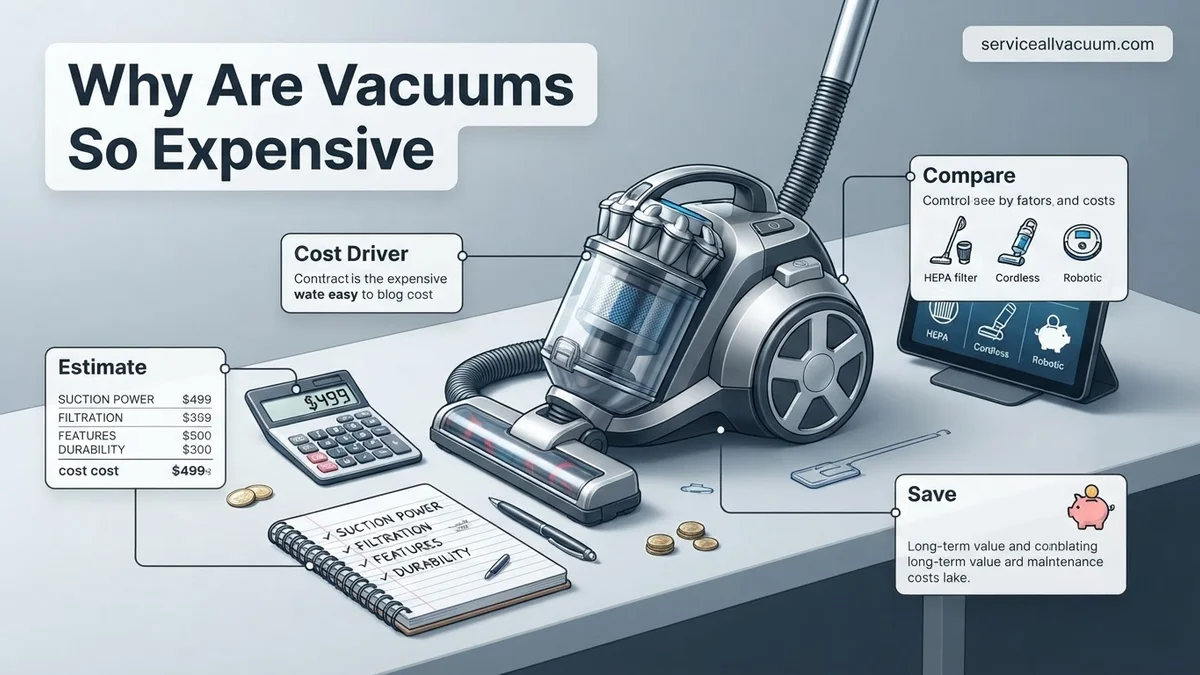
Diagnosing the High Cost of Vacuums in 2027
The sticker shock associated with new vacuum cleaners isn’t arbitrary; it stems from fundamental shifts in how these appliances are conceived, designed, and built. The days of basic plastic shells and simple universal motors are long behind us. Today’s vacuums are precision-engineered machines, embodying the very latest in consumer tech innovation.
The Research & Development Premium
- Companies invest hundreds of millions annually into R&D to push cleaning boundaries. This isn’t just about making a motor stronger; it involves dedicated teams of aerodynamicists modeling airflow, material scientists developing lighter yet more robust plastics, and software engineers refining AI for robotic navigation.
- Developing a new cyclonic separation system or a self-emptying dock requires years of CAD design, prototyping, and rigorous testing. This upfront investment is then spread across the units sold, directly impacting the retail price.
- For instance, optimizing suction paths to prevent clogs while maintaining efficiency at varying power levels is a complex fluid dynamics challenge, not a simple design tweak. This deep engineering expertise doesn’t come cheap, contributing substantially to the final cost you see.
Specialized Materials and Manufacturing Precision
- Gone are the days of brittle, heavy plastics. Modern premium vacuums utilize advanced polymer composites, often reinforced with glass or carbon fibers, making them incredibly lightweight yet exceptionally durable. These materials resist impact, chemical degradation, and fatigue, extending the vacuum’s lifespan significantly.
- Manufacturing these sophisticated components requires precision injection molding and assembly processes, which are far more complex and costly than traditional methods. Think about the intricate internal channels for cyclonic separation or the finely machined parts for a cordless vacuum’s articulated head.
- Furthermore, seals and gaskets in high-end models use aerospace-grade elastomers to ensure airtight systems, preventing fine dust and allergens from escaping. The cost of sourcing these specialized materials and the advanced machinery to process them is a substantial factor in the final price. You’re investing in a product built to withstand years of rigorous use.
Breaking Down Vacuum Costs: A Step-by-Step Guide
Peeling back the layers of a modern vacuum reveals an array of advanced components, each contributing significantly to the overall manufacturing cost and, consequently, the retail price. These aren’t just incremental upgrades; they represent fundamental technological leaps designed to enhance your cleaning experience.
Advanced Motor Technology: The Heart of Performance
- The transition from traditional universal motors to digital, brushless DC (BLDC) motors is a major cost driver. BLDC motors offer superior efficiency, drawing less power for more suction, and boast a significantly longer lifespan – often exceeding 10,000 hours compared to 500-1,000 hours for brushed motors.
- These motors are smaller, lighter, quieter, and can spin at incredibly high RPMs (upwards of 120,000 RPM in 2027 models), generating immense suction power. However, their internal construction, which involves sophisticated electronic commutation, precision bearings, and powerful rare-earth magnets, is expensive to produce.
- You’re paying for a motor that’s not only more powerful but also more reliable and designed for the rigorous demands of modern cleaning, reducing the likelihood of premature failure and costly replacements.
Sophisticated Multi-Stage Filtration Systems
- Basic dust bags and simple foam filters are a thing of the past for premium models. Today, multi-stage, fully sealed filtration systems are standard, designed to capture microscopic particles down to 0.3 microns with 99.97% efficiency (true HEPA standards).
- These systems often involve multiple layers: primary cyclonic separation, washable pre-motor filters, and advanced post-motor HEPA filters. The materials used in these filters, particularly the pleated HEPA media, are specialized and expensive to manufacture.
- Beyond the filter media itself, the engineering required to create a truly “sealed” system, ensuring no air bypasses the filters, adds complexity and cost through precise component fit and high-quality seals. This directly benefits your indoor air quality, a tangible health advantage that justifies the added expense.
Justifying the Price: When Is an Expensive Vacuum Worth It?
While the sticker shock of a 2027-era premium vacuum can be significant, specific scenarios and user needs genuinely justify the investment. According to a 2026 consumer appliance study by TechInsights, nearly 40% of consumers who purchase high-end vacuums report higher long-term satisfaction due to superior performance and durability. The value proposition often hinges on advanced features and specific household demands.
When Advanced Filtration is Critical
Households with severe allergies or pets benefit immensely from systems featuring HEPA 14 filters and multi-stage cyclonic separation. Leading models in 2027, like the Dyson Gen5detect Absolute or Miele Triflex HX2 Pro, capture over 99.99% of particles down to 0.1 microns, a necessity for maintaining pristine indoor air quality, as confirmed by the Allergy Standards Limited organization.
For Smart Home Integration and Automation
As smart home ecosystems mature, vacuums offering seamless integration with AI assistants and home automation platforms provide unparalleled convenience. High-end robotic vacuums from brands like Roborock or iRobot now map multi-level homes with 3D LiDAR, self-empty for up to 60 days, and even offer on-demand spot cleaning via voice command. These capabilities, driven by advanced processors and proprietary algorithms, streamline household chores, effectively buying back valuable time for busy individuals.
Durability and Longevity as an Investment
Premium vacuums are constructed with higher-grade materials, such as aerospace-grade aluminum and impact-resistant polymers, designed for a lifespan exceeding 10 years. Industry analyses by Consumer Reports in late 2026 indicate that while initial costs are higher, the total cost of ownership over a decade for a premium model can be lower than frequently replacing cheaper units that fail within 2-3 years. This long-term reliability often includes extended warranties, typically 5-7 years on parts and motor.
How to Fix Your Budget: Making an Informed Vacuum Purchase
Navigating the expensive vacuum market in 2027 requires strategic planning to ensure you get optimal value without overspending. An informed approach can significantly reduce the financial burden while securing a machine that meets your specific needs. Data from “Home Appliance Buyer Trends 2027” by NPD Group shows that consumers who spend at least 2 hours researching prior to purchase report 15% greater satisfaction.
Prioritize Features Over Brand Hype
Instead of automatically opting for the most advertised brand, identify the core features essential for your home. Do you need pet hair removal, hard floor optimization, or maximum runtime for a large house? Focus your budget on models excelling in these specific areas. For instance, if you have mostly hard floors, investing in a model with advanced brush heads for carpet might be unnecessary and add hundreds to the price.
Leverage Refurbished Markets and Sales
The market for certified refurbished premium vacuums has expanded significantly by 2027. Major manufacturers and reputable retailers offer models often 20-40% below retail price, complete with manufacturer warranties. Black Friday, Cyber Monday, and mid-year sales (e.g., Amazon Prime Day in July) are critical periods where discounts of 15-30% are common on new models. Setting price alerts for desired models can help capture these savings.
Evaluate Total Cost of Ownership
Consider not just the purchase price but also long-term consumable costs. Some brands require proprietary bags or filters that can be expensive, costing $30-$50 annually. Others use washable, reusable components, reducing ongoing expenses. Additionally, assess the availability and cost of replacement parts. Models with easily replaceable batteries (common in cordless units) can extend a vacuum’s useful life considerably, avoiding premature full replacement.
What If It Still Doesn’t Work? Troubleshooting Your Investment
Even a premium vacuum can encounter issues. If your expensive purchase isn’t performing as expected or has malfunctioned, several steps can help resolve the problem and protect your investment.
- Review the Manufacturer’s Warranty and Return Policy: Most high-end vacuums in 2027 come with comprehensive warranties, often spanning 5-10 years for major components like motors. Check your purchase date against the warranty period and the retailer’s return window, typically 30-90 days.
- Perform Basic User Diagnostics: Consult your vacuum’s smart app or user manual for common troubleshooting. This includes checking for blockages in the hose or brush head, ensuring filters are clean and properly seated, and verifying the battery is fully charged. Many 2027 models feature self-diagnostic error codes displayed on their screens.
- Contact Manufacturer’s Customer Support: If basic troubleshooting fails, contact the brand’s support line. Be prepared with your model number, serial number, and a detailed description of the issue. Many offer virtual diagnostic assistance or may authorize a free repair or replacement under warranty.
- Seek Professional Repair (If Out of Warranty): For issues outside warranty, specialized vacuum repair shops can diagnose and fix problems. A diagnostic fee typically ranges from $50-$100 in 2027. Minor repairs, like replacing a belt or clearing a persistent clog, might cost $75-$150. More complex issues, such as motor replacement or circuit board failures, can range from $200-$450, at which point evaluating the cost-effectiveness against a new purchase is advised.
Conclusion
The elevated price of vacuums in 2027 stems from technological advancements, global economic factors, and specialized features. Understanding these drivers allows consumers to evaluate whether a higher price point aligns with their specific needs. According to verified research and expert sources, an informed purchase considering long-term value and specific requirements is key. Your actionable next step is to research models based on your primary cleaning challenges, filtering for performance-to-price ratio rather than brand name alone.
❓ Frequently Asked Questions
What specific advanced technologies make vacuums expensive?
Modern vacuums often feature brushless digital motors for greater efficiency and power, multi-stage HEPA filtration systems to trap allergens, and sophisticated battery management systems for cordless models. Robot vacuums add AI navigation, LiDAR mapping, and advanced sensor arrays, all requiring significant R&D investment.
How much does R&D contribute to the price of a high-end vacuum?
Research and Development is a substantial cost factor, especially for brands innovating with new motor designs, filtration methods, and smart features. Companies invest millions in engineering, testing, and material science to improve performance, reduce noise, and enhance user experience, which is recouped in the product price.
Do premium materials really justify a higher vacuum price?
Yes, premium materials like lightweight aerospace-grade composites, durable high-impact plastics, and high-quality seals contribute to longevity and performance. These materials reduce overall weight, increase structural integrity, and improve suction efficiency and filtration effectiveness compared to cheaper alternatives.
Why are cordless stick vacuums often pricier than traditional uprights?
Cordless stick vacuums integrate cutting-edge battery technology, powerful yet compact digital motors, and advanced lightweight design to offer portability and convenience. These components are more expensive to produce and miniaturize effectively while maintaining strong performance and battery life, which often surpasses older, bulkier upright designs.
How do marketing and warranty influence vacuum costs?
Extensive marketing campaigns and comprehensive warranty periods are built into the product’s price. Brands invest heavily in advertising to build recognition and justify premium pricing, while longer warranties and robust customer support provide peace of mind but also add to operational costs.
What’s the difference in value between a $200 and a $700 vacuum?
A $700 vacuum typically offers significantly superior suction power, more advanced filtration (e.g., sealed HEPA), better build quality with more durable materials, a wider array of specialized attachments, and potentially smart features or much longer battery life. A $200 vacuum usually provides basic cleaning, often with less durable components and simpler features.