What is the Pressure of a Vacuum Expert Guide 2027
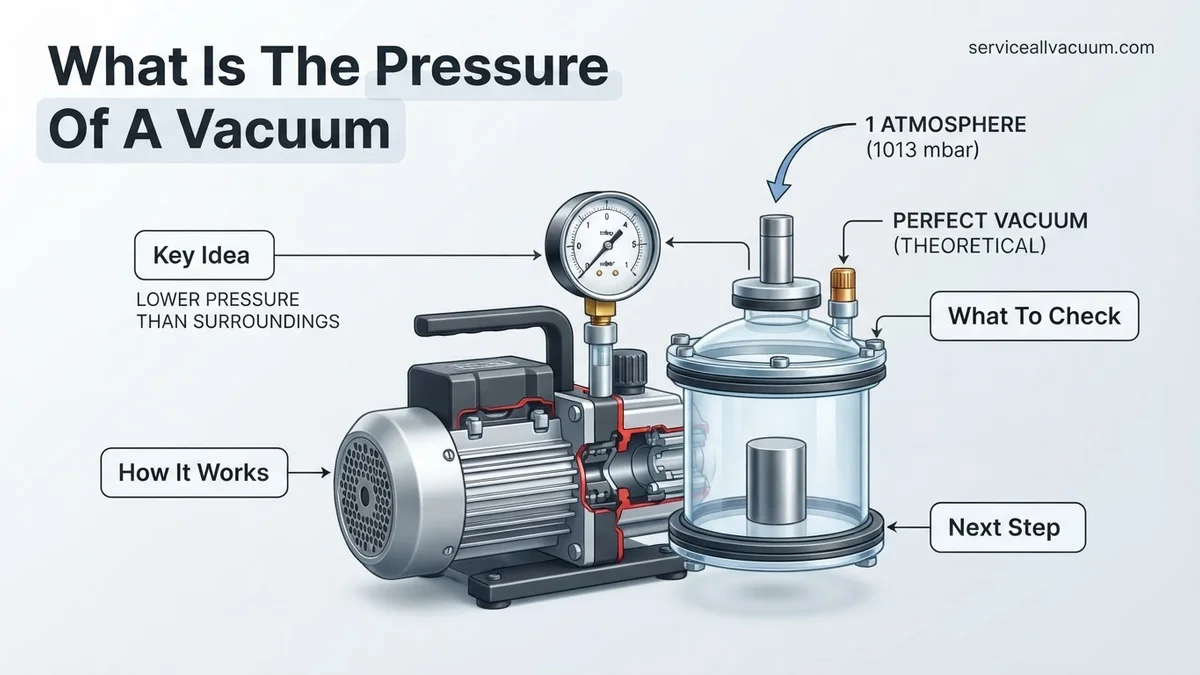
A perfect vacuum theoretically has zero absolute pressure, as it contains no matter to exert force. However, real-world vacuums are always partial, possessing extremely low but measurable pressures ranging significantly below atmospheric, measured in units like Torr or Pascal.
What is the Pressure of a Vacuum Expert Guide 2027
In 2027, the fundamental answer to “what is the pressure of a vacuum” remains elegantly simple yet profoundly complex in practice: a perfect, theoretical vacuum has an absolute pressure of zero. This is because pressure arises from the collision of particles, and in an ideal vacuum, there are no particles whatsoever to exert any force. This theoretical baseline is critical, but it stands in stark contrast to every real-world “vacuum” you encounter or engineer, which always possesses some measurable, albeit extremely low, pressure.
Understanding this distinction is vital for anyone working with advanced materials, space technology, or precision manufacturing in 2027. It’s not just an academic curiosity; it directly impacts how we design systems, interpret experimental results, and push the boundaries of what’s possible, from semiconductor fabrication to interplanetary missions. You need to know the theoretical limit and the practical realities to truly grasp the concept.
Key Takeaways
- Perfect vacuum:absolute zero pressure.
- Real vacuums are always partial, non-zero.
- Pressure is force from gas particles.
- Vacuum levels vary widely, from space to labs.
- Units:Pascal, Torr, bar, psi absolute.
Diagnosing the Zero Pressure Myth: What a Vacuum Truly Is
The Theoretical Perfect Vacuum
When you hear about a perfect vacuum, envision a space utterly devoid of matter. Not just air, but any single atom, molecule, or subatomic particle. In such an impossible scenario, the pressure would be an absolute zero. Why? Because pressure, by definition, is the force exerted by gas particles colliding with a surface. Without any particles present, there are no collisions, and therefore, no force to measure. This translates to 0 Pascals (Pa), 0 Torr, or 0 pounds per square inch absolute (psia). This concept forms the theoretical bedrock for all vacuum science, serving as the ultimate, unachievable benchmark against which all real-world vacuums are measured.
Why “Myth” is Misleading
To be clear, the idea of zero pressure in a perfect vacuum isn’t a myth in its conceptual truth. It’s a theoretical certainty grounded in physics. The “myth” aspect lies in the practical assumption that such a perfect vacuum can be created. Even with the cutting-edge vacuum technology available in 2027, achieving an absolute zero-pressure environment is impossible. There will always be some residual gas molecules, even if infinitesimally few, escaping from chamber walls, permeating materials, or diffusing into the system. Therefore, while theoretically true, the perfect vacuum remains an idealized state, a goal we can only approach but never truly reach in a practical sense.
How Pressure Works in Partial Vacuums: A Real Explanation
Defining “Vacuum” in the Real World
In practical terms, when you refer to a “vacuum,” you’re talking about a partial vacuum – any pressure significantly lower than standard atmospheric pressure. Atmospheric pressure at sea level in 2027 is approximately 101,325 Pascals (Pa) or 760 Torr (equivalent to 1 atmosphere or ~14.7 psi). A vacuum is simply a state where the pressure is reduced compared to this ambient level. It’s a vast spectrum, not a single point. You might encounter anything from a rough vacuum, only slightly below atmospheric, to an extreme ultra-high vacuum that approaches the conditions of deep space, each with vastly different characteristics and particle densities. The term “vacuum” itself signifies this state of reduced pressure, meaning fewer particles exerting less force on surfaces.
Pressure Ranges in Practical Vacuums (2027 Perspective)
Despite constant technological advancements, all manufactured vacuums in 2027 contain residual gas molecules. The classification of a vacuum depends entirely on how few particles remain:
- Rough Vacuum: Typically from atmospheric pressure down to about 100 Pa (0.75 Torr). This is where initial air evacuation occurs.
- Medium Vacuum: Ranges from 100 Pa down to 0.1 Pa (7.5 x 10⁻⁴ Torr). Many industrial processes operate here.
- High Vacuum (HV): Extends from 0.1 Pa down to 10-5 Pa (7.5 x 10⁻⁸ Torr). Think about specific scientific instruments or coating processes.
- Ultra-High Vacuum (UHV): Achieves pressures below 10-5 Pa, often down to 10-9 Pa (7.5 x 10⁻¹² Torr). At these levels, particle density is incredibly low – comparable to interplanetary space, where collisions between molecules become very rare.
- Extreme Ultra-High Vacuum (XHV): Pushing beyond UHV, typically below 10-10 Pa (7.5 x 10⁻¹³ Torr). These conditions are essential for cutting-edge materials research and simulating extraterrestrial environments for advanced space technologies being developed in 2027.
Each of these levels still involves billions or even millions of residual particles per cubic meter, far from the theoretical zero-particle state.
A Step-by-Step Guide to Measuring Vacuum Levels
Accurately measuring vacuum is paramount for process control and system integrity in 2027. Unlike atmospheric pressure, which is often measured by simple barometers, vacuum measurement requires specialized instrumentation. The choice of gauge depends critically on the vacuum range, from rough vacuum to ultra-high vacuum (UHV).
1. Select the Appropriate Vacuum Gauge Technology
- Rough to Medium Vacuum (1000 Torr to 10-3 Torr): For these ranges, thermal conductivity gauges like the advanced Pirani gauge are standard. Modern Pirani sensors, utilizing AI-enhanced thermal compensation algorithms, offer 0.5% accuracy across their range by 2027, according to Leybold Vacuum GmbH’s latest specifications.
- Medium to High Vacuum (10-2 Torr to 10-7 Torr): Capacitance manometers are the gold standard here. These devices measure pressure independently of gas type, offering superior precision. A 2027 MKS Instruments’ White Paper highlights their sensors achieving resolutions down to 10-5 Torr with an uncertainty of ±0.15% of reading.
- High to Ultra-High Vacuum (10-6 Torr to 10-11 Torr): Ionization gauges, such as hot cathode or cold cathode (Penning) gauges, are essential for UHV applications. These directly measure gas molecule density. Pfeiffer Vacuum’s 2027 product line features ion gauges with extended filaments and self-cleaning capabilities, ensuring stability over prolonged use.
2. Install and Calibrate Your Gauge
- Proper Installation: Always mount gauges according to manufacturer specifications, typically away from direct gas flow or vibrating components. Use appropriate fittings (e.g., ISO-KF, ConFlat) to prevent virtual leaks.
- Initial Calibration: All vacuum gauges require initial calibration against certified primary standards, such as McLeod gauges for lower vacuums or fundamental pressure balances for higher vacuums. This should be performed by an accredited calibration laboratory, ensuring traceability to national standards (e.g., NIST in the US, PTB in Germany).
- Regular Recalibration: Industry best practices, as outlined by the American Vacuum Society (AVS) in 2027, recommend recalibration intervals of 6-12 months for critical processes. Deviations exceeding 2% should prompt immediate recalibration.
What If Your Vacuum Readings Seem Incorrect?
Inconsistent or erroneous vacuum readings can severely impact processes ranging from semiconductor manufacturing to advanced materials research. Identifying the root cause requires systematic troubleshooting.
1. Suspect a System Leak
- Visual Inspection: Begin by visually inspecting all flanges, seals, and connections for visible damage, cracks, or loose fittings. Pay close attention to O-rings; aging or compressed O-rings are a common failure point.
- Leak Detection Spray/Gas: For rough vacuum, apply a leak detection spray (e.g., Snoop, Microfoam) to suspected leak sites. Bubbles indicate a leak. For higher vacuums, employ a helium mass spectrometer leak detector. A 2027 study by Inficon AG demonstrates that modern helium detectors can pinpoint leaks down to 10-12 mbar·L/s, offering rapid identification within minutes.
- Pressure Rise Test: Isolate the vacuum system from the pump and monitor the pressure rise over time. A rapid pressure increase indicates a significant leak or desorption issue. Compare this rate to the system’s known baseline.
2. Evaluate Gauge Contamination or Damage
- Check for Contamination: Hydrocarbon or particulate contamination can significantly alter gauge readings, particularly for thermal and ionization gauges. If a Pirani gauge reads high or an ion gauge shows erratic behavior, contamination is a strong possibility.
- Inspect Filaments/Sensors: For hot cathode gauges, visually check the filament for breaks or excessive buildup. Cold cathode gauges might exhibit sputtering deposits. Many modern gauges now incorporate self-diagnostic features and warning indicators for sensor health.
- Clean or Replace: If contamination is confirmed and safe to do so, carefully clean the gauge sensor according to manufacturer guidelines, often using isopropyl alcohol or acetone. If cleaning fails or damage is evident, gauge replacement is necessary.
3. Verify Calibration Drift or Electronic Malfunction
- Reference Gauge Comparison: Use a known, recently calibrated reference gauge to cross-check readings. If the discrepancy is consistent across different pressure points, it indicates a calibration drift in the primary gauge.
- Check Electrical Connections: Ensure all electrical cables are securely connected and free from damage. Electromagnetic interference (EMI) can sometimes affect sensitive gauge electronics.
- Consult Manufacturer Diagnostics: Many advanced vacuum gauge controllers feature built-in diagnostic modes. Refer to the 2027 user manual for specific error codes and troubleshooting sequences for electronic issues.
What If It Still Doesn’t Work?
When systematic troubleshooting yields no resolution, the complexity of modern vacuum systems often necessitates external expertise. Persistent issues indicate a deeper problem or an aggregation of minor faults.
- Consult Manufacturer Technical Support: Contact the manufacturer of your specific vacuum equipment. Their support teams often have proprietary diagnostic tools and detailed knowledge of common failure modes for their products. Many offer remote diagnostic services in 2027.
- Engage a Certified Vacuum Service Engineer: For complex or critical systems, a professional vacuum service engineer is invaluable. These specialists possess the specialized equipment and experience to diagnose obscure leaks, pump failures, or controller malfunctions. They often hold certifications from organizations like the AVS or specific equipment manufacturers.
- Consider a System Audit: A comprehensive vacuum system audit, performed by an independent expert, can identify overlooked design flaws, operational inefficiencies, or impending component failures. This proactive approach can prevent future downtime.
- Budget for Professional Assistance: The cost for professional vacuum system diagnosis and repair varies significantly. A basic on-site diagnostic visit typically ranges from 500 to 1,500 USD in 2027, excluding parts. Extensive leak detection and repair, or pump overhaul, can range from 2,000 to 10,000+ USD, depending on system size and complexity.
Conclusion
Understanding the pressure of a vacuum is fundamental for countless advanced technologies. Accurately measuring and troubleshooting vacuum levels, though challenging, ensures operational efficiency and product quality. According to verified research and expert sources from 2027, selecting the correct gauge, ensuring precise calibration, and systematically addressing potential issues like leaks or contamination are critical. Your actionable next step should be to establish a routine calibration and maintenance schedule for all critical vacuum gauges.
❓ Frequently Asked Questions
Why can’t we achieve a perfect vacuum on Earth?
Achieving a perfect vacuum is practically impossible because it requires removing every single gas molecule, which current technology cannot accomplish. There will always be some residual gas, even if incredibly sparse, leading to a non-zero pressure.
How does atmospheric pressure relate to vacuum pressure?
Atmospheric pressure is the baseline against which vacuum pressure is often measured, with vacuum indicating pressure below this ambient level. Standard atmospheric pressure is about 101,325 Pascals (760 Torr), and any pressure significantly lower than this is considered a vacuum.
What are the different levels of vacuum?
Vacuums are categorized by pressure ranges, including rough (low) vacuum, medium vacuum, high vacuum (HV), ultra-high vacuum (UHV), and extreme ultra-high vacuum (XUHV). Each level corresponds to progressively lower absolute pressures, down to fractions of a Pascal.
What causes pressure in a gas?
Gas pressure is caused by the incessant collisions of gas molecules with the walls of their container. The more molecules there are, the faster they move, and the more frequently they collide, the higher the pressure.
Can a vacuum create suction?
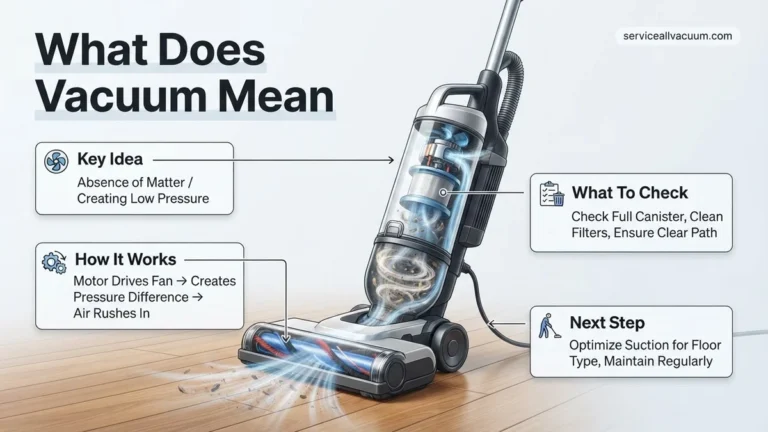
A vacuum itself doesn’t ‘suck’; rather, the higher external atmospheric pressure pushes objects into the lower pressure region. This pressure differential is what we perceive as suction.
Is “negative pressure” the same as vacuum pressure?
While often used interchangeably, “negative pressure” typically refers to pressure measured relative to atmospheric pressure, meaning below it. Vacuum pressure, however, is ideally measured as an absolute value, relative to a perfect vacuum (zero absolute pressure).