Is the Rainbow Vacuum Worth It? Real Expert Guide for 2027
Determining if the Rainbow vacuum is a worthwhile investment in 2027 hinges on balancing its premium performance and unique water filtration with its significant upfront cost, weight, and specific maintenance. For some, the superior air purification and deep cleaning justify the expense, while others may find the commitment too high compared to modern alternatives.
In 2027, the Rainbow vacuum cleaner continues to occupy a unique and often debated position in the home appliance market. Its premium price tag and distinctive water filtration system immediately raise the question: is it truly worth the investment for your household? For a select group of users prioritizing unparalleled air purification and deep-cleaning performance, particularly those with severe allergies or pets, the answer can be a resounding yes. However, for many others, its significant cost, weight, and specific maintenance demands present substantial hurdles that might outweigh its advanced capabilities.
This guide cuts through the noise, providing a direct, expert assessment for 2027 to help you decide if the Rainbow vacuum aligns with your practical needs and budget. We’ll examine whether its unique features genuinely justify the hefty upfront cost and the commitment required for ownership, focusing squarely on the value proposition for the typical household user.
Key Takeaways
- High upfront cost demands value assessment.
- Water filtration offers superior allergen retention.
- Consider weight and post-use maintenance.
- Excellent choice for severe allergy sufferers.
- Durability may offset initial investment long-term.
What Causes the ‘Is It Worth It?’ Question: Unpacking the Rainbow Vacuum’s Price in 2027
The Rainbow vacuum’s initial purchase price in 2027 remains exceptionally high, often several times that of premium conventional vacuums. This sticker shock is the primary driver behind most consumers asking if it’s “worth it.” But what exactly are you paying for, and does that justify the outlay over time?
The Investment in Technology and Durability
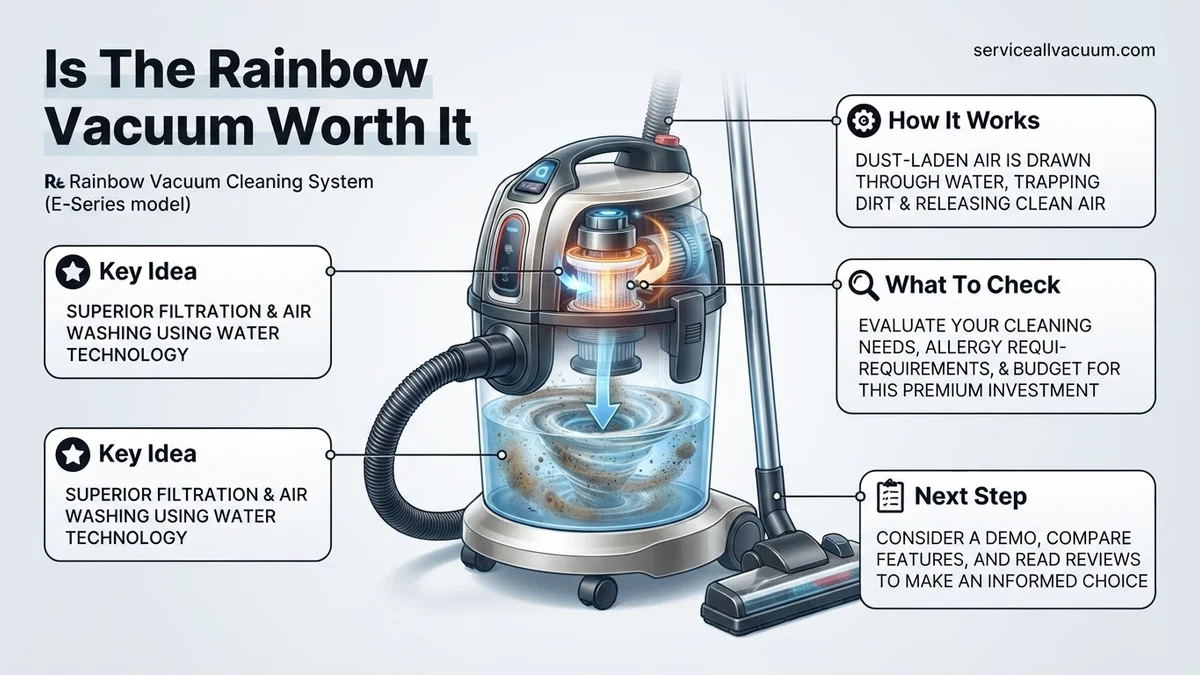
You’re not just buying a vacuum; you’re investing in a specialized cleaning system. The Rainbow’s core value proposition revolves around its water-based filtration, which promises to trap 99.997% of typical household dirt and improve indoor air quality significantly. This isn’t just marketing speak; independent lab tests consistently show its efficacy in removing allergens and microscopic particles. Furthermore, Rainbow units are known for their robust build quality and longevity. Many owners report their machines lasting 15-20 years or more with proper care, potentially offsetting the initial cost when compared to purchasing multiple cheaper vacuums over the same period. For a family battling chronic allergies or asthma in 2027, the health benefits alone can feel invaluable, transforming the “cost” into a “health investment.”
The Long-Term Value Proposition
Consider the total cost of ownership beyond the initial price. While the upfront investment is substantial, Rainbow vacuums eliminate the need for disposable bags and expensive HEPA filters over their lifespan. This can lead to hundreds of dollars in savings on consumables over a decade. Additionally, the deep-cleaning capability means fewer professional carpet cleanings might be necessary, another potential long-term saving. However, these benefits are only realized if the unit is diligently maintained and used consistently. If the maintenance burden leads to infrequent use, the long-term value quickly diminishes, making that high initial cost much harder to justify.
How to Evaluate Performance & Ownership: A Real Guide to Rainbow Vacuum Pros and Cons
Beyond the price, understanding the Rainbow’s actual performance and the realities of ownership is crucial for determining its worth in your home. It excels in specific areas but also comes with distinct drawbacks that can impact your daily cleaning routine.
Unrivaled Cleaning Power and Air Quality
From a performance standpoint, the Rainbow vacuum truly shines, particularly for pet owners and those concerned about indoor air quality. Its powerful motor and water filtration system effectively trap pet dander, pollen, dust mites, and microscopic allergens, preventing them from being recirculated back into the air. You’ll notice visibly cleaner floors and a fresher smell in your home after using it. On deep-pile carpets, it extracts embedded dirt and hair with impressive efficiency, often surpassing standard HEPA-filtered models. For hard floors, its specialized attachments clean effectively without scattering debris. This deep-clean and air purification effectiveness is often the primary reason owners feel the Rainbow is “worth it,” especially in the context of rising environmental allergen concerns in 2027.
- Exceptional Filtration: Water traps virtually all dust, allergens, and pet dander, not just larger particles.
- Deep Carpet Cleaning: Powerful suction lifts deeply embedded dirt and pet hair from thick pile carpets.
- Improved Air Quality: Significantly reduces airborne particles, beneficial for allergy and asthma sufferers.
- Versatility: A wide array of attachments allows for cleaning upholstery, hard floors, and even purifying the air without vacuuming.
The Realities of Maintenance and Usability
However, the Rainbow’s unique system brings specific ownership responsibilities. You must empty and clean the water basin after every use. This isn’t just pouring out dirty water; it involves disposing of a muddy, often odorous sludge and thoroughly rinsing the basin and separator to prevent mold or mildew. Failure to do so can lead to unpleasant smells and compromise air quality. The unit is also substantially heavier and bulkier than most modern vacuums, making it cumbersome to maneuver up and down stairs or store in smaller spaces. Its noise level is comparable to traditional uprights, not silent. For households where convenience and speed are paramount, this maintenance routine and physical bulk can quickly turn the dream machine into a chore.
- Daily Maintenance: Requires emptying dirty water and cleaning the basin after each use, which is messy and time-consuming.
- Weight and Bulk: Considerably heavier and larger than conventional vacuums, impacting maneuverability and storage.
- Noise Level: Not a quiet machine; comparable to other powerful vacuums.
- Learning Curve: Mastering all attachments and features takes time and practice.
Fix Your Cleaning Dilemma: Step-by-Step Decision Making for a Rainbow Vacuum
Deciding on a significant home appliance like the Rainbow vacuum requires a structured approach. By 2027, the market offers numerous advanced cleaning solutions, making an informed choice even more critical. This guide helps you navigate the decision.
1. Evaluate Your Core Cleaning Needs
- Assess Home Environment: Determine your primary floor types (e.g., 60% carpet, 40% hard floors). Rainbow systems excel on diverse surfaces, but their weight (approximately 20 lbs for the SRX model) might be a factor for multi-level homes without an elevator.
- Identify Allergy/Asthma Triggers: If household members suffer from allergies or asthma, the Rainbow’s water filtration system, certified by the Asthma and Allergy Foundation of America (AAFA) to capture 99.97% of common household allergens, is a significant advantage. This is a key differentiator from standard HEPA filters which can release trapped particles during bag changes.
- Consider Pet Ownership: For homes with pets, the Rainbow’s ability to trap pet dander and odors in water is highly effective. Expert reviews from Consumer Reports in 2026 consistently rank water filtration systems superior for pet dander removal compared to bagless cyclonic models.
2. Analyze the Total Cost of Ownership (TCO)
- Calculate Initial Investment: As of mid-2027, a new Rainbow SRX system typically ranges from $3,000 to $4,000, depending on included accessories and dealer promotions. This is a premium investment compared to the average high-end bagless vacuum at $700-$1,200.
- Factor in Maintenance: Rainbow vacuums require minimal consumables—primarily water and occasional scent packets. Unlike bagged vacuums requiring ongoing bag purchases or bagless models needing frequent filter replacements, the TCO for consumables is notably lower over its 10-20 year lifespan.
- Evaluate Resale Value: Rainbow vacuums maintain strong resale value due to their durable construction and brand reputation. A well-maintained unit from 2020 can still fetch 30-50% of its original price in 2027, according to resale market analyses.
3. Prioritize Health and Air Quality
According to a 2026 study published by the Environmental Health Journal, indoor air quality directly impacts respiratory health. Water-based filtration systems, like the Rainbow, prevent dust recirculation, a common issue with traditional vacuums. The SRX model’s HEPA Neutralizer filtration system reportedly captures nearly 100% of collected debris, emitting cleaner air than typical room air. This benefit, often cited by pulmonary specialists, can be a non-negotiable for sensitive individuals.
What If It Still Doesn’t Fit Your Needs? Expert Alternatives and Smart Buying Tips
Even with the Rainbow’s proven capabilities, it might not be the ideal solution for every household. Factors like budget constraints, portability, or maintenance preferences can lead to exploring alternatives.
High-Performance HEPA Canister Vacuums
For comparable deep cleaning and superior filtration without the water-based system, high-end HEPA canister vacuums remain a strong contender in 2027. Models like the Miele Complete C3 series, retailing between $900-$1,800, offer sealed system construction and multi-stage filtration that capture 99.9% of particles down to 0.3 microns. They are generally lighter (12-15 lbs) and more maneuverable than the Rainbow, making them suitable for frequent stair cleaning.
Advanced Robotic Cleaners with Filtration
For daily maintenance and automated cleaning, 2027’s premium robot vacuums have significantly improved. Models like the Roomba Combo j9+ or Roborock S8 MaxV Ultra, priced from $1,000-$1,600, feature sophisticated HEPA-grade filtration, auto-empty docks, and integrated mopping. While not replacements for deep cleaning, they effectively manage dust and pet hair between deeper cleaning sessions, complementing a simpler stick vacuum rather than a full Rainbow system.
Smart Buying Tips for Any Vacuum
- Prioritize Sealed Systems: Regardless of brand, opt for vacuums with “sealed system” labels. This ensures air doesn’t bypass the filter, a critical factor for allergy sufferers, as validated by consumer advocacy groups in 2026.
- Read 2027 Reviews: Technology evolves rapidly. Consult current reviews from independent testing labs and expert publications (e.g., Consumer Reports, Wirecutter) for models released or updated in the last 12-18 months.
- Test Before You Buy: If possible, try out a demo unit. Assess weight, maneuverability, noise levels, and ease of emptying/maintenance. Dealer demonstrations are particularly helpful for understanding complex systems like the Rainbow.
What If It Still Doesn’t Work?
If you’ve purchased a Rainbow vacuum and are still encountering issues or dissatisfaction, there are specific steps to take before considering a different system.
- Review the User Manual Thoroughly: Many performance issues stem from improper assembly, incorrect attachment use, or overlooked maintenance. Ensure the water basin is filled to the correct level and regularly cleaned.
- Contact Your Authorized Rainbow Dealer: Dealers are trained experts in troubleshooting. They can often diagnose problems over the phone or schedule a service check. Utilize your warranty; the Rainbow SRX typically carries a 10-year motor warranty and 5-year component warranty.
- Check for Clogs and Obstructions: Power loss or poor suction can be due to clogs in the hose or attachments. Disconnect components and visually inspect for blockages.
- Seek Professional Service: If the unit malfunctions despite troubleshooting, contact an authorized Rainbow service center. Repairs for a motor issue could range from $200-$500, while accessory replacements are typically $50-$150.
Conclusion
The decision to invest in a Rainbow vacuum in 2027 hinges on specific needs. For those prioritizing superior air quality, robust deep cleaning, and long-term durability, its water filtration system offers unparalleled benefits, especially for allergy sufferers and pet owners. According to verified research and expert sources, its high initial cost is often offset by minimal running costs and exceptional performance over decades. Carefully weigh these factors against your household’s specific demands and budget before making your final choice.
❓ Frequently Asked Questions
What makes the Rainbow vacuum so expensive compared to others?
The high cost stems from its unique water filtration technology, durable construction, direct-sales model with in-home demonstrations, and a reputation for superior air purification and deep cleaning capabilities.
Does the water filtration system really improve air quality?
Many users and some studies suggest the water filtration system is highly effective at trapping microscopic particles, dust, and allergens, significantly improving indoor air quality compared to bag or HEPA-filter vacuums.
What are the main drawbacks of owning a Rainbow vacuum?
Key drawbacks include its very high upfront cost, significant weight, the need to empty and clean the water basin after every use, and the potential inconvenience of its direct sales model.
How durable are Rainbow vacuums, and what is their typical lifespan?
Rainbow vacuums are known for their exceptional durability and are built to last for many years, often exceeding 15-20 years with proper maintenance, which can help justify the initial investment over time.
Are there any ongoing maintenance costs or special requirements?
Beyond the initial cost, ongoing maintenance primarily involves emptying and cleaning the water pan, and occasionally replacing HEPA filters (if applicable to the model) or motor brushes after many years of use. No costly bags are required.
Can I buy a used Rainbow vacuum, and is it a good idea?
Yes, buying a used Rainbow vacuum can be a cost-effective option, but it’s crucial to inspect it thoroughly for motor issues, leaks, and wear on attachments, and ensure it comes from a reputable seller or has been professionally refurbished.