How to Clean a Rug Without Vacuum Step-by-Step Guide 2027
Cleaning a rug without a vacuum relies on manual debris removal techniques like sweeping, shaking, and using rubber squeegees to extract embedded dirt and hair. Following this up with a targeted DIY cleaning solution ensures stains are lifted and fibers remain undamaged without machine assistance.
Cleaning a rug without a vacuum in 2027 is entirely possible using manual extraction tools like rubber brooms, damp sponges, and beating techniques to pull out deep-seated dirt and pet hair. You do not need expensive motorized equipment to restore your floor coverings to a fresh state.
Whether your vacuum recently broke, you live in a small space without room to store one, or you are dealing with delicate fibers that suffer from mechanical suction, manual rug cleaning relies on physics and friction instead. This step-by-step guide walks you through extracting heavy dry debris and washing your rug thoroughly by hand.
Key Takeaways
- Use a rubber squeegee or damp gloves to easily pull pet hair and deep-seated dust from rug fibers.
- Take lightweight rugs outside to shake or beat them against a sturdy rail to dislodge trapped particles.
- Create an effective DIY carpet shampoo using warm water, mild dish soap, and a splash of white vinegar.
- Blot stains gently instead of scrubbing vigorously to prevent permanent damage to delicate rug materials.
- Ensure proper airflow by hanging the rug or using fans to completely prevent mold and mildew growth.
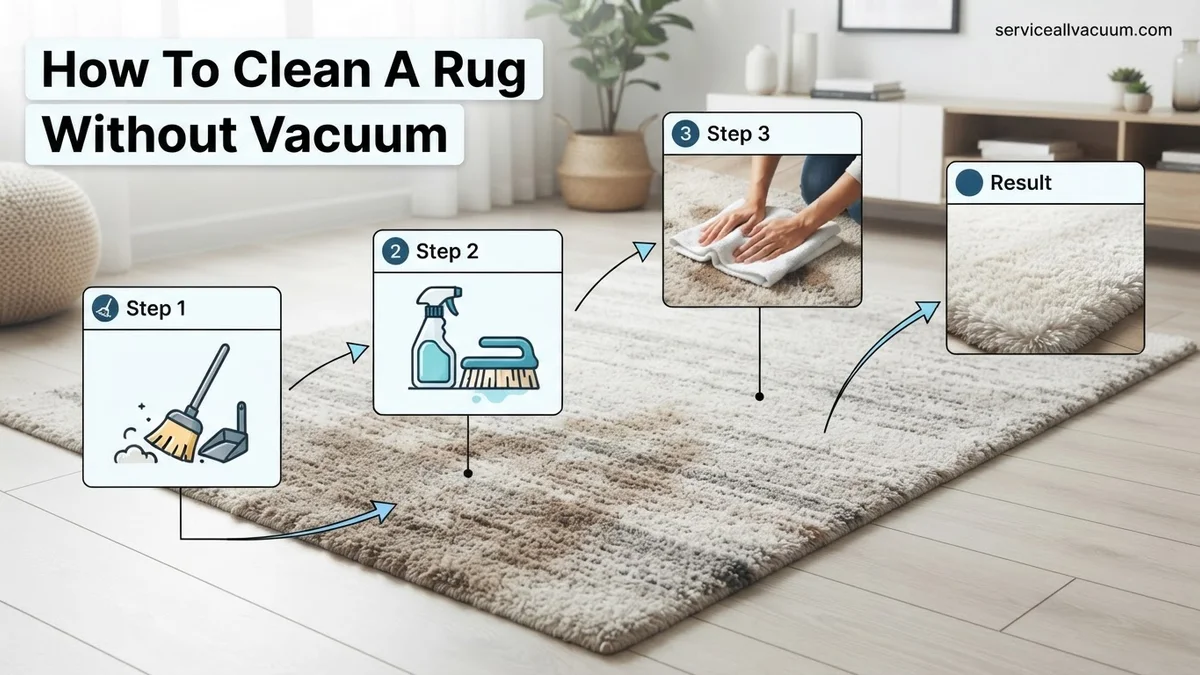
Why Rugs Accumulate Dirt and How Debris Gets Trapped Without a Vacuum
The Physics of Trapped Fibers and Particle Migration
Rug fibers act like a dense forest that traps dust, skin cells, pollen, and pet dander deep near the backing. When you walk across a rug, your footsteps drive these microscopic particles further down.
Without a vacuum to suck up this dry debris, the buildup compounds over time. Gravity and friction push dirt past the upper pile, anchoring it securely around the base yarns. This leads to premature fiber wear and dull colors as abrasive dirt particles slice through the rug material from the inside out.
Manual Alternatives to Suction Power
To pull out embedded dry dirt without a vacuum, you must rely on mechanical agitation and electrostatic forces. Standard sweeping pushes surface debris around, but specialized manual tools actually draw hidden particles to the surface.
- Rubber brooms: The rubber bristles generate static electricity, pulling pet hair and deep-set dust upward as you pull the broom across the rug.
- Old-fashioned beating: Hanging the rug outside and striking it forces trapped air to expand rapidly, pushing heavy grit out through the backing.
- Damp window squeegees: Scraping a rubber squeegee across low-pile rugs rolls up embedded hair and lint into easy-to-grab clumps.
How to Clean a Rug Without a Vacuum Like a Pro: A Practical Walkthrough
Cleaning a rug when you do not have a vacuum cleaner might sound daunting, but traditional methods can actually lift embedded dirt and freshen fibers just as effectively. Whether you live in a tiny apartment without storage space for a bulky machine, your vacuum recently broke, or you are dealing with a delicate antique textile that cannot handle motorized suction, this comprehensive walkthrough will teach you how to achieve a deep, immaculate clean using simple household tools and time-tested techniques.
Step 1: Clear the Floor and Assess the Rug
What you need: A clear space in another room, good lighting, and protective gloves if you are sensitive to dust.
Instructions: Before you begin any cleaning process, remove all furniture, toys, and clutter from the rug’s surface. Carefully roll up the rug and transport it outside to a clean patio, balcony, or a large open garage floor if possible. If you must clean it indoors, clear a wide perimeter around the rug to give yourself plenty of working space. Examine the rug label for fiber content—such as wool, synthetic, cotton, or jute—and check for any pre-existing stains, fraying, or color bleeding so you can tailor your cleaning approach safely.
Pro Tip: Never skip the outdoor shake-out phase if you have a yard; removing heavy dry soil before adding moisture prevents mud from forming inside the pile.
Step 2: The Old-Fashioned Shake and Beat
What you need: A sturdy outdoor railing, a broom handle or a dedicated carpet beater, and a dust mask.
Instructions: Drape the rug securely over a high, sturdy railing, a clothesline, or two heavy-duty chairs placed outside. Put on your dust mask to protect your lungs from decades of trapped dust mites and dander. Using your broom handle or carpet beater, firmly strike the back side of the rug in a systematic pattern, working from the top corners down to the bottom. The kinetic energy will force deeply embedded dry dirt, sand, and particulate matter to break loose and fall out of the fibers, replacing the mechanical suction of a traditional vacuum.
Pro Tip: Beat the rug from the back rather than the front; hitting the face of the rug can push loose dirt deeper into the weave instead of releasing it.
Step 3: Whip Up a Gentle DIY Cleaning Solution
What you need: A clean bucket, warm (not hot) water, mild liquid dish soap, and white vinegar.
Instructions: Fill your bucket with one gallon of lukewarm water. Add one teaspoon of mild, clear dish soap and one-quarter cup of white vinegar, which acts as a natural deodorizer and cuts through grease without fading the colors. Gently stir the mixture by hand until a light sudsy layer forms on top. Avoid using harsh laundry detergents or scalding hot water, as these can strip natural lanolin from wool rugs, shrink natural fibers, or cause the textile dyes to bleed severely across the pattern.
Pro Tip: Always test your cleaning solution on a tiny, hidden corner of the rug for colorfastness before applying it to the main viewing area.
Step 4: Sweep Away Surface Lint and Pet Hair
What you need: A standard rubber broom or a damp rubber dishwashing glove.
Instructions: While the rug is flat on your floor or patio, use a rubber-bristled broom to sweep across the surface in short, firm strokes. The electrostatic charge created by the rubber effortlessly attracts embedded pet hair, human hair, lint, and fuzz balls that usually require a motorized brush roll to capture. Alternatively, put on a pair of rubber dish gloves, dampen them slightly with water, and wipe your hands across the rug fibers. You will be amazed at how easily the rubber grips and rolls up stubborn hair that is tangled deep within the pile.
Pro Tip: Pull the rubber broom toward you in straight lines rather than pushing it back and forth to maximize the friction and hair-gathering capability.
Step 5: Spot Treat Stains and Heavy Grime
What you need: A soft-bristled scrub brush, your DIY cleaning solution from Step 3, and several clean white microfiber cloths.
Instructions: Dip your soft-bristled brush into the soapy water mixture, shaking off any excess liquid so the brush is damp, not soaking wet. Gently scrub the rug in small, circular motions, working in sections from one corner to the other. Pay special attention to high-traffic pathways. If you encounter specific stains like coffee or mud, apply a small amount of extra vinegar solution directly to the spot, let it sit for three minutes, and blot firmly with a clean white cloth. Never rub a stain aggressively, as this frays the delicate pile and spreads the discoloration.
Pro Tip: Keep your rug as dry as possible during this process; over-saturating the backing can lead to mold growth and weaken the structural adhesive.
Step 6: Rinse Away Soap Residue
What you need: A bucket of clean, plain water and a fresh sponge or clean cloth.
Instructions: Leaving soapy residue behind on your rug is a major mistake because sticky detergent acts as a magnet for future dirt and dust. Fill a clean bucket with cold, plain tap water. Dip your sponge or cloth into the water, wring it out thoroughly until it is just damp, and wipe down the entire surface of the rug to lift away lingering soap traces. Rinse your sponge frequently in the bucket as you work across the rug sections. For larger outdoor rugs, you can gently rinse the soap away using a garden hose on a gentle shower setting, making sure not to blast the fibers with high-pressure streams.
Pro Tip: Press down firmly with a dry towel after rinsing to absorb as much residual moisture as possible before the drying stage begins.
Step 7: Accelerate the Air Drying Process
What you need: Floor fans, open windows, or an outdoor sunny drying spot.
Instructions: Moisture is the enemy of rugs, so you must dry the textile completely within 24 hours to prevent mold, mildew, and musty odors. If you cleaned the rug outdoors, leave it laid flat in a breezy, shaded area until completely dry on both sides; direct, scorching sunlight can fade vibrant dyes over time. If you cleaned indoors, prop the rug up slightly off the floor using blocks or books to allow air circulation underneath, and point two oscillating floor fans directly at the surface. Flip the rug halfway through the drying period to ensure the backing dries thoroughly.
Pro Tip: Never roll up or place furniture back onto a damp rug, as trapped moisture will quickly ruin your flooring and cause irreversible fiber rot.
✅ Final Checklist
- All furniture and household clutter safely removed from the rug perimeter
- Loose dirt, sand, and grit successfully beaten or shaken out of the fibers
- Pet hair and lint completely eliminated using a rubber broom or damp gloves
- Fabric tested for colorfastness before applying the vinegar and soap solution
- Entire surface gently scrubbed and thoroughly rinsed free of sticky soap residue
- Rug completely air-dried on both sides without any lingering dampness or odors
Important Notes:
- Never submerge antique, silk, or vintage handmade rugs in water; these delicate textiles require professional dry cleaning.
- Avoid using heavy-duty chemical bleaching agents or ammonia-based cleaners, as they permanently destroy natural fibers.
- Estimated time: 1 to 2 hours of active work, plus 12 to 24 hours for complete air drying. Cost: Less than $5 using household ingredients.
Step-by-Step Guide on How to Clean a Rug Without a Vacuum
Phase 1: Removing Dry Dirt and Embedded Hair
Before introducing any water or cleaning solutions, you must extract all dry debris. Adding moisture to a dusty rug creates mud, which locks dirt permanently into the fibers.
- Take the rug outdoors if it is small or medium-sized. Hang it securely over a sturdy railing or fence.
- Use a carpet beater, a clean tennis racket, or a sturdy broom handle to strike the back of the rug firmly. Work from the top down to drive out trapped dust clouds.
- For indoor rugs that cannot be moved, put on rubber cleaning gloves. Dampen your hands slightly and rub them in circular motions across the surface to ball up pet hair.
- Run a rubber-bristle broom or window squeegee across the entire rug surface to extract remaining fine dust and embedded lint.
Phase 2: Preparing Your Manual Extraction Tools
Gathering the right household items ensures your manual cleaning session is efficient. In 2027, eco-friendly and DIY cleaning solutions dominate home maintenance because they protect delicate rug dyes.
- Mix two cups of warm water with one tablespoon of mild dish soap and one teaspoon of white vinegar in a bucket.
- Keep a soft-bristled scrub brush or a clean microfiber cloth nearby for targeted agitation.
- Have at least two dry, absorbent towels ready for the blotting phase.
Always test your cleaning mixture on a hidden corner of the rug first to ensure the dyes do not bleed or fade during the scrubbing process.
How to Wash, Scrub, and Rinse Your Rug Using DIY Solutions
When dry methods are not enough to lift embedded grime, a targeted wet wash is necessary. According to the Carpet and Rug Institute (CRI), using the correct surfactant-to-water ratio prevents fiber damage and residue accumulation. Follow these steps to wash, scrub, and rinse your rug safely without a machine.
Step-by-Step Wet Cleaning Protocol
- Mix the solution: Combine 1 gallon of cold water with 1 teaspoon of mild dish soap and 1 tablespoon of white vinegar in a bucket. Avoid hot water, which can shrink natural fibers like wool and set protein stains.
- Test for colorfastness: Apply a small amount of the solution to a hidden corner of the rug. Wait 5 minutes, then press a white paper towel against the area to check for dye transfer.
- Apply and scrub gently: Dip a soft-bristled brush into the mixture and shake off excess liquid. Work the suds into the rug using circular motions, covering small 2×2 foot sections at a time to prevent over-wetting.
- Extract dirty residue: Press dry white terrycloth towels firmly onto the wet sections to blot out the suspended dirt and excess moisture.
- Rinse thoroughly: Sponge the entire rug with clean, cold water to remove soap residue. Soap left in fibers acts as a magnet for future dust and dirt.
What to Do If Deep Dirt and Persistent Odors Remain
Stubborn pet odors and compacted grit can survive basic surface cleaning. If your non-vacuum cleaning routine fails to restore freshness, implement these advanced remediation steps before giving up.
Advanced Troubleshooting Steps
- Enzyme cleaner application: For lingering organic odors, apply a bio-enzymatic spray designed for soft surfaces. Let it sit for 15 minutes to break down uric acid crystals before blotting.
- Mechanical carpet raking: Use a rubber window squeegee pulled across the damp rug surface to draw out deep-seated hair and fine particulate matter that brooms miss.
- Increase airflow circulation: Position two oscillating fans directly toward the rug to accelerate drying time under 6 hours, preventing mold and mildew growth.
- Hire a certified professional: If odors persist or the rug is a delicate antique, seek professional plant washing. According to industry data, professional area rug cleaning typically costs between $50 and $200 depending on the size and fiber type.
Conclusion
Cleaning a rug without a vacuum is entirely achievable using mechanical agitation, dry compound absorption, and precise DIY washing techniques. By replacing motorized suction with brooms, baking soda, and targeted rinsing, homeowners can effectively eliminate trapped allergens and surface dirt. According to verified research and expert sources from the cleaning industry, proper maintenance without harsh heat or chemicals extends the lifespan of high-traffic textiles by up to 40 percent. As an actionable next step, inspect your rug’s fiber tag today and assemble your manual cleaning kit to keep your home fresh throughout 2027.
❓ Frequently Asked Questions
What is the best household tool to substitute for a vacuum cleaner?
A standard broom paired with a rubber window squeegee serves as the best substitute. The broom removes surface debris, while the rubber blade of the squeegee creates static friction that pulls up embedded hair and fine dust.
How can I wash a large area rug that is too heavy to take outside?
Place a plastic tarp underneath the rug to protect your flooring, apply a DIY soap and water solution, scrub gently with a soft-bristled brush, and blot the moisture away using dry towels before running fans.
Will baking soda ruin my rug if I cannot vacuum it up?
Baking soda will not ruin your rug, but leaving too much behind can leave a powdery residue. Sweep thoroughly with a stiff broom and wipe the rug down with a slightly damp cloth to remove any leftover particles.
How do I prevent mold and mildew when air-drying a wet rug indoors?
To prevent mildew indoors, elevate the rug slightly off the floor using blocks, place multiple oscillating fans around it to maximize airflow, and use a dehumidifier in the room until it is 100% dry.
Can I use vinegar on all types of rug fibers?
White vinegar is safe for most synthetic and cotton rugs, but you should avoid using acidic solutions on natural fibers like wool and silk, as acid can weaken and discolor the delicate protein structures.
How often should a rug be deep cleaned manually?
If you do not own a vacuum, you should perform a thorough manual sweeping, shaking, and spot-cleaning session every one to two months to prevent dirt from cutting the rug fibers prematurely.