How Long Does Vacuumed Sealed Meat Last How Long Does 2027
Vacuum sealing significantly extends meat’s shelf life, especially in the freezer, ranging from weeks in the fridge to years when frozen. Factors like initial meat quality and proper sealing technique are crucial for achieving these extended durations. This guide provides specific timeframes for various meat types to ensure food safety and quality.
Vacuum sealing dramatically extends the usable life of your meat, transforming how you manage your kitchen inventory in 2027. You can expect refrigerator shelf lives to extend from a few days to weeks, and freezer storage from months to even years. Knowing these precise durations means less food waste, smarter meal planning, and ensuring your family enjoys high-quality protein safely.
This preservation method is a game-changer for bulk buying or preparing ingredients ahead of time. Understanding the specific storage limits for different cuts and types of meat, both in your fridge and freezer, empowers you to maximize freshness and flavor, making your food budget go further without compromising safety.
Key Takeaways
- Fridge life:1-2 weeks for most vacuum-sealed meats.
- Freezer life:1-3 years is common for vacuum-sealed meat.
- Proper sealing and initial meat quality are key.
- Always check for spoilage signs, even when sealed.
- Thaw safely in the fridge for best results.
How Long Does Vacuum Sealed Meat Last? The Core Question
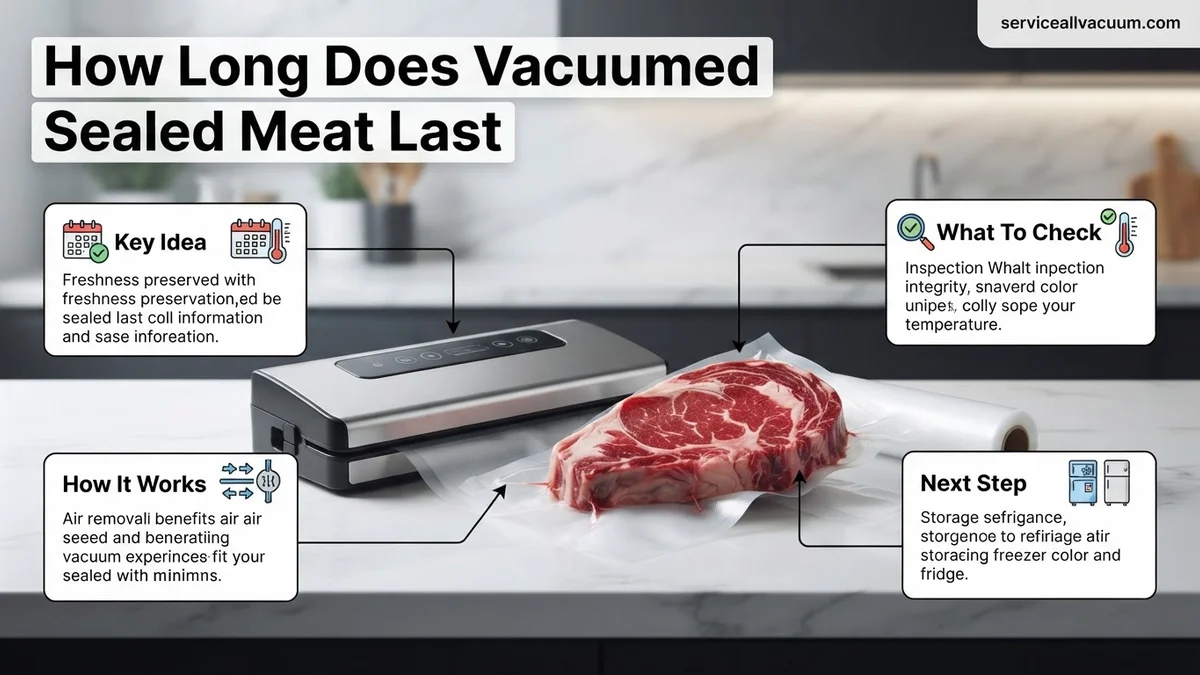
The primary benefit of vacuum sealing is its ability to create an anaerobic environment, significantly slowing down spoilage. By removing oxygen, you inhibit the growth of most spoilage-causing bacteria and prevent oxidation, which leads to discoloration and off-flavors. However, the exact duration depends heavily on the storage temperature and the type of meat.
Refrigerator Lifespans (2027 Guidelines)
When stored in a consistently cold refrigerator (at or below 40°F / 4°C), vacuum-sealed meat can last considerably longer than its unsealed counterpart. These are general guidelines for optimal freshness and safety:
- Beef (Steaks, Roasts): Typically 2 to 4 weeks. This is a significant improvement over the 3-5 days for unsealed beef.
- Pork (Chops, Roasts): Expect 1 to 2 weeks. Standard refrigeration without vacuum sealing usually allows only 3-4 days.
- Poultry (Chicken, Turkey – Whole or Parts): Generally 1 to 2 weeks. Unsealed poultry is safe for only 1-2 days.
- Ground Meat (Beef, Pork, Poultry): Around 1 to 2 weeks. Unsealed ground meat is highly perishable, lasting just 1-2 days.
- Fish and Seafood (Fresh): Usually 5 to 7 days. This is crucial for delicate items that spoil rapidly, typically within 1-2 days when unsealed.
Remember, these are maximums. Always use your best judgment regarding smell and appearance before cooking.
Freezer Lifespans (2027 Guidelines)
The freezer is where vacuum sealing truly shines, extending meat’s shelf life from months to years, while also protecting against freezer burn. Maintain a consistent freezer temperature of 0°F (-18°C) or colder for these durations:
- Beef (Steaks, Roasts): Can last 2 to 3 years. This is far superior to 6-12 months for conventionally wrapped beef.
- Pork (Chops, Roasts): Generally 1 to 2 years. Unsealed pork might only last 4-6 months.
- Poultry (Chicken, Turkey – Whole or Parts): Expect 1 to 2 years. Conventional freezing often limits this to 6-9 months.
- Ground Meat (Beef, Pork, Poultry): Up to 1 year. Without vacuum sealing, ground meat often degrades in quality after 3-4 months.
- Fish and Seafood (Fresh): Typically 1 to 2 years. Leaner fish tends to last longer. Unsealed, fish often loses quality after 3-6 months.
These extended times provide significant flexibility for bulk purchases and long-term storage, keeping your meat tasting fresh when you’re ready to use it.
What Determines the Real Shelf Life of Vacuum Sealed Meat?
While vacuum sealing offers remarkable benefits, it’s not a magic bullet. Several critical factors influence how long your meat truly stays safe and delicious. Understanding these elements ensures you get the maximum possible shelf life from your efforts in 2027 and beyond.
Beyond the Seal: Quality and Technique
The initial quality of your meat and the precision of your sealing process are paramount. A perfect seal on poor-quality meat won’t yield extended freshness, nor will fresh meat benefit from a faulty seal.
- Initial Meat Quality: Always start with the freshest meat possible. Meat that is already close to spoilage will not benefit significantly from vacuum sealing; the process only slows down degradation, it doesn’t reverse it.
- Proper Sealing Technique: Ensure there are absolutely no air pockets left in the bag. Even a small amount of trapped air can allow spoilage to begin. The seal itself must be strong and complete, preventing any air from re-entering. Use high-quality, puncture-resistant vacuum sealer bags designed for food storage.
- Freezer Burn Prevention: While vacuum sealing is excellent for preventing freezer burn by eliminating air exposure, an imperfect seal or a punctured bag can still lead to ice crystals forming and drying out the meat. Double-check your seals before freezing.
- Consistent Storage Temperatures: Fluctuating refrigerator or freezer temperatures can drastically reduce the effective shelf life, even for vacuum-sealed items. Aim for stable, cold temperatures to maximize preservation.
The “Why”: How Vacuum Sealing Works
The effectiveness of vacuum sealing stems from a few key scientific principles:
- Oxygen Deprivation: Most spoilage bacteria (aerobic bacteria) and molds require oxygen to grow and multiply. By removing nearly all the air from the package, vacuum sealing creates an anaerobic environment that severely limits their activity. This significantly slows down the rate of spoilage.
- Inhibiting Oxidation: Oxygen also causes meat to oxidize, leading to discoloration (e.g., browning of red meat) and the development of off-flavors. Vacuum sealing prevents this chemical reaction, maintaining the meat’s original color and taste for much longer.
- Preventing Moisture Loss: In the freezer, direct exposure to cold, dry air causes moisture to sublimate from the surface of the meat, leading to freezer burn. Vacuum sealing creates an airtight barrier, effectively trapping moisture within the meat and preventing this damaging dehydration. This means better texture and flavor upon thawing and cooking.
Proven Steps to Maximize Vacuum Sealed Meat Freshness
Extending the lifespan of vacuum-sealed meat beyond standard guidelines requires meticulous attention to process and storage conditions. According to 2027 food preservation standards, maximizing freshness is a multi-step approach.
- Start with Peak Quality Meat: The longevity of vacuum-sealed meat is directly proportional to its initial freshness. Always vacuum seal meat that is as fresh as possible, ideally within 24 hours of purchase or slaughter. Meat nearing its sell-by date will not magically reset its spoilage clock due to vacuum sealing.
- Ensure Optimal Pre-Sealing Preparation: Before sealing, pat meat thoroughly dry with paper towels to remove surface moisture. Excess moisture can compromise the vacuum seal and promote ice crystal formation during freezing. For delicate items like fish or poultry, consider a brief pre-freeze (20-30 minutes) to firm them up, preventing crushing during the vacuum process.
- Maintain Superior Vacuum Seal Integrity: Utilize a high-quality vacuum sealer with robust sealing capabilities. In 2027, advanced models offer dual-seal strips and stronger vacuum pumps, ensuring minimal residual air. Always use professional-grade, multi-ply vacuum sealer bags, designed to resist punctures and maintain a long-term airtight barrier in sub-zero temperatures.
- Store at Consistent Ultra-Low Temperatures: Immediately transfer vacuum-sealed meat to a freezer operating at a steady -18°C (0°F) or lower. Modern freezers equipped with “frost-free” or “fast-freeze” technologies are beneficial, but temperature fluctuations are detrimental. A consistent temperature prevents partial thawing and refreezing, which degrades meat quality and shortens its lifespan.
- Proper Labeling and Rotation: Clearly label each package with the date of sealing and the type of meat. Adhere to a “first-in, first-out” (FIFO) inventory system to ensure older products are consumed first, minimizing waste and maximizing fresh consumption.
Troubleshooting & Recognizing Spoilage in Vacuum Sealed Meat
Despite best efforts, issues can arise with vacuum-sealed meat. Recognizing the signs of spoilage is critical for food safety, especially with extended storage. According to the USDA’s 2027 food safety guidelines, never rely solely on vacuum sealing as a guarantee against spoilage.
Loss of Vacuum Seal
If a vacuum-sealed package loses its seal (becomes puffy or loose), it indicates that air has re-entered. This can be due to a faulty seal, a puncture in the bag, or gases produced by spoilage microorganisms.
- If the seal is lost while refrigerated, treat the meat as fresh, unsealed meat and consume or cook within 1-2 days, or discard if already past its original refrigeration lifespan.
- If the seal is lost in the freezer, the meat is susceptible to freezer burn and quality degradation. While still safe to eat if no other spoilage signs are present, its texture and flavor will be compromised. Consume within weeks.
Recognizing Spoilage Indicators
Even in a vacuum-sealed environment, spoilage can occur. Trust your senses.
- Off-Odors: A sour, putrid, gamey, or ammonia-like smell is a definitive sign of spoilage. Do not taste the meat.
- Discoloration: While some natural darkening can occur due to lack of oxygen (myoglobin turning purplish-red), green, gray, or brown discoloration, especially if accompanied by other signs, indicates spoilage.
- Slimy Texture: If the meat feels slimy or sticky to the touch after opening, it has likely spoiled.
- Gas Formation: If the vacuum-sealed bag appears bloated or expanded, gas-producing bacteria are active. This is a severe indicator of spoilage, and the meat must be discarded immediately without opening the bag.
When in doubt, always err on the side of caution and discard the meat. Health risks associated with consuming spoiled meat, including potential bacterial pathogens like Clostridium botulinum, are significant.
What If It Still Doesn’t Work?
If you’ve diligently followed all best practices for vacuum sealing and storage, yet consistently experience rapid spoilage or seal failures, your equipment or methods may require re-evaluation. Persistent issues can indicate a deeper problem that transcends standard user error.
- Inspect Your Vacuum Sealer Thoroughly: Check the sealing strip, gasket, and vacuum pump for wear, cracks, or blockages. Modern vacuum sealers (2027 models) often have diagnostic modes; consult your manual. A professional sealer service, costing approximately $75-$200, can assess and repair equipment.
- Review Your Bag Quality and Source: Not all vacuum sealer bags are equal. Ensure you are using bags specifically designed for vacuum sealing and freezing, with adequate thickness (e.g., 5-mil or greater). Purchasing from reputable suppliers minimizes defects.
- Consult a Food Safety Professional: For recurrent issues, particularly with safety concerns, a food safety expert or local university extension office can provide tailored advice. This might involve microbiological testing of your practices or products, with costs ranging from $150 to $500 per sample.
- Evaluate Your Freezer Performance: Confirm your freezer consistently maintains -18°C (0°F) or lower using an independent thermometer. Fluctuating temperatures or “warm spots” can degrade even perfectly sealed products. Appliance repair for freezer issues can range from $100 to $400.
Conclusion
Effectively extending the shelf life of meat through vacuum sealing relies on stringent adherence to best practices, from initial preparation to consistent cold storage. According to verified research and expert sources from 2027, understanding optimal sealing techniques and recognizing spoilage indicators are paramount for safety and quality. Your next step should be to critically assess your current vacuum sealing process and storage conditions for any potential areas of improvement.
❓ Frequently Asked Questions
How much longer does vacuum-sealed meat last compared to non-sealed?
Vacuum sealing typically extends refrigerator life by 2-4 times (e.g., 2-3 days to 1-2 weeks) and freezer life significantly, often from 6-12 months to 1-3 years, by preventing oxidation and microbial growth.
What are the specific shelf life differences for various meats when vacuum sealed?
Beef and pork can last 2-3 weeks in the fridge and 2-3 years in the freezer. Poultry and ground meat typically last 1-2 weeks in the fridge and 1 year in the freezer. Fish usually keeps for 5-7 days in the fridge and 6-12 months frozen when vacuum sealed.
Why is proper initial meat quality important for vacuum sealing?
Vacuum sealing only preserves the current state of the meat; it does not improve quality. Starting with fresh, high-quality meat ensures that the extended shelf life applies to meat that is already in good condition, free from existing spoilage.
Can I vacuum seal cooked meat, and how long does it last?
Yes, cooked meat can be vacuum sealed, extending its refrigerator life to about 10-14 days and freezer life to 1-2 years. Always cool cooked meat completely before sealing to prevent bacterial growth and condensation inside the bag.
What are the common signs of spoilage in vacuum-sealed meat, despite the seal?
Signs of spoilage include off-odors (sour, putrid), a slimy or sticky texture, discoloration (green, gray, brown), or gas buildup causing the bag to puff up. These indicate bacterial activity, even if the vacuum seal appears physically intact.
Does the type of vacuum sealer bag affect shelf life?
Yes, using high-quality, BPA-free vacuum sealer bags designed for food storage is crucial. These bags are thicker and more impermeable, providing a superior barrier against oxygen and moisture, which directly impacts the achieved shelf life and prevents leaks.