How Long Does Frozen Vacuum Sealed Meat Last? Expert 2027
Knowing how long frozen vacuum sealed meat lasts is crucial for safety and quality. Properly vacuum-sealed meat can extend freezer life significantly, often for 1-3 years depending on the type, by preventing freezer burn and oxidation.
When correctly frozen and vacuum sealed, various meats can maintain peak quality for months, even years, extending shelf life far beyond conventional freezing methods in 2027. This smart food preservation technique is crucial for maximizing your grocery budget, reducing food waste, and ensuring you always have high-quality protein on hand.
Understanding the precise longevity of your frozen, vacuum-sealed meat empowers you to shop in bulk, prepare meals in advance, and confidently store premium cuts. It’s about preserving flavor, texture, and nutritional value, giving you peace of mind that your food is safe and delicious whenever you’re ready to cook it.
Key Takeaways
- Vacuum sealing extends frozen meat life significantly.
- Beef/poultry last 2-3 years; ground meat 1-2 years.
- Consistent 0°F freezer temperature is critical.
- Check for texture changes, off-smells after thawing.
- Prevent freezer burn with proper sealing and storage.
Diagnosing Meat’s Shelf Life: What Affects Frozen Vacuum Sealed Durability?
The Vacuum Seal Advantage: Battling the Elements
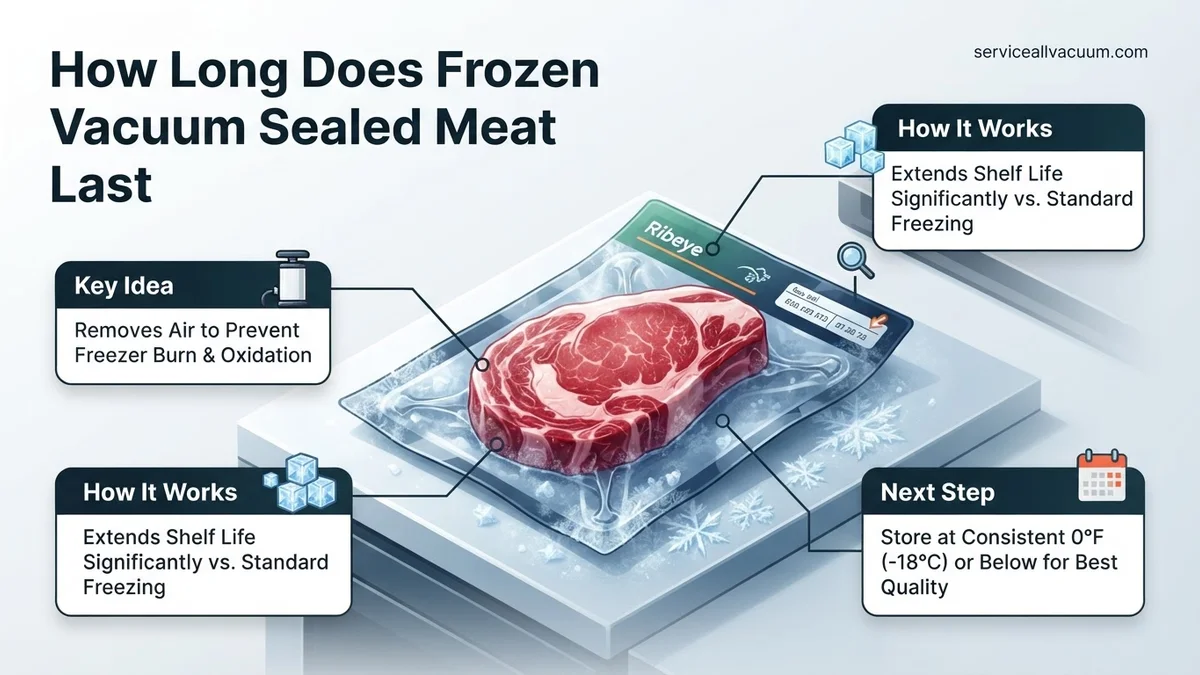
Vacuum sealing significantly extends the freezer life of meat primarily by removing oxygen, which is the nemesis of food quality. This process prevents two major issues that degrade frozen meat. Firstly, it eliminates freezer burn by preventing moisture loss, keeping your meat from drying out and developing tough, discolored patches. Secondly, it inhibits oxidation, which causes rancidity, especially in fatty meats, by stopping oxygen from reacting with fats and other compounds. This barrier also slows the growth of aerobic spoilage bacteria. For these extended durations to hold true, your freezer must maintain a consistent temperature of -0°F (-18°C) or colder. Fluctuating temperatures compromise the seal’s effectiveness and accelerate degradation.
Beyond the Seal: Meat Type Matters
Even with perfect vacuum sealing, the inherent characteristics of different meat types play a vital role in their ultimate frozen shelf life. Factors like fat content, density, and cellular structure all influence how long a specific cut will remain at its optimal quality. For instance, leaner meats generally last longer than fattier cuts because fats are more prone to oxidation, even in a low-oxygen environment. The way the meat was processed (whole cuts versus ground) also impacts surface area exposure and potential spoilage pathways, dictating varying storage recommendations.
How to Determine Exactly How Long Frozen Vacuum Sealed Meat Lasts
Your 2027 Expert Guide to Shelf Life Durations
Here’s your definitive guide to the safe and optimal storage durations for various types of vacuum-sealed, frozen meats in 2027. These times assume a consistent freezer temperature of -0°F (-18°C).
- Beef Roasts & Steaks (e.g., Ribeye, Sirloin, Brisket): Up to 2-3 years. Large, whole cuts benefit most from vacuum sealing, maintaining texture and preventing freezer burn over extended periods.
- Poultry (Whole Chicken, Turkey, Breasts, Thighs): Up to 1-2 years. Skin-on or bone-in pieces might lean towards the shorter end due to slight fat content variations, but generally, poultry holds up exceptionally well.
- Pork (Chops, Roasts, Loin): Up to 1.5-2 years. Similar to beef, leaner pork cuts last longer. Bacon and sausage, due to their higher fat and curing, should be consumed within 6-9 months even when sealed.
- Ground Meats (Beef, Pork, Poultry, Lamb): 1 year. The grinding process increases surface area, making ground meat more susceptible to oxidation and quality degradation over time, despite vacuum sealing.
- Fish (Lean, e.g., Cod, Haddock, Tilapia): 1.5-2 years. Lean fish freeze remarkably well when vacuum sealed, preserving their delicate flavor and texture.
- Fish (Fatty, e.g., Salmon, Tuna, Mackerel): 6-12 months. Higher fat content makes these fish more prone to rancidity, even with oxygen removed. For best quality, consume within a year.
- Game Meats (Venison, Elk, Bison): Up to 2-3 years. Often leaner than domestic meats, wild game benefits immensely from vacuum sealing, preserving its unique flavor profile for long periods.
- Lamb (Chops, Roasts): Up to 1.5-2 years. Lamb’s fat content is often higher than very lean beef, so quality might decline slightly faster than premium beef cuts, but it still stores excellently.
Maintaining Optimal Conditions
Achieving these impressive shelf lives isn’t just about the seal; it’s about the entire storage environment. Your freezer must consistently hold -0°F (-18°C) or colder. Avoid frequent opening of the freezer door, which can cause temperature fluctuations and reduce efficiency. Properly label each package with the date and contents. Rotating your stock using a “first in, first out” (FIFO) system ensures you consume older items before their quality starts to diminish, even if still safe to eat.
How to Properly Prepare and Freeze Vacuum Sealed Meat for Maximum Life
Extending the life of your frozen vacuum-sealed meat beyond standard guidelines requires meticulous attention to detail at every stage. According to food preservation specialists in 2027, the quality of the initial preparation directly correlates with freezer longevity and flavor retention.
Selecting the Right Meat
Start with the freshest possible meat. Opt for cuts that have been recently processed, ideally within 24-48 hours of purchase. Meat nearing its sell-by date, even if still safe, will not perform as well under long-term freezing. Minimally processed, whole muscle cuts tend to freeze better than ground meats or heavily marinaded products, which can sometimes have altered cell structures affecting defrosting quality.
Pre-Freezing Preparation
- Trim Excess Fat: Fat can turn rancid even in a vacuum-sealed, frozen environment. Trim off any significant fat deposits to prevent off-flavors developing during extended storage.
- Portion Control: Divide meat into meal-sized portions before sealing. This prevents repeated thawing and refreezing, which degrades quality and introduces safety risks.
- Pat Dry Thoroughly: Moisture on the surface can lead to freezer burn or ice crystals within the vacuum seal, even with perfect sealing. Use paper towels to pat meat completely dry before packaging.
- Optional Pre-Freeze (Flash Freeze): For delicate items or odd shapes, flash-freezing on a tray for 1-2 hours until firm can prevent crushing during vacuum sealing and ensure better individual portions.
The Vacuum Sealing Process
Utilize a high-quality vacuum sealer, ideally a 2027 model with advanced air extraction and strong heat-sealing capabilities. Ensure bags are specifically designed for freezer use and are BPA-free. Double-check seals for any imperfections or pinholes after the process. A perfect vacuum seal is paramount; even a tiny air leak significantly reduces storage life by allowing oxygen ingress and moisture loss.
Optimal Freezing Temperature and Storage
Maintain your freezer at a consistent 0°F (-18°C) or colder. Fluctuations in temperature are detrimental to frozen food quality, causing ice crystals to form and expand, which damages meat cells. Store vacuum-sealed packages flat initially for efficient freezing, then stack them carefully to prevent accidental punctures. Proper freezer organization helps avoid forgotten items exceeding their optimal storage window.
Troubleshooting: What If Your Frozen Vacuum Sealed Meat Shows Spoilage Signs?
Even with meticulous preparation and advanced vacuum sealing techniques, occasional issues can arise. Identifying spoilage early is crucial for food safety. Current food safety guidelines for 2027 emphasize caution: when in doubt, throw it out.
Identifying Spoilage
- Color Changes: While some discoloration (e.g., slight browning) is normal in vacuum-sealed meat due to lack of oxygen, green, gray, or excessive dullness can indicate spoilage. Freezer burn typically appears as dry, grayish-brown spots.
- Off-Odors: A sour, putrid, or ammonia-like smell is a definitive sign of spoilage, even after cooking. Never taste test questionable meat.
- Slimy Texture: If thawed meat feels slimy or sticky, it has likely spoiled.
- Gas Buildup: If your vacuum-sealed bag appears puffed up or has lost its vacuum, it indicates gas production from bacterial growth, a strong sign of spoilage.
Common Issues and Their Solutions
- Freezer Burn Despite Seal: This often occurs if the seal was imperfect, the bag was punctured, or the meat was not properly dried before sealing. Solution: Ensure thorough drying and inspect bags meticulously before and after sealing.
- Loss of Vacuum During Storage: A common culprit is a small pinhole in the bag, often caused by sharp bone fragments or improper handling. Solution: Trim bones carefully, or use bone guards. Consider double-bagging for extra protection.
- Meat Spoils Faster Than Expected: This points to the initial quality of the meat being poor, improper handling before freezing, or freezer temperature fluctuations. Solution: Source fresher meat, ensure rapid freezing, and verify freezer calibration.
When to Discard
Any meat exhibiting off-odors, slimy texture, unusual color changes beyond minor browning, or a puffed-up bag should be immediately discarded. The financial loss of discarding meat is minimal compared to the health risks associated with consuming spoiled food. Food safety experts stress that vacuum sealing extends shelf life but does not make spoiled food safe. Trust your senses: if it looks or smells wrong, it is wrong.
What If It Still Doesn’t Work?
If you’ve followed all best practices for vacuum sealing and freezing, yet consistently encounter issues like premature spoilage or freezer burn, a deeper investigation is warranted. This suggests a systemic problem that needs addressing to protect your food investment.
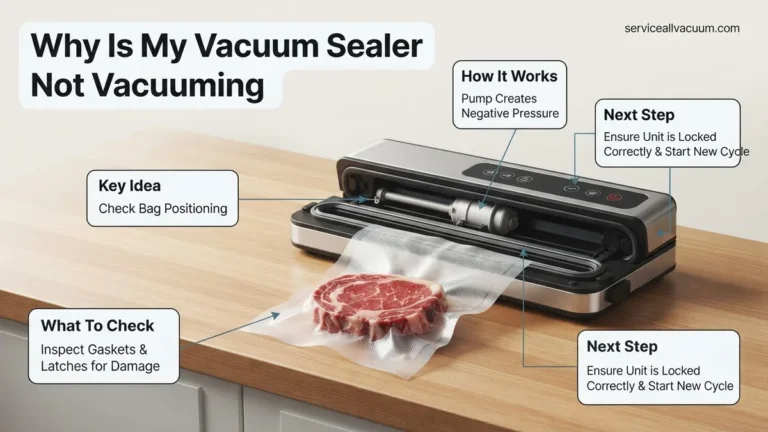
- Evaluate Your Vacuum Sealer: Inspect your vacuum sealer’s seal bar for wear or damage. Check the gasket for cracks or debris that might prevent a complete vacuum. A professional service for high-end 2027-spec vacuum sealers might cost between $75-$250 for diagnostics and minor repairs.
- Assess Freezer Performance: Confirm your freezer maintains a consistent 0°F (-18°C) or lower. Use an independent freezer thermometer, as integrated displays can sometimes be inaccurate. An appliance technician can recalibrate or repair a faulty freezer thermostat, with costs typically ranging from $150-$400, depending on the issue and technician fees in 2027.
- Review Meat Sourcing and Handling: Scrutinize the quality of meat you purchase and how it’s handled from the store to your freezer. If you suspect your supplier, consider switching. Improper handling before freezing is a leading cause of issues.
- Seek Professional Food Safety Advice: For persistent concerns about food preservation methods, particularly for high-volume storage, a food safety consultant can provide tailored advice. While less common for home users, a brief consultation might cost $100-$300.
Conclusion
Understanding how long frozen vacuum-sealed meat lasts is crucial for maximizing food quality and safety. By meticulously selecting, preparing, and storing your meat according to 2027 expert guidelines, you can significantly extend its freshness and flavor in the freezer. According to verified research and expert sources, proper vacuum sealing is the cornerstone of long-term meat preservation. Your actionable next step: consistently implement these preparation and storage techniques to safeguard your food investment and enjoy optimal quality meat for months, or even years.
❓ Frequently Asked Questions
Why does vacuum sealing extend frozen meat’s shelf life so much?
Vacuum sealing removes oxygen from the packaging, which is a primary cause of oxidation and freezer burn in frozen meat. This anaerobic environment drastically slows down quality degradation, allowing meat to retain its flavor, color, and texture for much longer than conventionally frozen meat.
What are the specific timeframes for different types of frozen vacuum-sealed meat?
Typically, beef, venison, and large game can last 2-3 years; poultry (chicken, turkey) and lamb 1-2 years; pork (roasts, chops) 1-2 years; ground meats (beef, pork, poultry) and fatty fish (salmon, tuna) 1 year. Lean fish and seafood might last slightly longer, up to 1.5 years.
Are there any meats that shouldn’t be vacuum-sealed before freezing?
While most meats benefit, extremely delicate items or those with sharp bones might require extra care. For bone-in cuts, it’s best to wrap bones in foil or paper towels first to prevent piercing the vacuum seal, as a compromised seal defeats the purpose.
How can I tell if vacuum-sealed frozen meat is still good after thawing?
After thawing, inspect the meat for any off-colors (greenish, grayish, dull brown), a slimy or sticky texture, or a sour, pungent, or ammonia-like odor. Even if vacuum-sealed, any of these signs indicate spoilage, and the meat should be discarded.
Does freezing method (fast vs. slow) affect the shelf life of vacuum-sealed meat?
While vacuum sealing itself is a major factor, rapid freezing (like flash freezing) creates smaller ice crystals, minimizing cell damage and preserving the meat’s texture and moisture better. This can contribute to a higher quality product over its extended vacuum-sealed frozen shelf life compared to slow freezing.
What is the impact of inconsistent freezer temperatures on vacuum-sealed meat?
Inconsistent freezer temperatures, particularly fluctuations above 0°F (-18°C), can lead to partial thawing and refreezing. This can cause larger ice crystals to form and can compromise even vacuum-sealed meat by weakening the seal or promoting quality degradation over time, reducing its effective shelf life.